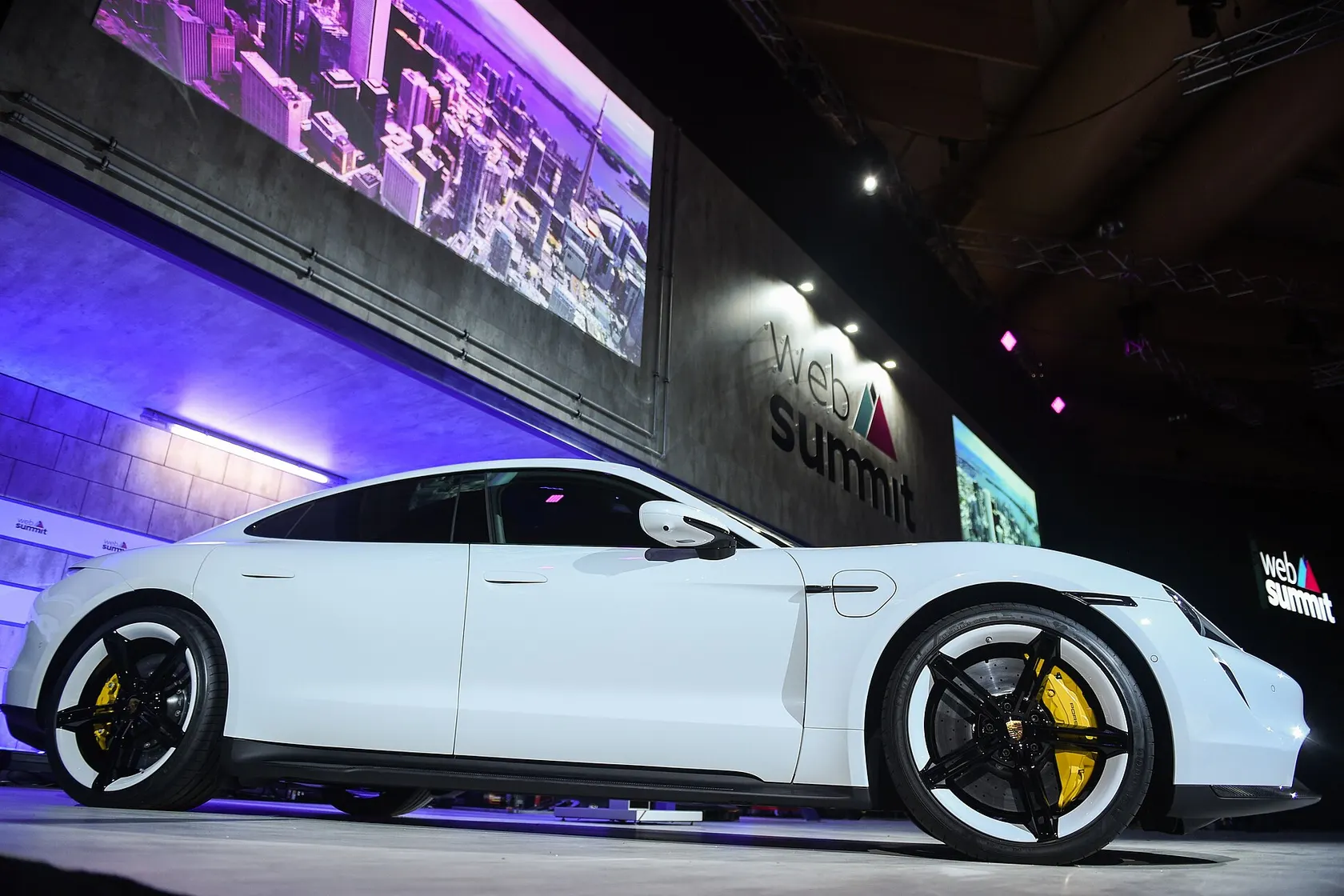
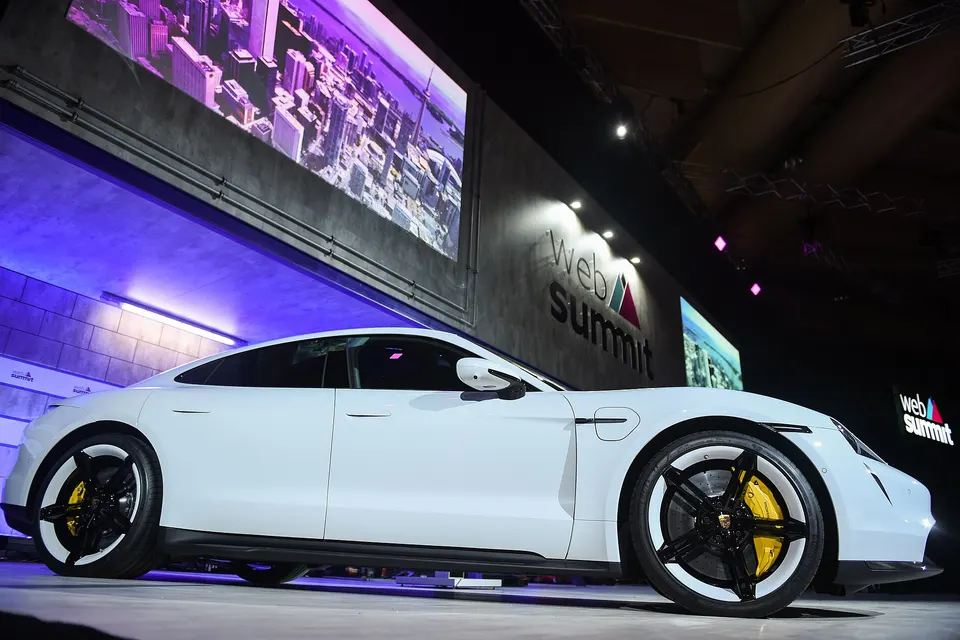
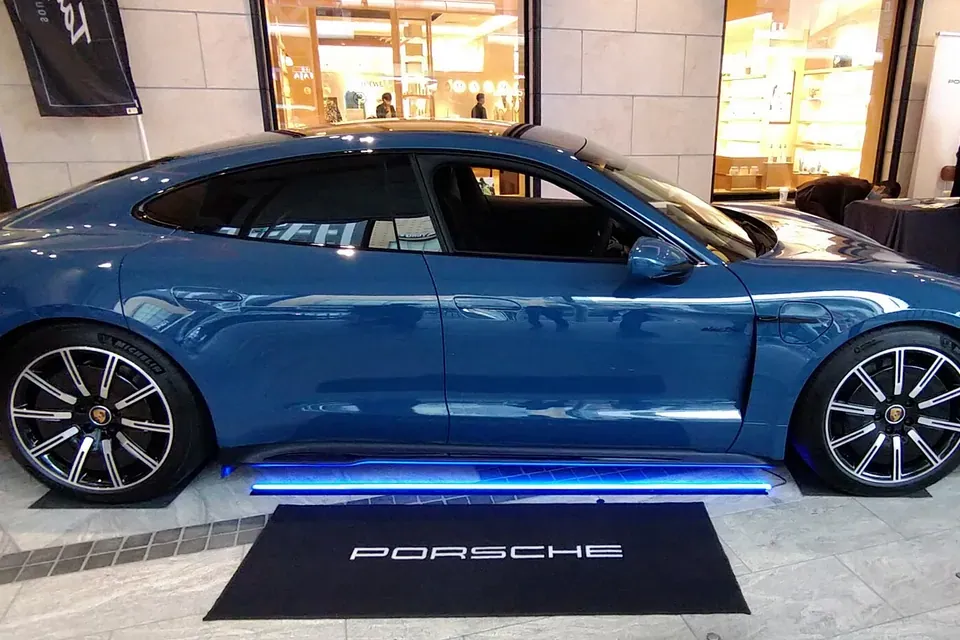
Dual permanent-magnet motors · 800 VFront and rear motors, variable all-wheel driveTopology diagram · not to scale · based on the cited primary sources
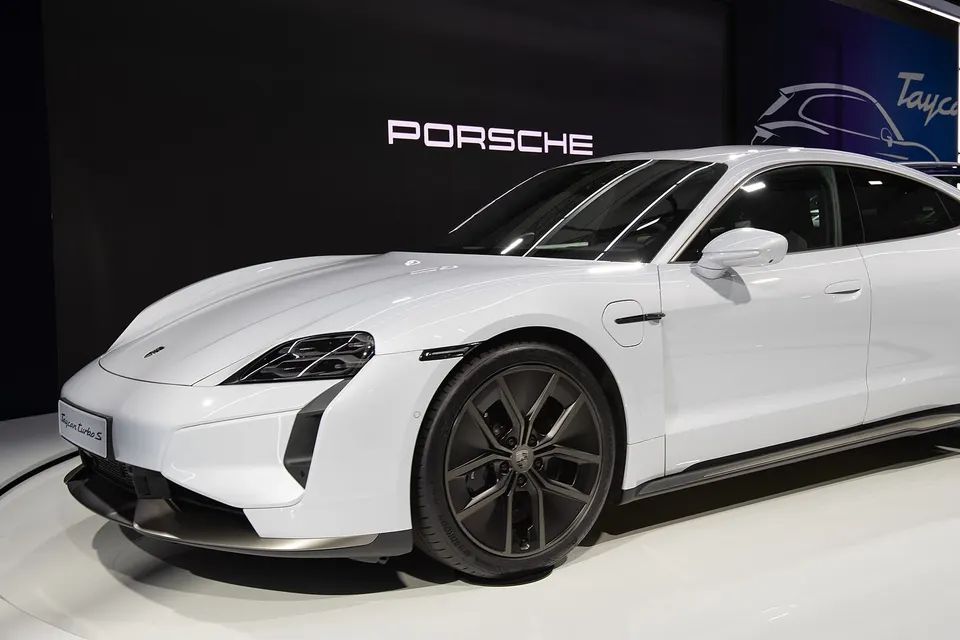
Taycan Turbo S is the exact Y1A production representative for the Taycan milestone in this archive’s source-led family tree.
R / production rarity
How rare is it?
A simple 1–5 rating based on completed worldwide production for this exact version. Price and desirability are not included.
Rarity ratingNot availableNo comparable worldwide production total
Production bandNot available
Production evidenceNo exact production total
ProducedWorldwide total used for the rating
Production total unavailable
A reliable worldwide figure is not listed in the references.
How the rating works
The rating uses five fixed production bands. Smaller production runs receive higher ratings. Exact totals and responsibly sourced estimates for this precise version can be rated. Plans, regional totals, lower bounds, disputed figures and broader-family totals remain visible but unclassified. The evidence description is kept separate from the rating so a source limitation cannot change how scarcity is measured.
Open-licence recordings can appear with a visible Unregistered note; archive verification still requires independent identity and configuration evidence.
Listening descriptors remain editorial; architecture and output claims trace to the cited manufacturer material.
The Taycan Turbo S arrived with the production Taycan in 2019 as Porsche’s first battery-electric series flagship. The “Turbo” badge describes its place in the performance hierarchy rather than forced induction, because the car has no combustion engine. That naming decision is part of the historical context, but the engineering is more important: an 800-volt battery system, permanent-magnet motors at both axles and a two-speed rear transmission were combined to deliver high output repeatedly rather than only in a short laboratory burst.
The front and rear permanent-magnet synchronous machines provide electric all-wheel drive with variable torque distribution. Nominal output is 460 kW (625 PS), rising to 560 kW (761 PS) with Launch Control overboost and 1,050 Nm under the same condition. A single-speed front reduction works with a two-speed rear gearbox. First gear supports maximum launch force; second supports efficiency and the 260 km/h top speed. This transmission layout is a defining Taycan feature, not a conventional stepped automatic.
Porsche quoted 0–100 km/h in 2.8 seconds, 0–200 km/h in 9.8 seconds and 2,295 kg DIN for the early EU car. The 93.4 kWh gross Performance Battery Plus and 800-volt architecture enabled DC charging at up to 270 kW under suitable conditions. None of these peaks exists independently of temperature, charge level and control state. A premium record should therefore state measurement protocol and battery condition instead of presenting launch output as a permanently available mechanical rating.
Engineering and character
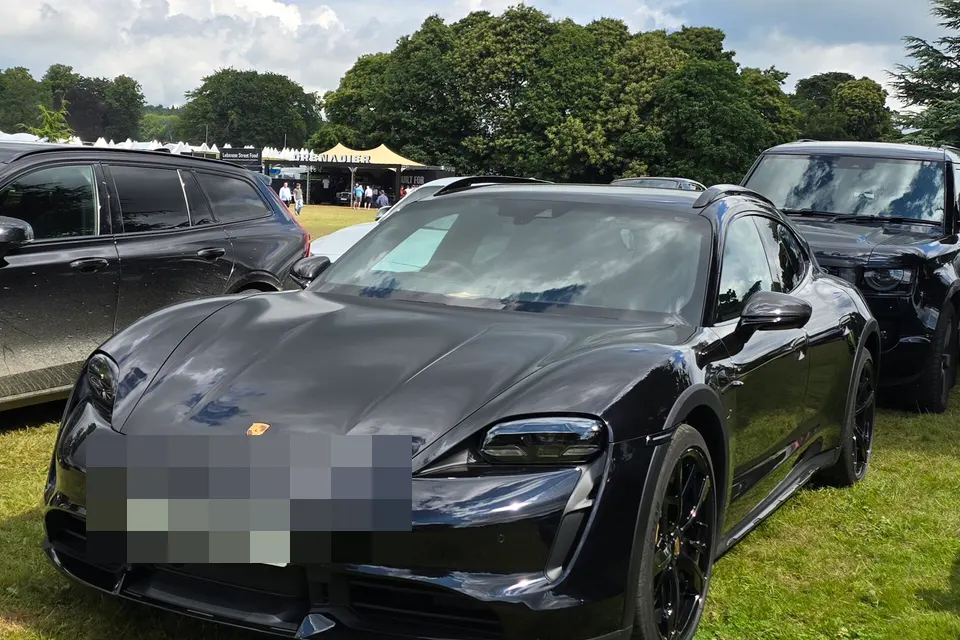
The saloon body was developed from the Mission E concept and shaped to a coefficient of drag from 0.25 in Porsche’s launch material. Adaptive air suspension, active damping, rear steering and torque vectoring integrated the battery’s low placement with the demands of a heavy high-performance car. The Turbo S is distinct from the later Cross Turismo, which adds a long roof, greater ground clearance and gravel-oriented modes, and from the 2024 update with significantly revised battery and performance systems.
Its acoustic record contains several layers: natural motor and inverter harmonics, reduction-gear and tyre noise, and the optional or market-dependent Porsche Electric Sport Sound. Unlike the GTS-specific sound admission, this Turbo S also exceeds 750 hp and sits close to the archive’s peak-output rationale, but its exact catalogue basis remains the recorded production entry. Captures should separate sound enabled and disabled and include speed, drive mode, gearbox shift, state of charge and cabin or exterior position.
The two-speed rear transmission produces an event absent from most EVs. Under the appropriate operating strategy, the rear axle changes ratio while the front motor continues to contribute drive, altering pitch and acceleration without a combustion engine’s ignition rhythm. That makes the Taycan valuable for an audio archive: it documents a genuine mechanical and control-system signature of early high-performance EV development. Artificial overlays should be identified as authored feedback, not confused with the underlying machines.
Legacy and identity
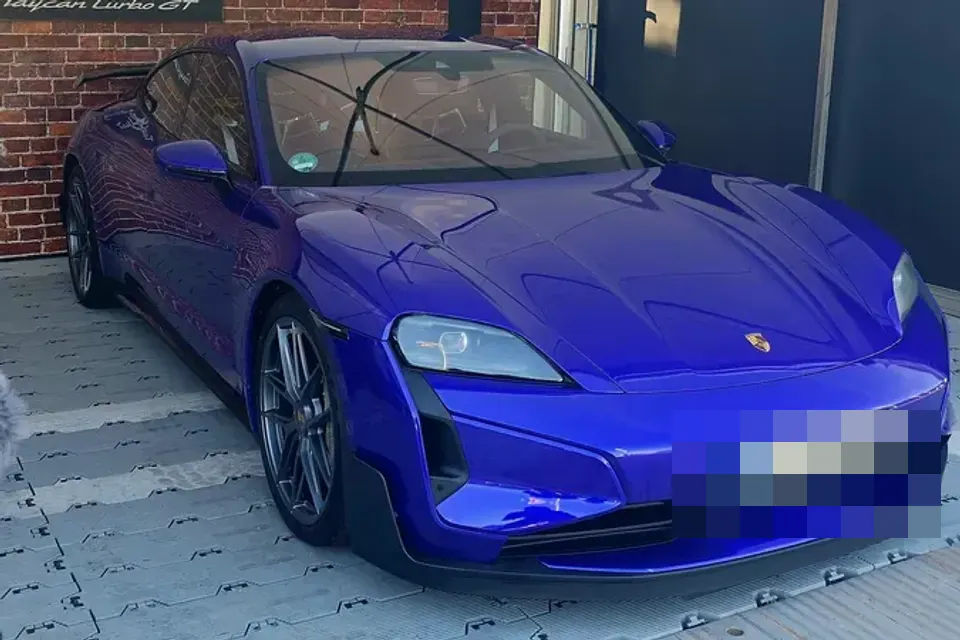
The focus here is the 2019–2024 first-phase Taycan Turbo S saloon, model code Y1A, at 560 kW Launch Control overboost. It excludes the Turbo, GTS, Cross Turismo, updated 2024 Turbo S and Turbo GT. The car shows why Porsche used 800 volts and two rear ratios. Separating nominal from overboost output, recording battery state and preserving the exact body and software phase prevents one familiar model name from flattening several materially different electric drivetrains.
01
Model identity
Y1A is displayed prominently so this record cannot be confused with an adjacent derivative.
02
Original soundtrack
Modified exhausts, aftermarket induction and replacement EV sound packs are excluded.
04 / family tree
Model lineage
1900–2024 · 8 documented milestones
No archive image
1900Lohner–Porsche ElectromobileEarly Porsche wheel-hub electric drive[6]
→
No archive image
2015Mission E conceptElectric sports-car concept[4]
→
No archive image
2018Mission E Cross TurismoCrossover concept branch[4]