
Porsche · Iconic performance derivative · 2000–2005
911 Turbo
Recorded designation · Type 996- Recorded designation
- Type 996
- Engine / drive unit
- M96/70
- Archive no.
- 068
- Sources updated
- 20 September 2026
Help build this passport
Have a recording, source, correction, photo or missing detail for this exact car? Prepare a contribution with the Car ID already selected.
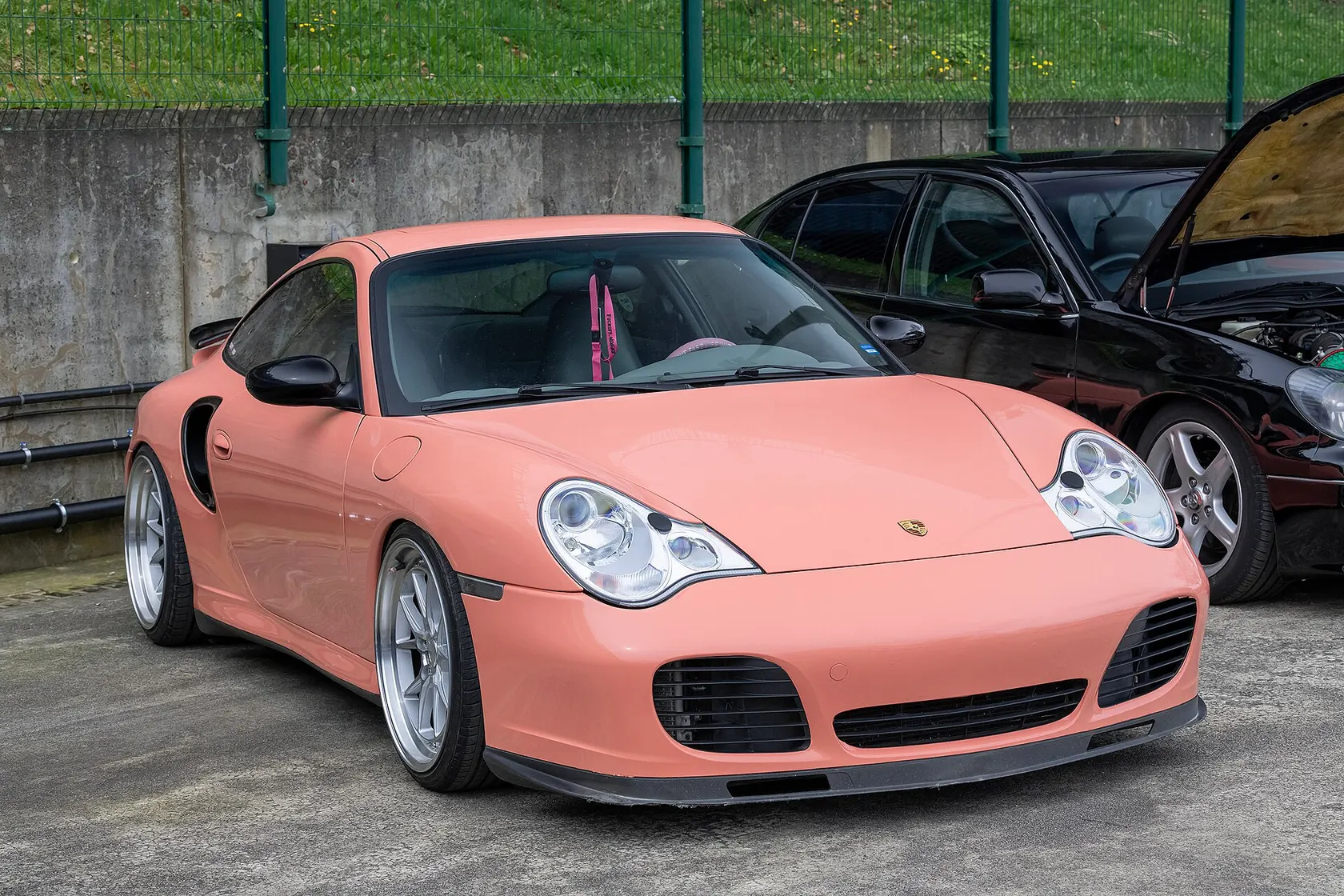
The 996 Turbo carried the flagship across Porsche’s water-cooling divide and became the first regular production 911 Turbo to exceed 300 km/h.
How rare is it?
A simple 1–5 rating based on completed worldwide production for this exact version. Price and desirability are not included.
Limited production
Manufacturer-published production total
- Figure type
- Exact
- Scope
- 996-generation Turbo production through model year 2005
- Geography / date
- Global · 2000–2005
How the rating works
The rating uses five fixed production bands. Smaller production runs receive higher ratings. Exact totals and responsibly sourced estimates for this precise version can be rated. Plans, regional totals, lower bounds, disputed figures and broader-family totals remain visible but unclassified. The evidence description is kept separate from the rating so a source limitation cannot change how scarcity is measured.
- 5/5Fewer than 25 builtUltra rare
- 4/525 to 249 builtVery rare
- 3/5250 to 2,499 builtRare
- 2/52,500 to 24,999 builtLimited production
- 1/525,000 or more builtSeries production
At a glance
What creates the sound
Turbo response, induction, mechanical texture and exhaust should be captured separately where practical.
A factory-stock claim requires evidence for turbochargers, intake, engine management, catalysts and silencers.
Open-licence recordings with incomplete configuration evidence may publish only as Unregistered.
- Horizontally opposed six-cylinder architecture
- Water cooling and four-valve cylinder heads changed the thermal and breathing architecture, while standard all-wheel drive and an optional ceramic brake system moved the Turbo into a new operating envelope.
- 6-speed manual with all-wheel drive
History and character
Origins and context
911 Turbo (Type 996) belongs to the Turbo lineage that Porsche began as a production experiment and developed into its everyday high-performance flagship. The 996 Turbo carried the flagship across Porsche’s water-cooling divide and became the first regular production 911 Turbo to exceed 300 km/h. It follows the 911 Turbo (993) and precedes the 911 Turbo (997.1), so its specification records one deliberate transition rather than a generic Turbo description.
The engineering centre is a 3,600 cc rear-mounted flat-six identified here as M96/70. Porsche publishes 309 kW (420 PS) and 560 Nm for this configuration. Water cooling and four-valve cylinder heads changed the thermal and breathing architecture, while standard all-wheel drive and an optional ceramic brake system moved the Turbo into a new operating envelope. Those values are bound to the cited manufacturer record and are not transferred from a later power kit, facelift or special series.
Transmission and driven wheels define the same exact car as the engine figures. This edition uses a 6-speed manual and all-wheel drive. That distinction changes launch behaviour, the path of torque through the chassis and the sounds that may reach the cabin.
Engineering and character
Porsche positioned every Turbo as more than a stripped circuit derivative. Equipment, long-distance usability and high-speed stability mattered alongside output, while the widened body and rear aerodynamic treatment made the engineering visible. The balance changed with each generation: the early 930 demanded attention around boost response, the 964 broadened torque, the 993 paired two turbos with all-wheel drive, and the water-cooled cars expanded thermal control and speed.
The acoustic identity comes from interaction rather than one exhaust note. At low load the rear-mounted flat-six contributes mechanical and induction texture; as exhaust energy rises, turbocharger response changes the rate and shape of the engine’s delivery. Bypass flow, charge-air cooling, catalyst specification, gearbox and cabin isolation all matter. RedlineCodex uses the listening cues water-cooled, twin-turbo, dense, high-speed, but those words are editorial orientation, not evidence that any submitted recording is factory original.
The recorded configuration is the 420 PS coupé with six-speed manual. It excludes Tiptronic S, Cabriolet, X50 power kit, Turbo S and GT2, along with later cosmetic or mechanical conversions. This exclusion is essential because surviving Turbo cars are often modified, and a visually convincing example may carry different turbochargers, boost control, intercooling, intake, catalysts or silencers. Open-licence sound can still be useful when those details are unknown, but it will be marked Unregistered until the archive has evidence for the exact configuration.
Legacy and identity
It intentionally publishes an honest empty audio state instead of withholding the car or attaching a weak candidate.
Preservation is part of the record, not a claim that every surviving example remains unchanged. Service replacements, regional equipment and period-approved updates can be historically legitimate while still affecting identity or sound. A useful contribution names what is known, distinguishes observation from documentation and leaves uncertainty visible. That approach lets the archive grow through participation without turning an attractive photograph, a familiar badge or an isolated audio file into proof of factory specification.
Turbo identity
The recorded configuration is the 420 PS coupé with six-speed manual. It excludes Tiptronic S, Cabriolet, X50 power kit, Turbo S and GT2, along with later cosmetic or mechanical conversions.
Why it matters
The 996 Turbo carried the flagship across Porsche’s water-cooling divide and became the first regular production 911 Turbo to exceed 300 km/h.
Model lineage
1975–2006 · 6 documented milestones

Photo: MrWalkr · CC BY-SA 4.0 · resized and cropped · Registration identifiers pixelated for privacy. 1975911 Turbo 3.0 (930)The first production 911 Turbo established Turbo as both a technical programme and the top road-going 911 proposition.[1]→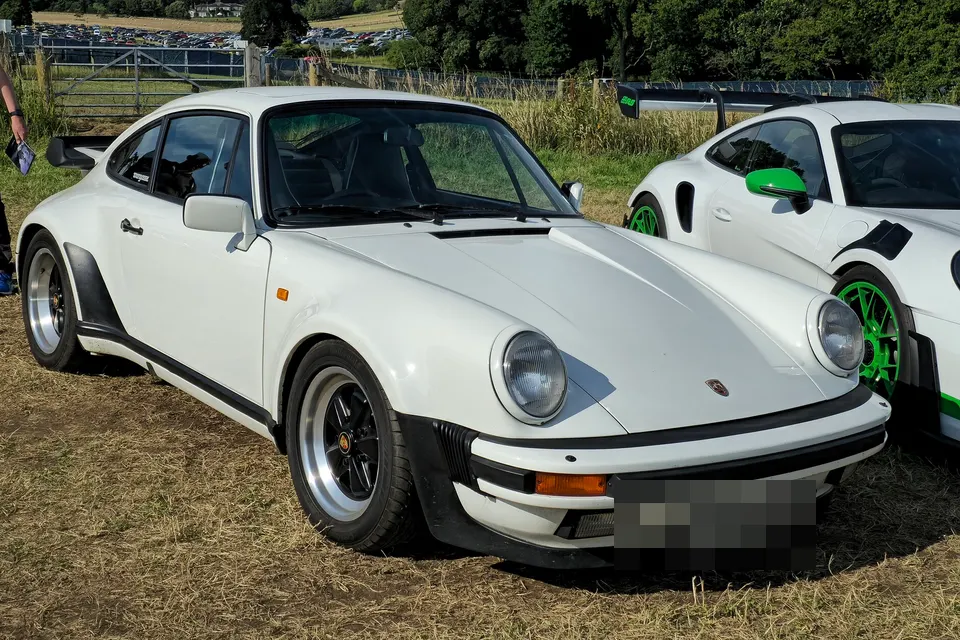
Photo: Calreyn88 · CC BY-SA 4.0 · resized and cropped · Registration identifier pixelated for privacy. 1978911 Turbo 3.3 (930)The 3.3-litre car turned the early Turbo experiment into a long-running flagship and introduced an intercooled production-car package derived from motorsport.[1]→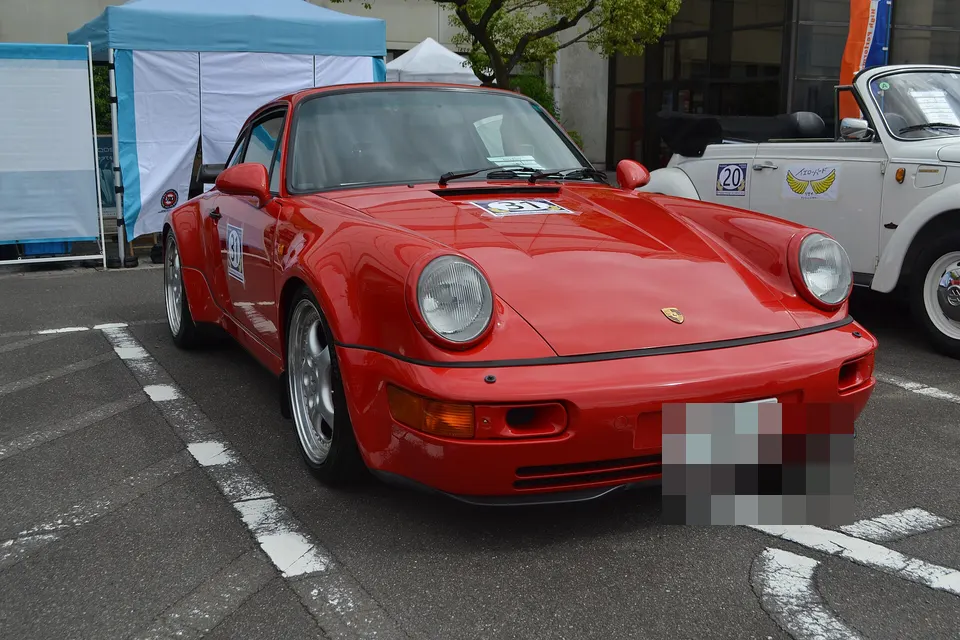
Photo: 先従隗始 · CC0 1.0 · resized and cropped · Registration identifier pixelated for privacy. 1993911 Turbo 3.6 (964)The short-lived 3.6 closed Porsche’s single-turbo, rear-wheel-drive road lineage before the 993 introduced two turbochargers and standard all-wheel drive.[1]→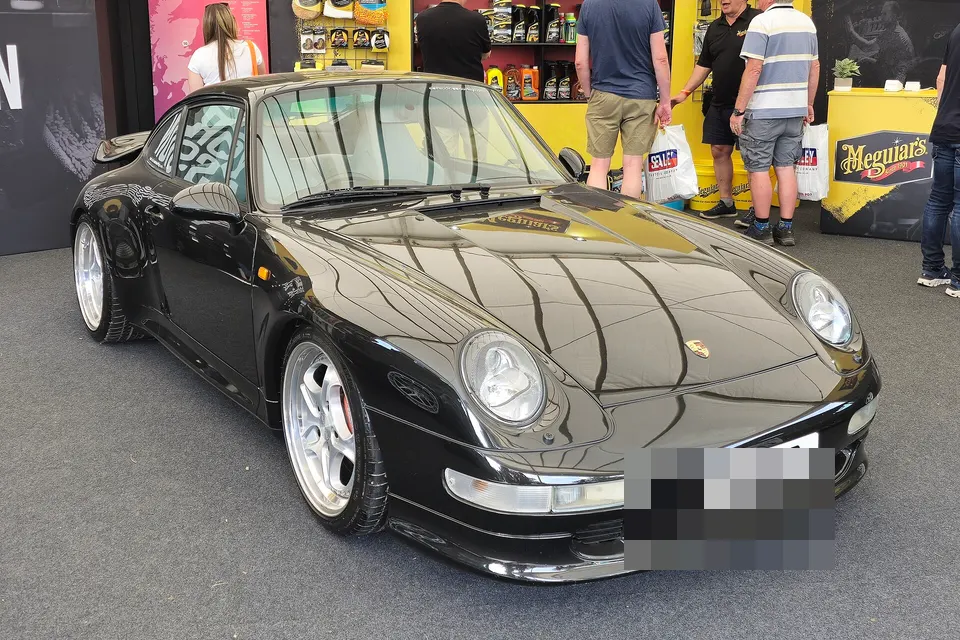
Photo: Calreyn88 · CC BY-SA 4.0 · resized and cropped · Registration identifier pixelated for privacy. 1995911 Turbo (993)The 993 Turbo joined the final air-cooled flat-six with twin turbochargers, hollow-spoke wheels, modern emissions control and standard all-wheel drive.[1]→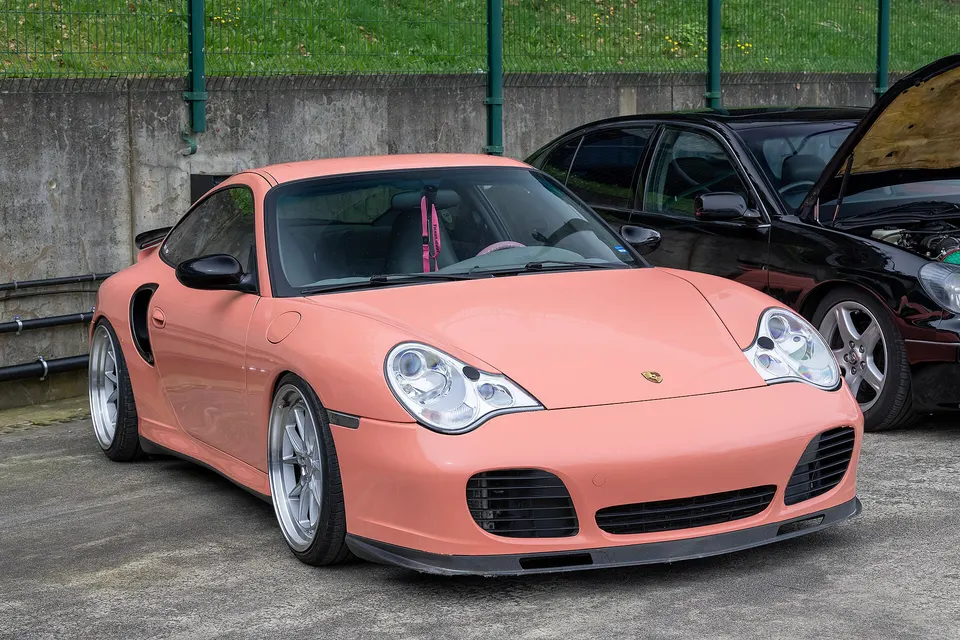
Photo: Alexandre Prevot from Nancy, France · CC BY-SA 4.0 · resized and cropped 2000911 Turbo (996)The 996 Turbo carried the flagship across Porsche’s water-cooling divide and became the first regular production 911 Turbo to exceed 300 km/h.[1]→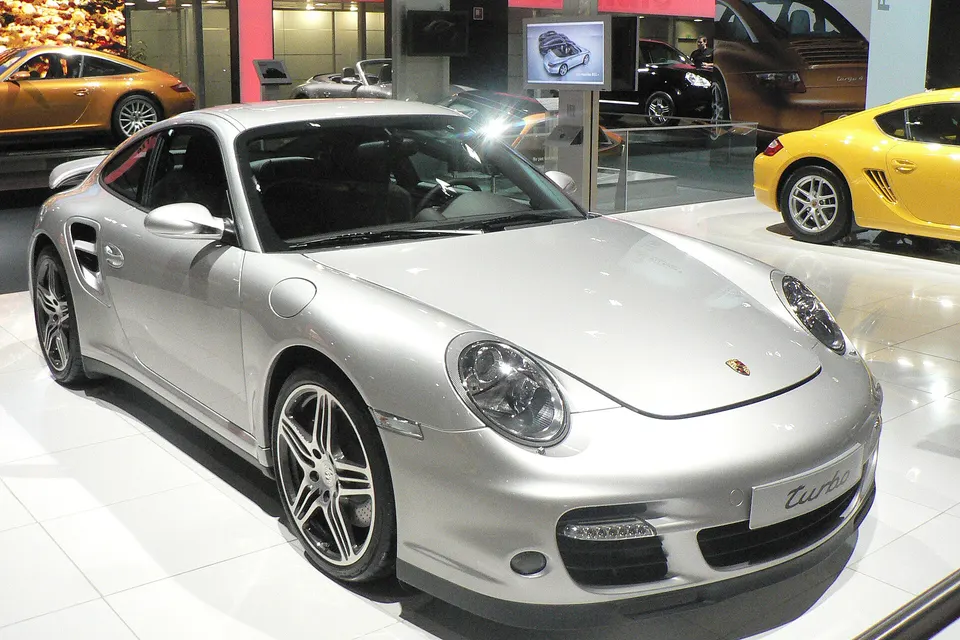
Photo: Ton1~commonswiki · CC BY-SA 3.0 · resized and cropped 2006911 Turbo (997.1)The first 997 Turbo combined familiar everyday usability with petrol-engine VTG, a manual gearbox and a marked step in torque without increasing displacement.[1]


Help us hear this car
Share a properly licensed recording of this exact model. Stock and modified cars are both welcome when their configuration is described clearly.
- Cold start
- Acceleration
- Fly-by
Authoritative films
Links pass directly to YouTube. The archive does not host, copy or embed these films.
References
- 01The 911 Turbo generationsPorsche Newsroom · accessed 20 September 2026
- 0260 years of the Porsche 911Porsche Newsroom · accessed 20 September 2026
- 03Drive: History and future of the Porsche 911Porsche Newsroom · accessed 20 September 2026
- 04Under pressure: twelve milestones in Porsche turbo technologyPorsche Newsroom · accessed 20 September 2026