4.0-litre flat-six · integrated dry sump · 8,000 rpmLongitudinal mid-engine, rear-wheel driveTopology diagram · not to scale · based on the cited primary sources
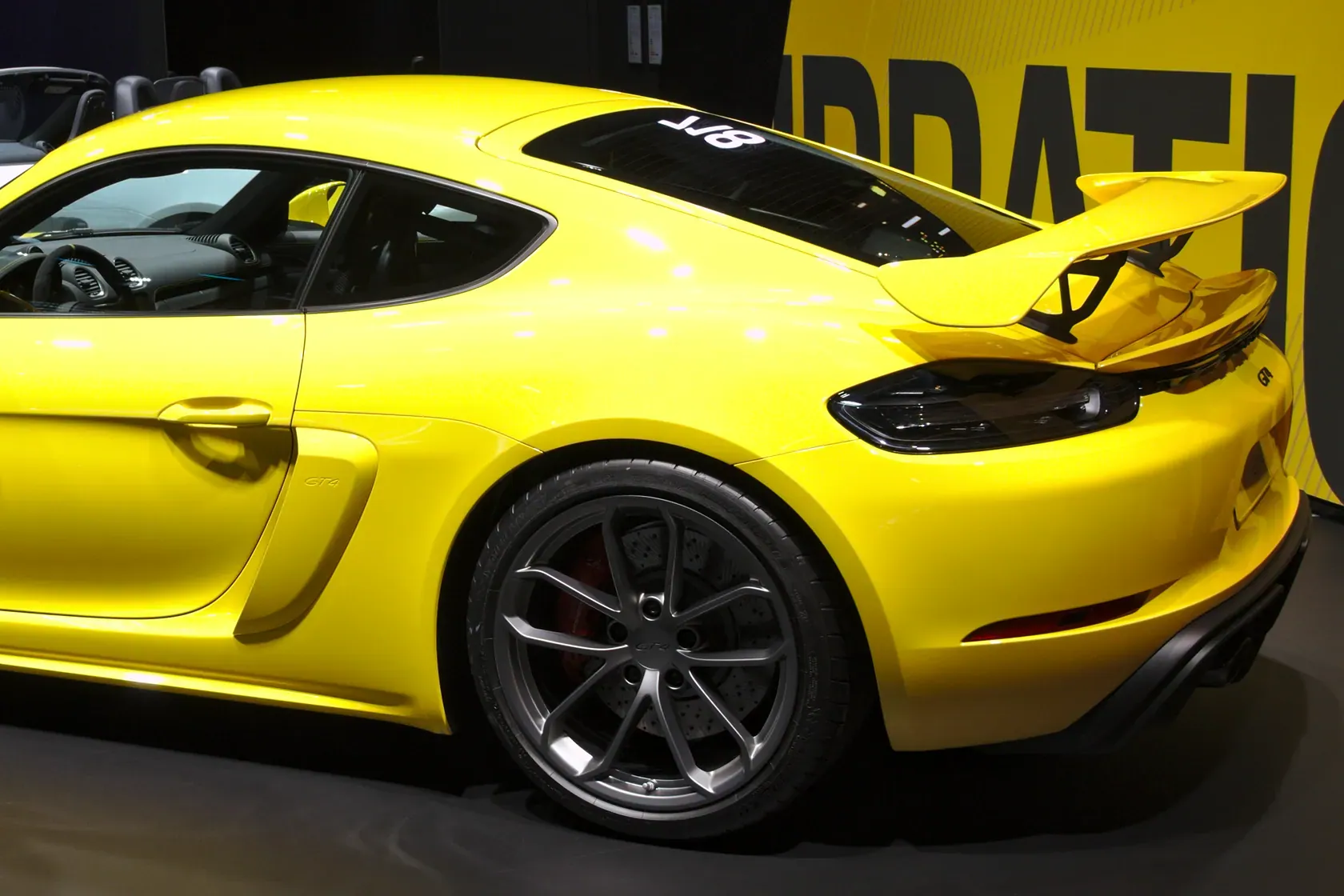
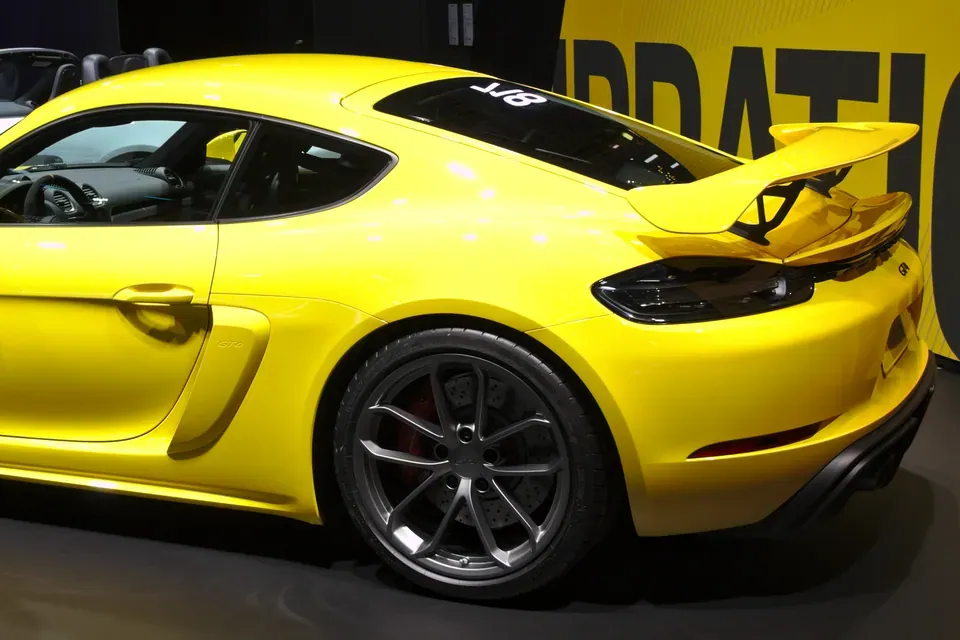
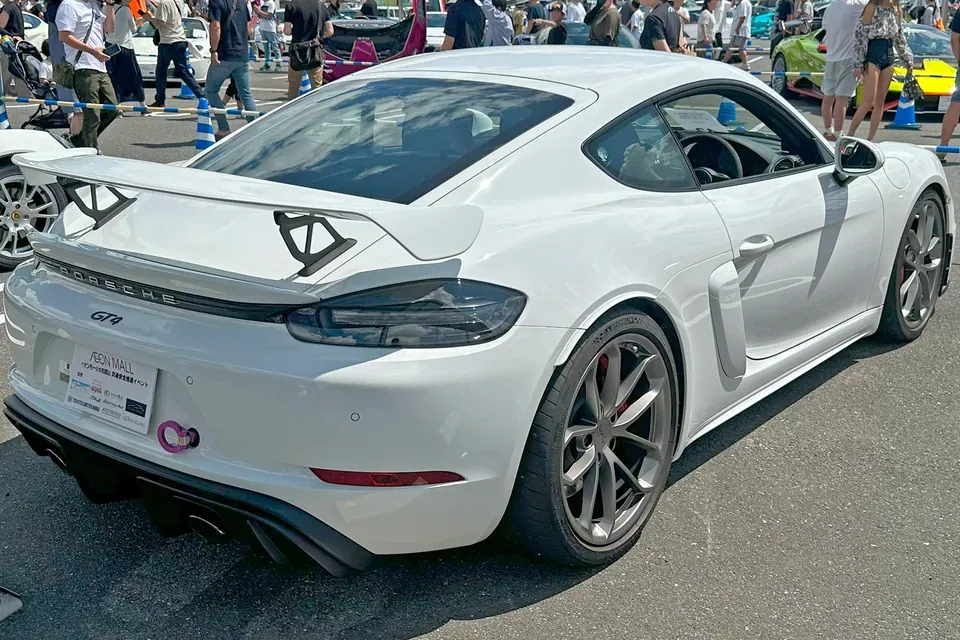
The last road-going Cayman to wear GT4 without the RS suffix: a Type 982 coupé with a 309 kW naturally aspirated 4.0-litre flat-six and six-speed manual transmission.
R / production rarity
How rare is it?
A simple 1–5 rating based on completed worldwide production for this exact version. Price and desirability are not included.
Rarity ratingNot availableNo comparable worldwide production total
Production bandNot available
Production evidenceNo exact production total
ProducedWorldwide total used for the rating
Production total unavailable
A reliable worldwide figure is not listed in the references.
How the rating works
The rating uses five fixed production bands. Smaller production runs receive higher ratings. Exact totals and responsibly sourced estimates for this precise version can be rated. Plans, regional totals, lower bounds, disputed figures and broader-family totals remain visible but unclassified. The evidence description is kept separate from the rating so a source limitation cannot change how scarcity is measured.
5/5Fewer than 25 builtUltra rare
4/525 to 249 builtVery rare
3/5250 to 2,499 builtRare
2/52,500 to 24,999 builtLimited production
1/525,000 or more builtSeries production
A / exact variant
Which 718 Cayman GT4 is this?
Type 982 · road-going 718 Cayman GT4 · six-speed manual · EU specification
Included in this passport
The 3,995 cc, 309 kW (420 PS) naturally aspirated production car
The original six-speed manual drivetrain with mechanical rear differential lock
Factory steel brakes and 20-inch wheel-and-tyre specification unless an option is named
Deliberately excluded
Seven-speed PDK cars, which have different torque, ratios and differential locking values
The 500 PS 718 Cayman GT4 RS and its GT3-derived engine
The 718 Cayman GT4 Clubsport competition car
Aftermarket exhaust, intake, calibration, suspension or aero configurations
Porsche describes the GT4’s naturally aspirated four-litre flat-six as a specially developed engine based on the same engine family as the turbocharged contemporary 911 Carrera. That distinction matters: the road-going 982 GT4 did not receive the GT3-derived engine later used by the GT4 RS.
Its character comes from an 8,000 rpm limit, a variable intake with two resonance flaps, VarioCam on both sides, adaptive cylinder control and a twin-branch sports exhaust packaged around the rear diffuser.
RedlineCodex calculation using Porsche’s published ratios, 3.89 final drive, 8,000 rpm engine limit and the nominal diameter of the factory 295/30 ZR20 rear tyre. Values are theoretical: tyre growth, slip, tolerances and aerodynamic drag are excluded. Porsche’s published maximum speed is 304 km/h.
Is the 718 Cayman GT4 engine the same as the 911 GT3 engine?
No. Porsche states that the 982 GT4’s four-litre engine is based on the same engine family as the turbocharged contemporary 911 Carrera. The later GT4 RS is the Cayman derivative associated with the GT3 engine concept.
What is the difference between the manual and PDK 718 GT4?
The manual has six ratios, 420 Nm and a 4.4-second 0–100 km/h figure. The seven-speed PDK has 430 Nm, launch control, a 3.9-second figure and higher differential locking values.
Why is the 718 Cayman GT4 gearing described as long?
The factory ratios and final drive produce a theoretical 136 km/h at the 8,000 rpm limit in second gear on the nominal rear tyre. That is a transparent calculation, not a Porsche performance claim.
Porsche reports 50 percent more total downforce than the previous GT4, with 122 kg acting on the rear axle at maximum speed. The diffuser accounts for 30 percent of rear-axle downforce.
Porsche engineered a twin-branch sports exhaust around the particulate filter and the rear diffuser; stock recordings must preserve that complete factory path.
Adaptive cylinder control can shut off injection to one cylinder bank at part load. Capture notes should therefore distinguish idle, steady cruise and full-load operation.
This passport is scoped to the launch-spec six-speed manual GT4. PDK cars and every GT4 RS or Clubsport derivative require separate records.
Six horizontally opposed cylinders
Integrated dry-sump lubrication
VarioCam on the inlet and exhaust sides
Adaptive cylinder control
Variable intake with two switchable resonance flaps
Variable intake with two switchable resonance flaps[6]
Exhaust
Twin-branch sports exhaust with gasoline particulate filter[6]
03 / context
History and character
Origins and context
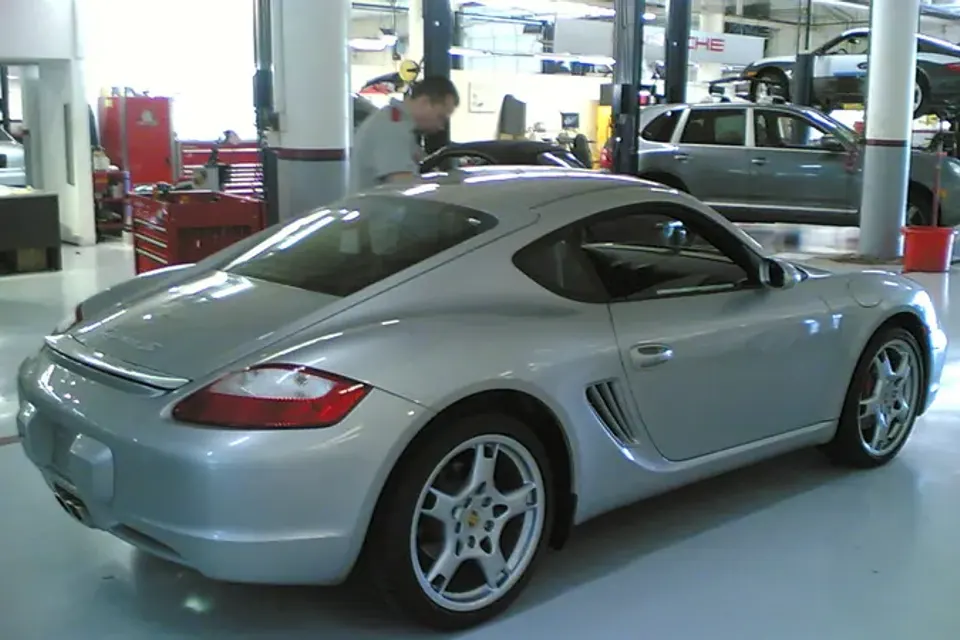
The 718 Cayman GT4 belongs to a Porsche story much older than the Cayman name. Porsche used the mid-engine layout in competition and in its first sports car before bringing the concept to series production with the 914 in 1969. The Boxster revived the format in the 1990s, and the Cayman coupé followed in 2005. In each case the engine sat ahead of the rear axle, concentrating mass near the centre of the car and giving the smaller Porsche line a character separate from the rear-engined 911.
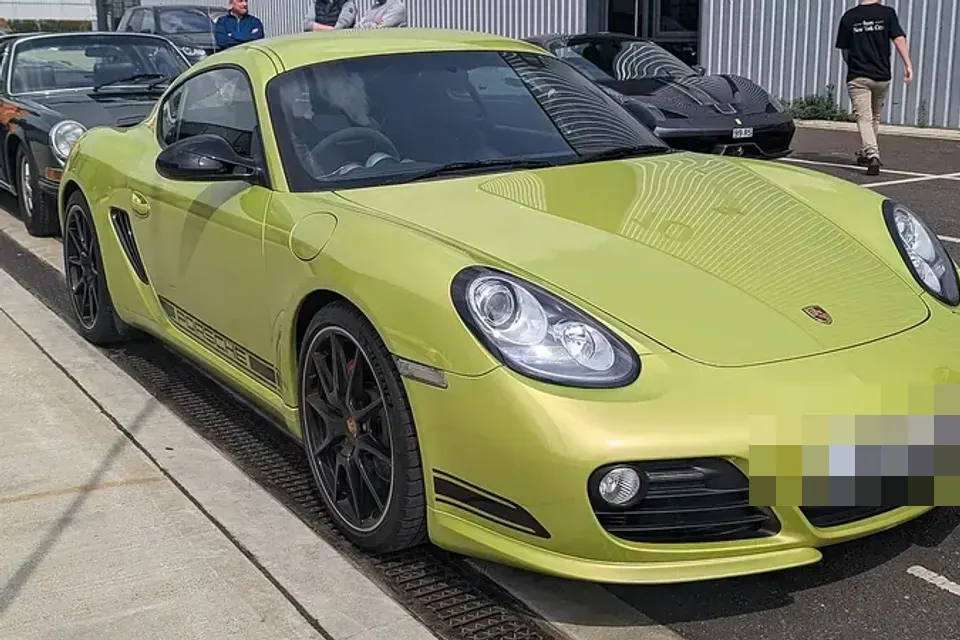
The road to the GT4 badge was gradual. The 2010 Cayman R showed how persuasive a lighter, more focused Cayman could be, but the decisive step came in 2015. The Type 981 Cayman GT4 was the first Cayman developed as a Porsche GT road car. It combined a 385 PS, 3.8-litre flat-six derived from the contemporary 911 Carrera S with a six-speed manual gearbox, a 30 mm-lower chassis using extensive 911 GT3 hardware, and an aerodynamic package that generated downforce at both axles. It made the Cayman a full member of Porsche’s Weissach-developed GT family rather than merely the quickest trim in the ordinary range.
That background made the second-generation GT4 unusually significant. By 2019, the wider 718 range had adopted turbocharged four-cylinder engines and revived a historic racing designation. The 718 Cayman GT4 moved in the opposite direction: Porsche gave it a newly developed 3,995 cc naturally aspirated flat-six, paired it with a six-speed manual transmission and presented it as the entry point to the road-going GT range. It was launched alongside the 718 Spyder, the first time the two models shared the same engine and GT chassis foundation.
Engineering and character
The engine is central to understanding the car, and also to avoiding one of the most common GT4 misconceptions. Its 9A2 evo architecture came from the same engine family as the turbocharged contemporary 911 Carrera, not from the 911 GT3. For the GT4 it became a naturally aspirated four-litre with 309 kW (420 PS), 420 Nm and an 8,000 rpm limit. It added 35 PS over the first GT4 while retaining the linear response and rising cadence that enthusiasts associate with an atmospheric Porsche flat-six. Modern measures—including a gasoline particulate filter, piezo injection and cylinder-bank deactivation at light load—place that traditional character firmly in the emissions era in which the car was created.
The chassis explains why the GT4 was more than an engine-led special. It sat 30 mm lower than a regular 718, used lightweight spring-strut axles with ball-jointed connections at selected points, and allowed toe, camber and anti-roll bars to be adjusted for circuit use. Porsche Active Suspension Management, Porsche Torque Vectoring and a mechanical rear differential lock worked around the inherent balance of the mid-engine layout. Stability control could be relaxed in two stages, but the car still retained the luggage compartments, visibility and basic usability of a Cayman road car. That combination—serious adjustment and feedback without abandoning the shape’s everyday virtues—is fundamental to the GT4’s identity.
Its visual drama was functional. Repackaging the exhaust into a single-chamber rear silencer created the space needed for a working diffuser, while the fixed rear wing and GT-style front treatment kept the aerodynamic balance intact. Porsche reported up to 50 percent more total downforce than the preceding GT4 without a meaningful increase in drag; the diffuser alone produced around 30 percent of the rear-axle downforce. The result is an unusually clear example of systems influencing one another: exhaust packaging made the diffuser possible, and the diffuser helped the road-going coupé sustain genuine circuit performance.
Legacy and identity
The six-speed manual shapes the way the original 982 GT4 delivers that performance. Its ratios are long enough for second gear to reach a calculated 136 km/h at the 8,000 rpm limit on the nominal factory rear tyre. That can reduce the number of shifts demanded on the road, but it also means the driver must choose when and where to reach the upper part of the rev range. Porsche later added a seven-speed PDK version with more torque and quicker acceleration, creating a distinct alternative rather than erasing the manual car’s appeal. The focus remains on the launch-specification manual as its own configuration, not as shorthand for every GT4 sold.
The later 718 Cayman GT4 RS pushed the platform into different territory with 500 PS, PDK, more radical aerodynamics and an engine concept associated with the contemporary 911 GT3. That car may be faster and more extreme, but it does not make the non-RS GT4 a preliminary version of the same idea. The 420 PS manual occupies a particular point in Porsche history: a compact mid-engine coupé, developed by the GT department, with a naturally aspirated six-cylinder engine, three pedals and enough road-car civility to be used beyond a circuit. Its importance lies in that balance rather than in any single headline number.
01
Non-RS, by design
This is the 420 PS GT4 with the 9A2 evo engine—not the later 500 PS GT4 RS and not a race-only Clubsport.
02
Manual gearbox
The performance and drivetrain data here describe Porsche’s original six-speed manual EU specification.
03
Sound-shaped aero
Packaging the single-chamber rear silencer created room for the rear diffuser, linking the exhaust architecture directly to the aero concept.