Porsche · RS road car · 2015–2016

911 GT3 RS

Recorded designation · Type 991.1
Recorded designation
Type 991.1
Engine / drive unit
MA1.76
Archive no.
114
Sources updated
11 September 2026
Community archive

Help build this passport

Have a recording, source, correction, photo or missing detail for this exact car? Prepare a contribution with the Car ID already selected.

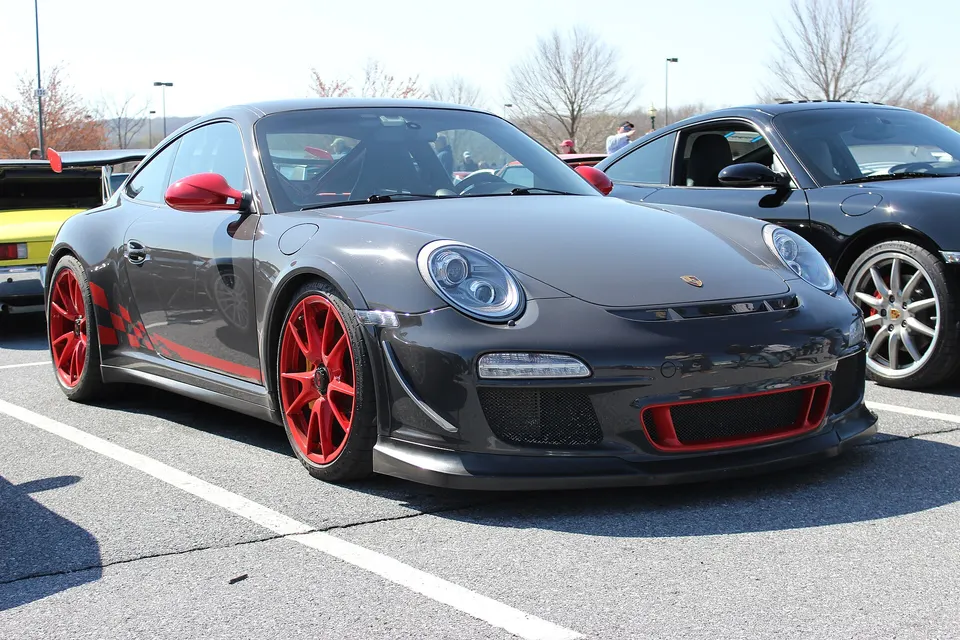
Porsche 911 GT3 RS Type 991.1, front three-quarter view
Documentary photographPhoto: Mathious Ier · CC0 1.0 · resized and cropped
Engine redprint / verifiedMA1.76
4.0 L flat-six · naturally aspirated · MA1.76180° horizontally opposed banksbank 1 · 3 cylindersbank 2 · 3 cylinders
4.0 L flat-six · naturally aspirated · MA1.76Longitudinal rear-engine, rear-wheel driveTopology diagram · not to scale · based on the cited primary sources

A four-litre, PDK-only RS in the Turbo-width 991 body, with roof and bonnet made from lightweight materials.

R / production rarity

How rare is it?

A simple 1–5 rating based on completed worldwide production for this exact version. Price and desirability are not included.

Rarity ratingNot availableNo comparable worldwide production total
Production bandNot available
Production evidenceNo exact production total
ProducedWorldwide total used for the rating
Production total unavailable

A reliable worldwide figure is not listed in the references.

How the rating works

The rating uses five fixed production bands. Smaller production runs receive higher ratings. Exact totals and responsibly sourced estimates for this precise version can be rated. Plans, regional totals, lower bounds, disputed figures and broader-family totals remain visible but unclassified. The evidence description is kept separate from the rating so a source limitation cannot change how scarcity is measured.

  1. 5/5Fewer than 25 builtUltra rare
  2. 4/525 to 249 builtVery rare
  3. 3/5250 to 2,499 builtRare
  4. 2/52,500 to 24,999 builtLimited production
  5. 1/525,000 or more builtSeries production
01 / specifications

At a glance

Model code
Type 991.1[2]
Engine
3,996 cc flat-six[2]
Output
368 kW / 500 PS[2]
Torque
460 Nm[2]
Transmission
7-speed PDK[2]
Production period
2015–2016[2]
02 / architecture

What creates the sound

The descriptors are editorial listening notes for the unmodified factory intake and exhaust system.

Open-licence recordings may be published as Unregistered when intake, exhaust or calibration details remain unknown.

  1. Horizontally opposed six-cylinder architecture
  2. Naturally aspirated factory induction
  3. Direct-injected four-litre flat-six with dry-sump lubrication and a 8,800 rpm maximum engine speed.
Engine designation
MA1.76[2]
Configuration
Direct-injected four-litre flat-six with dry-sump lubrication and a 8,800 rpm maximum engine speed.[2]
Displacement
3,996 cc[2]
Rated output
368 kW / 500 PS[2]
Peak torque
460 Nm[2]
Installation
Rear-engine, rear-wheel drive[2]
03 / context

History and character

Origins and context

Porsche unveiled the 991.1 GT3 RS in 2015 as the first RS built around the new-generation PDK and rear-steering architecture. The standard 991.1 GT3 had already broken with manual, Mezger-powered tradition; the RS pushed that modern direction much further through a four-litre engine, Turbo-width body, aggressive airflow management and conspicuous lightweight materials. It preserved the naturally aspirated response expected of an RS while accepting that electronic control and aerodynamic efficiency had become central to extracting circuit performance.

Its MA1.76 flat-six displaced 3,996 cc and produced 368 kW (500 PS) with 460 Nm. The direct-injected, dry-sump engine could reach 8,800 rpm and worked exclusively with a seven-speed PDK. Although its 500 PS matched the earlier 997 RS 4.0, the resemblance ends at displacement and output. The 991 engine belongs to a different architecture, and the dual-clutch transmission, rear steering and electronic differential control create a fundamentally different chain between combustion, tyres and driver.

Porsche combined the powertrain with the wide body of the 911 Turbo. The luggage-compartment lid and engine cover used carbon fibre, while the roof was magnesium. A pronounced central roof recess continued into the bonnet, and louvres in the front wings relieved wheel-arch pressure. These were functional decisions with visible consequences: reducing mass high in the body and managing air around the front axle helped a larger 911 respond with the precision expected of an RS.

Engineering and character

The chassis used recalibrated rear-axle steering and Porsche Torque Vectoring Plus with a fully variable rear differential lock. Carbon full-bucket seats, lightweight door trim and reduced insulation continued the RS cabin language. Options and regional equipment still affect actual mass and configuration, so a generic “lightweight” label is insufficient. A passport for an individual car should state seats, cage or Clubsport equipment, brakes and other weight-sensitive options instead of quoting the lightest catalogue figure indiscriminately.

Its soundtrack combines a deeper four-litre pulse with the rapid interruptions and blipped downshifts of PDK. Induction and valvetrain harden toward the 8,800 rpm ceiling, while less insulation admits tyre and transmission noise into the cabin. Modern valve-controlled exhaust modes make operating state essential metadata. A source-quality capture records mode, temperature, microphone position and original intake and catalyst hardware, separating factory character from the many aftermarket systems fitted to circuit-driven examples.

In the RS chronology, the 991.1 is the car that made the aero-led, dual-clutch format permanent. The 997 RS 4.0 before it represented the manual Mezger finale; the 991.2 RS after it raised output to 520 PS, the ceiling to 9,000 rpm and offered the Weissach Package. The first 991 RS should not borrow those later figures. Its historical importance lies in establishing the new platform and control philosophy, not in being an incomplete version of the facelift.

Legacy and identity

The focus here is the 2015–2016 Type 991.1 GT3 RS with MA1.76 power and seven-speed PDK. It excludes the standard 3.8-litre GT3, the later 520 PS RS and visually modified Carrera or Turbo models. Keeping the engine architecture, magnesium roof, carbon panels and PDK-only boundary explicit makes the story useful at two levels: an accessible account of a generational transformation and a sufficiently exact reference for evaluating specification, provenance and the authenticity of surviving cars.

01

Engineering context

Direct-injected four-litre flat-six with dry-sump lubrication and a 8,800 rpm maximum engine speed.

04 / family tree

Model lineage

1972–2024 · 19 documented milestones

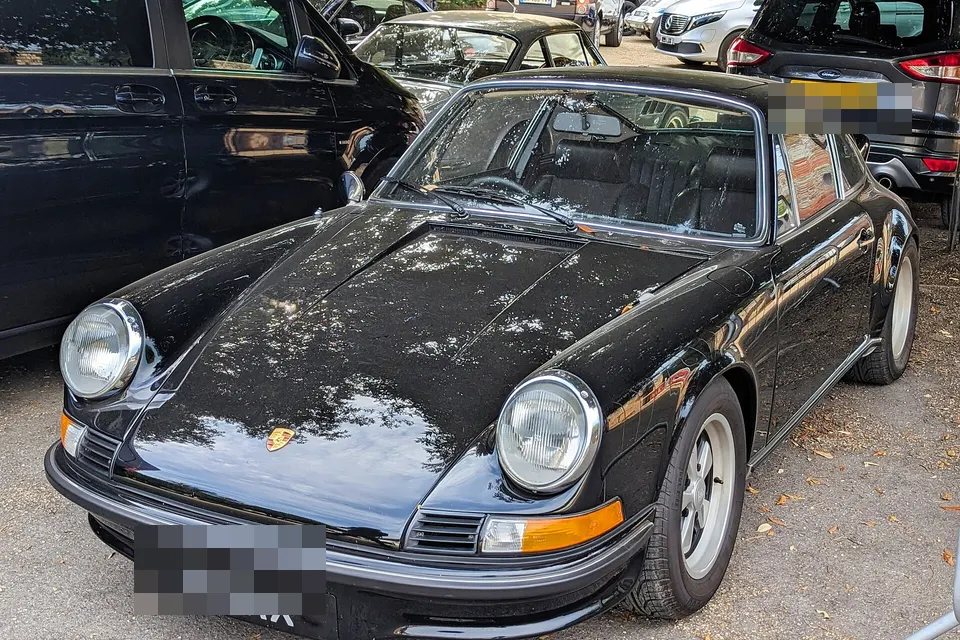
  1. Black Porsche 911 Carrera RS 2.7, front three-quarter view
    Photo: Calreyn88 · CC BY 4.0 · resized and cropped · Registration identifiers pixelated for privacy.

    1972911 Carrera RS 2.7Road-going RS origin of the later GT3 and GT3 RS ethos[2][3]
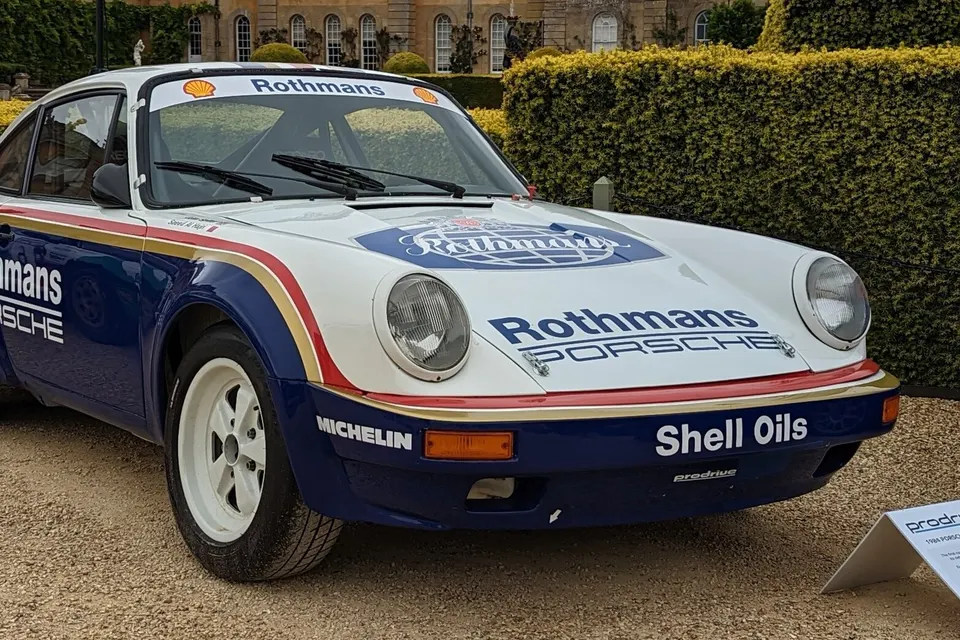
  2. White Porsche 911 SC RS, front three-quarter view
    Photo: Calreyn88 · CC BY-SA 4.0 · resized and cropped
    1984911 SC RS (G model)Rally-homologation continuation of the 911 RS line[2]
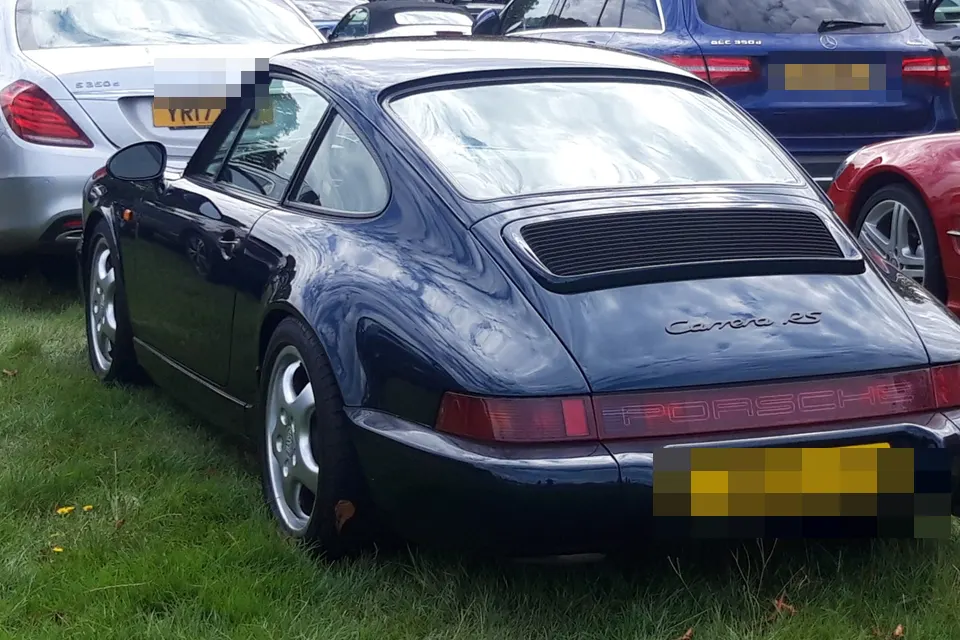
  3. Porsche 911 Carrera RS Type 964, rear three-quarter view
    Photo: MrWalkr · CC BY-SA 4.0 · resized and cropped · Registration identifiers pixelated for privacy.
    1991911 Carrera RS 3.6 (964)Carrera Cup technology returned the RS badge to production[2]
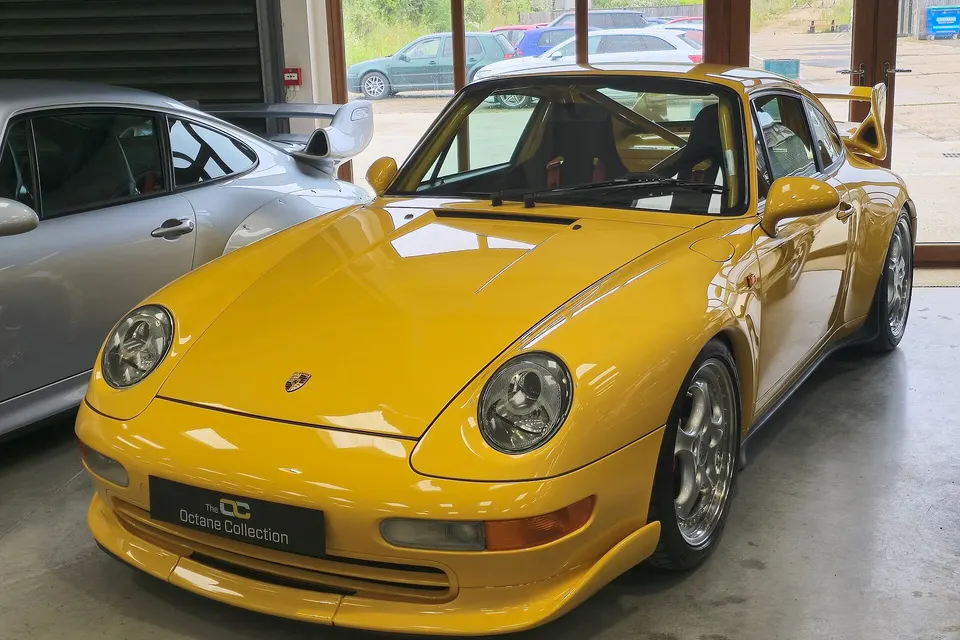
  4. Porsche 911 Carrera RS Type 993, front three-quarter view
    Photo: Calreyn88 · CC BY-SA 4.0 · resized and cropped
    1995911 Carrera RS (993)Final air-cooled RS generation before the GT3 era[2]
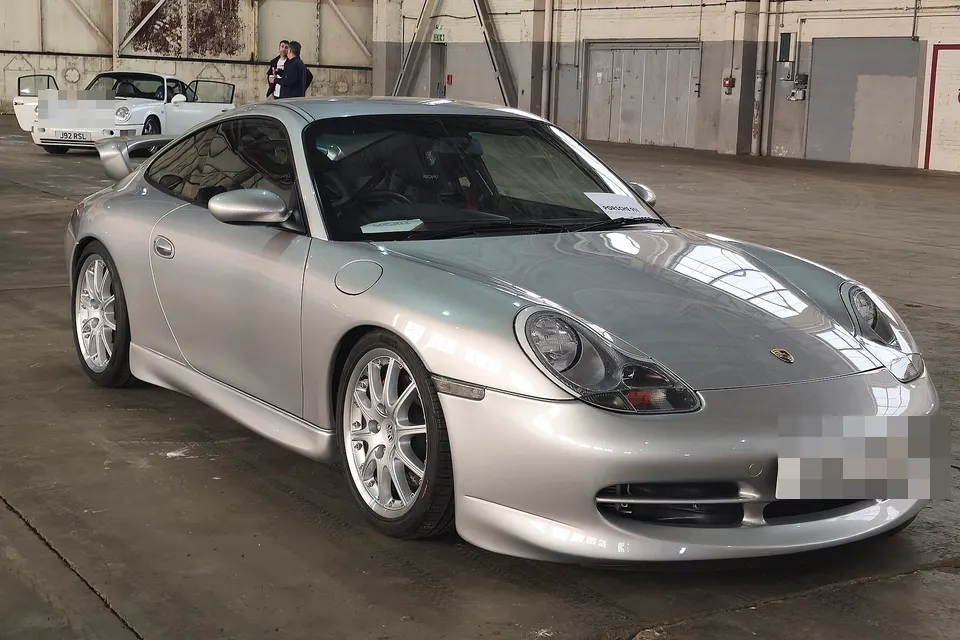
  5. Porsche 911 GT3 Type 996.1, front three-quarter view
    Photo: Calreyn88 · CC BY-SA 4.0 · resized and cropped · Registration identifiers pixelated for privacy.
    1999911 GT3 (996.1)First production 911 to carry the GT3 name[3]
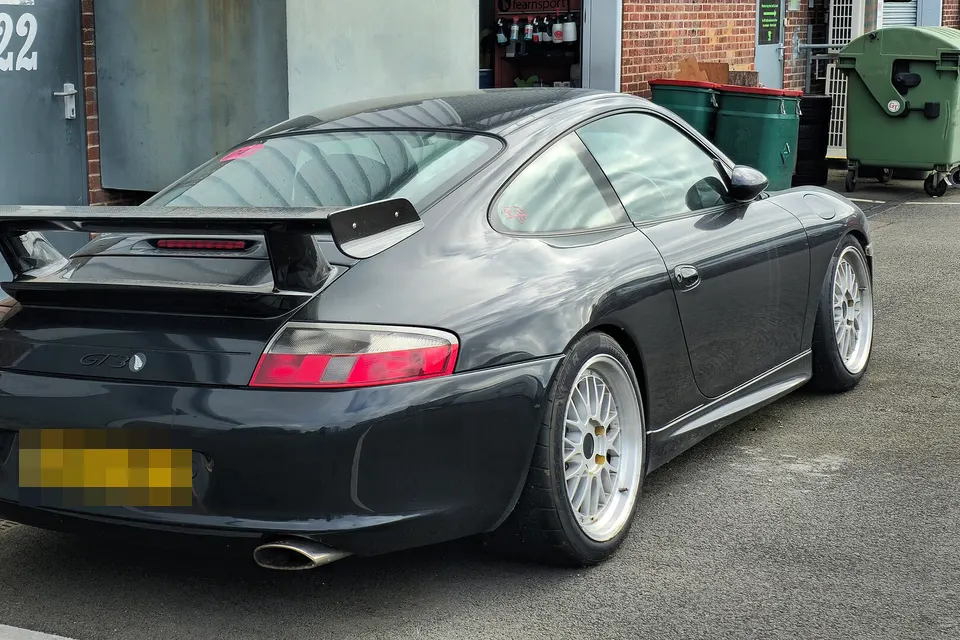
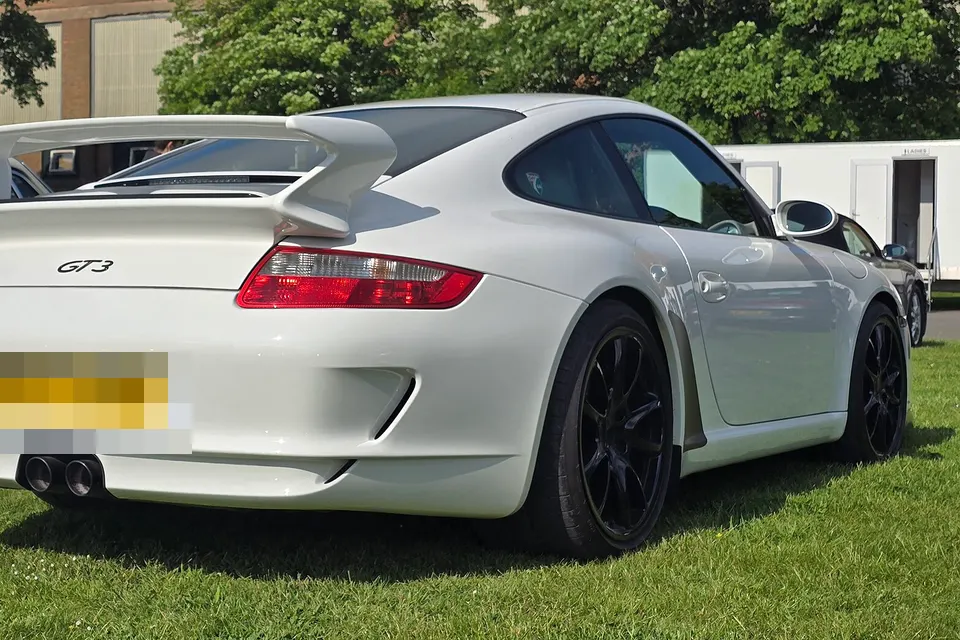
  6. Porsche 911 GT3 Type 996.2, rear three-quarter view
    Photo: Calreyn88 · CC BY-SA 4.0 · resized and cropped · Registration identifier pixelated for privacy.
    2003911 GT3 (996.2)First GT3 model update, with 381 PS and optional PCCB[3]
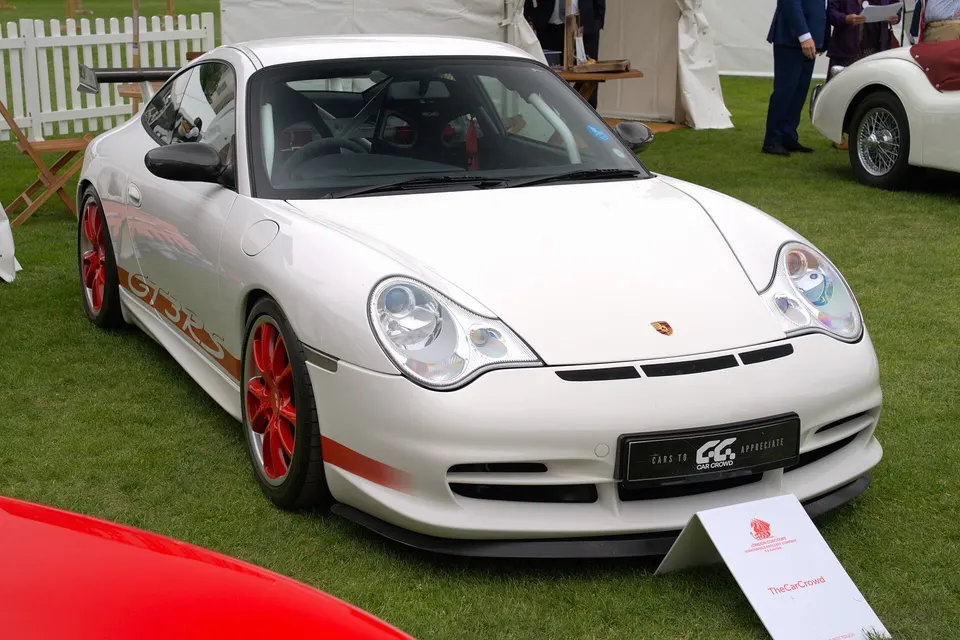
  7. White Porsche 911 GT3 RS Type 996.2 with red script
    Photo: MrWalkr · CC BY-SA 4.0 · resized and cropped
    2003911 GT3 RS (996.2)First GT3 RS; the sharper RS branch begins[2]
  8. Porsche 911 GT3 Type 997.1, side view
    Photo: Calreyn88 · CC BY-SA 4.0 · resized and cropped · Registration identifier pixelated for privacy.
    2006911 GT3 (997.1)New 997 generation introduced PASM to the GT3[3]
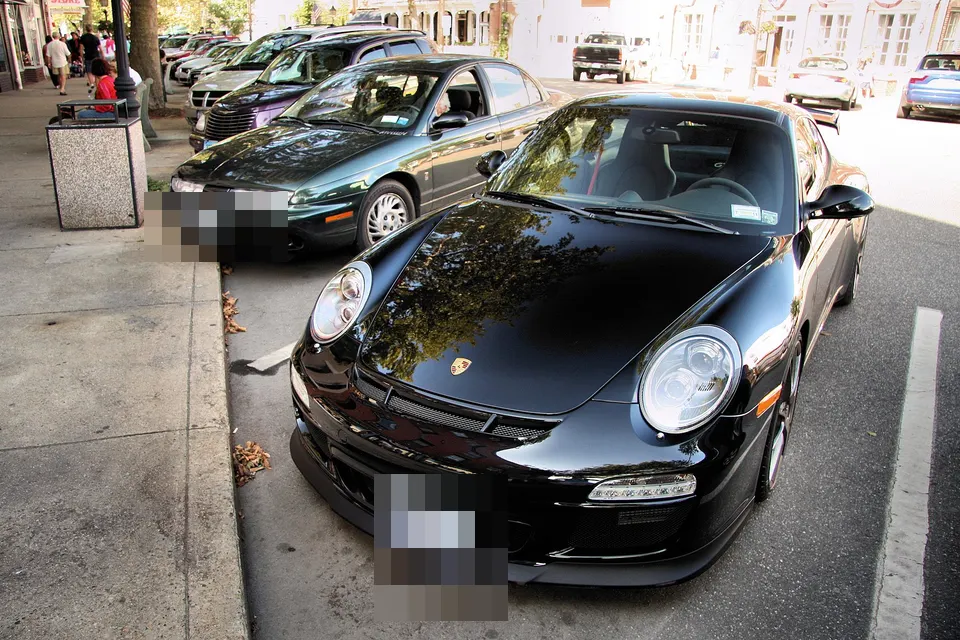
  9. Porsche 911 GT3 RS Type 997.1, front three-quarter view
    Photo: Calreyn88 · CC BY-SA 4.0 · resized and cropped · Registration identifier pixelated for privacy.
    2006911 GT3 RS (997.1)First wide-body 997 RS and first GT3 RS sold in the US[2]
  10. Porsche 911 GT3 Type 997.2, front three-quarter view
    Photo: Damian Morys · CC BY 2.0 · resized and cropped · Registration identifiers pixelated for privacy.
    2009911 GT3 (997.2)Displacement grew to 3.8 litres and output to 435 PS[3]
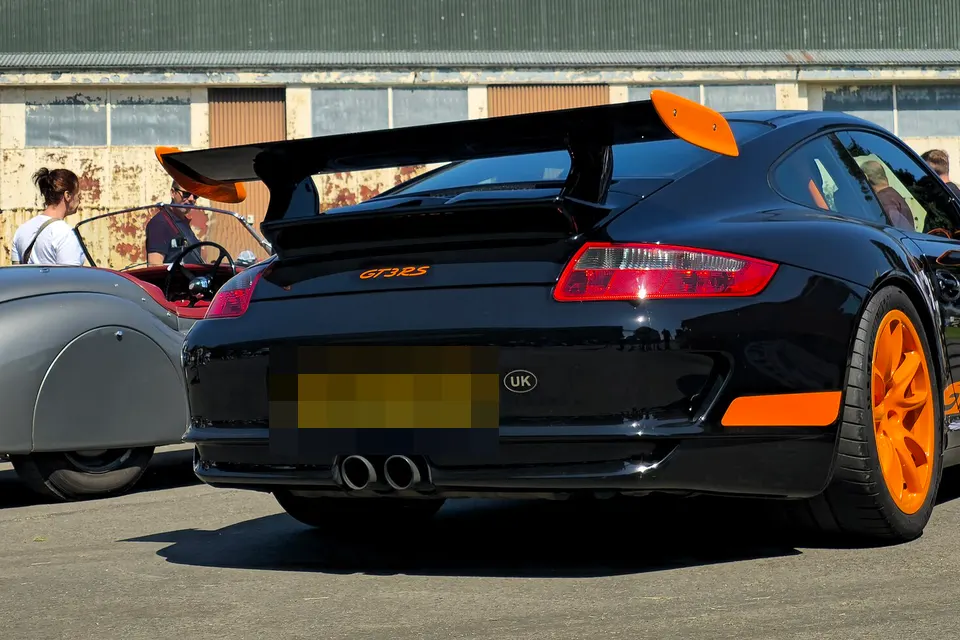
  11. Porsche 911 GT3 RS Type 997.2, rear three-quarter view
    Photo: ilikewaffles11 · CC BY 2.0 · resized and cropped
    2009911 GT3 RS (997.2)First GT3 RS to out-power its contemporary GT3[2]
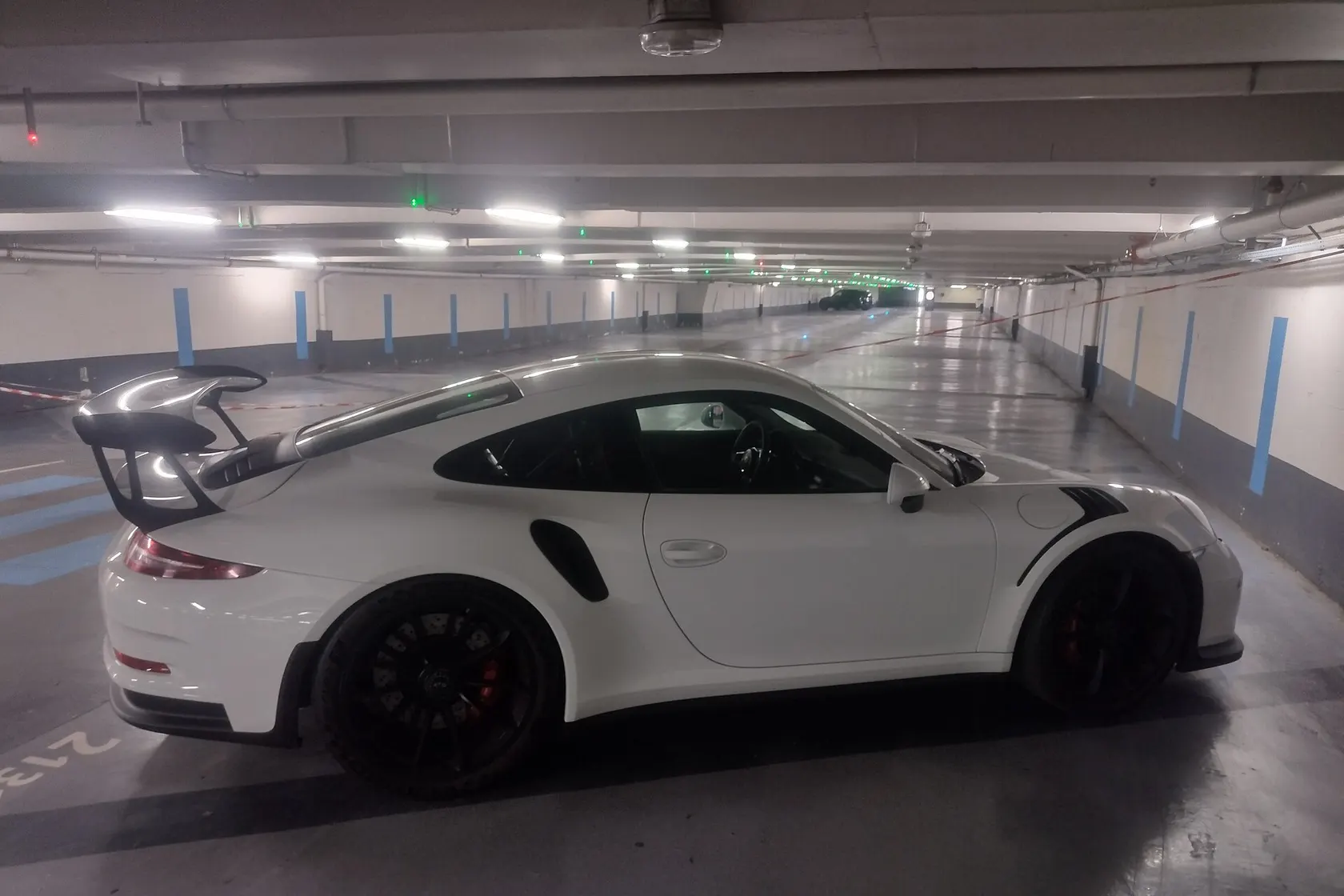
  12. White Porsche 911 GT3 RS 4.0 Type 997.2, side view
    Photo: Calreyn88 · CC BY-SA 4.0 · resized and cropped
    2011911 GT3 RS 4.0 (997.2)Limited 4.0-litre culmination of the 997 RS line[2]
  13. Porsche 911 GT3 Type 991.1, front three-quarter view
    Photo: Calreyn88 · CC BY-SA 4.0 · resized and cropped · Registration identifier pixelated for privacy.
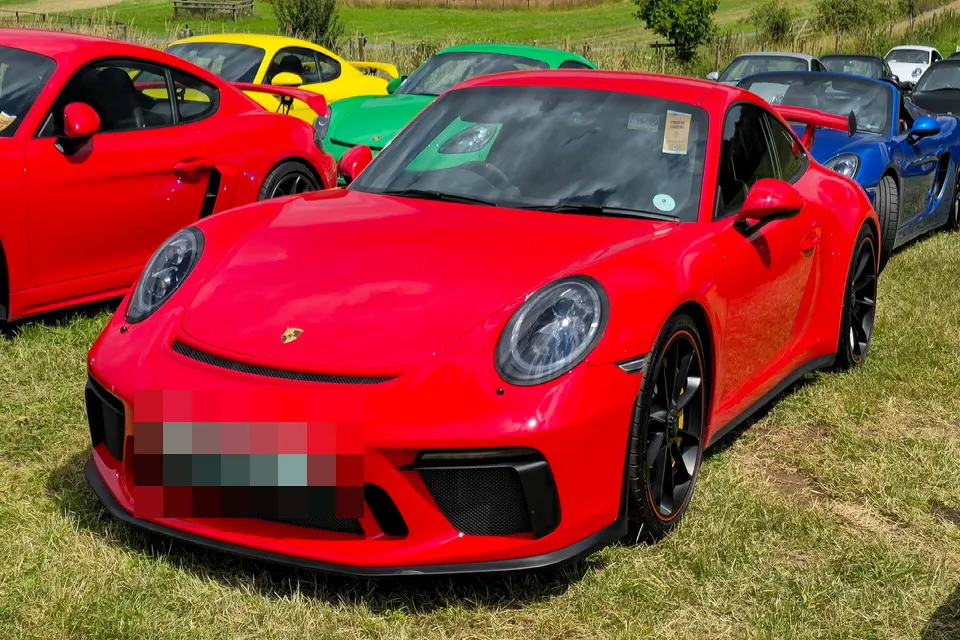
    2013911 GT3 (991.1)First GT3 with PDK and rear-axle steering[3]
  14. Porsche 911 GT3 RS Type 991.1, front three-quarter view
    Photo: Mathious Ier · CC0 1.0 · resized and cropped
    2015911 GT3 RS (991.1)The RS branch adopted PDK and the Turbo-width body[2]
  15. Porsche 911 GT3 Type 991.2, front three-quarter view
    Photo: Calreyn88 · CC BY-SA 4.0 · resized and cropped · Registration identifier pixelated for privacy.
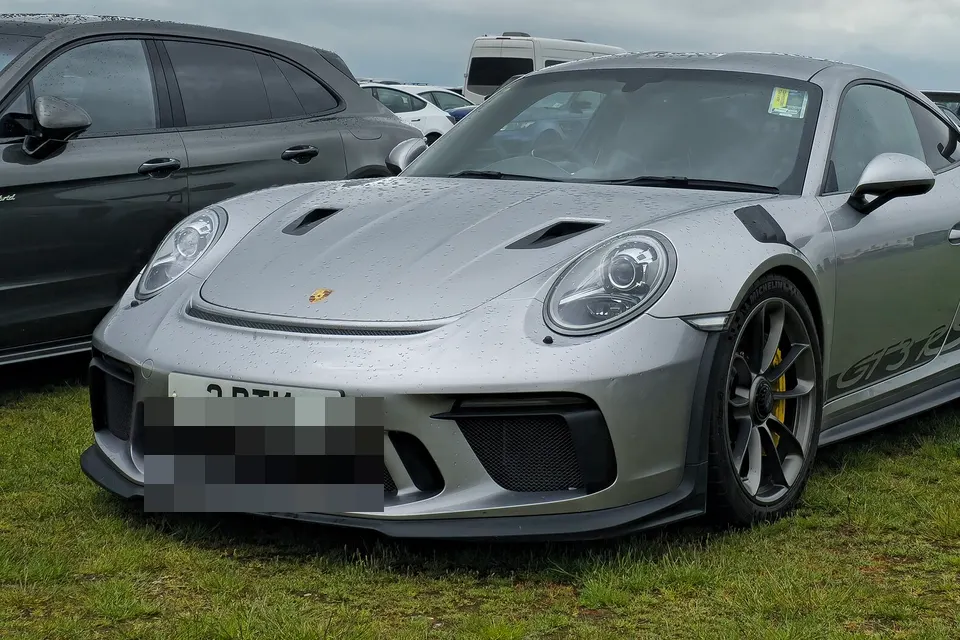
    2017911 GT3 (991.2)Four-litre engine, manual return and first Touring Package[3]
  16. Porsche 911 GT3 RS Type 991.2, side view
    Photo: Calreyn88 · CC BY-SA 4.0 · resized and cropped · Registration identifier pixelated for privacy.
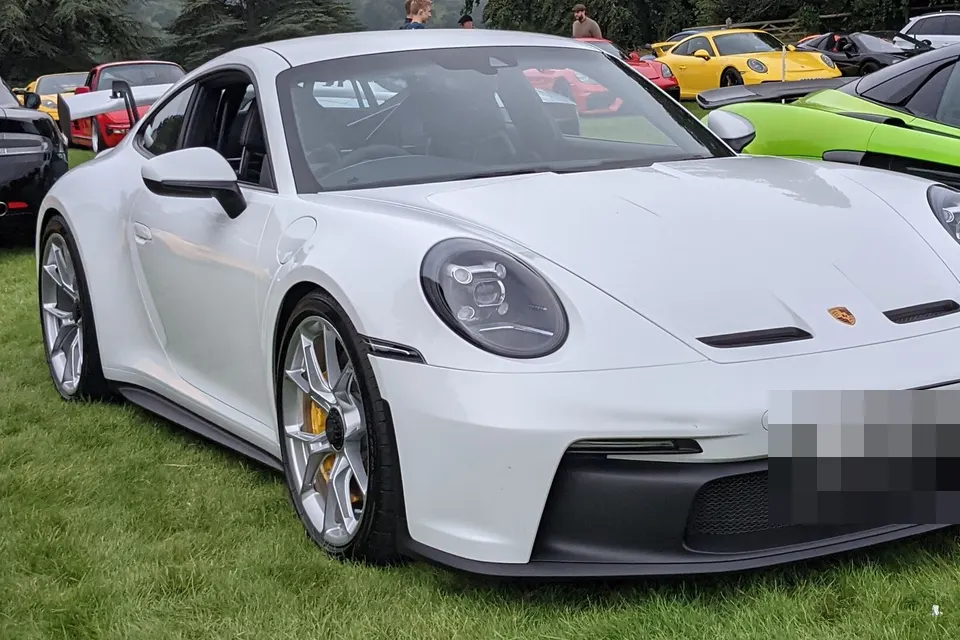
    2018911 GT3 RS (991.2)Second 991 RS iteration introduced the Weissach Package[2]
  17. Porsche 911 GT3 Type 992.1, front three-quarter view
    Photo: Calreyn88 · CC BY-SA 4.0 · resized and cropped · Registration identifier pixelated for privacy.
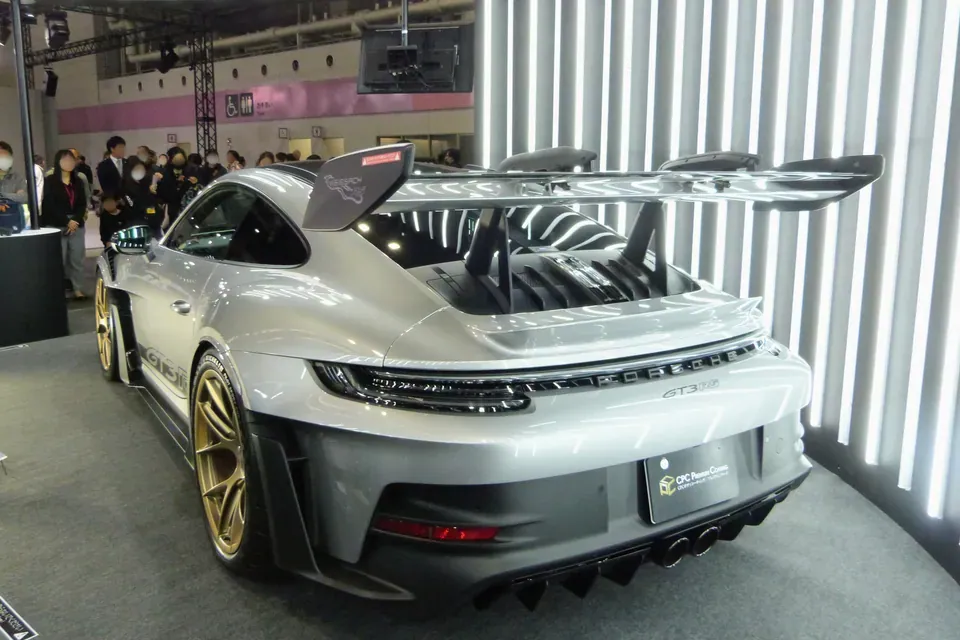
    2021911 GT3 (992.1)Double-wishbone front suspension reaches the road GT3[3]
  18. Grey Porsche 911 GT3 RS Type 992.1 photographed from the rear three-quarter angle at Japan Mobility Show Kansai 2025
    Photo: Aos.1905 · CC BY-SA 4.0 · resized and cropped
    2022911 GT3 RS (992.1)Current active-aero RS branch[4]
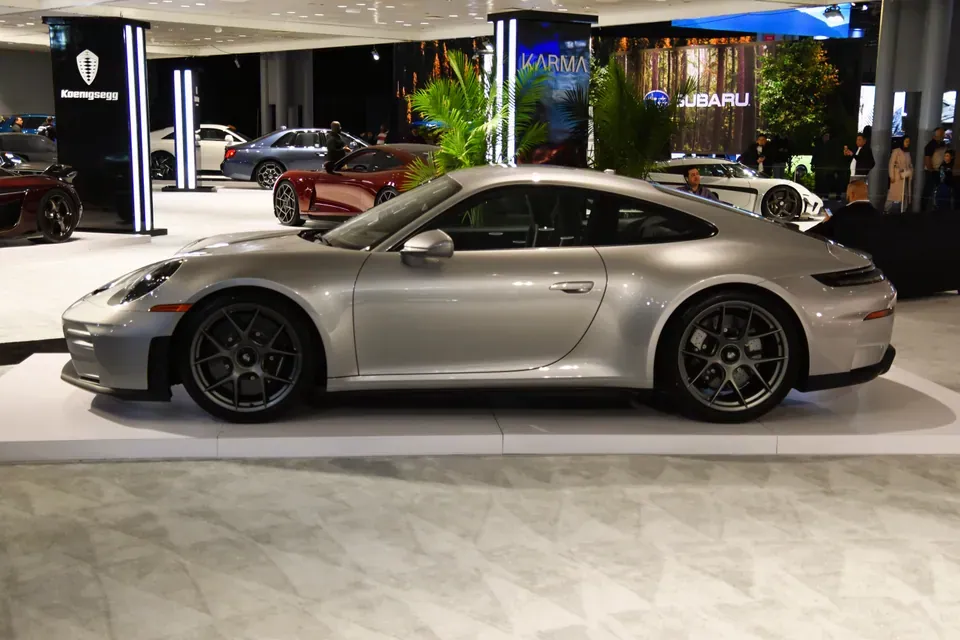
  19. Silver Porsche 911 GT3 with Touring Package Type 992.2 photographed in profile at the 2026 New York International Auto Show
    Photo: Charles from Port Chester, New York · CC0 1.0 · resized and cropped
    2024911 GT3 (992.2)Latest GT3 generation, offered winged or with Touring Package[5]
06 / contribute sound

Help us hear this car

Share a properly licensed recording of this exact model. Stock and modified cars are both welcome when their configuration is described clearly.

  • Cold start
  • Acceleration
  • Fly-by
Contribute a recording
07 / further viewing

Authoritative films

Links pass directly to YouTube. The archive does not host, copy or embed these films.

08 / further reading

References

  1. 01Ganz nah am Rennsport: der neue Porsche 911 GT3 RSPorsche Newsroom · accessed 14 September 2026
  2. 02Fifty years of RS and five iconic predecessors of the 911 GT3 RSPorsche AG · accessed 11 September 2026
  3. 03Twenty-five years of the Porsche 911 GT3Porsche Newsroom · accessed 11 September 2026
  4. 04Purpose-built for performance: the new Porsche 911 GT3 RSPorsche Newsroom · accessed 11 September 2026
  5. 05Double Premiere: the new 911 GT3 and 911 GT3 with Touring packagePorsche Newsroom · accessed 11 September 2026