The rating uses five fixed production bands. Smaller production runs receive higher ratings. Exact totals and responsibly sourced estimates for this precise version can be rated. Plans, regional totals, lower bounds, disputed figures and broader-family totals remain visible but unclassified. The evidence description is kept separate from the rating so a source limitation cannot change how scarcity is measured.
5/5Fewer than 25 builtUltra rare
4/525 to 249 builtVery rare
3/5250 to 2,499 builtRare
2/52,500 to 24,999 builtLimited production
1/525,000 or more builtSeries production
Additional context
Other useful counts
Useful allocation, delivery or registry figures that do not alter the production-based rating.
Regional allocation644Approximate US new-car sales
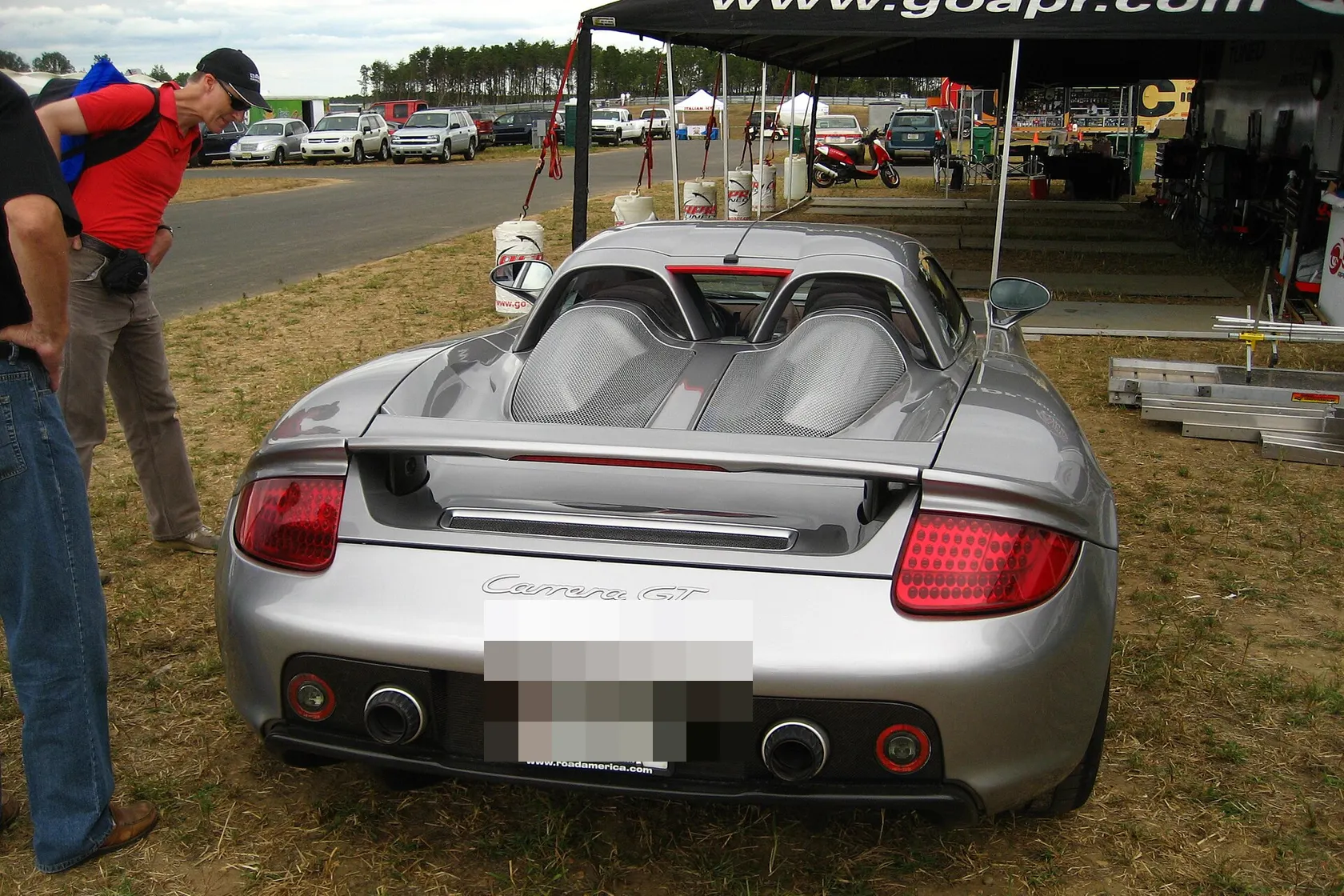
The Carrera GT began with an engine intended for Porsche’s cancelled LMP 2000 racing programme. When that prototype project ended, the company redirected the naturally aspirated V10 toward a road car and previewed the idea with the Carrera GT concept in Paris in 2000. Series production followed in Leipzig from 2003. This origin is unusually direct: the car was not styled first and given a dramatic engine afterward; its proportions, structure and controls were organised around a compact, high-revving racing-derived power unit.
The M80/01 V10 uses a 68-degree bank angle, displaces 5,733 cc and produces 450 kW (612 PS) at 8,000 rpm with 590 Nm at 5,750 rpm. Dry-sump lubrication supports a low installation and sustained cornering loads, while one throttle butterfly per cylinder gives the intake immediate authority over the engine’s voice and response. A six-speed manual is the only transmission. There is no automated alternative in the production model, making clutch and shift technique inseparable from its performance identity.
A carbon-fibre monocoque and separate carbon engine carrier formed the structural core. Porsche paired them with a compact two-plate Porsche Ceramic Composite Clutch whose small diameter allowed the crankshaft and centre of gravity to sit low. The suspension used pushrods and inboard spring-damper units, while ceramic composite brakes were standard. Porsche quoted 1,380 kg DIN, 0–100 km/h in 3.9 seconds and 330 km/h, but the lasting engineering story is the concentration of racing solutions into a road-legal, open-roof package.
Engineering and character
The laminated beech gear knob references the wooden shift levers of historic Porsche racing cars, but the control is functional rather than nostalgic decoration. The ceramic clutch has low rotating inertia and a distinctive engagement technique; the unassisted sensations and absence of modern stability-management intervention demand informed operation. Tyre specification is especially important to condition and driving behaviour. A premium chassis record needs tyre age and type, clutch status, service campaigns and documented setup rather than relying on odometer reading alone.
Acoustically, ten individual throttles create a dense induction layer that climbs toward a metallic upper register, while the lightweight stainless exhaust takes a short path from the mid-mounted engine. Gear whine, clutch events and the open roof alter the balance heard by occupants. Aftermarket exhausts can make the V10 louder without representing its factory timbre. RedlineCodex therefore requires original intake, calibration and exhaust evidence, plus roof state, temperature, microphone placement and load for any recording presented as an archival reference.
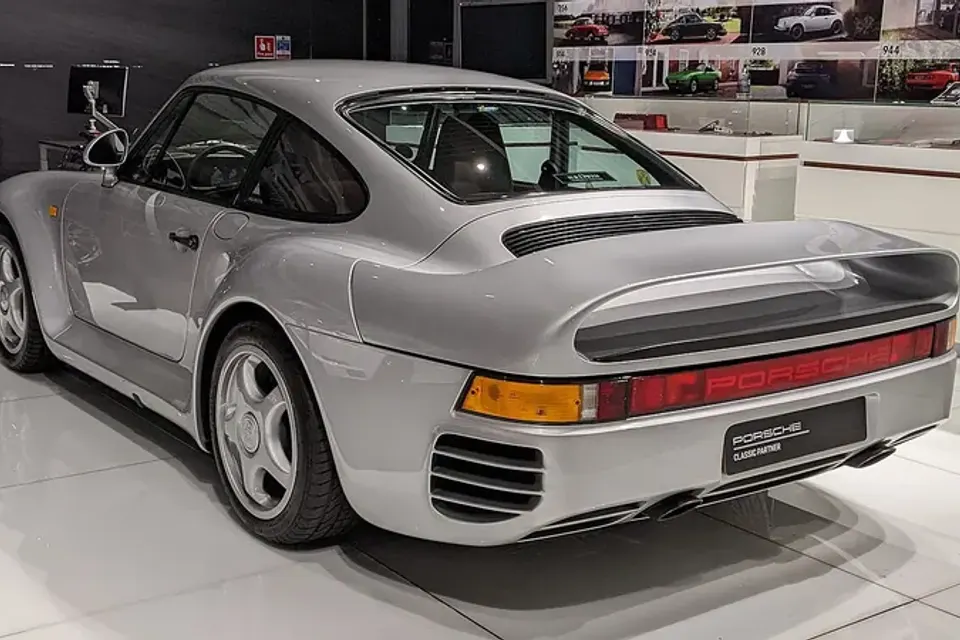
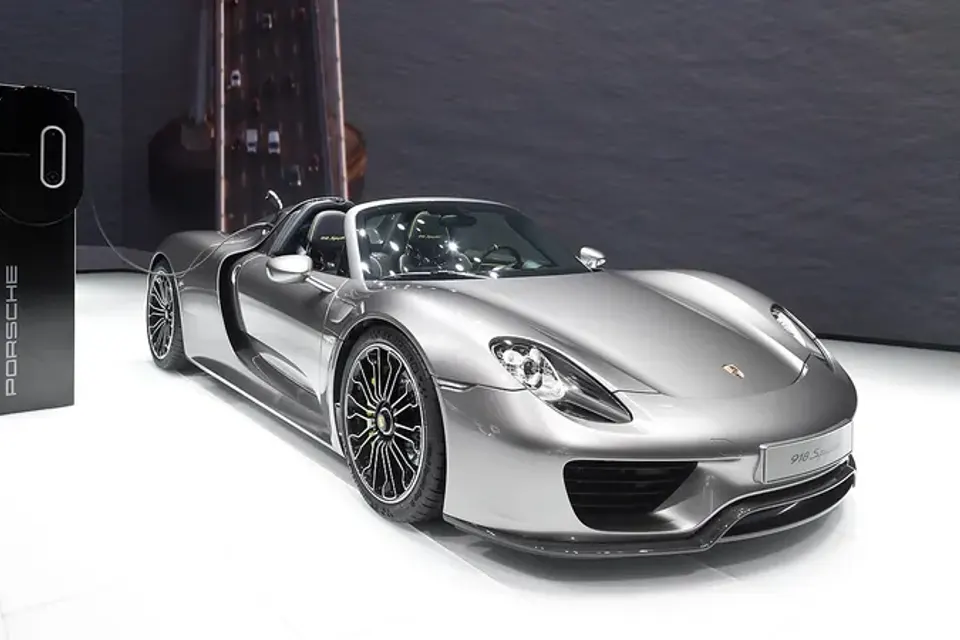
Porsche built 1,270 Carrera GTs before production ended in 2006. Within the company’s halo chronology it followed the electronically sophisticated all-wheel-drive 959 and preceded the plug-in-hybrid 918 Spyder. The contrast is illuminating: the 959 explored controlled boost and torque distribution, the Carrera GT focused on lightweight structure and a manual racing-derived V10, and the 918 integrated electrical energy into performance. Each is a technology platform, but the technologies and the role of the driver differ sharply.
Legacy and identity
The focus here is the 2003–2006 Type 980 production Carrera GT with M80/01 engine and six-speed manual. It excludes the Paris concept, LMP 2000 prototype and modified road cars whose intake, exhaust or chassis no longer matches production specification. The exact boundary gives broad readers a complete origin story while preserving the details specialists use to judge authenticity. Its value is not merely that it is rare and fast; it is that nearly every major system expresses the same uncompromised engineering premise.
01
Beech gear knob
The laminated beechwood knob references the material used in historic Porsche racing gear levers.
02
Ceramic clutch
The compact two-plate clutch helped Porsche keep the crankshaft and vehicle centre of gravity low.
03
Race programme origin
Its V10 was not merely race-inspired; Porsche traces it directly to the cancelled LMP 2000 project.