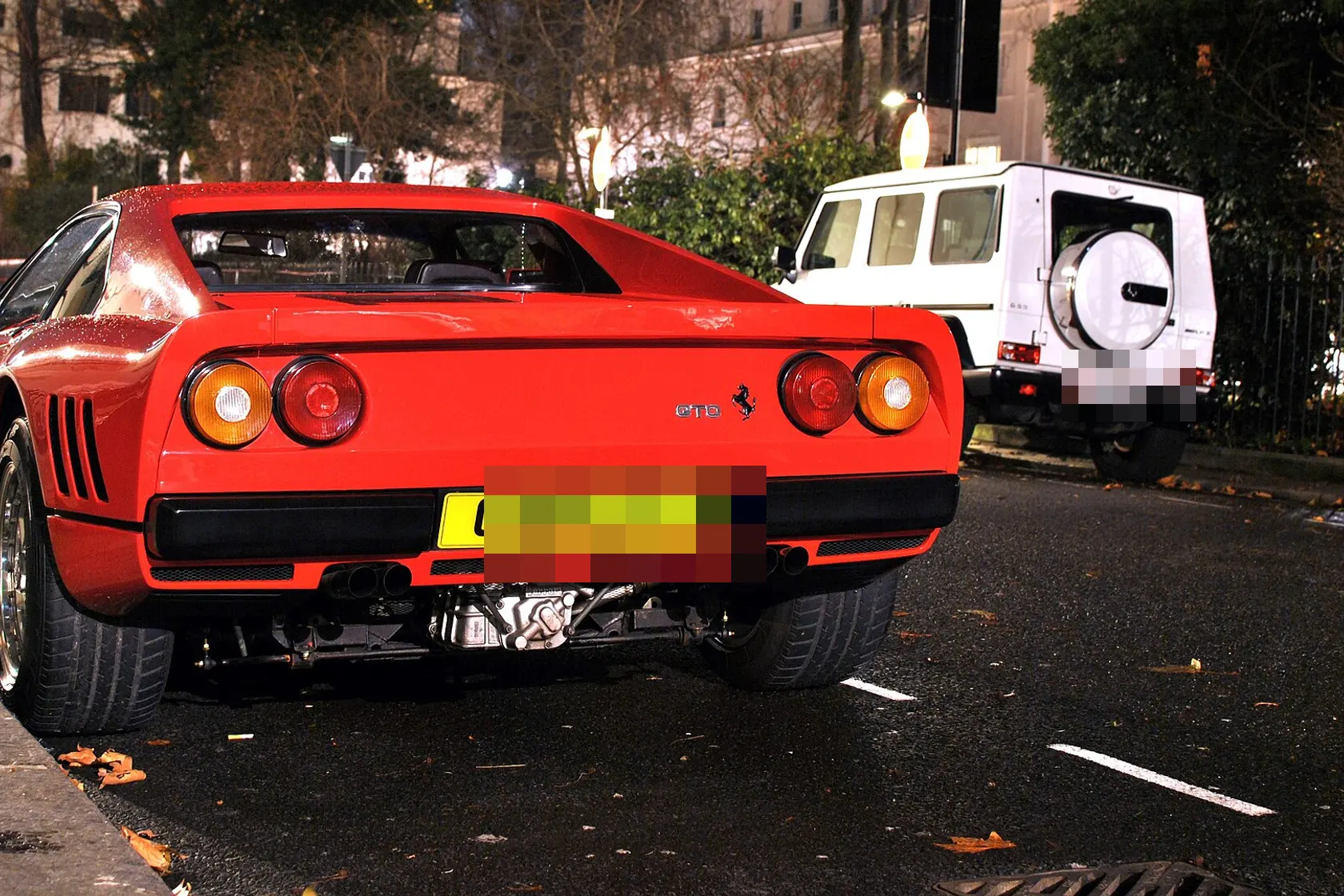
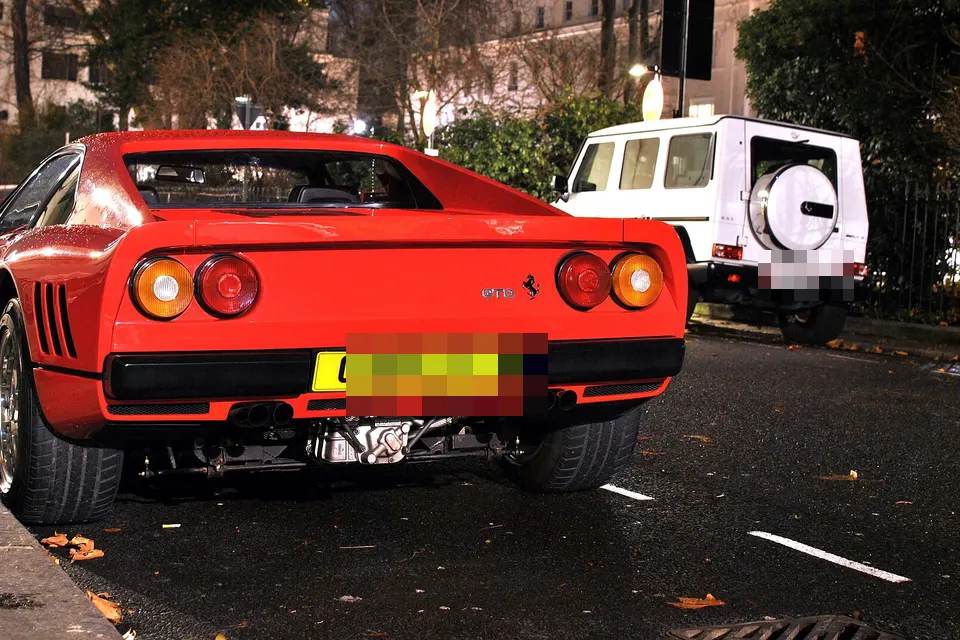
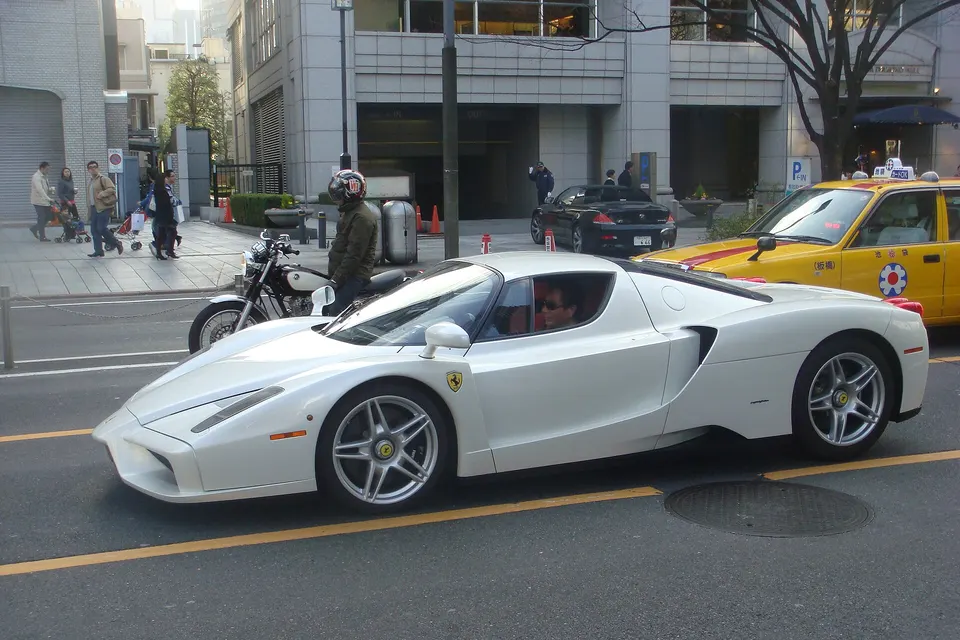
Documentary photographPhoto: Ed Callow · CC BY 2.0 · resized and cropped · Registration identifiers pixelated for privacy.
Engine redprint / verifiedF114B · twin-turbo V8
2,855 cc 90° V8 · twin IHI turbochargersLongitudinal rear-mid engine, rear-wheel driveTopology diagram · not to scale · based on the cited primary sources
GTO is Ferrari’s 1984–1987 the first ferrari limited-series supercar bloodline car, preserved here as an exact factory road-car passport rather than a generic supercar profile.
R / production rarity
How rare is it?
A simple 1–5 rating based on completed worldwide production for this exact version. Price and desirability are not included.
The rating uses five fixed production bands. Smaller production runs receive higher ratings. Exact totals and responsibly sourced estimates for this precise version can be rated. Plans, regional totals, lower bounds, disputed figures and broader-family totals remain visible but unclassified. The evidence description is kept separate from the rating so a source limitation cannot change how scarcity is measured.
5/5Fewer than 25 builtUltra rare
4/525 to 249 builtVery rare
3/5250 to 2,499 builtRare
2/52,500 to 24,999 builtLimited production
1/525,000 or more builtSeries production
Recorded sales
Documented sales
Prices never affect the rarity rating.
Sold$11,555,0002026 · RM Sotheby's · Monterey
Auction result
Exact production GTO
Published sale total; buyer premium included by the auction house.
Ferrari unveiled the GTO at Geneva in 1984 after developing it around the FIA Group B framework, which called for at least 200 examples across the intended road-and-race programme. Ferrari’s own retrospective places it first in the limited-series supercar bloodline that now runs through the F40, F50, Enzo Ferrari and LaFerrari to the F80. The factory name was simply GTO.
Its resemblance to the contemporary 308 GTB can disguise how different the engineering was. The wheelbase grew, the engine turned through ninety degrees from transverse to longitudinal installation, and the body used composite and resin panels over a tubular steel structure. That layout created room for two turbochargers and their intercoolers while positioning the five-speed transaxle behind the V8. The result was not a tuned 308 derivative in the modern aftermarket sense; it was a homologation-minded road car whose proportions, materials and powertrain arrangement served a separate technical programme.
The 90-degree V8 displaced 2,855.08 cc and used twin IHI turbochargers, intercoolers and Weber-Marelli electronic injection. Ferrari documented 294 kW, or 400 cv, at 7,000 rpm and 496 Nm at 3,800 rpm. A twin-plate clutch and five-speed manual sent power to the rear wheels. The factory technical sheet lists 1,160 kg dry, 305 km/h and 4.9 seconds from rest to 100 km/h. Those figures belong together; later Evoluzione power, modern tyres or auction-catalogue estimates must not be substituted into the production road-car record.
Engineering and character
The chassis retained Ferrari’s familiar steel-tube principle but used special materials to reduce mass, including Kevlar within the composite body construction. Double-wishbone suspension, coil springs, telescopic dampers and anti-roll bars were fitted at both ends. The spare cabin and competition purpose matter because they explain why the car feels like the opening of a new line even before its successors are considered. Ferrari initially pursued sporting eligibility, yet the road machine became historically important on its own when Group B’s proposed circuit future failed to develop as planned.
Its factory soundtrack is a negotiation between a small flat-plane-crank V8 and the hardware forcing air through it. Combustion produces the even, hard-edged cadence; intake flow, two compressors, wastegates and a low-compression turbo calibration alter how that cadence rises under load. The open-gate five-speed manual creates long, audible separations between boost events. A useful archive recording therefore documents turbochargers, intercoolers, exhaust, injection and gearbox as a system. Any replacement exhaust would change that reference, and rarity alone does not prove that an individual car remains original.
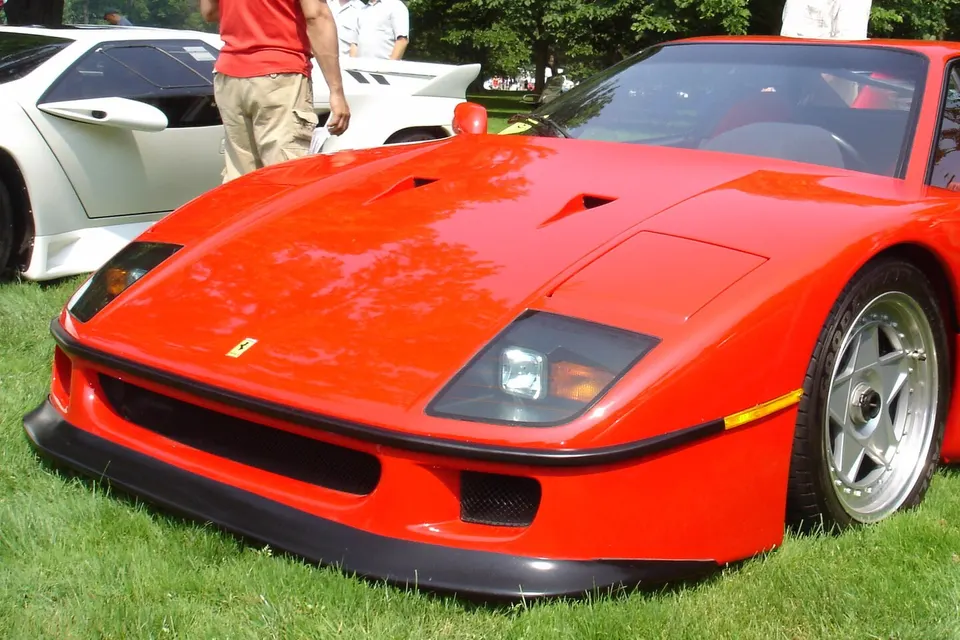
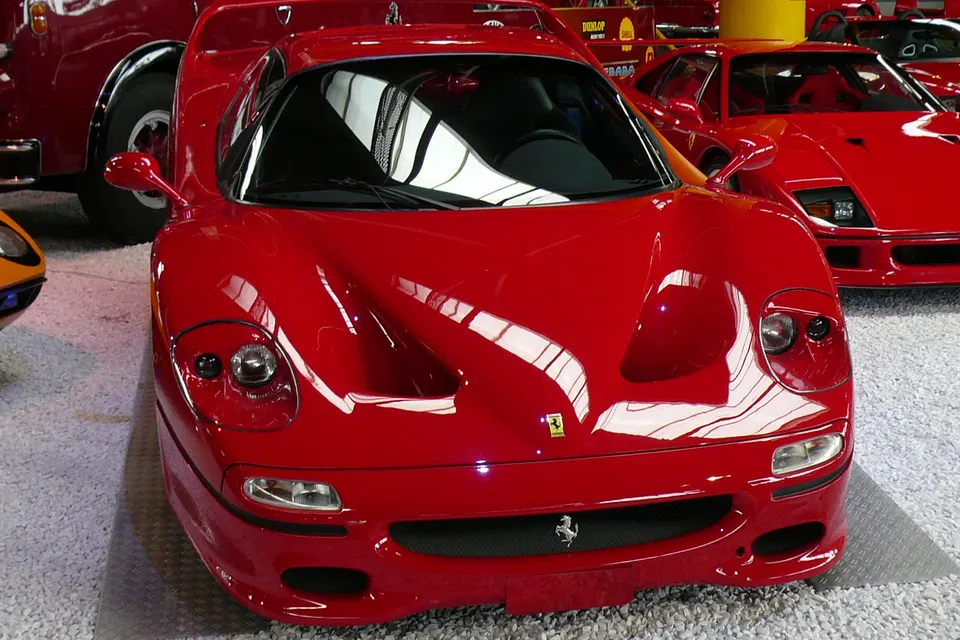
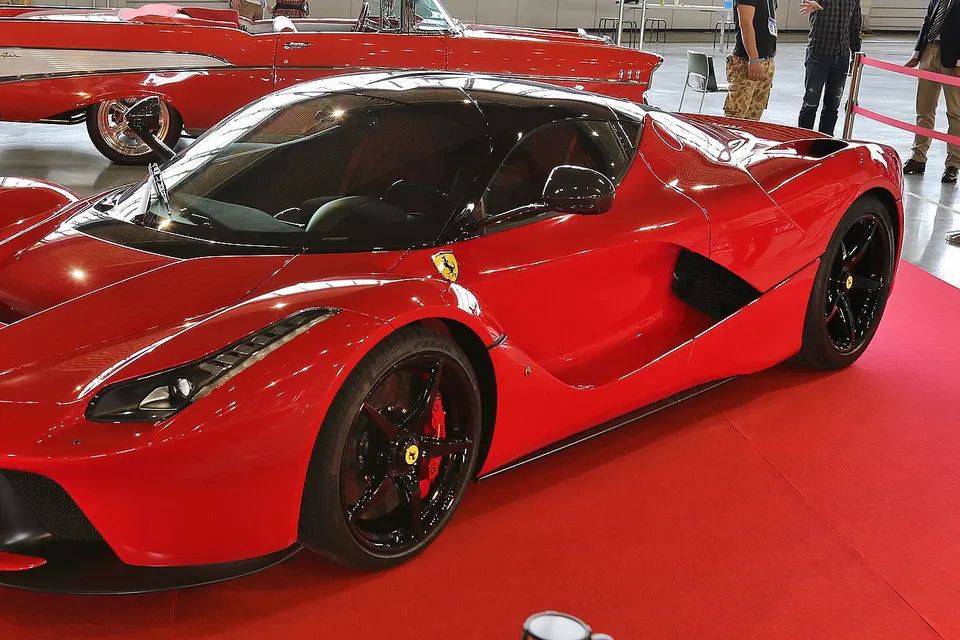
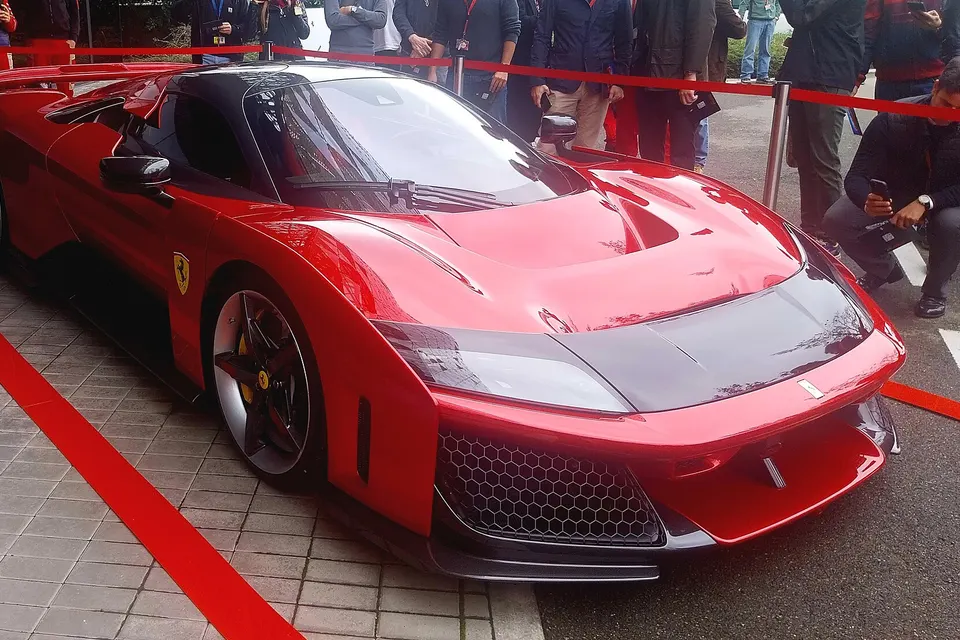
The F40 followed only three years later and developed the GTO’s longitudinal twin-turbo V8 philosophy with more capacity, output and a dramatically different aerodynamic body. Later cars broke that continuity: the F50 changed to an unassisted naturally aspirated V12 and carbon monocoque, the Enzo integrated electronic controls and paddle shifting, and LaFerrari introduced hybrid assistance. The GTO is consequently more than the slowest numerical starting point. It established Ferrari’s practice of making an infrequent road flagship around the most relevant competition technology of its moment.
Legacy and identity
The focus here is the 1984–1987 production GTO road car, Tipo F114, not the 1962 250 GTO, the more extreme GTO Evoluzione prototypes or a 308 converted with widened bodywork. Its 2,855 cc engine, 400 cv output, longitudinal layout and five-speed transmission define the boundary.
01
Model lineage
Ferrari itself identifies GTO, F40, F50, Enzo Ferrari, LaFerrari and F80 as one six-car road-supercar sequence.
02
Road-car identity
The focus here is the production GTO; racing, XX, open and modified derivatives require separate evidence.
04 / family tree
Model lineage
1984–2025 · 6 documented milestones
Photo: Ed Callow · CC BY 2.0 · resized and cropped · Registration identifiers pixelated for privacy.
1984GTO (288)The first Ferrari limited-series supercar bloodline car[1][2]