Porsche · GT road car · 1999–2001

911 GT3

Recorded designation · Type 996.1
Recorded designation
Type 996.1
Engine / drive unit
M96/76
Archive no.
105
Sources updated
11 September 2026
Community archive

Help build this passport

Have a recording, source, correction, photo or missing detail for this exact car? Prepare a contribution with the Car ID already selected.

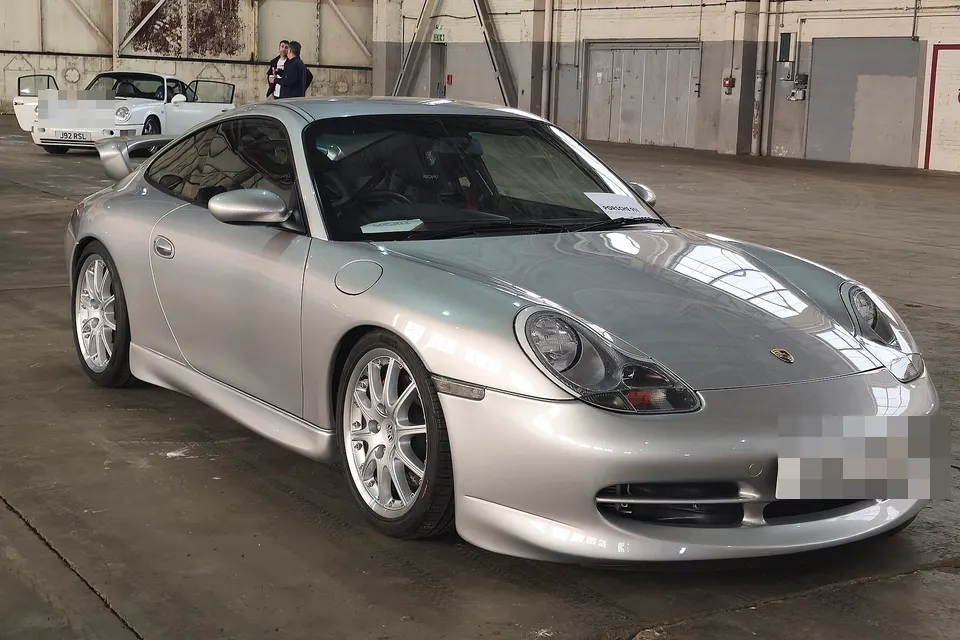
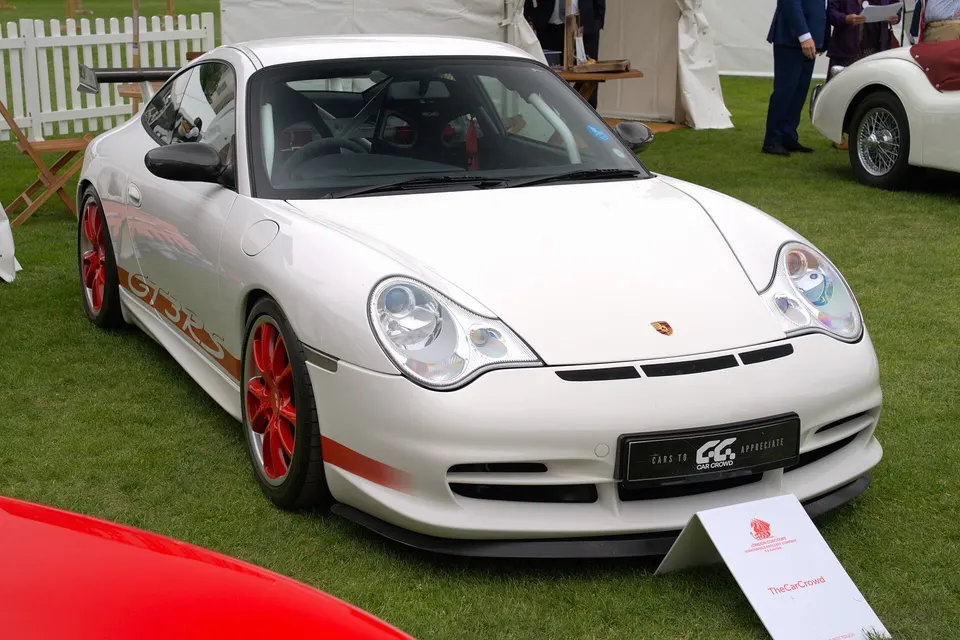
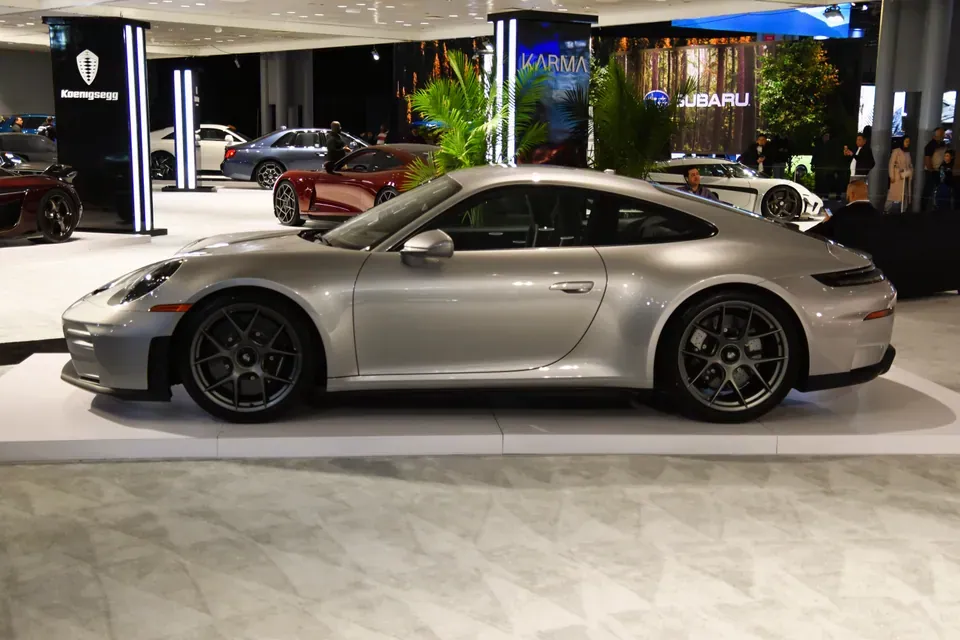
Porsche 911 GT3 Type 996.1, front three-quarter view
Documentary photographPhoto: Calreyn88 · CC BY-SA 4.0 · resized and cropped · Registration identifiers pixelated for privacy.
Engine redprint / verifiedM96/76
3.6 L flat-six · naturally aspirated · M96/76180° horizontally opposed banksbank 1 · 3 cylindersbank 2 · 3 cylinders
3.6 L flat-six · naturally aspirated · M96/76Longitudinal rear-engine, rear-wheel driveTopology diagram · not to scale · based on the cited primary sources

The first GT3: a 360 PS, manual, rear-drive 996 developed under Walter Röhrl’s test programme.

R / production rarity

How rare is it?

A simple 1–5 rating based on completed worldwide production for this exact version. Price and desirability are not included.

Rarity ratingNot availableNo comparable worldwide production total
Production bandNot available
Production evidenceDocumented lower bound
ProducedWorldwide total used for the rating
1,360

Documented 2000 model-year subset

Figure type
Minimum
Scope
Type 996.1 GT3 cars from model year 2000; does not establish the full passport run
Geography / date
Global · 2000 model year

Not rated: Lower bound only

How the rating works

The rating uses five fixed production bands. Smaller production runs receive higher ratings. Exact totals and responsibly sourced estimates for this precise version can be rated. Plans, regional totals, lower bounds, disputed figures and broader-family totals remain visible but unclassified. The evidence description is kept separate from the rating so a source limitation cannot change how scarcity is measured.

  1. 5/5Fewer than 25 builtUltra rare
  2. 4/525 to 249 builtVery rare
  3. 3/5250 to 2,499 builtRare
  4. 2/52,500 to 24,999 builtLimited production
  5. 1/525,000 or more builtSeries production
01 / specifications

At a glance

Model code
Type 996.1[3]
Engine
3,600 cc flat-six[3]
Output
265 kW / 360 PS[3]
Torque
370 Nm[3]
Transmission
6-speed G96/90 manual[3]
Production period
1999–2001[3]
02 / architecture

What creates the sound

The descriptors are editorial listening notes for the unmodified factory intake and exhaust system.

Open-licence recordings may be published as Unregistered when intake, exhaust or calibration details remain unknown.

  1. Horizontally opposed six-cylinder architecture
  2. Naturally aspirated factory induction
  3. Water-cooled Mezger-derived 3.6-litre flat-six with separate crankcase architecture and dry-sump oiling.
Engine designation
M96/76[3]
Configuration
Water-cooled Mezger-derived 3.6-litre flat-six with separate crankcase architecture and dry-sump oiling.[3]
Displacement
3,600 cc[3]
Rated output
265 kW / 360 PS[3]
Peak torque
370 Nm[3]
Installation
Rear-engine, rear-wheel drive[3]
03 / context

History and character

Origins and context

Porsche unveiled the first 911 GT3 at the Geneva Motor Show in March 1999. The new badge referenced the GT3 racing class and took over the road-and-track position previously associated with the Carrera RS. This was not simply a faster Carrera within the new water-cooled 996 range. Porsche developed it as the point where series production and motorsport met, establishing a formula that would remain recognisable even as engines, gearboxes, suspension and aerodynamics changed over the following quarter-century.

The 996.1 arrived during a sensitive transition for the 911. Water cooling, shared front-end design and a more modern cabin had already moved the standard car away from the air-cooled 993. The GT3 answered that change with a deliberately focused mechanical specification. Its 3.6-litre M96/76 flat-six belonged to the dry-sump, separate-crankcase architecture commonly associated with Hans Mezger’s racing-engine lineage, rather than the engine family used by ordinary 996 Carrera models.

Porsche rated the engine at 265 kW (360 PS) and 370 Nm, equivalent to 100 PS per litre, with a 7,800 rpm maximum speed. A six-speed G96/90 manual sent power to the rear wheels. The factory chronology records 302 km/h, 0–100 km/h in 4.8 seconds and a sub-eight-minute Nürburgring Nordschleife lap—the first by a road-approved series-production car. Together those figures established the GT3 as a circuit-capable production reference, not merely an appearance package.

Engineering and character

Its chassis and body communicated the same intent. A fixed rear wing, lower ride height, stronger brakes and focused suspension separated it visually and dynamically from the Carrera. Yet the importance of the first GT3 lies less in any one component than in the integration: the high-revving engine, manual gearbox, rear-drive layout, reduced compromise and track development were engineered as one car. Later generations added adaptive damping, rear steering and PDK, but the 996.1 established the baseline they had to reinterpret.

For listeners, the early GT3 has a layered mechanical character. Induction hardens with engine speed, the flat-six becomes increasingly metallic, and the transmission and valvetrain remain present rather than isolated behind heavy refinement. Those qualities explain why original configuration matters. Exhaust replacements are common and can dominate a recording, but volume alone does not document the production car.

The 2003 996.2 update brought 381 PS, different lighting and body details, a revised rear wing and optional ceramic brakes. The first GT3 RS then sharpened that later platform. Those developments should not be projected backward. The focus here is the 1999–2001 996.1 with its M96/76 engine and six-speed manual, preserving the specification that introduced the name rather than combining the entire 996 GT3 era into one convenient set of numbers.

Legacy and identity

Its legacy is unusually clear. Every later GT3 continues the argument that motorsport knowledge can improve a road 911 without making it a competition car, while every technical break—PDK, rear-axle steering, double-wishbone front suspension—can be measured against this analogue starting point. The 996.1 is therefore valuable to newcomers as the first chapter and to purists as a specific mechanical object. Premium coverage requires both readings: cultural importance and exact engineering identity.

01

Engineering context

Water-cooled Mezger-derived 3.6-litre flat-six with separate crankcase architecture and dry-sump oiling.

04 / family tree

Model lineage

1972–2024 · 19 documented milestones

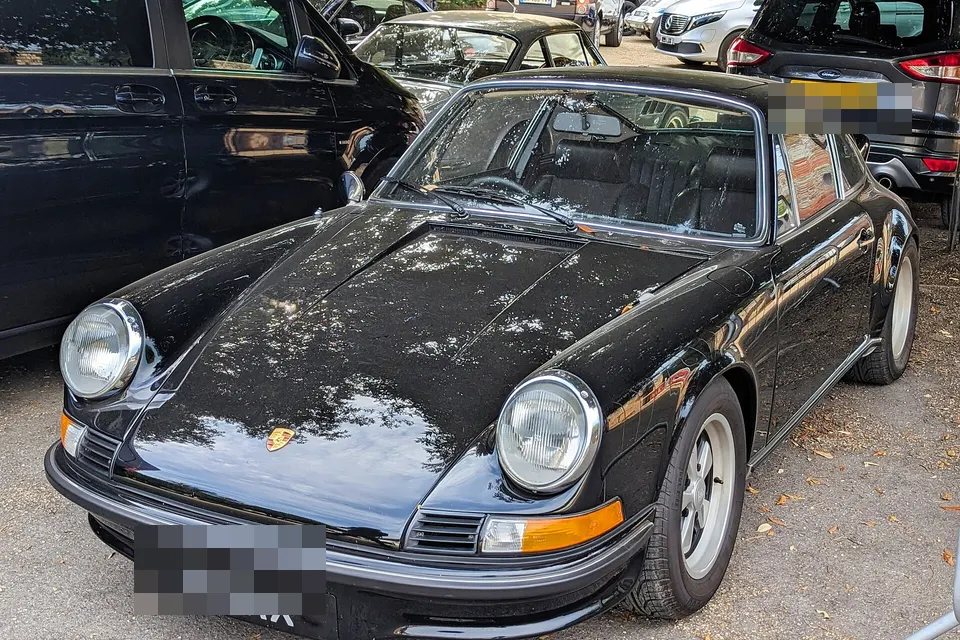
  1. Black Porsche 911 Carrera RS 2.7, front three-quarter view
    Photo: Calreyn88 · CC BY 4.0 · resized and cropped · Registration identifiers pixelated for privacy.

    1972911 Carrera RS 2.7Road-going RS origin of the later GT3 and GT3 RS ethos[2][3]
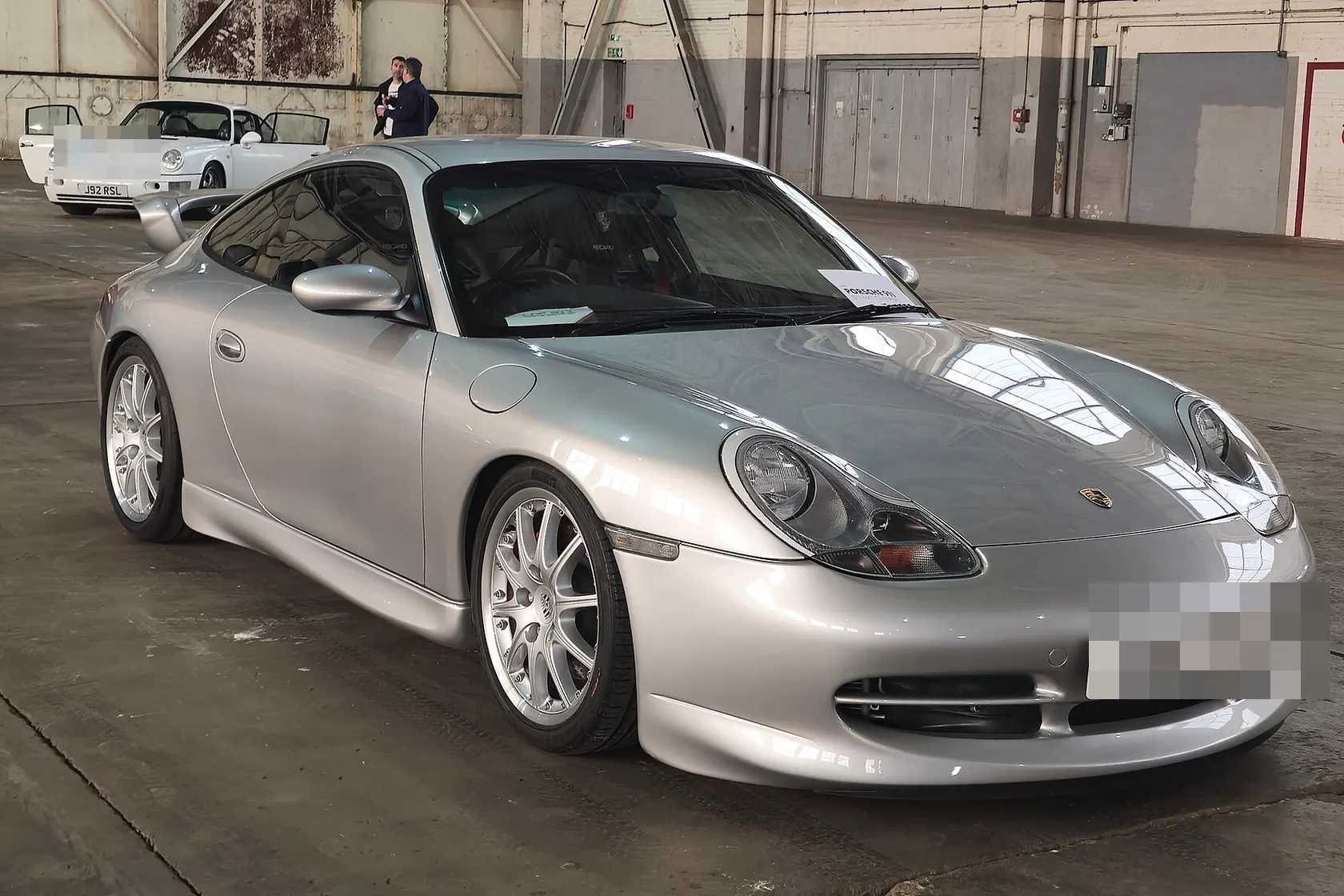
  2. White Porsche 911 SC RS, front three-quarter view
    Photo: Calreyn88 · CC BY-SA 4.0 · resized and cropped
    1984911 SC RS (G model)Rally-homologation continuation of the 911 RS line[2]
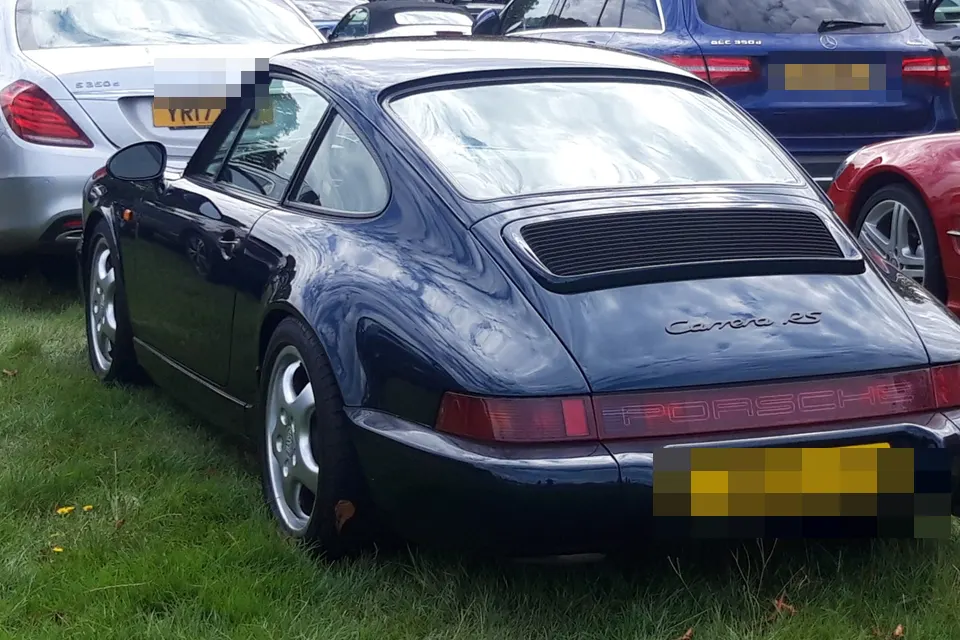
  3. Porsche 911 Carrera RS Type 964, rear three-quarter view
    Photo: MrWalkr · CC BY-SA 4.0 · resized and cropped · Registration identifiers pixelated for privacy.
    1991911 Carrera RS 3.6 (964)Carrera Cup technology returned the RS badge to production[2]
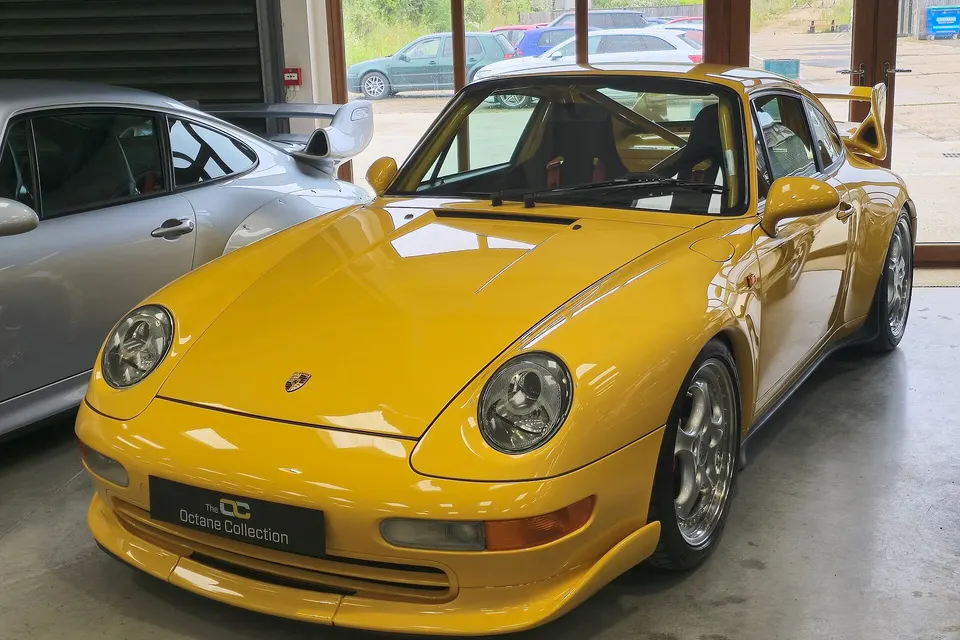
  4. Porsche 911 Carrera RS Type 993, front three-quarter view
    Photo: Calreyn88 · CC BY-SA 4.0 · resized and cropped
    1995911 Carrera RS (993)Final air-cooled RS generation before the GT3 era[2]
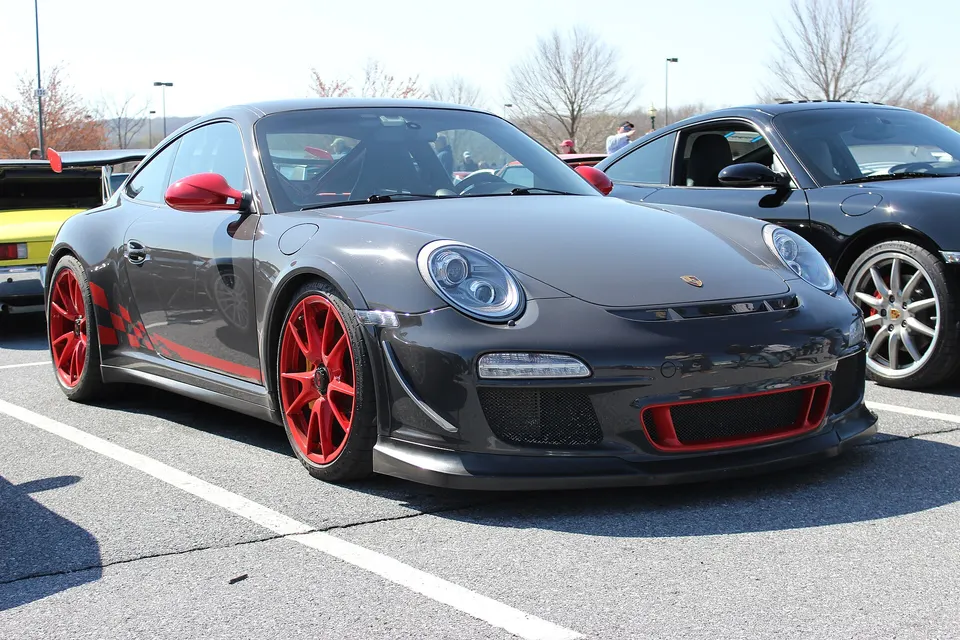
  5. Porsche 911 GT3 Type 996.1, front three-quarter view
    Photo: Calreyn88 · CC BY-SA 4.0 · resized and cropped · Registration identifiers pixelated for privacy.
    1999911 GT3 (996.1)First production 911 to carry the GT3 name[3]
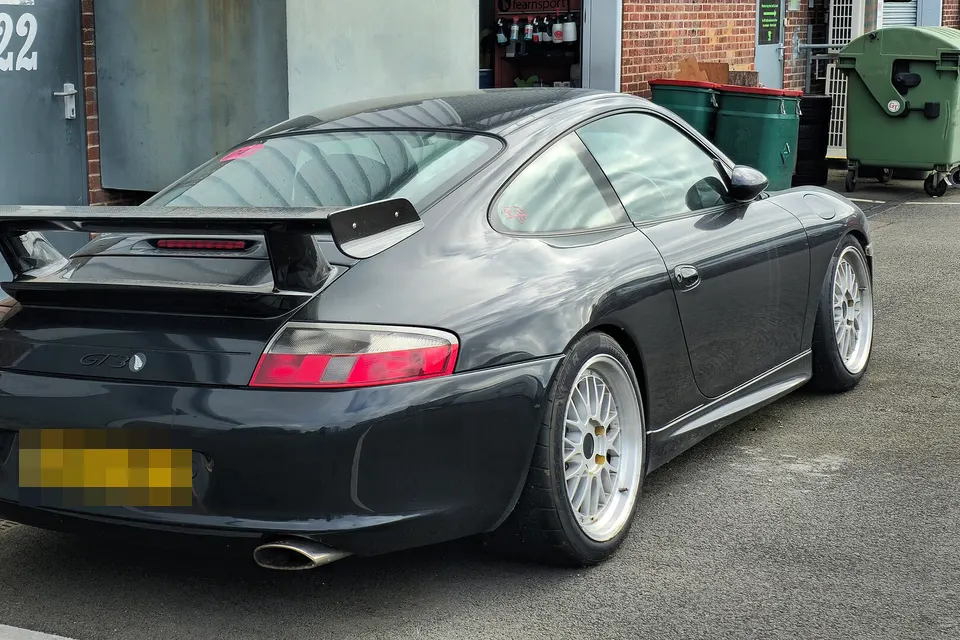
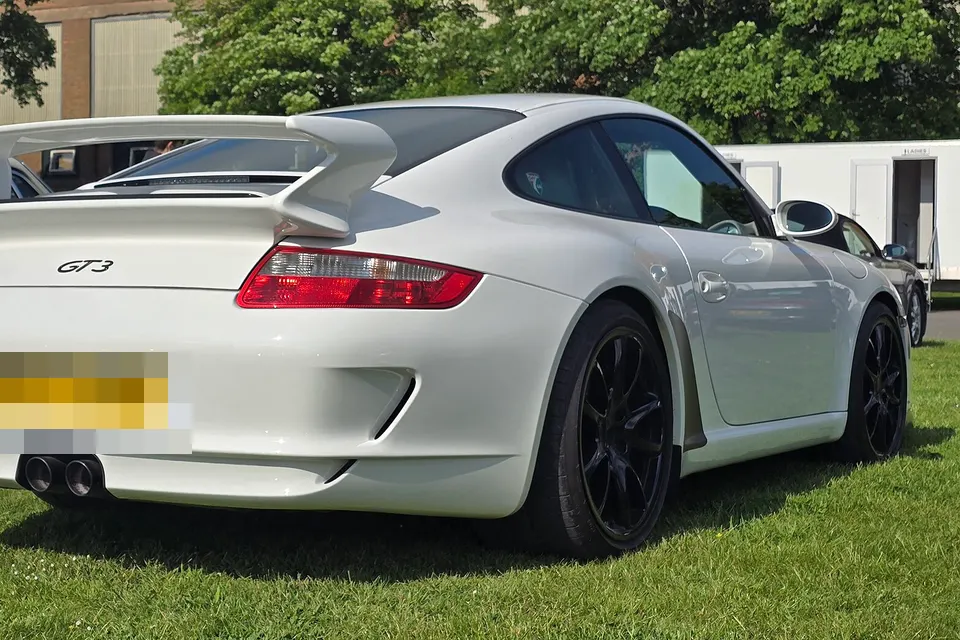
  6. Porsche 911 GT3 Type 996.2, rear three-quarter view
    Photo: Calreyn88 · CC BY-SA 4.0 · resized and cropped · Registration identifier pixelated for privacy.
    2003911 GT3 (996.2)First GT3 model update, with 381 PS and optional PCCB[3]
  7. White Porsche 911 GT3 RS Type 996.2 with red script
    Photo: MrWalkr · CC BY-SA 4.0 · resized and cropped
    2003911 GT3 RS (996.2)First GT3 RS; the sharper RS branch begins[2]
  8. Porsche 911 GT3 Type 997.1, side view
    Photo: Calreyn88 · CC BY-SA 4.0 · resized and cropped · Registration identifier pixelated for privacy.
    2006911 GT3 (997.1)New 997 generation introduced PASM to the GT3[3]
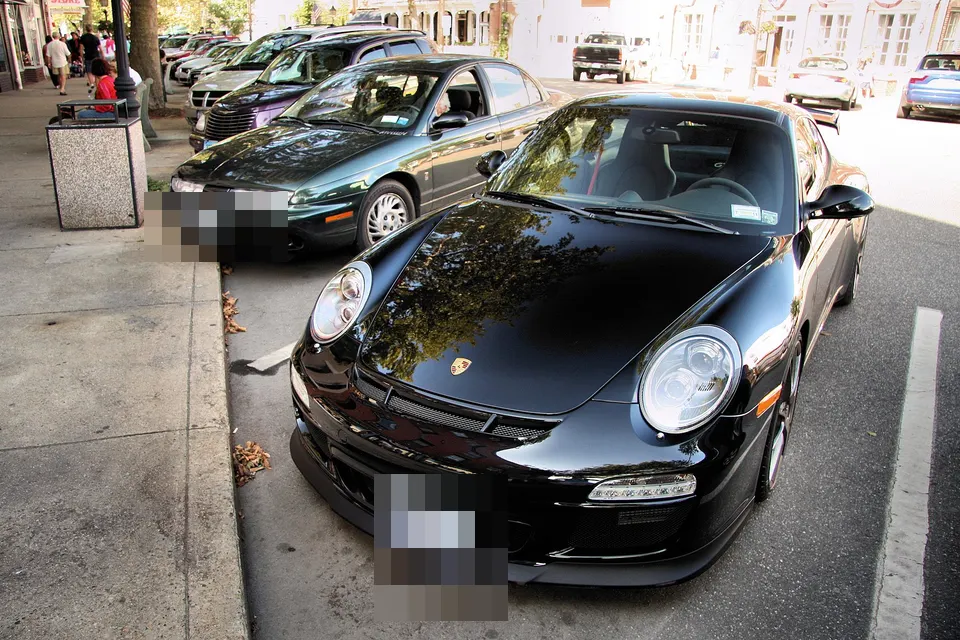
  9. Porsche 911 GT3 RS Type 997.1, front three-quarter view
    Photo: Calreyn88 · CC BY-SA 4.0 · resized and cropped · Registration identifier pixelated for privacy.
    2006911 GT3 RS (997.1)First wide-body 997 RS and first GT3 RS sold in the US[2]
  10. Porsche 911 GT3 Type 997.2, front three-quarter view
    Photo: Damian Morys · CC BY 2.0 · resized and cropped · Registration identifiers pixelated for privacy.
    2009911 GT3 (997.2)Displacement grew to 3.8 litres and output to 435 PS[3]
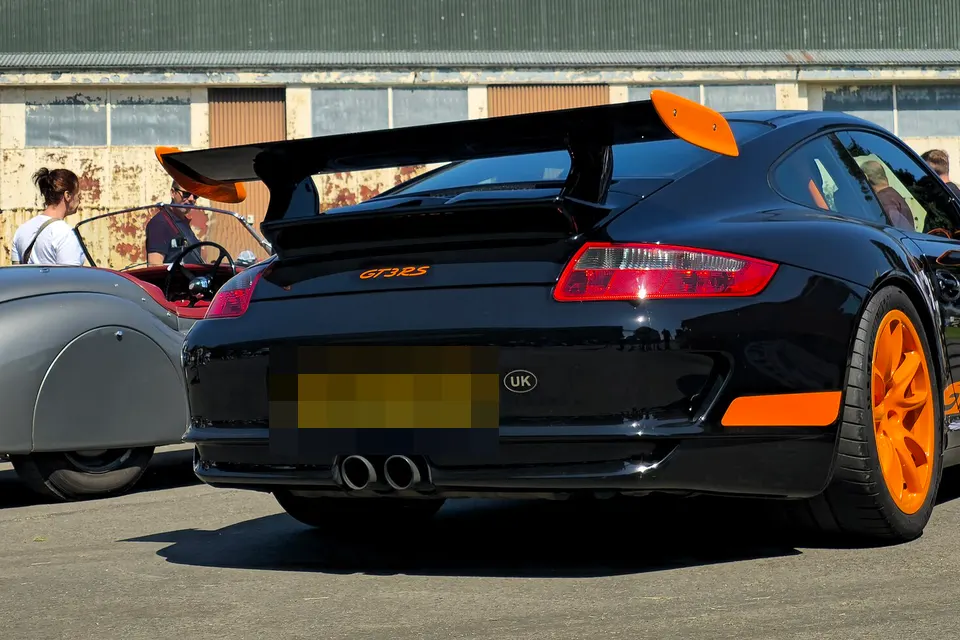
  11. Porsche 911 GT3 RS Type 997.2, rear three-quarter view
    Photo: ilikewaffles11 · CC BY 2.0 · resized and cropped
    2009911 GT3 RS (997.2)First GT3 RS to out-power its contemporary GT3[2]
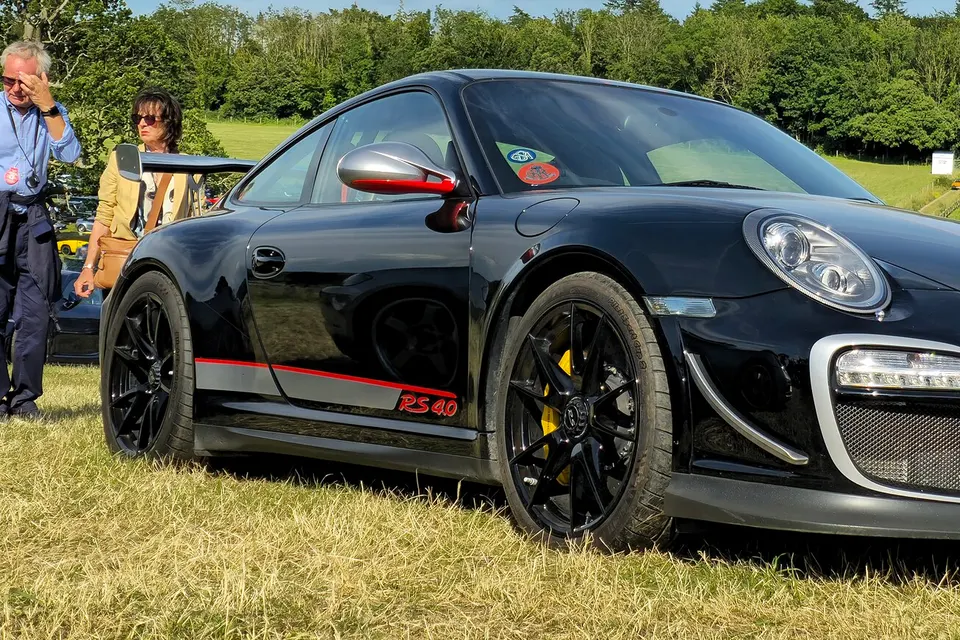
  12. White Porsche 911 GT3 RS 4.0 Type 997.2, side view
    Photo: Calreyn88 · CC BY-SA 4.0 · resized and cropped
    2011911 GT3 RS 4.0 (997.2)Limited 4.0-litre culmination of the 997 RS line[2]
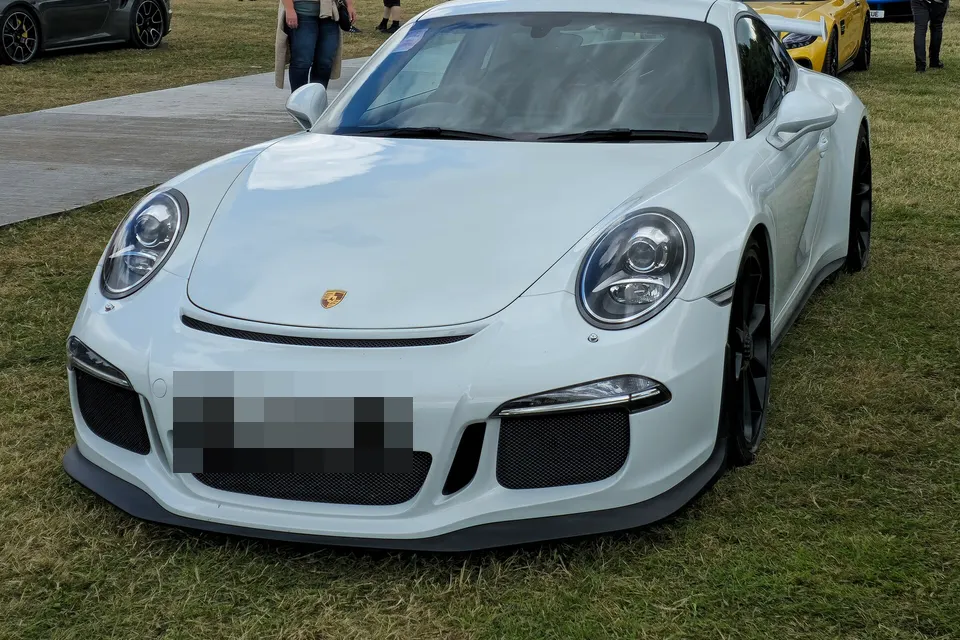
  13. Porsche 911 GT3 Type 991.1, front three-quarter view
    Photo: Calreyn88 · CC BY-SA 4.0 · resized and cropped · Registration identifier pixelated for privacy.
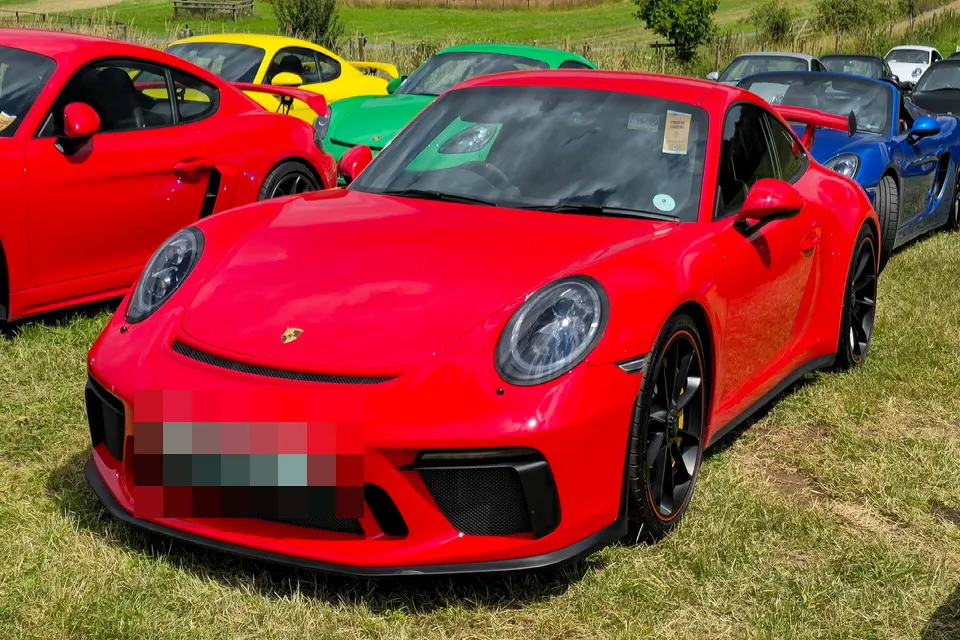
    2013911 GT3 (991.1)First GT3 with PDK and rear-axle steering[3]
  14. Porsche 911 GT3 RS Type 991.1, front three-quarter view
    Photo: Mathious Ier · CC0 1.0 · resized and cropped
    2015911 GT3 RS (991.1)The RS branch adopted PDK and the Turbo-width body[2]
  15. Porsche 911 GT3 Type 991.2, front three-quarter view
    Photo: Calreyn88 · CC BY-SA 4.0 · resized and cropped · Registration identifier pixelated for privacy.
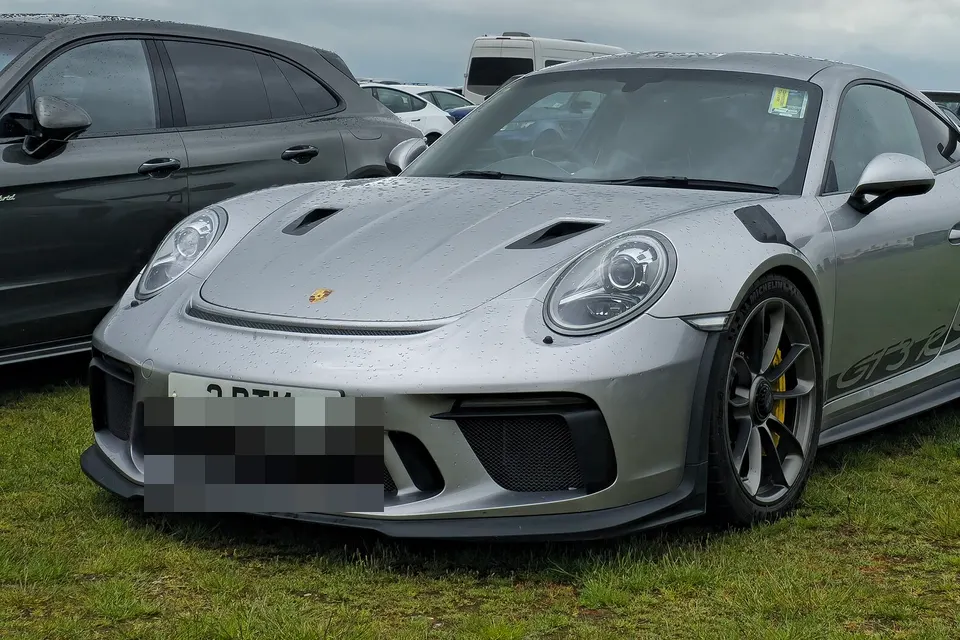
    2017911 GT3 (991.2)Four-litre engine, manual return and first Touring Package[3]
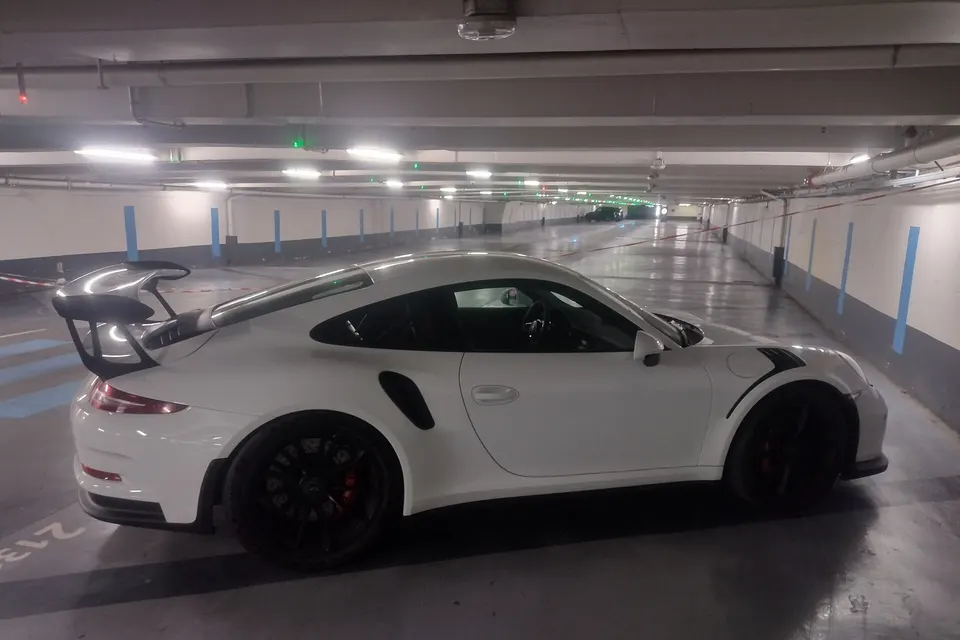
  16. Porsche 911 GT3 RS Type 991.2, side view
    Photo: Calreyn88 · CC BY-SA 4.0 · resized and cropped · Registration identifier pixelated for privacy.
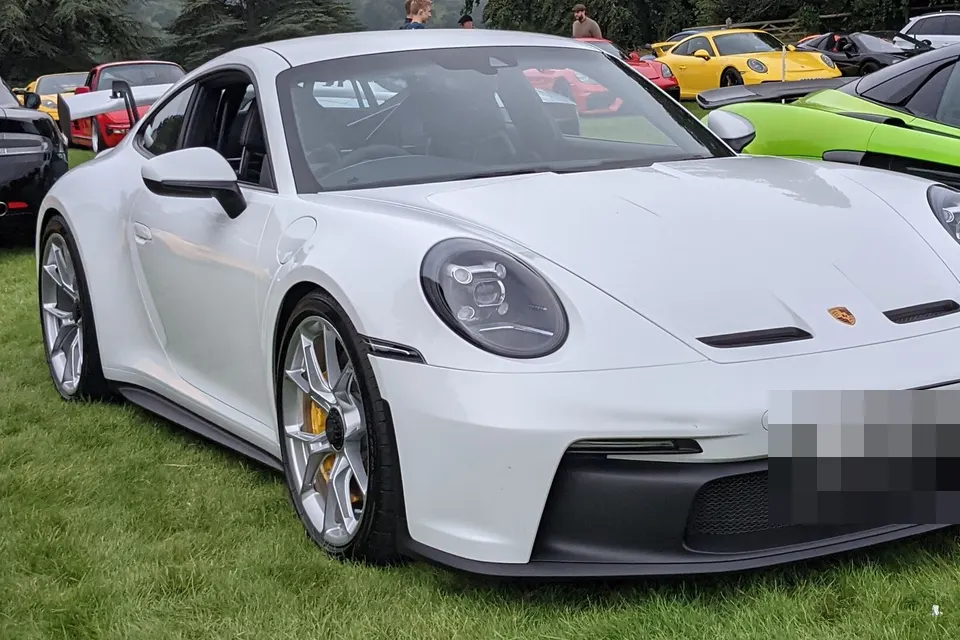
    2018911 GT3 RS (991.2)Second 991 RS iteration introduced the Weissach Package[2]
  17. Porsche 911 GT3 Type 992.1, front three-quarter view
    Photo: Calreyn88 · CC BY-SA 4.0 · resized and cropped · Registration identifier pixelated for privacy.
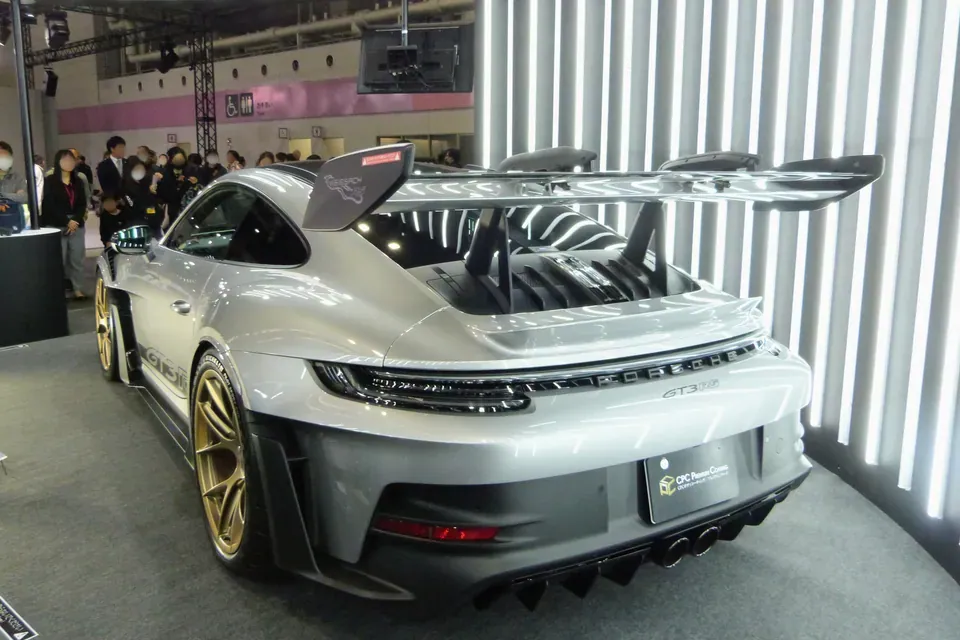
    2021911 GT3 (992.1)Double-wishbone front suspension reaches the road GT3[3]
  18. Grey Porsche 911 GT3 RS Type 992.1 photographed from the rear three-quarter angle at Japan Mobility Show Kansai 2025
    Photo: Aos.1905 · CC BY-SA 4.0 · resized and cropped
    2022911 GT3 RS (992.1)Current active-aero RS branch[4]
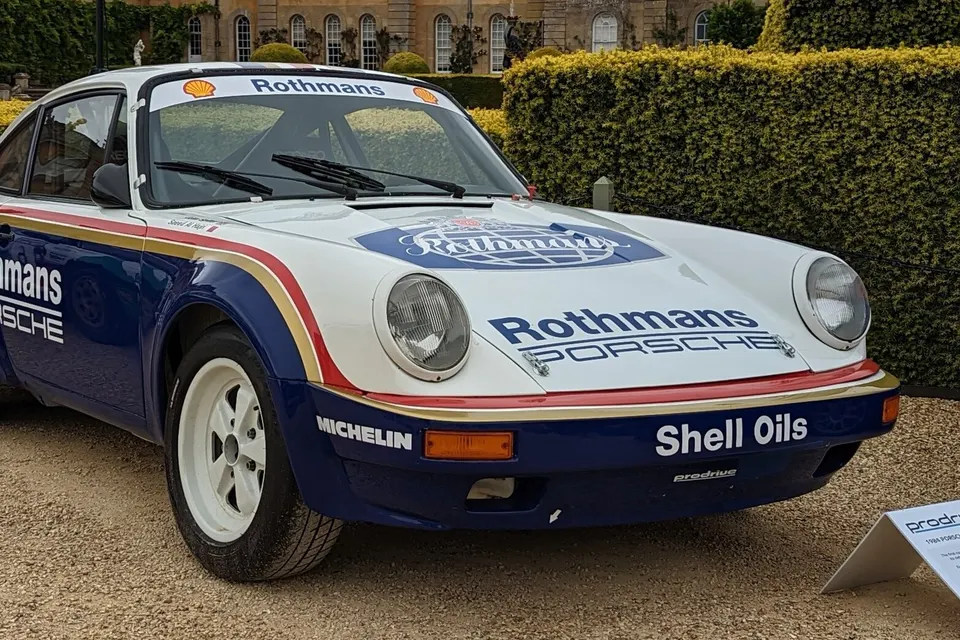
  19. Silver Porsche 911 GT3 with Touring Package Type 992.2 photographed in profile at the 2026 New York International Auto Show
    Photo: Charles from Port Chester, New York · CC0 1.0 · resized and cropped
    2024911 GT3 (992.2)Latest GT3 generation, offered winged or with Touring Package[5]
06 / contribute sound

Help us hear this car

Share a properly licensed recording of this exact model. Stock and modified cars are both welcome when their configuration is described clearly.

  • Cold start
  • Acceleration
  • Fly-by
Contribute a recording
07 / further viewing

Authoritative films

Links pass directly to YouTube. The archive does not host, copy or embed these films.

08 / further reading

References

  1. 01Ganz nah am Rennsport: der neue Porsche 911 GT3 RSPorsche Newsroom · accessed 14 September 2026
  2. 02Fifty years of RS and five iconic predecessors of the 911 GT3 RSPorsche AG · accessed 11 September 2026
  3. 03Twenty-five years of the Porsche 911 GT3Porsche Newsroom · accessed 11 September 2026
  4. 04Purpose-built for performance: the new Porsche 911 GT3 RSPorsche Newsroom · accessed 11 September 2026
  5. 05Double Premiere: the new 911 GT3 and 911 GT3 with Touring packagePorsche Newsroom · accessed 11 September 2026
  6. 062000 Porsche 911 GT3 — The Carrera CollectionRM Sotheby's · accessed 12 September 2026