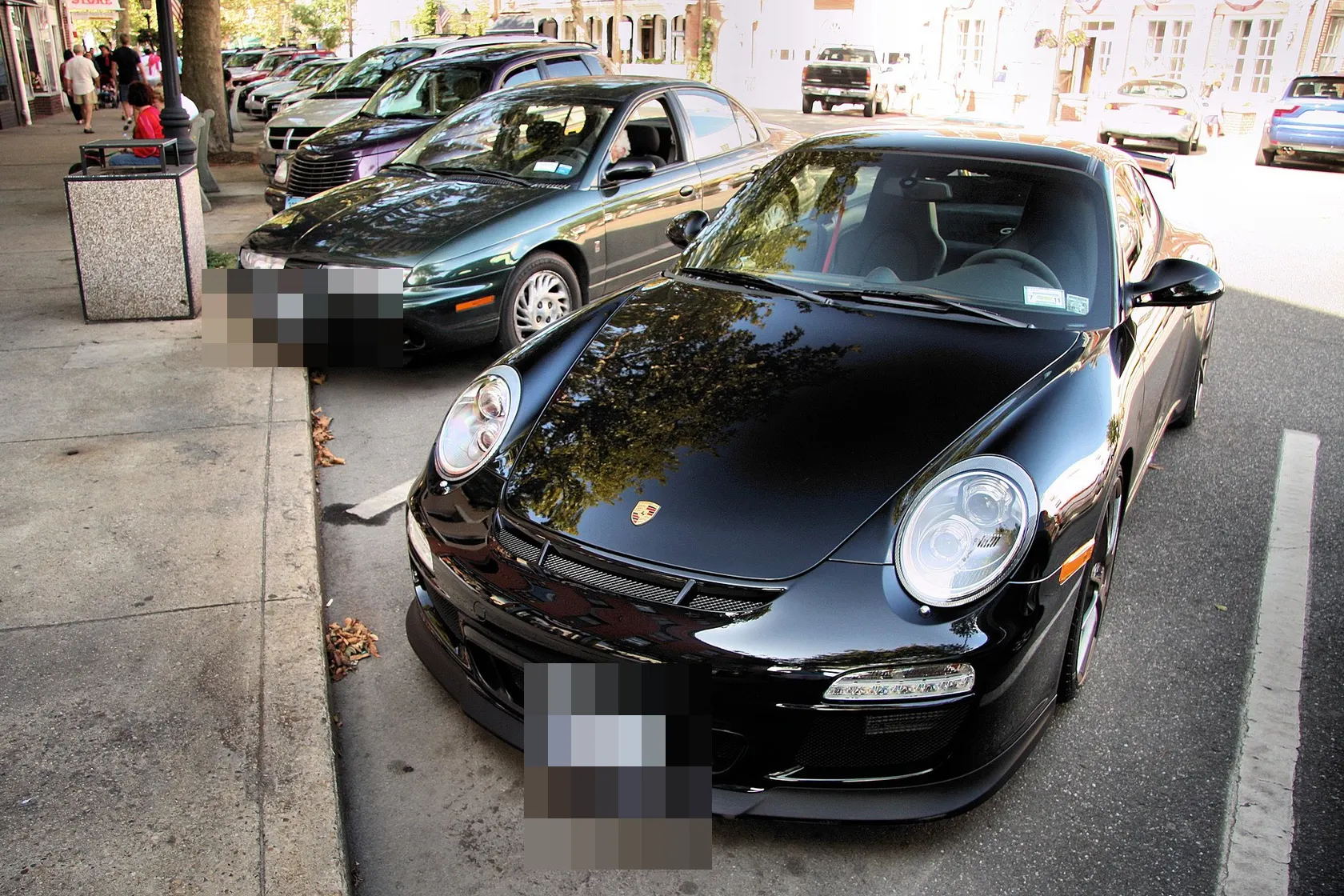
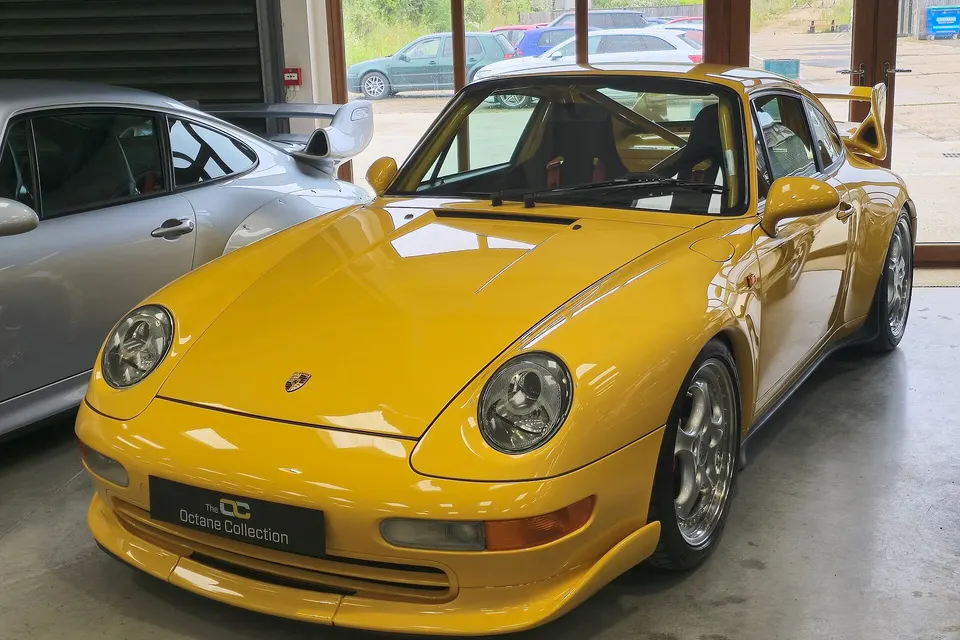
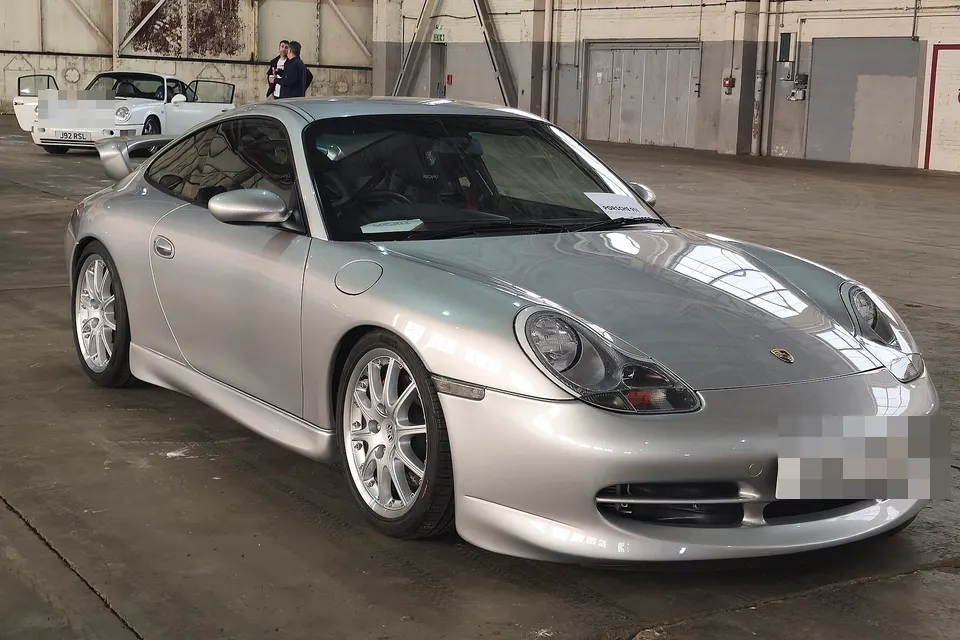
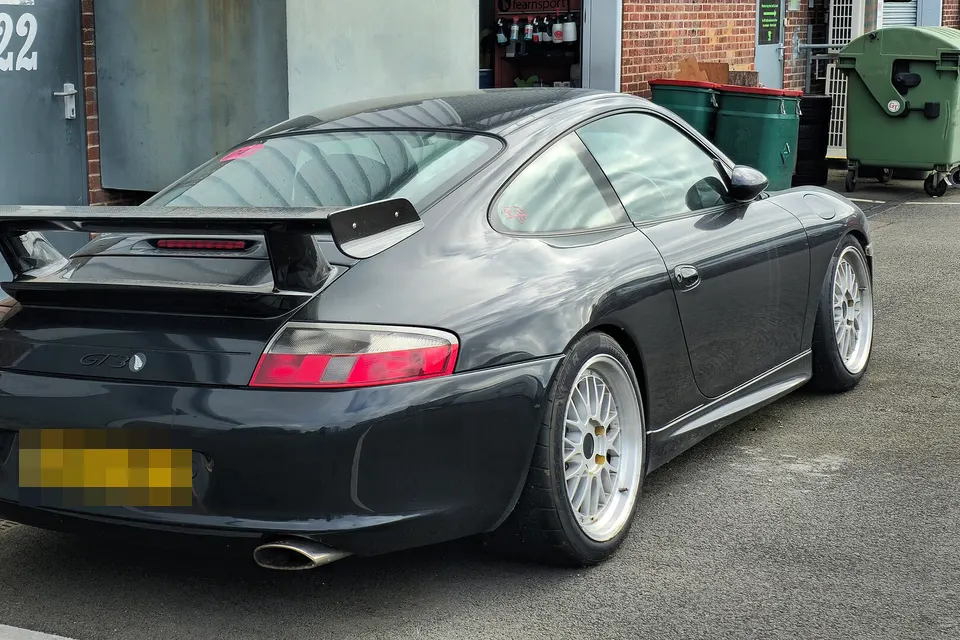
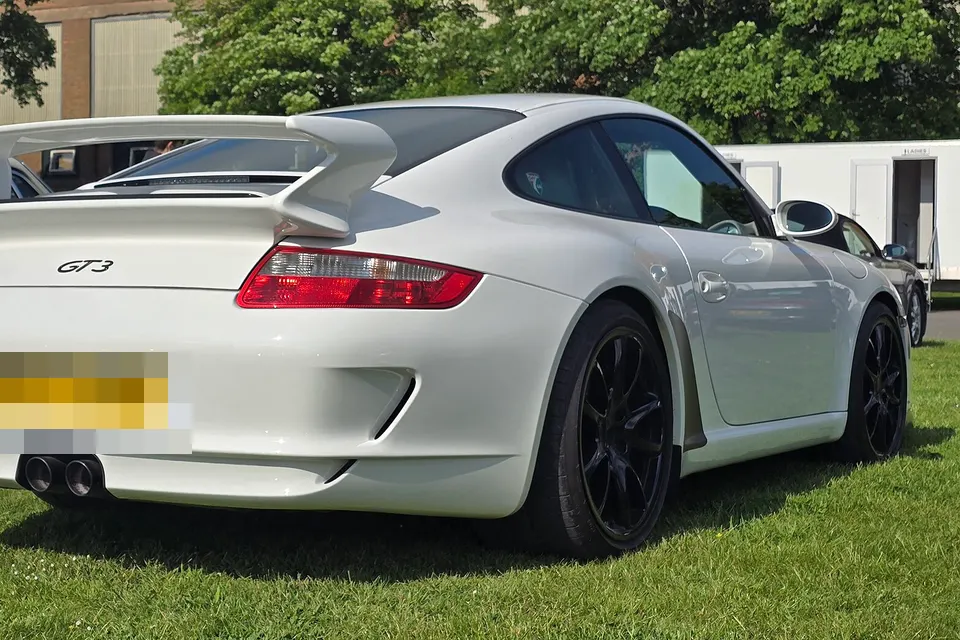
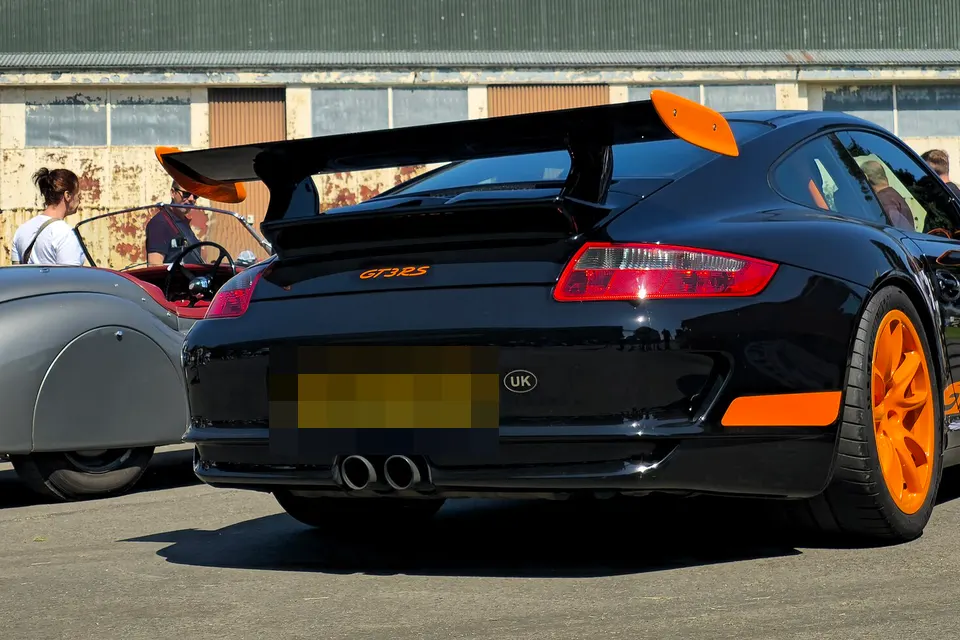
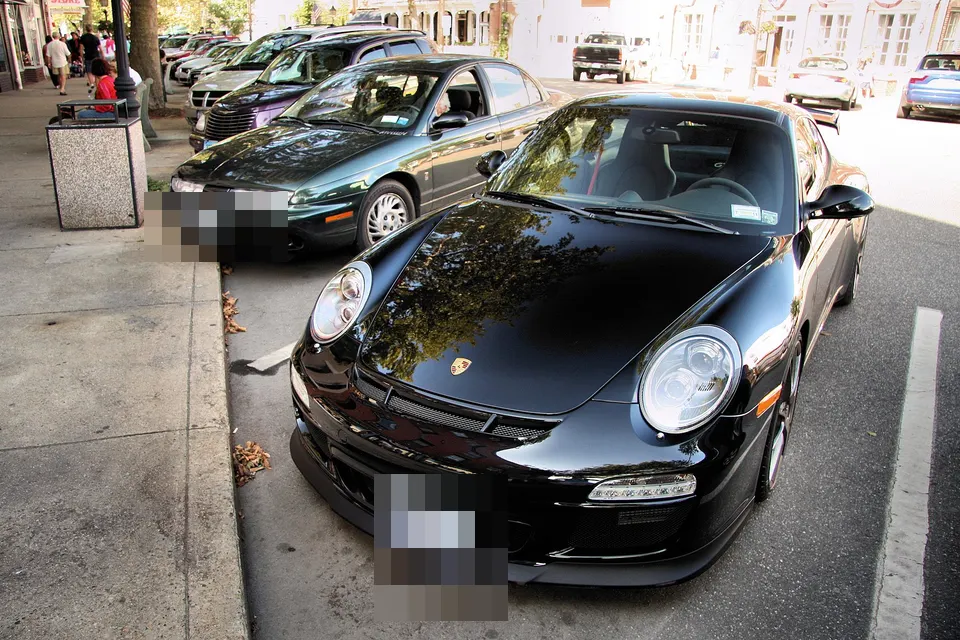
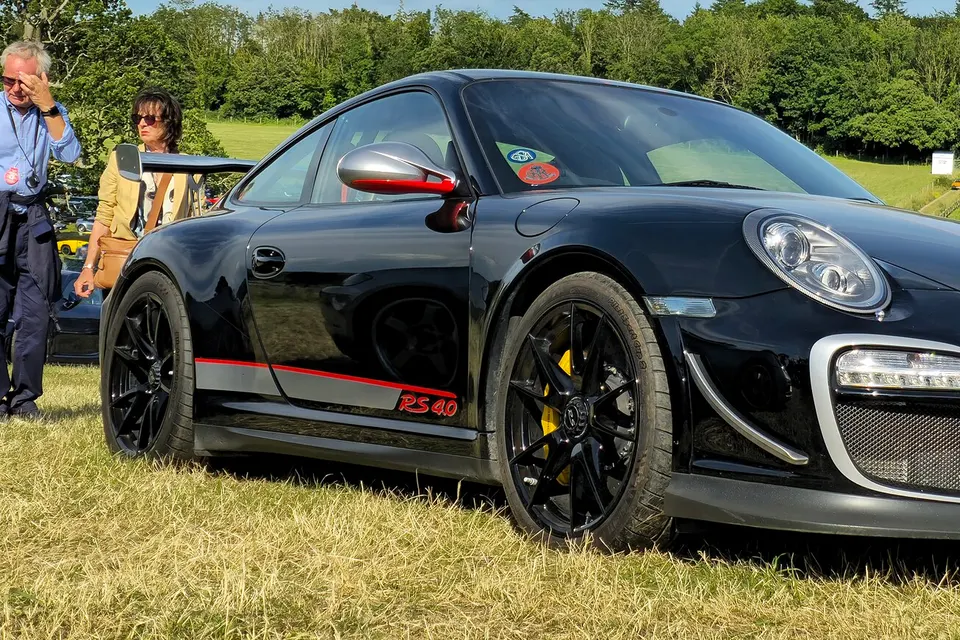
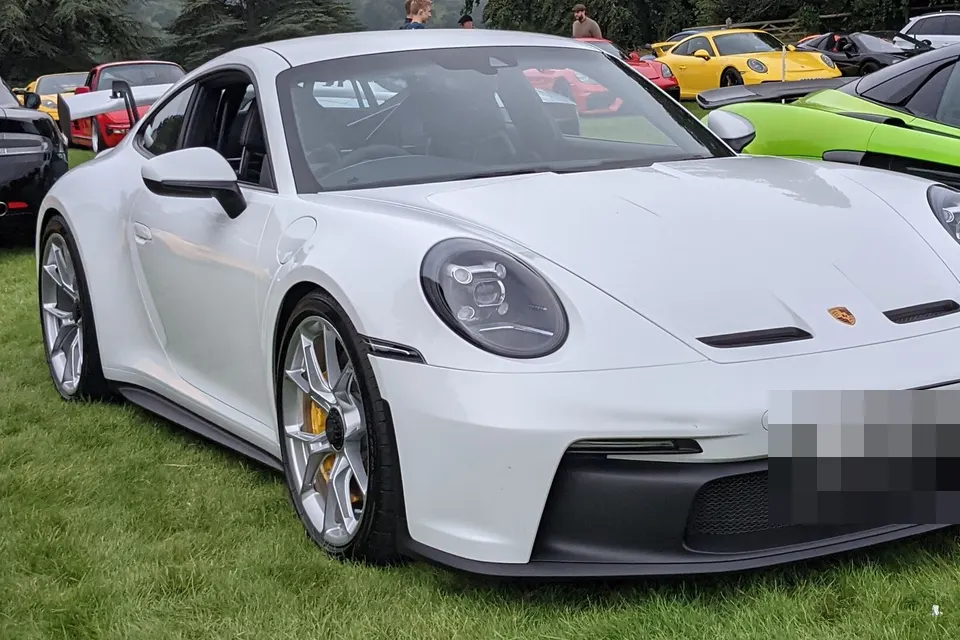
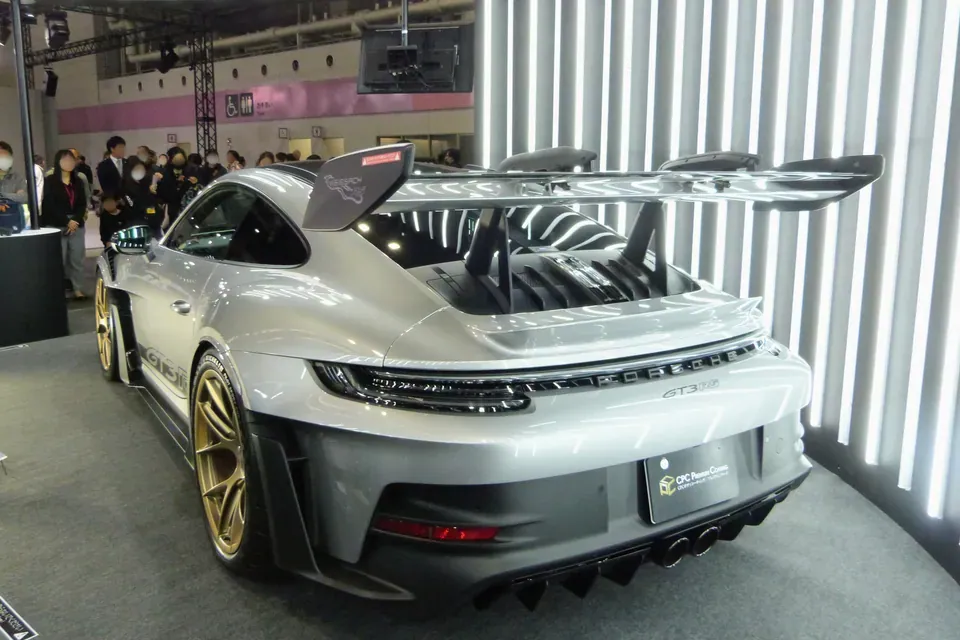
Documentary photographPhoto: Damian Morys · CC BY 2.0 · resized and cropped · Registration identifiers pixelated for privacy.
Engine redprint / verifiedM97/77
3.8 L flat-six · naturally aspirated · M97/77Longitudinal rear-engine, rear-wheel driveTopology diagram · not to scale · based on the cited primary sources
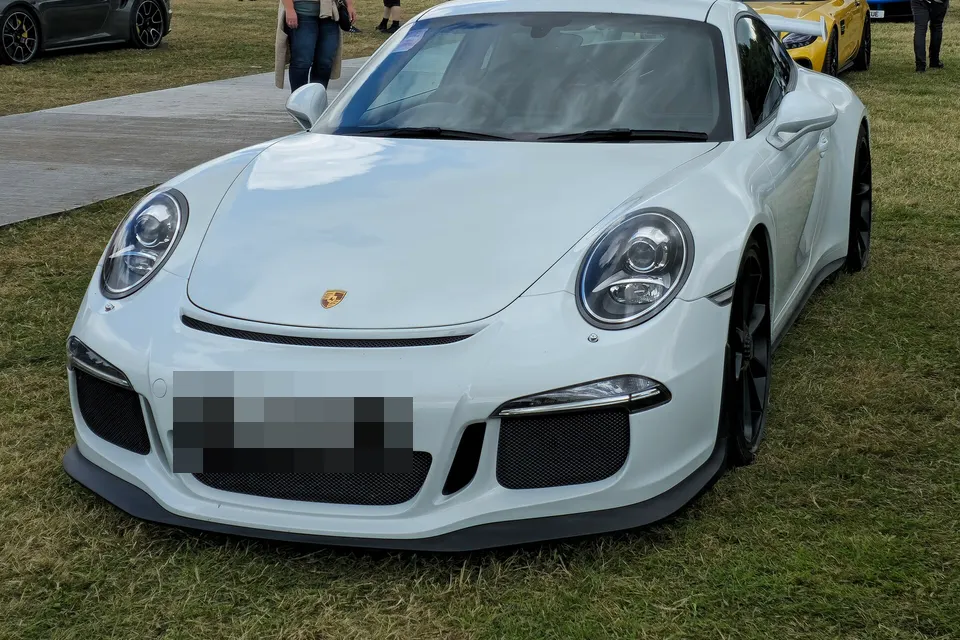
The 3.8-litre 997.2 GT3 added output, centre-lock wheels and revised aerodynamics without losing the manual.
R / production rarity
How rare is it?
A simple 1–5 rating based on completed worldwide production for this exact version. Price and desirability are not included.
Rarity ratingNot availableNo comparable worldwide production total
Production bandNot available
Production evidenceNo exact production total
ProducedWorldwide total used for the rating
Production total unavailable
A reliable worldwide figure is not listed in the references.
How the rating works
The rating uses five fixed production bands. Smaller production runs receive higher ratings. Exact totals and responsibly sourced estimates for this precise version can be rated. Plans, regional totals, lower bounds, disputed figures and broader-family totals remain visible but unclassified. The evidence description is kept separate from the rating so a source limitation cannot change how scarcity is measured.
The 997.2 GT3 arrived in 2009 as the second development of a generation that had already made the GT3 more usable without abandoning its motorsport-derived core. Porsche enlarged the naturally aspirated flat-six from 3.6 to 3.8 litres, the first displacement increase in GT3 history. The change was not a move toward effortless low-speed performance; it strengthened the engine across its operating range while preserving the escalating response and manual interaction that defined the model.
Its M97/77 engine displaced 3,797 cc and produced 320 kW (435 PS) with 430 Nm. Dry-sump lubrication and the established Mezger-derived crankcase architecture supported repeated high-load use, while VarioCam timing broadened the delivery. Porsche raised the operating ceiling to 8,500 rpm and retained a six-speed manual gearbox driving the rear wheels. The technical identity is therefore inseparable from the combination of increased capacity, high engine speed and a driver-operated transmission.
Porsche’s official GT3 chronology records 0–100 km/h in 4.1 seconds and 312 km/h, but the 997.2’s importance is not captured by acceleration alone. Centre-lock wheels became standard and soon became a visual GT3 signature. Revised aerodynamics and chassis development continued the movement toward greater circuit authority, while the relatively compact 997 body retained proportions and visibility that place the car between the earlier analogue GT3s and the larger, technology-heavy 991 generation.
Engineering and character
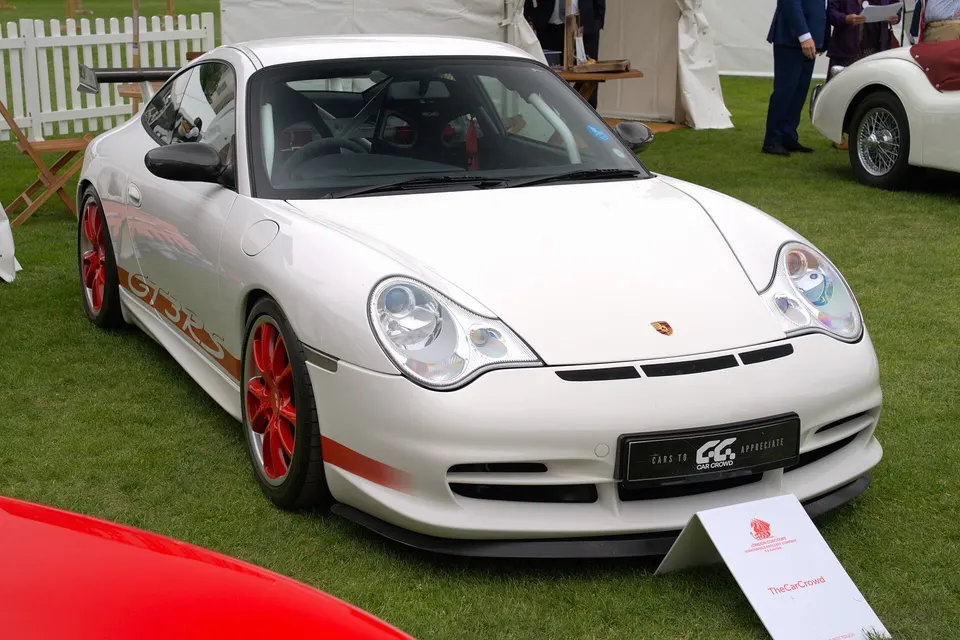
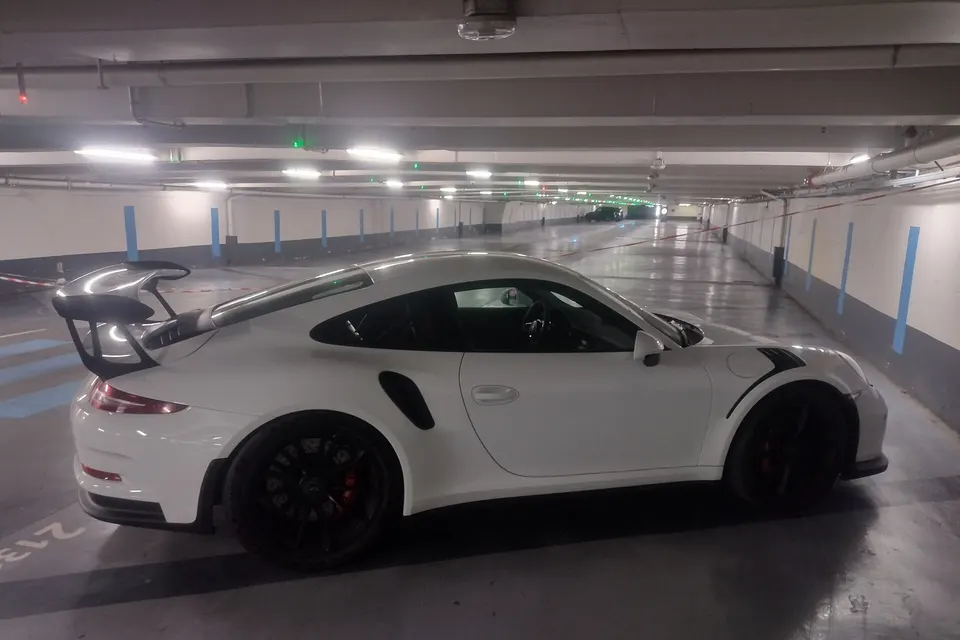
The 997.2 also became the foundation for two increasingly specialised RS cars. The contemporary 3.8-litre GT3 RS received model-specific output, tracks and gearing, while the limited RS 4.0 expanded the engine to 3,996 cc and adopted racing-derived internal components. Those cars dominate many retrospective discussions, but they do not erase the standard GT3. The 435 PS model is the central production configuration from which the extremity of both RS derivatives can be measured.
From the cabin, the sound is an interaction between intake resonance, valvetrain, exhaust and the close mechanical connection of the drivetrain. The 3.8-litre engine has greater body than the earlier 3.6 while remaining urgent near the limit. Correct documentation must identify the factory exhaust and intake, because aftermarket systems can overwhelm subtler engine and gear noise. Tyres, road surface, microphone position and load should be recorded rather than mistaken for permanent traits of the car.
Its historical position is also defined by what came next. The 991.1 GT3 abandoned both the Mezger-derived engine architecture and the manual gearbox, adding direct injection, PDK and rear-axle steering. That later car was quicker and represented a genuine technical reset. The 997.2 consequently closes one coherent chapter: naturally aspirated Mezger lineage, rear-wheel drive and manual control in the standard GT3, before Porsche reconsidered almost every part of the formula.
Legacy and identity
The distinctions are more than collector vocabulary: displacement, output, gearing, bodywork and production purpose differ. For a general reader, the car explains how continuous development can matter as much as revolution. For a purist, its appeal lies in being the mature, non-RS expression of a mechanical lineage that was about to end.
01
Engineering context
Enlarged 3.8-litre Mezger-derived flat-six with dry-sump lubrication and VarioCam timing.
04 / family tree
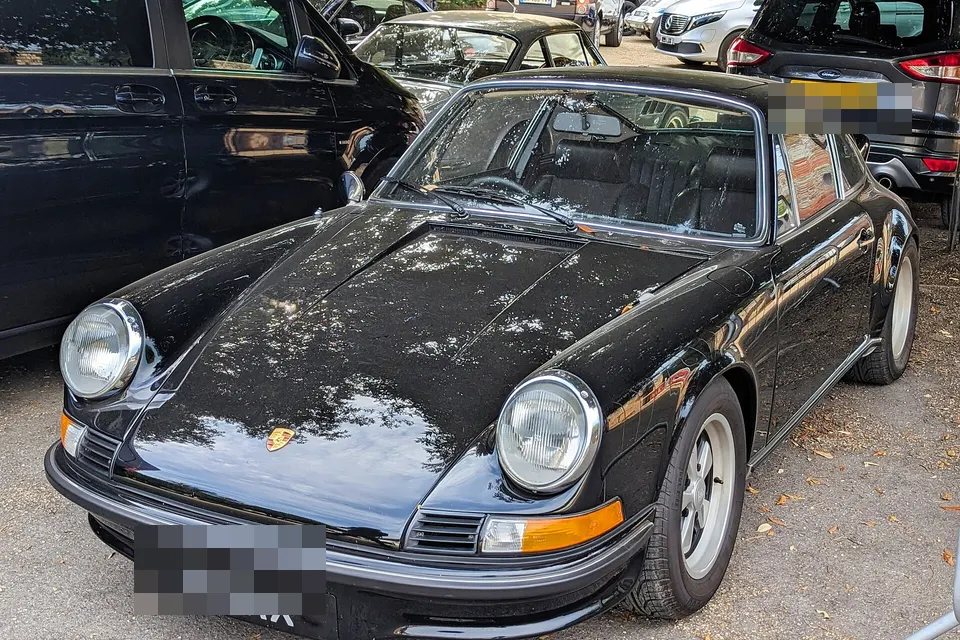
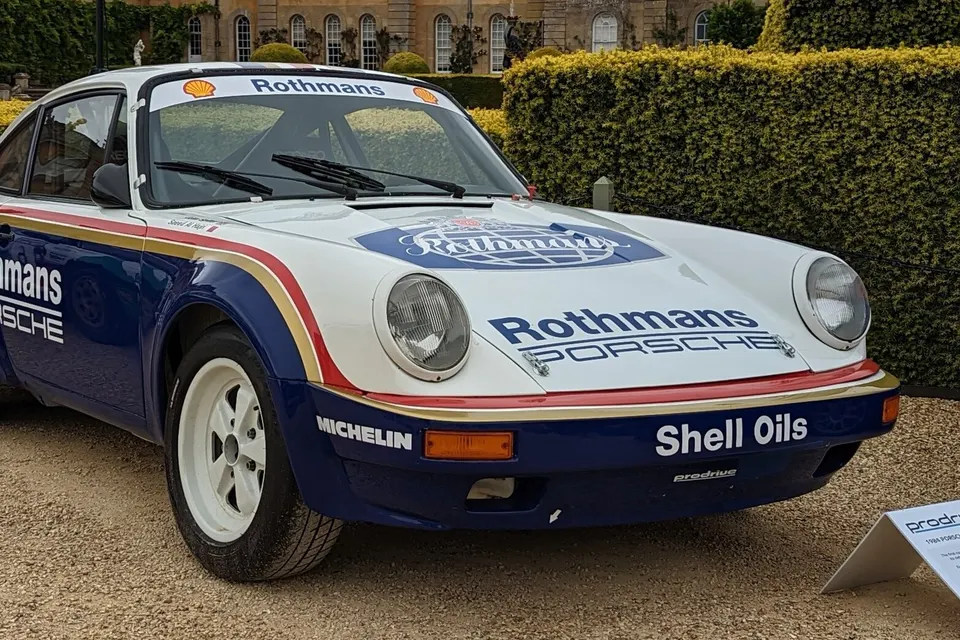
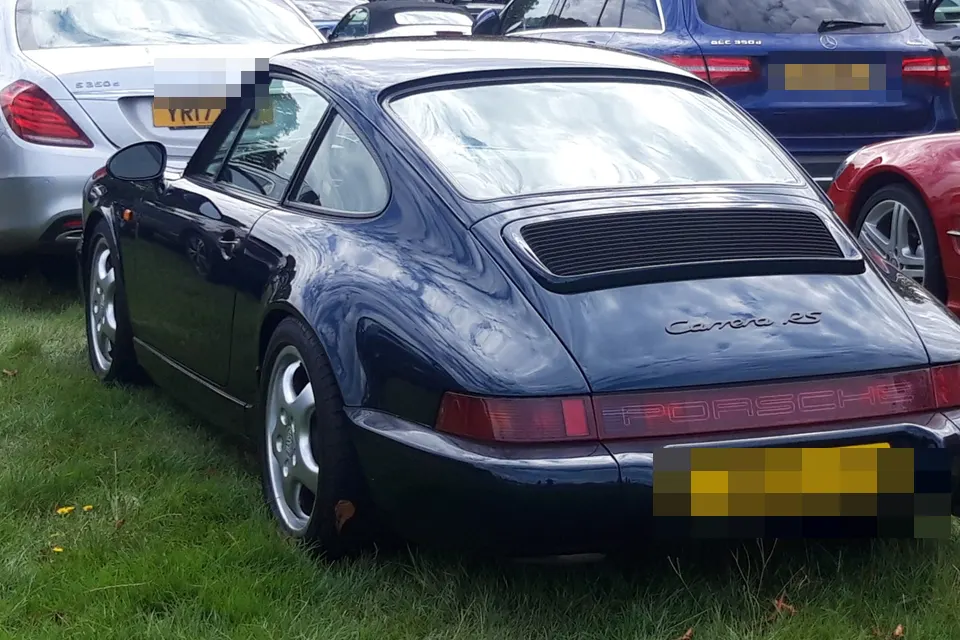
Model lineage
1972–2024 · 19 documented milestones
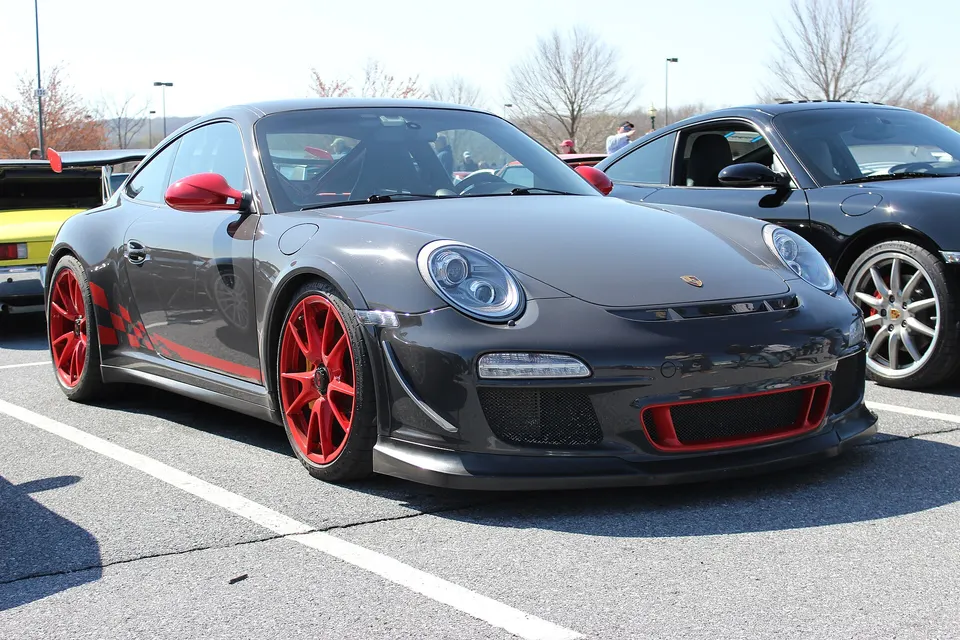
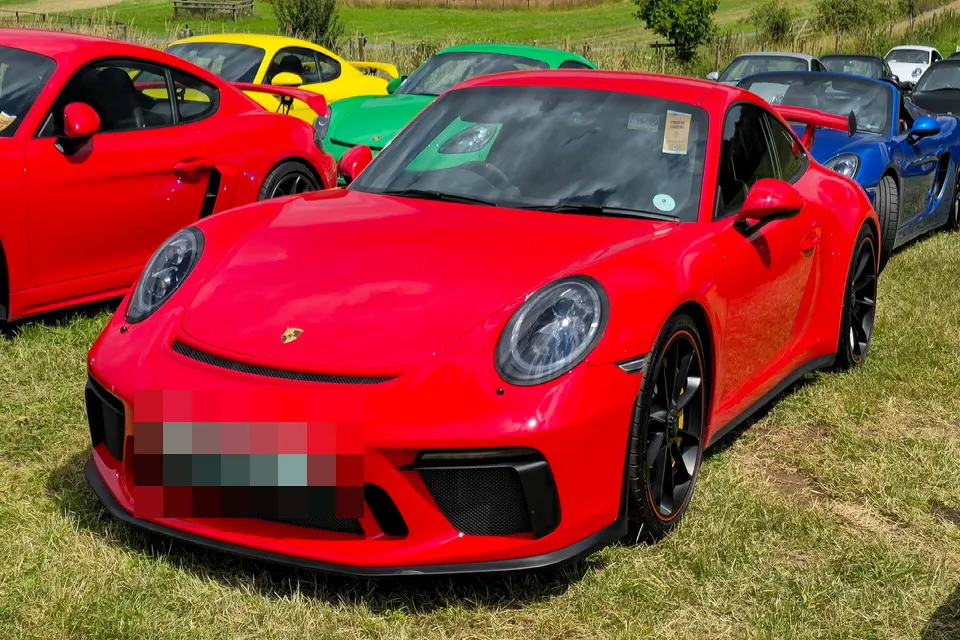
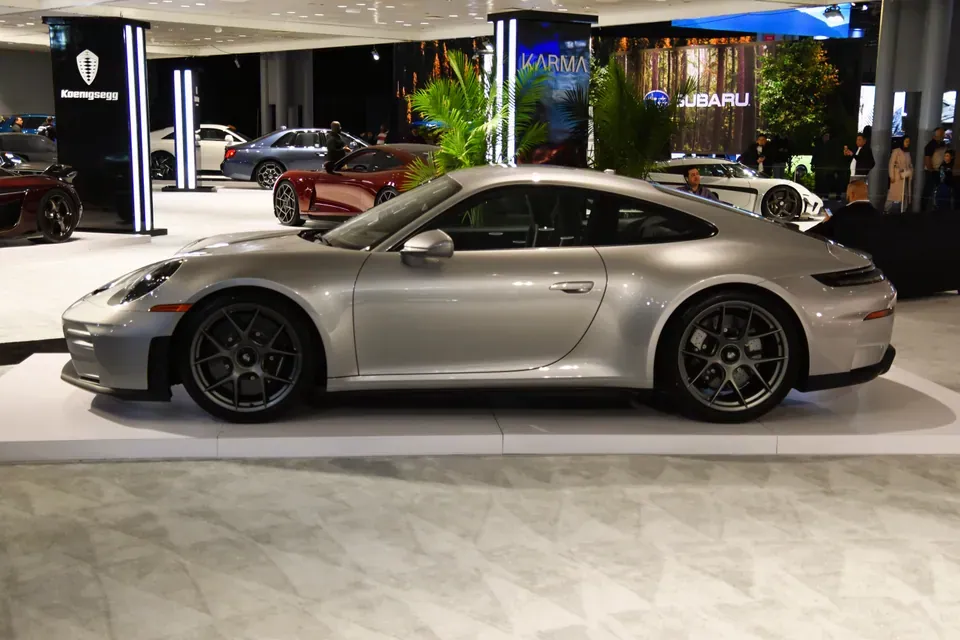
Photo: Calreyn88 · CC BY 4.0 · resized and cropped · Registration identifiers pixelated for privacy.