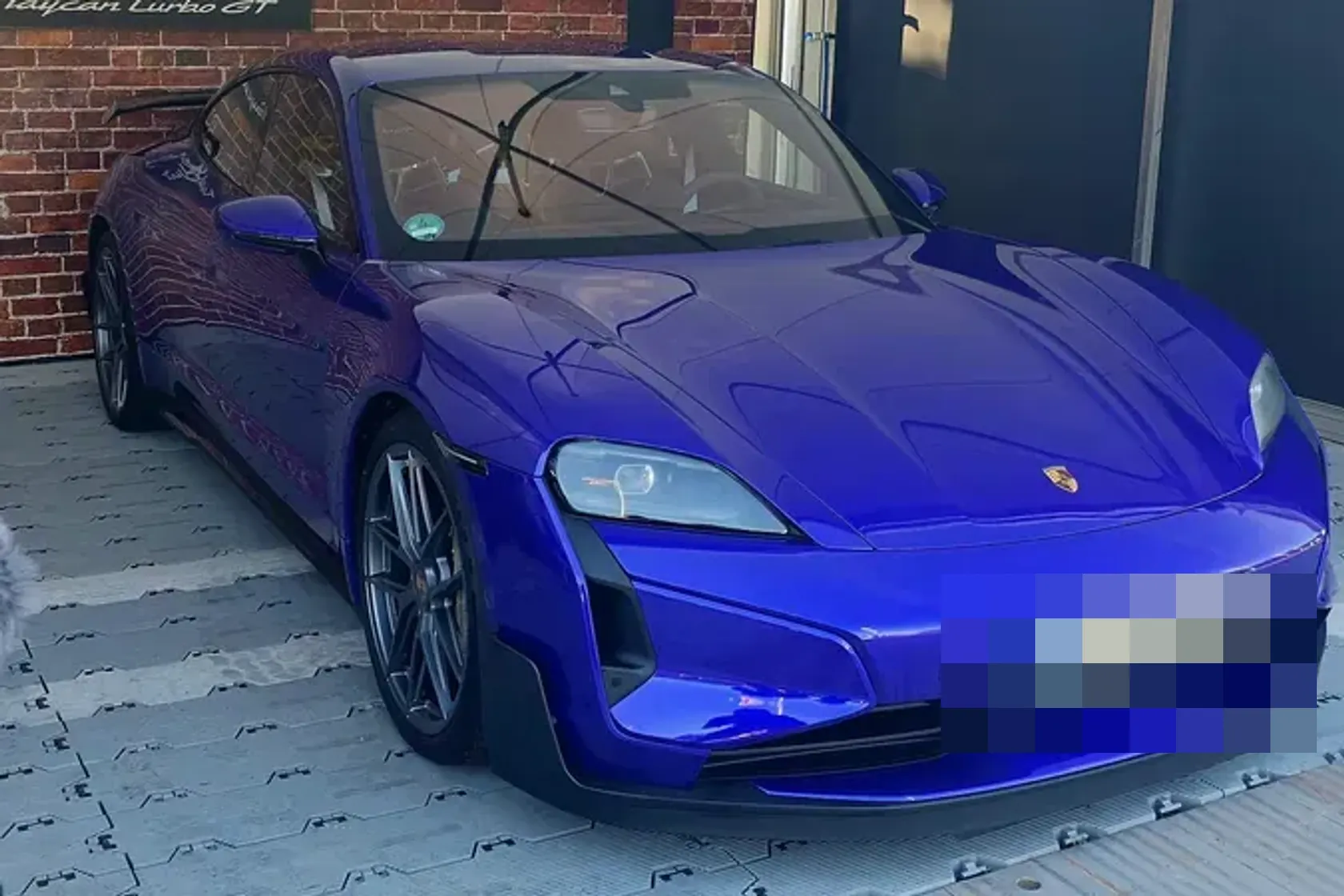
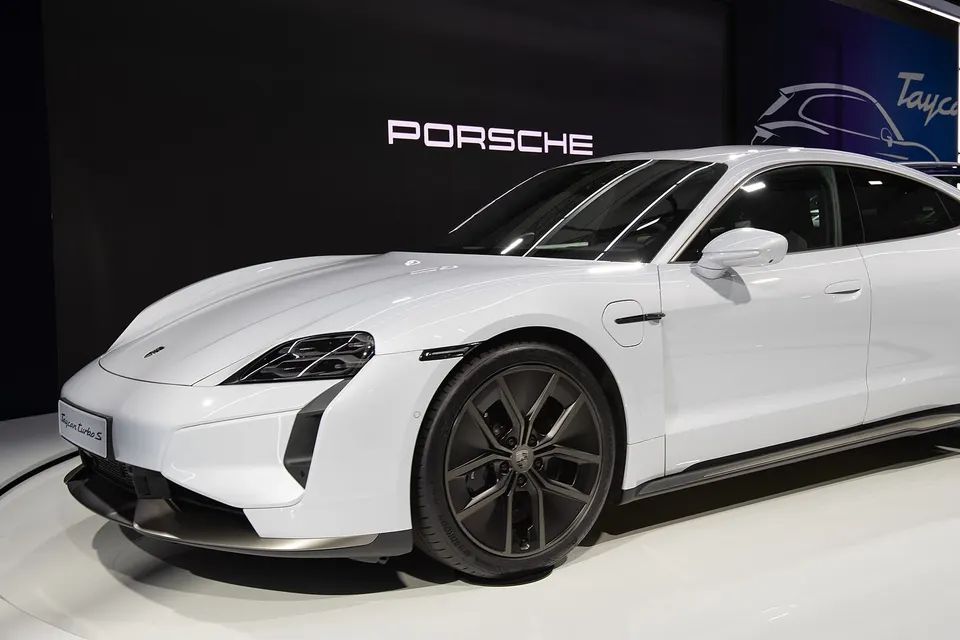
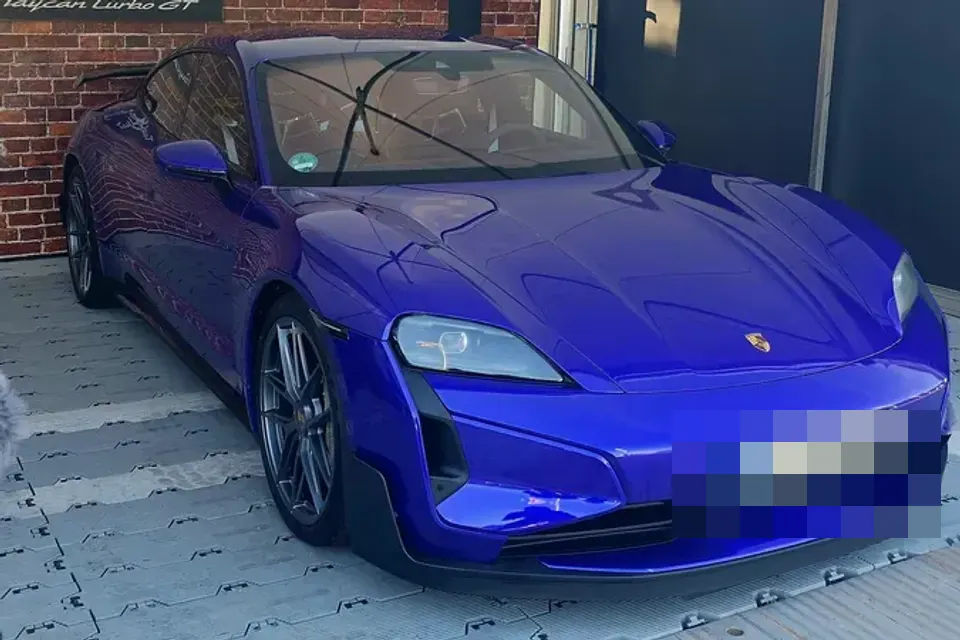
Documentary photographPhoto: Calreyn88 · CC BY-SA 4.0 · resized and cropped · Registration identifier pixelated for privacy.
Engine redprint / verifiedDual PSM AWD
High-output dual-motor 800 V architectureFront and rear motors, variable all-wheel driveTopology diagram · not to scale · based on the cited primary sources
Taycan Turbo GT with Weissach Package is the exact Y1A production representative for the Taycan Turbo GT milestone in this archive’s source-led family tree.
R / production rarity
How rare is it?
A simple 1–5 rating based on completed worldwide production for this exact version. Price and desirability are not included.
Rarity ratingNot availableNo comparable worldwide production total
Production bandNot available
Production evidenceNo exact production total
ProducedWorldwide total used for the rating
Production total unavailable
A reliable worldwide figure is not listed in the references.
How the rating works
The rating uses five fixed production bands. Smaller production runs receive higher ratings. Exact totals and responsibly sourced estimates for this precise version can be rated. Plans, regional totals, lower bounds, disputed figures and broader-family totals remain visible but unclassified. The evidence description is kept separate from the rating so a source limitation cannot change how scarcity is measured.
Open-licence recordings can appear with a visible Unregistered note; archive verification still requires independent identity and configuration evidence.
Listening descriptors remain editorial; architecture and output claims trace to the cited manufacturer material.
The Taycan Turbo GT arrived in 2024 as Porsche’s most powerful series-production car, and the Weissach Package turned it into a specifically circuit-focused two-seater. The focus here is that package rather than the standard four-seat Turbo GT. The distinction is structural and functional: Porsche removed rear seats and other equipment, revised aerodynamics and reduced mass by 70 kg compared with the non-Weissach version. A shared powertrain does not make the two configurations interchangeable.
Two permanent-magnet synchronous motors drive all four wheels through the familiar single-speed front and two-speed rear layout, but the high-output rear pulse inverter operates at up to 900 amperes. Porsche strengthened transmission gears, bearings and clutch hardware for the increased input torque and lengthened the rear ratio to support the 305 km/h maximum speed. Continuous output is 580 kW (789 PS); Launch Control provides 760 kW (1,034 PS), with 815 kW (1,108 PS) available for at most two seconds.
Those three power states must remain distinct. Attack Mode can provide up to 120 kW of additional power for ten seconds outside Launch Control, subject to conditions including more than 30 percent battery charge and a suitable battery temperature; it is not added on top of the 815 kW peak. The system derives from Porsche’s Formula E work and imposes a recovery interval to manage heat. A premium page exposes that logic rather than advertising every maximum as simultaneously and indefinitely available.
Engineering and character
The Weissach car uses a fixed rear wing, model-specific front and underbody aerodynamics, lightweight ceramic brakes, forged wheels and track-oriented tyres. Removing the rear seats contributes to 0–100 km/h in 2.2 seconds and 0–200 km/h in 6.4 seconds under Porsche’s stated conditions. During 2024 the derivative set records at the Nürburgring Nordschleife, Laguna Seca and Shanghai, but lap distance, driver, weather, tyres and timing protocol must stay attached to each result.
Its acoustic identity includes higher-current inverter tones, motor harmonics, the strengthened two-speed rear transmission, tyre load and Porsche Electric Sport Sound. The gearbox’s longer ratio and circuit thermal strategy distinguish it from a Turbo S even before synthetic sound is enabled. A rigorous recording logs Attack or Launch state, battery temperature and charge, cooling status, sound mode, gear event and microphone position. Track footage also needs speed and safety context rather than using public-road material to imply unrestricted performance.
The Turbo GT qualifies for RedlineCodex independently through documented output above 800 hp; factory-authored sound remains a second area of interest. That dual rationale must not dilute the exact derivative boundary. The standard Turbo GT keeps rear seats and uses a different aerodynamic balance, while the updated Turbo S peaks at 700 kW. The Weissach Package is therefore neither a cosmetic trim nor the generic name for every high-output Taycan—it is the two-seat, fixed-wing end of the J1 II range.
Legacy and identity
The focus here is the 2024-onward Y1A Taycan Turbo GT with Weissach Package. It excludes the standard Turbo GT, Turbo S, modified Taycans and Formula E competition cars. The broader story explains how a production EV manages short peak, launch and ten-second attack states. Current, temperature, gearing, seating, aero and timing metadata turn extraordinary claims into verifiable ones. That exactness is especially valuable for electric performance, where software and thermal state can change the result without changing the badge.
01
Model identity
Y1A is displayed prominently so this record cannot be confused with an adjacent derivative.
02
Original soundtrack
Modified exhausts, aftermarket induction and replacement EV sound packs are excluded.
04 / family tree
Model lineage
1900–2024 · 8 documented milestones
No archive image
1900Lohner–Porsche ElectromobileEarly Porsche wheel-hub electric drive[6]
→
No archive image
2015Mission E conceptElectric sports-car concept[4]
→
No archive image
2018Mission E Cross TurismoCrossover concept branch[4]