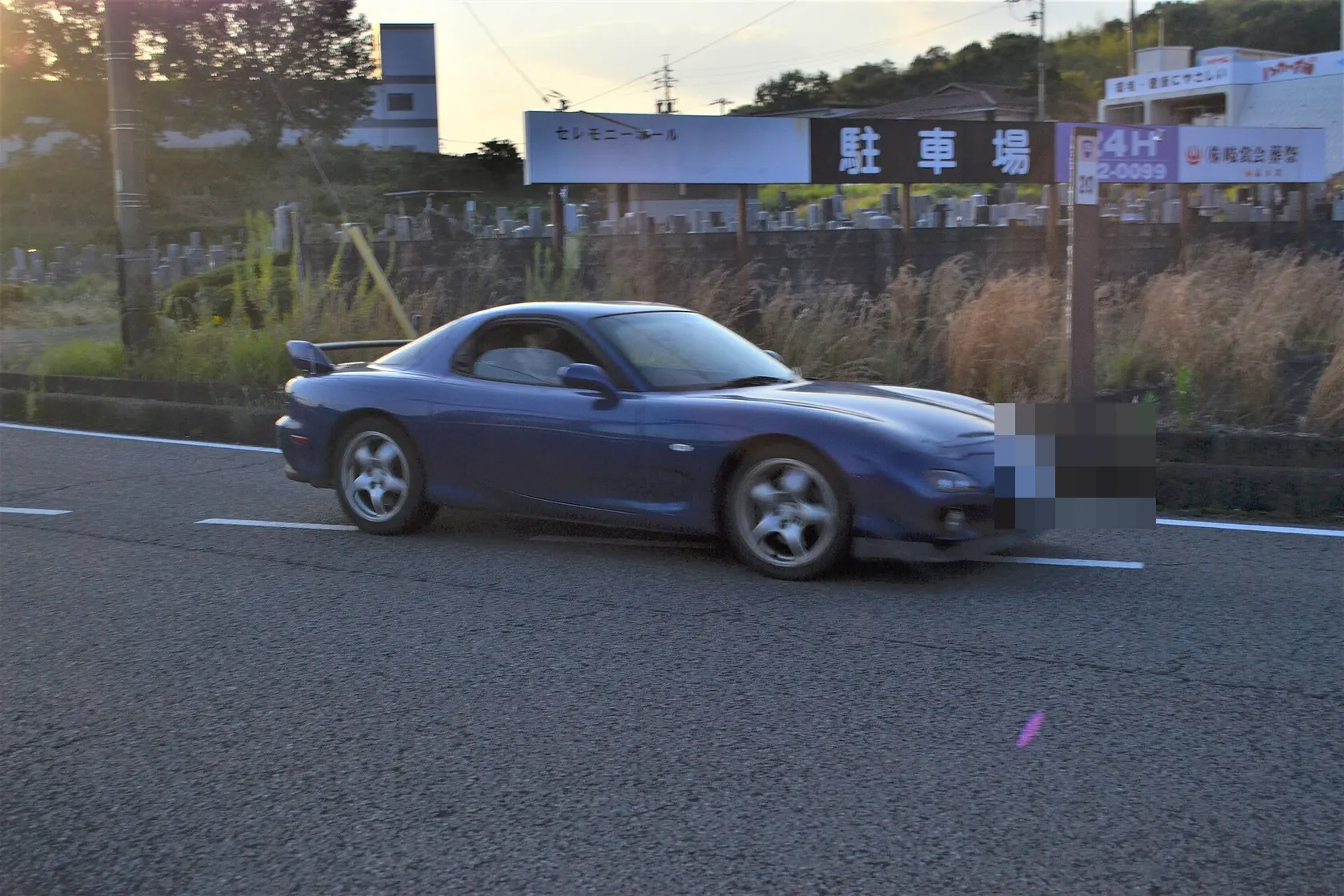
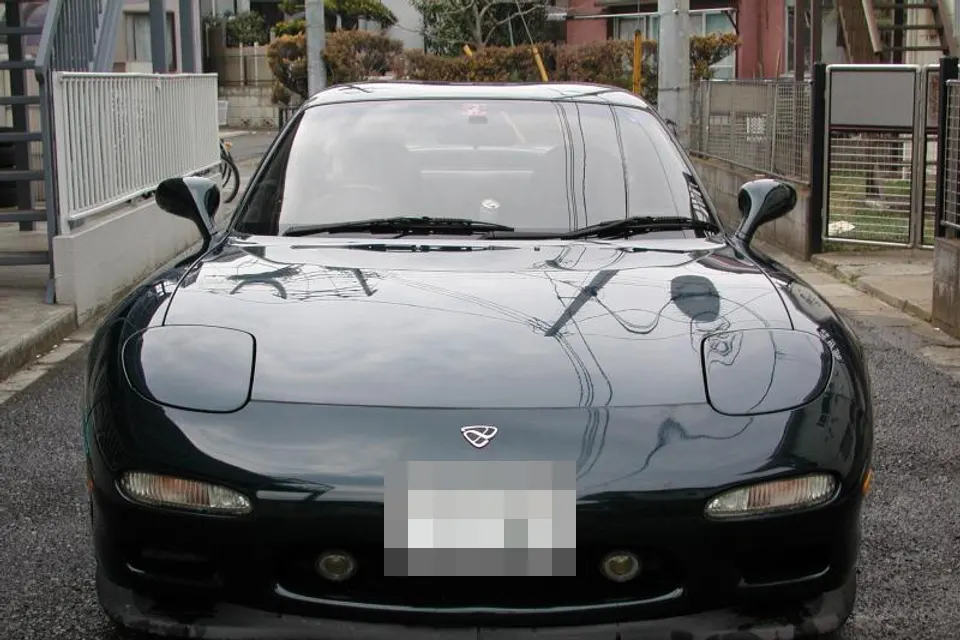
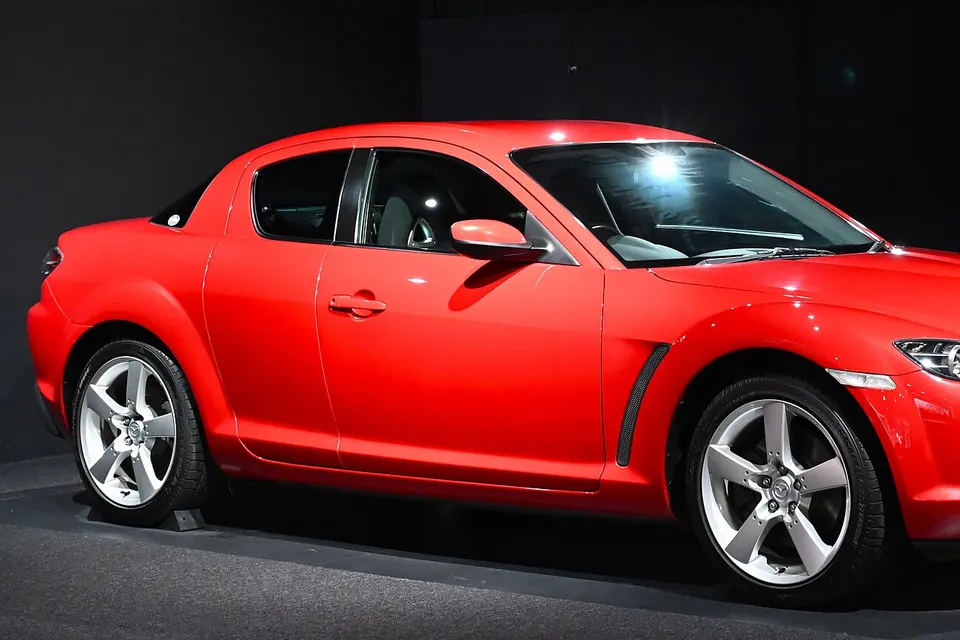
Documentary photographPhoto: 先従隗始 · CC0 1.0 · resized and cropped · Registration identifier pixelated for privacy.
Engine redprint / verified13B-REW
Two-rotor rotary · 654 cc × 2 · sequential twin-turboLongitudinal front-mid engine, rear-wheel driveTopology diagram · not to scale · based on the cited primary sources
The late Japanese-market Type RS combines the 13B-REW two-rotor engine’s sequential twin-turbo system with 206 kW and a five-speed manual.
R / production rarity
How rare is it?
A simple 1–5 rating based on completed worldwide production for this exact version. Price and desirability are not included.
Rarity ratingNot availableNo comparable worldwide production total
Production bandNot available
Production evidenceNo exact production total
ProducedWorldwide total used for the rating
Production total unavailable
A reliable worldwide figure is not listed in the references.
How the rating works
The rating uses five fixed production bands. Smaller production runs receive higher ratings. Exact totals and responsibly sourced estimates for this precise version can be rated. Plans, regional totals, lower bounds, disputed figures and broader-family totals remain visible but unclassified. The evidence description is kept separate from the rating so a source limitation cannot change how scarcity is measured.
Mazda revised the Japanese-market RX-7 in December 1998, with sales beginning the following January. The Type RS recorded here received the full 280 PS engine together with model-specific chassis equipment, placing it near the mature end of FD3S production without making it a limited edition. This exact grade matters: Type R shared the output, Type RB used lower calibrations, Type RZ added limited-run equipment and Spirit R arrived only at the end. “Late FD” is not precise enough for ownership or archive work.
The 13B-REW uses two 654 cc chambers and sequential twin turbochargers. Mazda raised output to 206 kW (280 PS) at 6,500 rpm and torque to 32.0 kg-m—approximately 314 Nm—at 5,000 rpm. Higher-flow turbines, abradable seals, roughly 1.2 times the previous boost pressure, larger cooling apertures and reduced silencer back pressure supported the gain. A five-speed manual drives the rear wheels; Mazda did not offer the Type RS with the four-speed automatic used by the Type RB.
Bilstein monotube dampers, twin engine-oil coolers, model-specific tyre sizes and revised brake cooling distinguish the Type RS hardware. Mazda also increased front anti-roll stiffness and fitted a Nardi-developed 370 mm steering wheel with its airbag inflator positioned to reduce rotational inertia. A large rear spoiler could be adjusted for conditions. These are not incidental options borrowed from a brochure: together they define why Type RS is a separate grade from an equally powerful Type R.
Engineering and character
In October 2000 Mazda revised braking, damper and safety equipment across the range while offering a 175-car Type RZ based on the Type RS. That limited car added Recaro seats, BBS wheels, specific Bilstein suspension and a unique colour while reducing about 10 kg. It should not lend its mass or equipment to this regular Type RS passport. Likewise, the 2002 Spirit R series has its own brakes, trim and production context even where output and manual gearbox are shared.
The acoustic signature depends on the complete sequential system. Primary boost arrives first, the transition prepares the secondary circuit, then both compressors support upper-range flow. Solenoid faults or owner simplification can create a pronounced step that is not necessarily factory character. Intake, intercooler, turbochargers, catalysts and the lower-back-pressure 1998 silencer must all be documented.
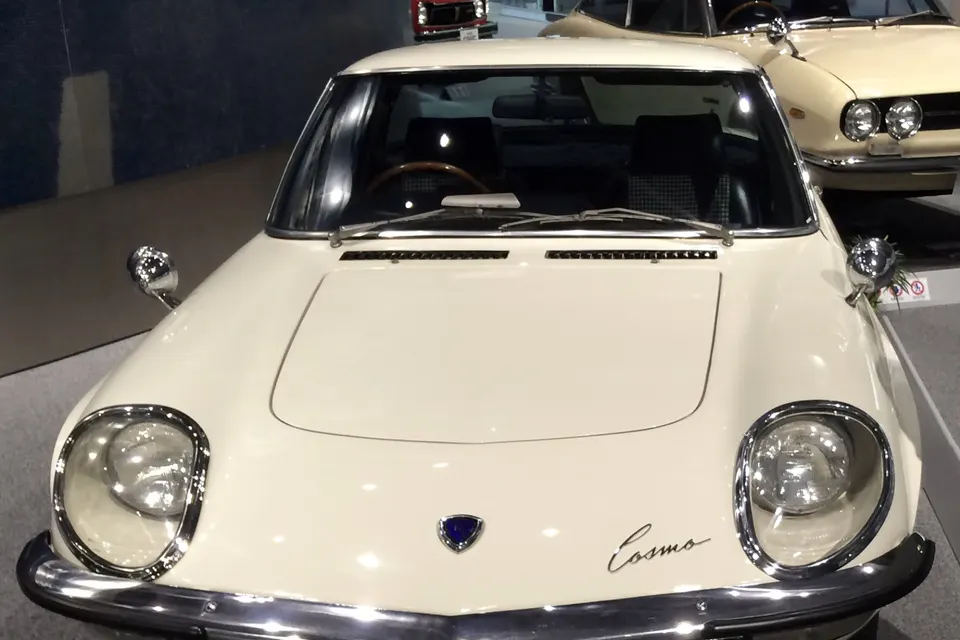
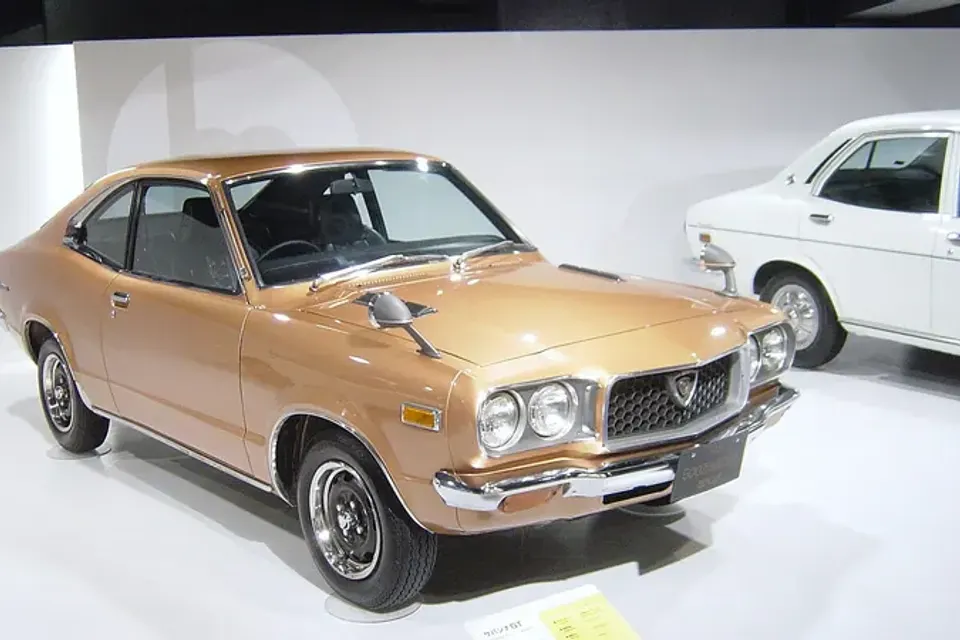
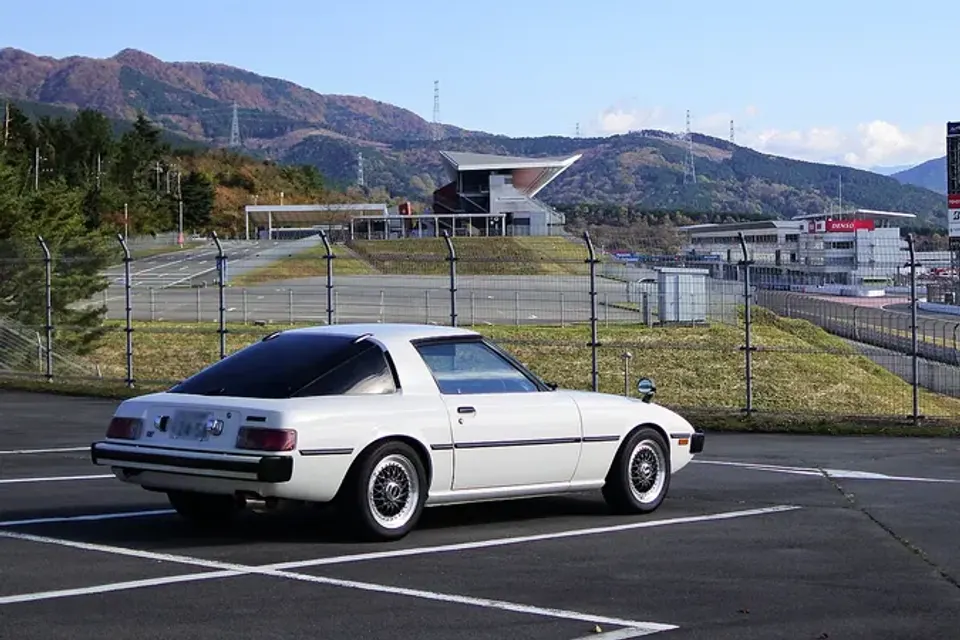
This Type RS belongs at the end of a lineage beginning with the 1978 SA22C and passing through the turbocharged FC. It also precedes the naturally aspirated RENESIS RX-8, which changes port architecture and abandons turbocharging to improve emissions and packaging. The FD’s place is therefore specific: the most developed regular-production expression of Mazda’s sequential twin-turbo rotary sports car before the company chose a different four-seat direction for its next rotary flagship.
Legacy and identity
The focus here is the 1998–2002 GF-FD3S RX-7 Type RS with 280 PS, five-speed manual, Bilstein dampers and twin oil coolers. It excludes Type R, RB, RZ, Bathurst and Spirit R grades, plus single-turbo and port-modified cars. The broader story explains how Mazda extracted the final regular-production gains. Grade-specific cooling, dampers, turbo system and update phase create an exact reference instead of a composite “ultimate FD” built from whichever late-model features attract the most search traffic.
01
654 cc × 2
Mazda documents the nominal chamber volume per rotor rather than describing the engine as a conventional piston displacement.
02
Sequential boost
The turbochargers operate in stages to broaden response rather than working as a simple parallel pair.
03
Type RS identity
The archive now keeps Type RS equipment and figures separate from the limited Type RZ and later Spirit R.