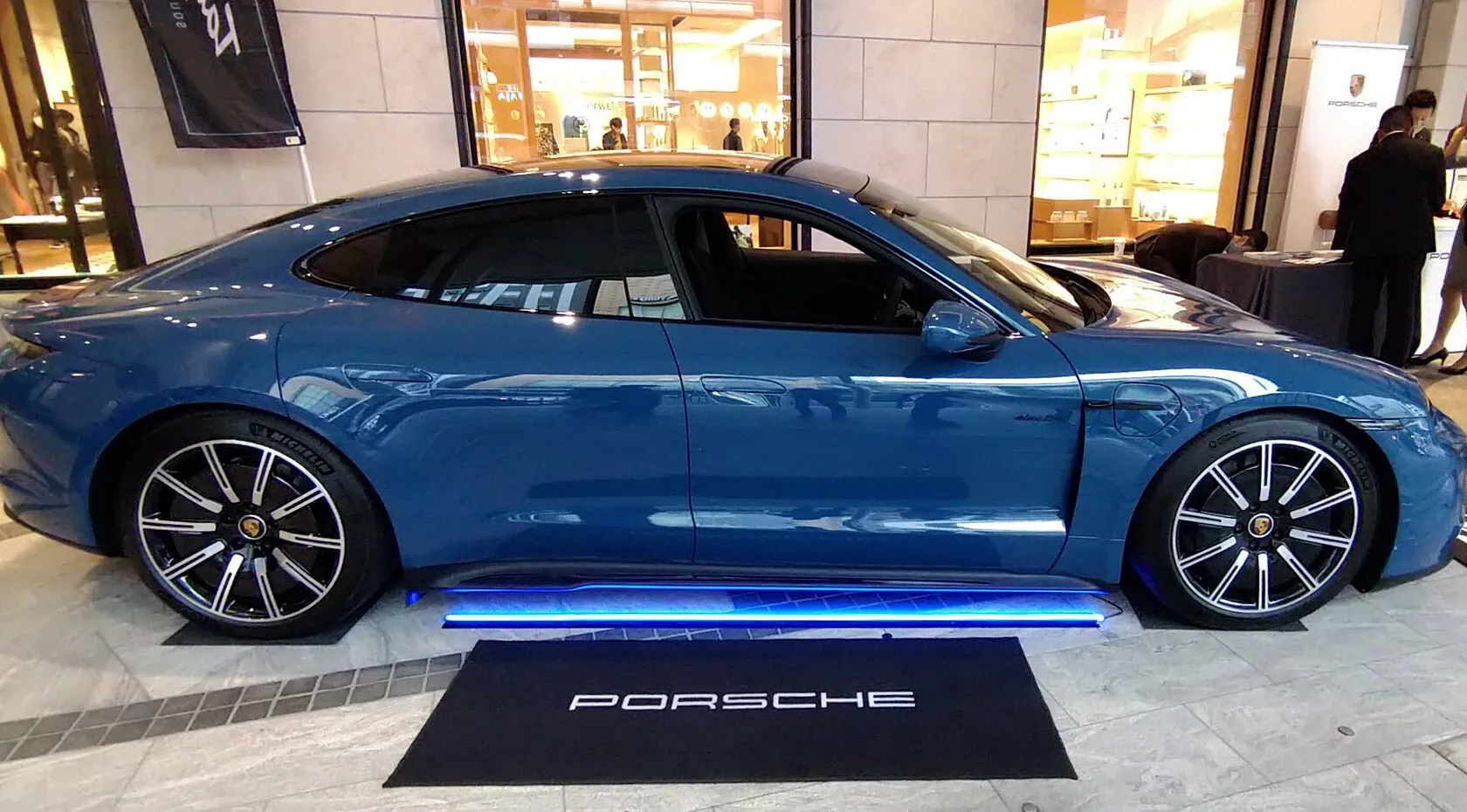
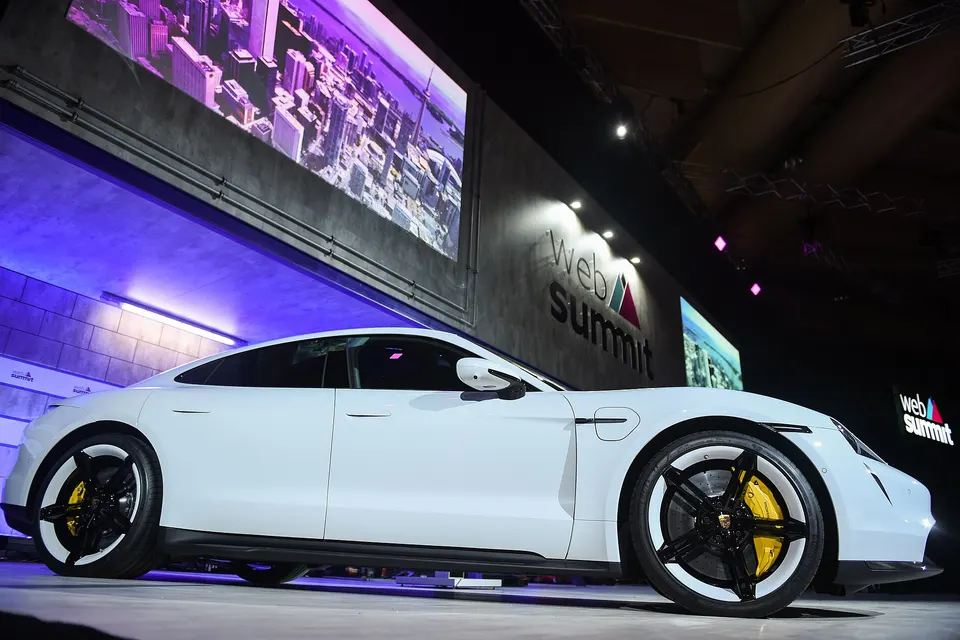
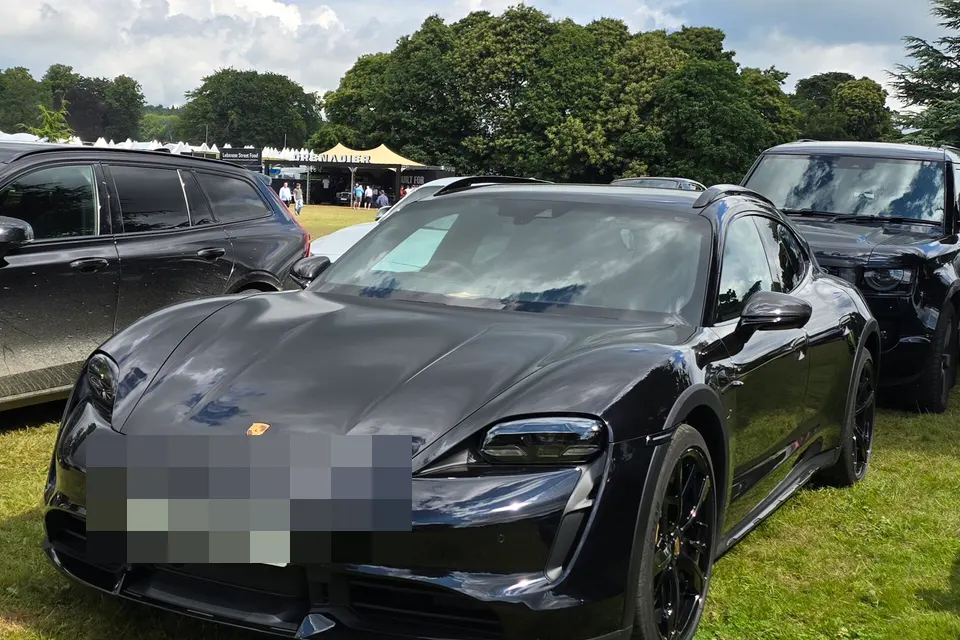
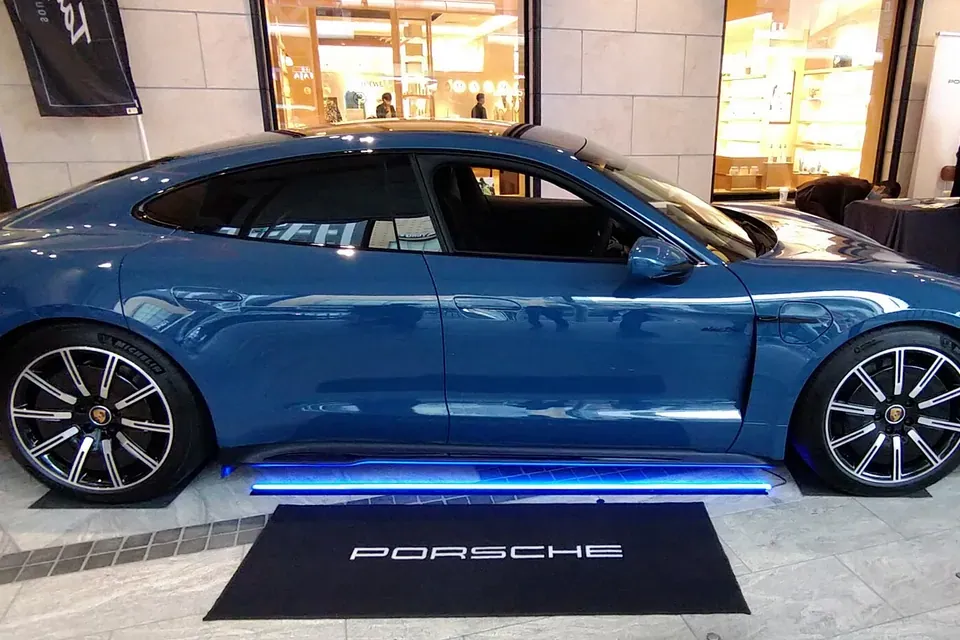
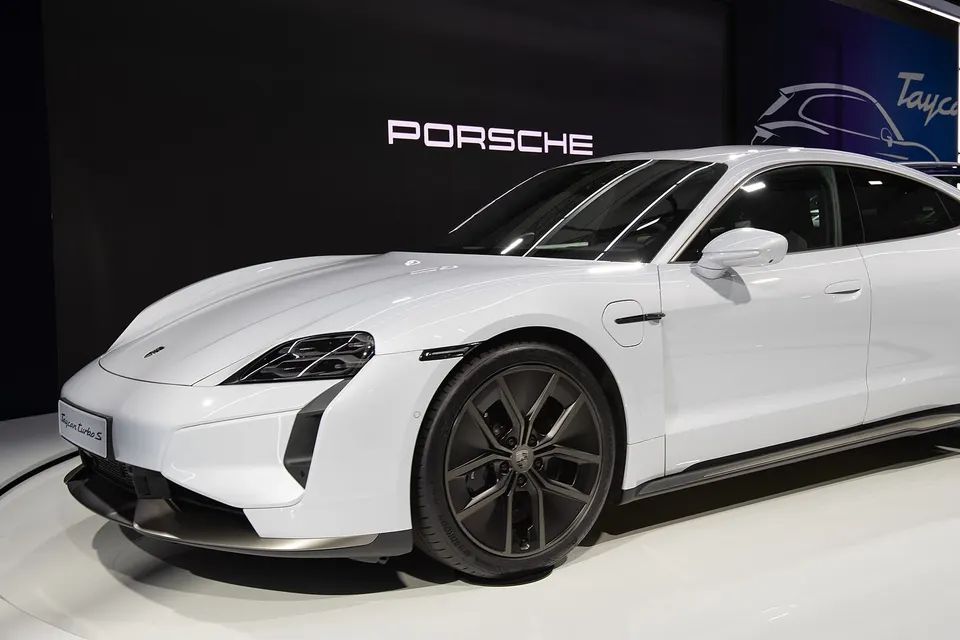
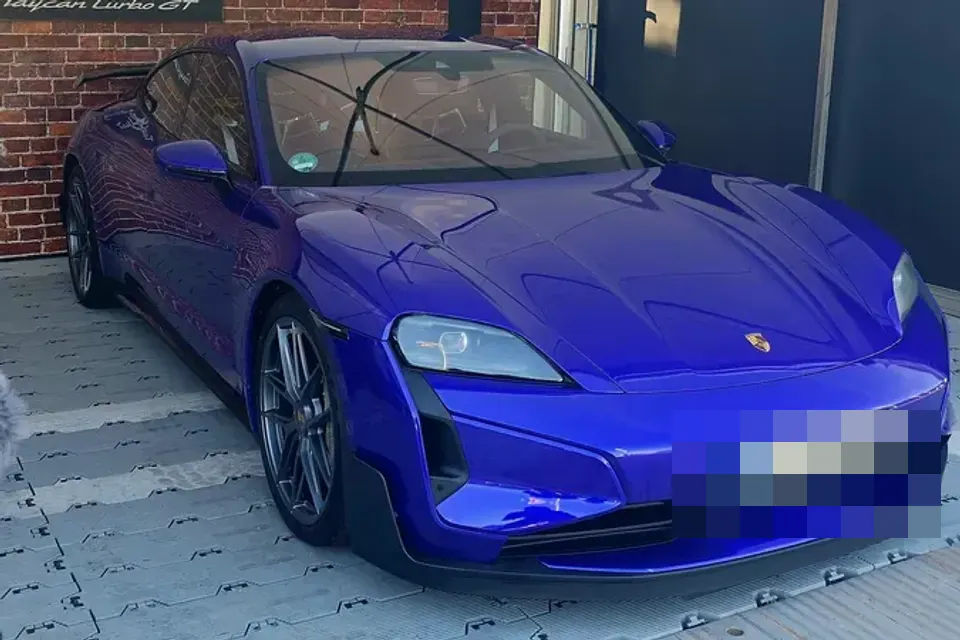
Documentary photographPhoto: Aos.1905 · CC BY 4.0 · resized and cropped
Engine redprint / verifiedDual PSM AWD
Dual permanent-magnet synchronous motors · 800 VFront and rear motors, variable all-wheel driveTopology diagram · not to scale · based on the cited primary sources
The first-generation GTS combines dual permanent-magnet motors with a two-speed rear transmission and a GTS-specific factory Electric Sport Sound.
R / production rarity
How rare is it?
A simple 1–5 rating based on completed worldwide production for this exact version. Price and desirability are not included.
Rarity ratingNot availableNo comparable worldwide production total
Production bandNot available
Production evidenceNo exact production total
ProducedWorldwide total used for the rating
Production total unavailable
A reliable worldwide figure is not listed in the references.
How the rating works
The rating uses five fixed production bands. Smaller production runs receive higher ratings. Exact totals and responsibly sourced estimates for this precise version can be rated. Plans, regional totals, lower bounds, disputed figures and broader-family totals remain visible but unclassified. The evidence description is kept separate from the rating so a source limitation cannot change how scarcity is measured.
Porsche unveiled the first Taycan GTS in November 2021 for the 2022 model year, placing it between the Taycan 4S and Turbo derivatives. RedlineCodex admits this 598 PS electric car through a specific archive rule: it has a distinctive manufacturer-authored sound design, not the separate 800 hp performance threshold. That rationale is important because the catalogue is not treating every electric vehicle as acoustically equivalent. The GTS belongs because Porsche deliberately developed a derivative-specific Electric Sport Sound as part of its character.
A permanent-magnet synchronous motor drives each axle through an 800-volt electrical system. The front motor uses a single-speed reduction gear, while the rear unit uses a two-speed transmission: a short first ratio supports launch performance and the second balances high-speed operation and efficiency. With Launch Control, overboost reaches 440 kW (598 PS) and 850 Nm. The 93.4 kWh gross Performance Battery Plus stores energy beneath the cabin, contributing both mass and a low centre of gravity.
Factory performance figures are 3.7 seconds from 0–100 km/h and 250 km/h. Those values are operating-state dependent in a way combustion shorthand can conceal: battery charge, cell temperature, launch availability and thermal limits influence repeatability. Porsche’s permanent-magnet machines were selected for high power density and sustained performance, while the 800-volt architecture reduces current for a given power level and supports rapid charging.
Engineering and character
The GTS chassis and body sit within the first J1 Taycan generation, using all-wheel drive and adaptive systems to create a distinct calibration rather than relying on a new motor concept. The Cross Turismo is a raised long-roof branch with different body and chassis context, and the later updated Taycan changes battery, output and suspension technology. Similar names across those cars do not make their figures interchangeable.
Porsche described the GTS Electric Sport Sound as deeper, louder and more strongly modulated than other Taycan sound profiles. It is synthesised by design, using vehicle operating data to provide feedback rather than imitating a piston engine. The archive should capture cabin and exterior perspectives with the sound enabled and disabled, recording mode, speed, acceleration request and state of charge. Added third-party sound packs are excluded because they overwrite the authored relationship between this calibration and the car’s actual control signals.
The wider lineage begins with Ferdinand Porsche’s early electric and mixed-drive work, then passes through the Mission E concept and the 2019 production Taycan. The GTS demonstrates a later phase: once basic EV performance was established, sound and chassis calibration became tools for differentiating derivatives. It precedes the comprehensively updated 2024 range and the Turbo GT, whose power exceeds the archive’s 800 hp route. The GTS is here for a different, equally explicit reason.
Legacy and identity
The focus here is the 2022–2024 Taycan GTS saloon, model code Y1A, with its original 93.4 kWh battery, 440 kW overboost and GTS Electric Sport Sound. It excludes the Sport Turismo body, Turbo and Turbo S, later facelift and aftermarket acoustic software. The broader story explains why an EV can have a meaningful factory sound identity. It preserves the motor, gearbox, battery, software and operating-state metadata needed to reproduce that identity rather than recording undifferentiated electric acceleration noise.
01
Why it matters
At 598 PS with launch control it is below the 800 hp rule, but the documented factory GTS sound design qualifies it.
02
Two-speed rear
The rear axle uses two ratios while the front axle uses a single-speed transmission.
03
No combustion imitation
The archive treats Porsche Electric Sport Sound as authored EV feedback, not as a substitute engine soundtrack.
04 / family tree
Model lineage
1900–2024 · 8 documented milestones
No archive image
1900Lohner–Porsche ElectromobileEarly Porsche wheel-hub electric drive[6]
→
No archive image
2015Mission E conceptElectric sports-car concept[4]
→
No archive image
2018Mission E Cross TurismoCrossover concept branch[4]