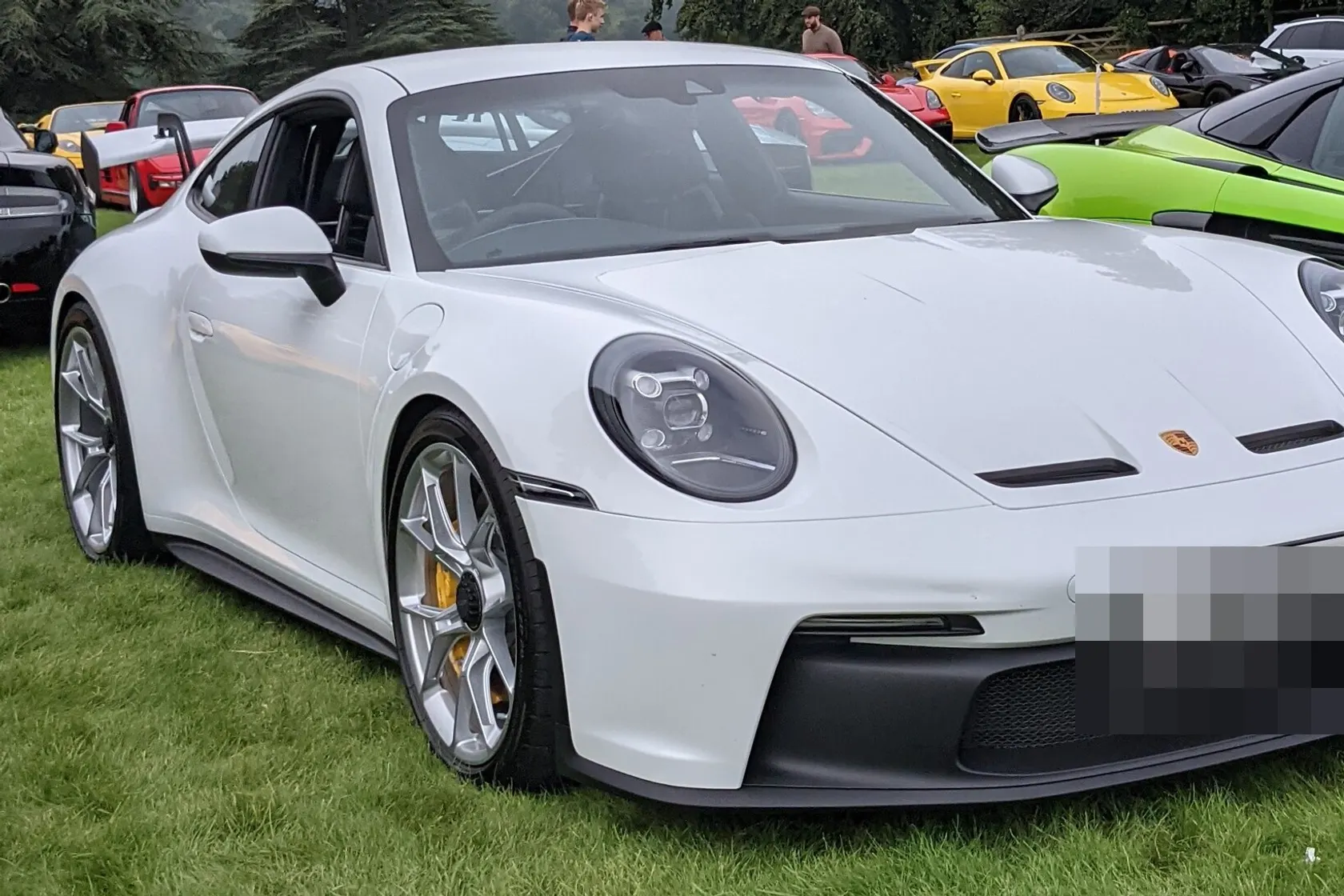
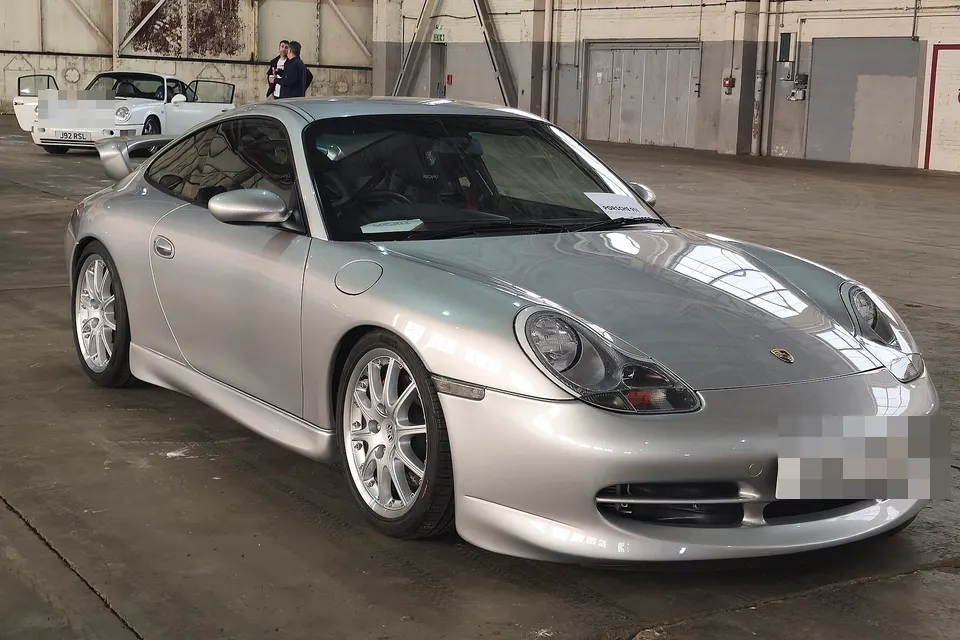
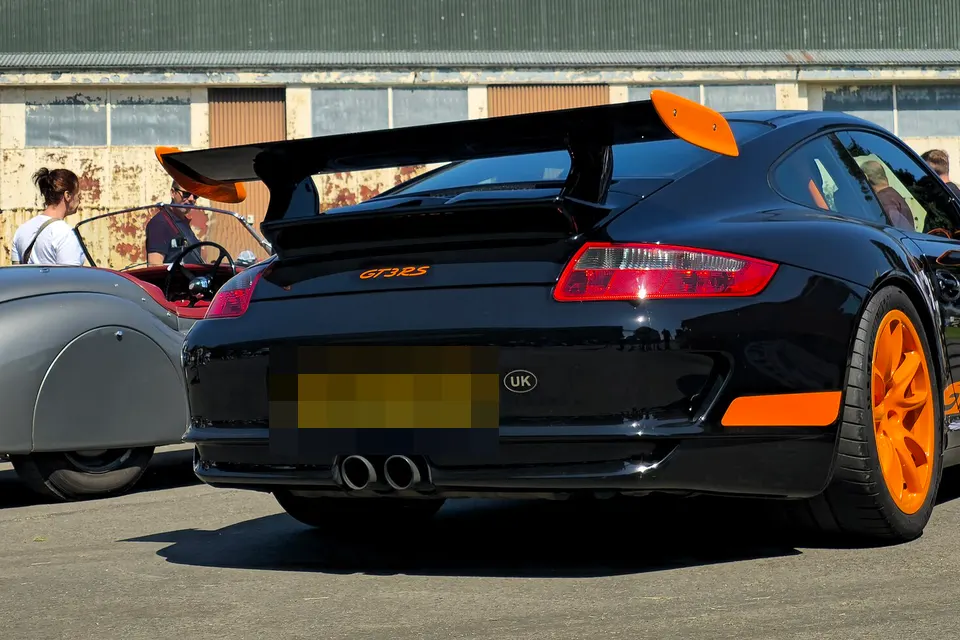
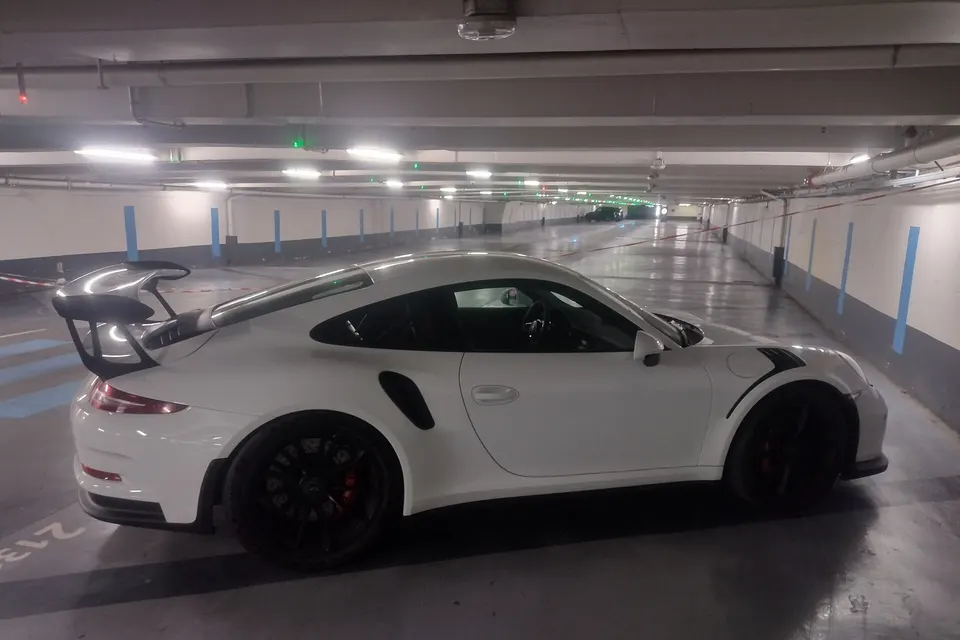
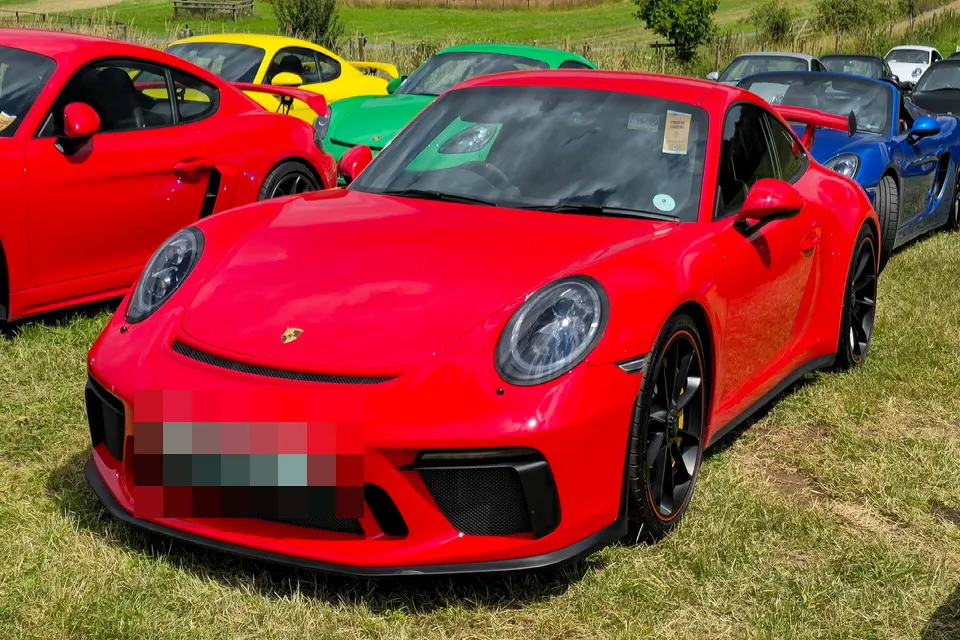
Documentary photographPhoto: Calreyn88 · CC BY-SA 4.0 · resized and cropped · Registration identifier pixelated for privacy.
Engine redprint / verified9A1.5
4.0 L flat-six · naturally aspirated · 9A1.5Longitudinal rear-engine, rear-wheel driveTopology diagram · not to scale · based on the cited primary sources
The 992 GT3 brought double-wishbone front suspension to the road car and retained manual or PDK choice.
R / production rarity
How rare is it?
A simple 1–5 rating based on completed worldwide production for this exact version. Price and desirability are not included.
Rarity ratingNot availableNo comparable worldwide production total
Production bandNot available
Production evidenceNo exact production total
ProducedWorldwide total used for the rating
Production total unavailable
A reliable worldwide figure is not listed in the references.
How the rating works
The rating uses five fixed production bands. Smaller production runs receive higher ratings. Exact totals and responsibly sourced estimates for this precise version can be rated. Plans, regional totals, lower bounds, disputed figures and broader-family totals remain visible but unclassified. The evidence description is kept separate from the rating so a source limitation cannot change how scarcity is measured.
The 992.1 GT3, introduced in 2021, marked the most visible transfer of racing chassis technology into the series-production GT3 up to that point. Porsche retained the naturally aspirated four-litre engine and choice of manual or PDK, but replaced the familiar front strut arrangement with a double-wishbone axle derived conceptually from the 911 RSR. The change separated wheel guidance from spring and damper forces more effectively and gave engineers greater control over tyre contact under circuit loads.
Its 3,996 cc flat-six produced 375 kW (510 PS) and 470 Nm, with a 9,000 rpm operating limit. The engine used six individual throttle valves, rigid valve operation and dry-sump lubrication, keeping response and high-speed breathing central to the experience. Porsche offered a six-speed manual and seven-speed PDK, both driving the rear wheels. As with earlier GT3s, transmission choice materially changes the exact performance record and must accompany any acceleration or weight figure.
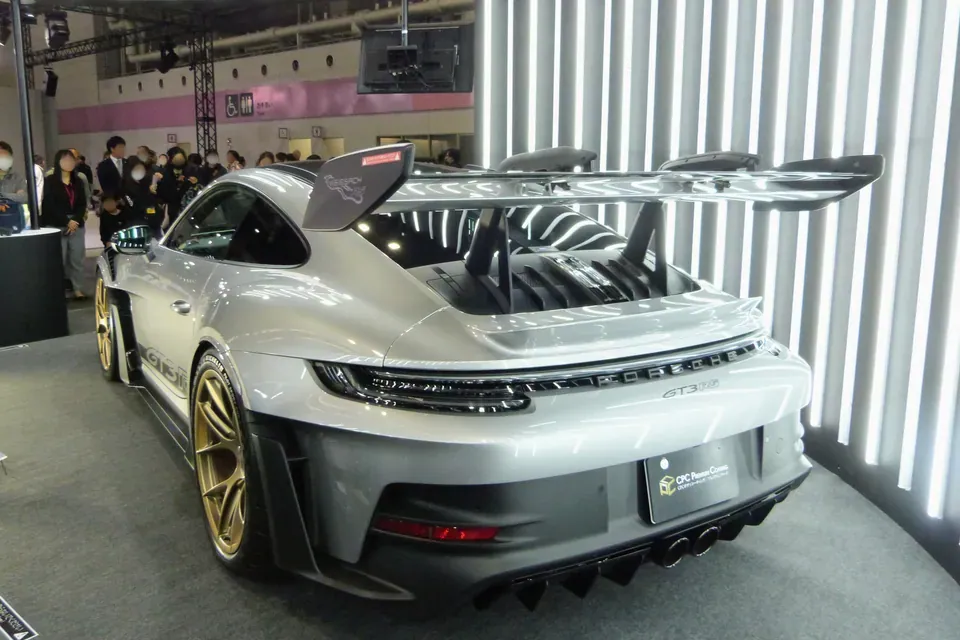
Aerodynamics became more explicit. A swan-neck rear wing supported the blade from above, leaving the lower surface cleaner, while an adjustable front diffuser and revised rear diffuser contributed to the balance. Porsche’s history records that components and concepts came from the 911 RSR, and the car became the first production GT3 to complete the Nürburgring Nordschleife in under seven minutes. The achievement reflected an integrated chassis and aero package rather than engine output alone.
Engineering and character
The 992 body was larger and more digitally equipped than earlier generations, yet Porsche continued to frame the GT3 around circuit durability and driver control. Rear-axle steering, adjustable chassis settings and substantial brakes broadened the operating envelope. The Touring Package again offered a less conspicuous body without the fixed wing. None of those options makes the 992.1 a single universal specification; winged and Touring, manual and PDK combinations require exact identification.
Acoustically, individual throttles and the high engine limit give intake sound a strong role, while particulate filters and modern emissions hardware form part of the original exhaust path. Removing or bypassing those components may change volume and frequency content dramatically. A premium recording preserves them, identifies the selected exhaust and gearbox modes, and distinguishes cabin induction from exterior exhaust. Without that context, a compelling clip can still be poor evidence.
The model sits between the 991.2—where the manual returned and Touring began—and the updated 992.2, which revised gearing, equipment and aerodynamic details. It also supplied the foundation from which the far more aero-dominant 992.1 GT3 RS departed. Seen in that sequence, the standard 992.1 is neither an enlarged 991 nor a restrained RS. It is the generation that made double-wishbone front suspension part of the core GT3 road-car formula.
Legacy and identity
The premium value lies in joining an accessible story—why the chassis represented a break—with the forensic detail an owner needs. Porsche’s GT3 name is continuous, but its engineering is not static; understanding the car requires preserving both the lineage and the changes that make this generation uniquely itself. That precision also gives future comparisons a dependable baseline.
01
Engineering context
Four-litre naturally aspirated dry-sump flat-six with six individual throttle valves and a 9,000 rpm maximum speed.
04 / family tree
Model lineage
1972–2024 · 19 documented milestones
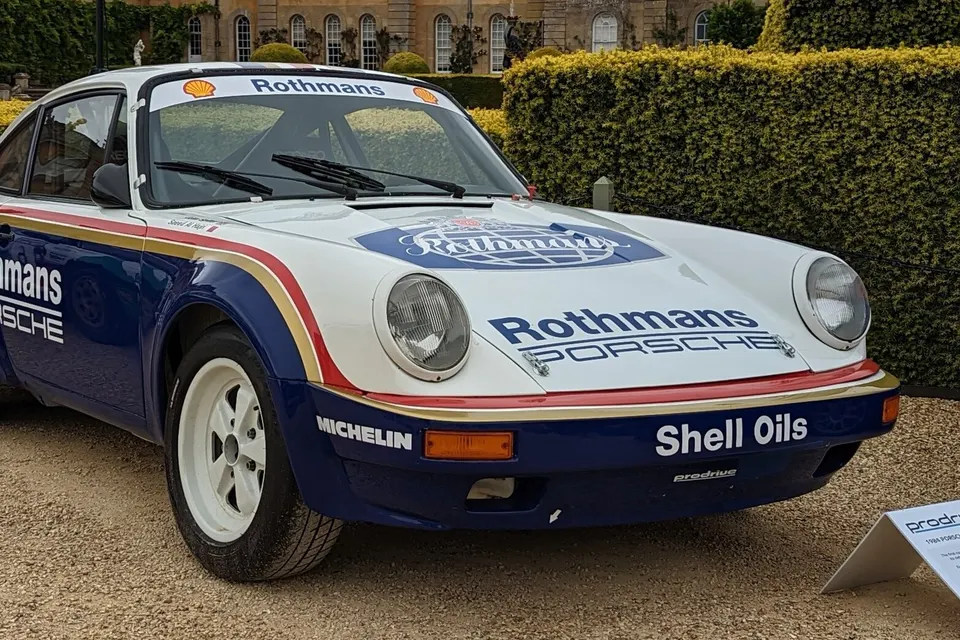
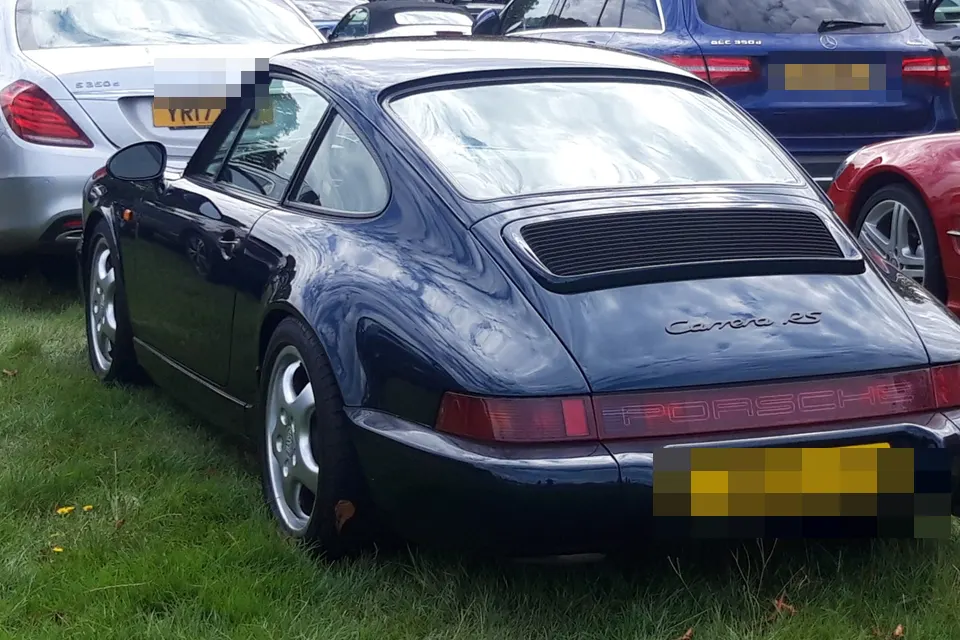
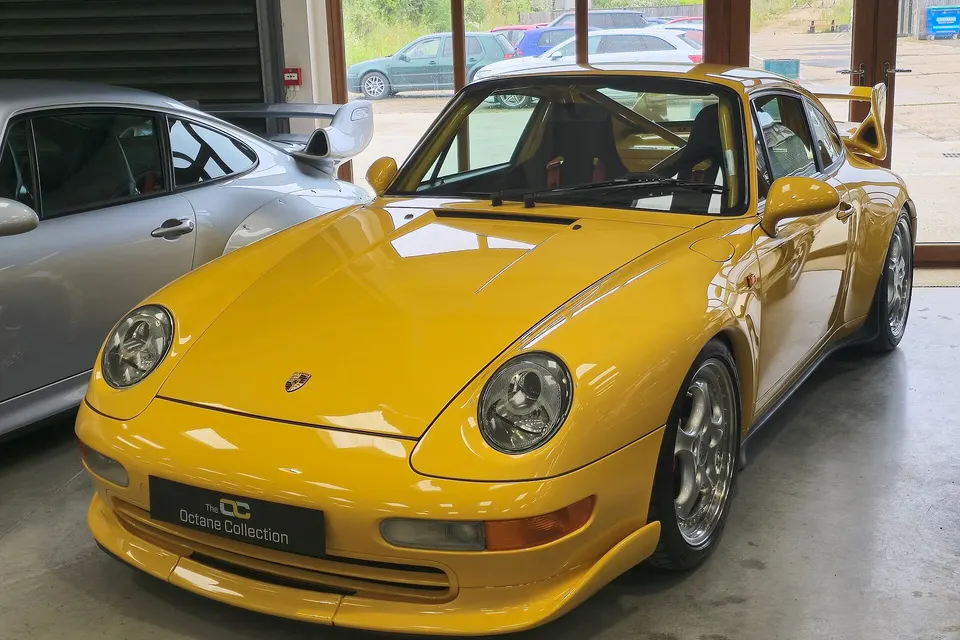
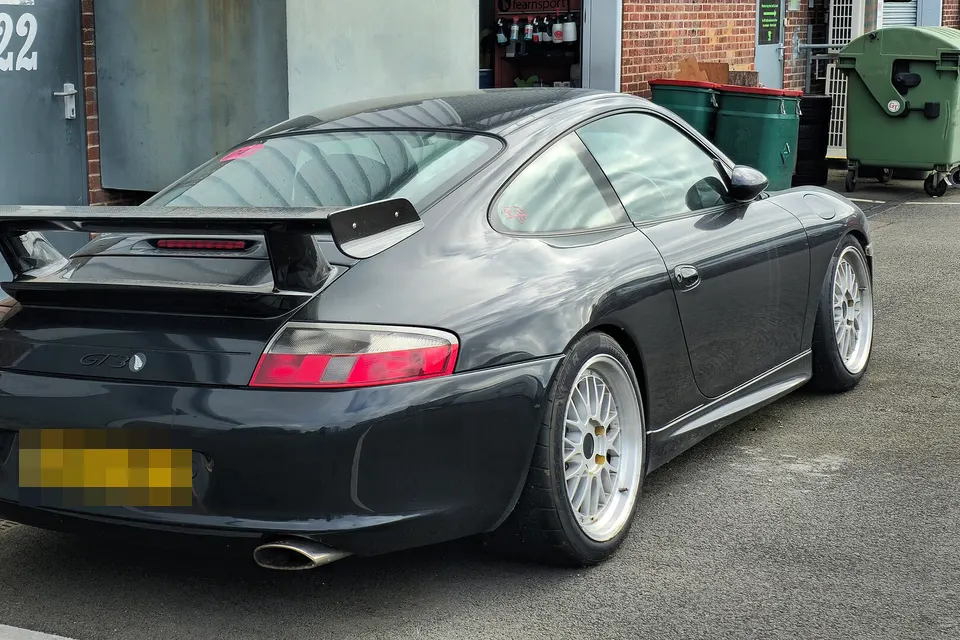
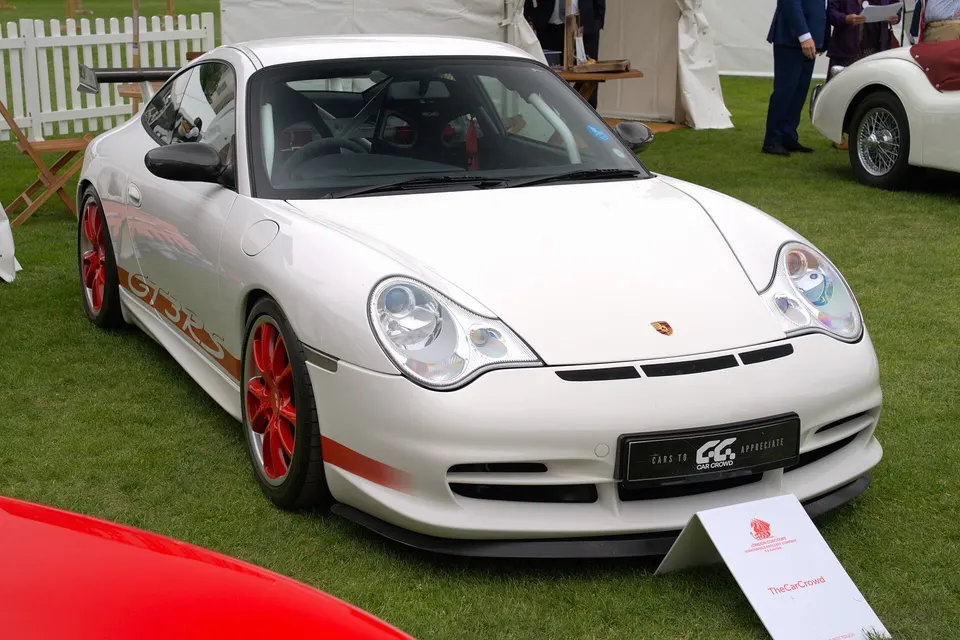
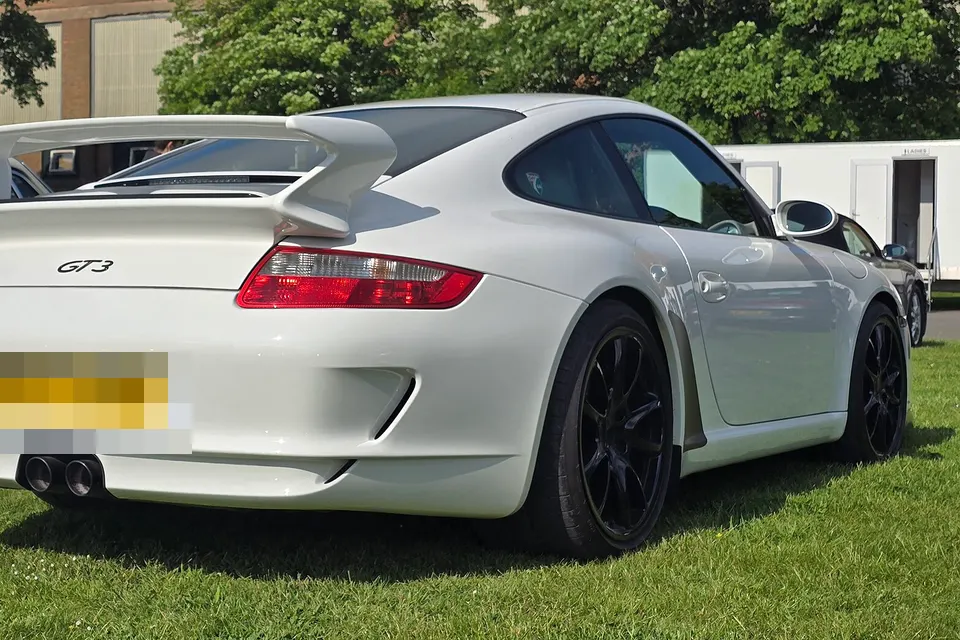
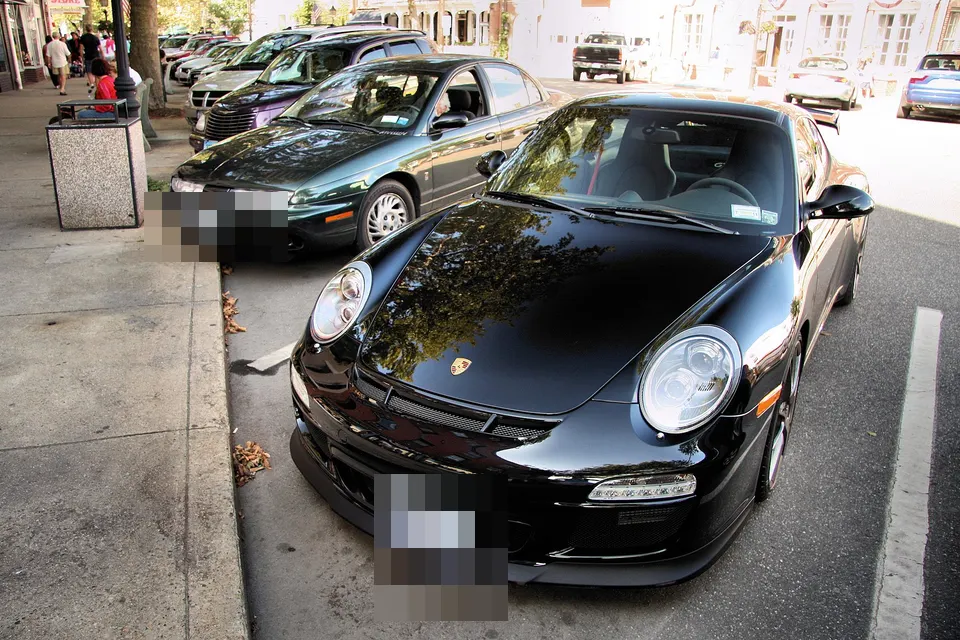
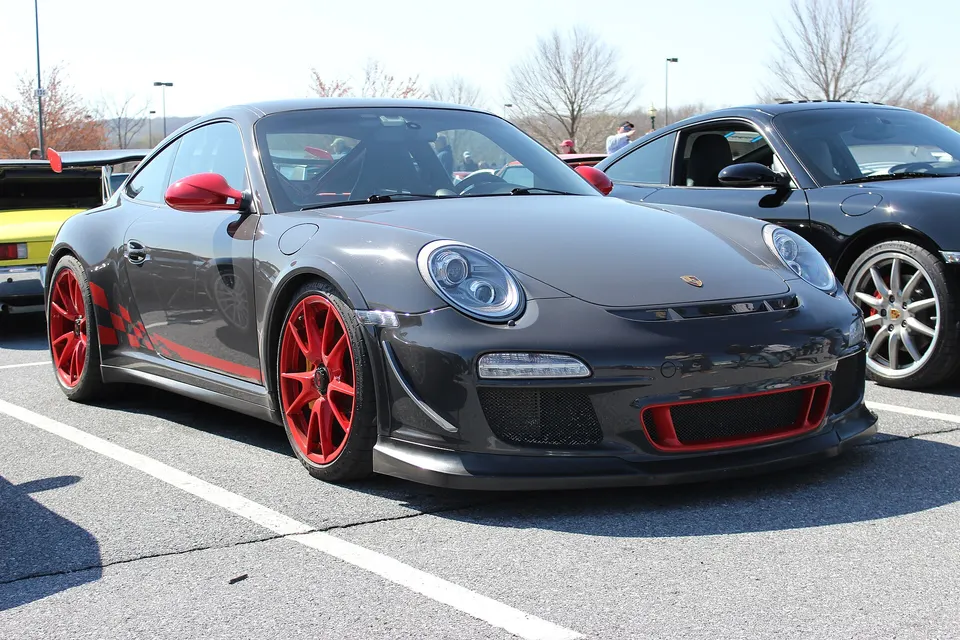
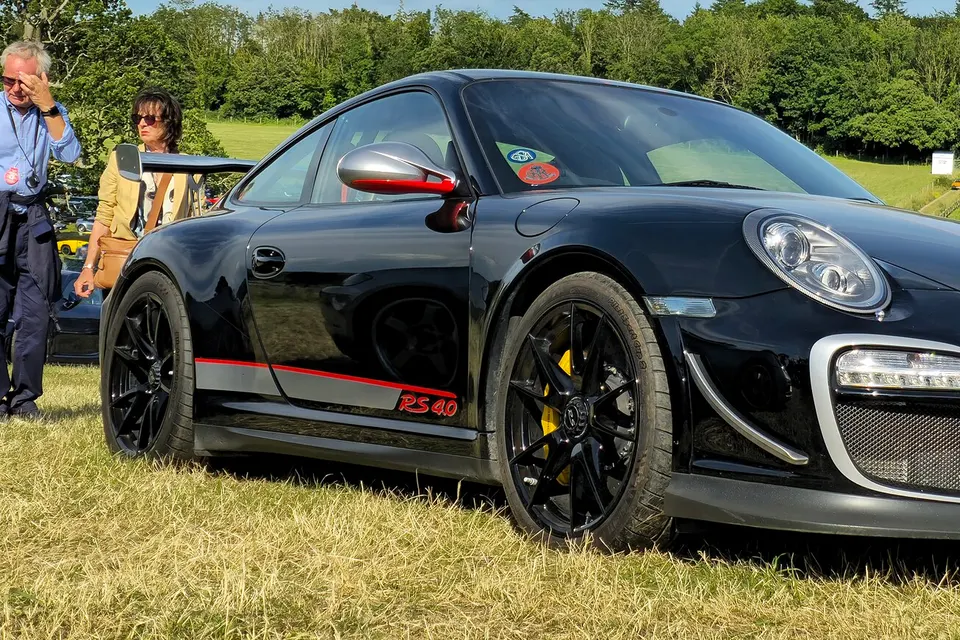
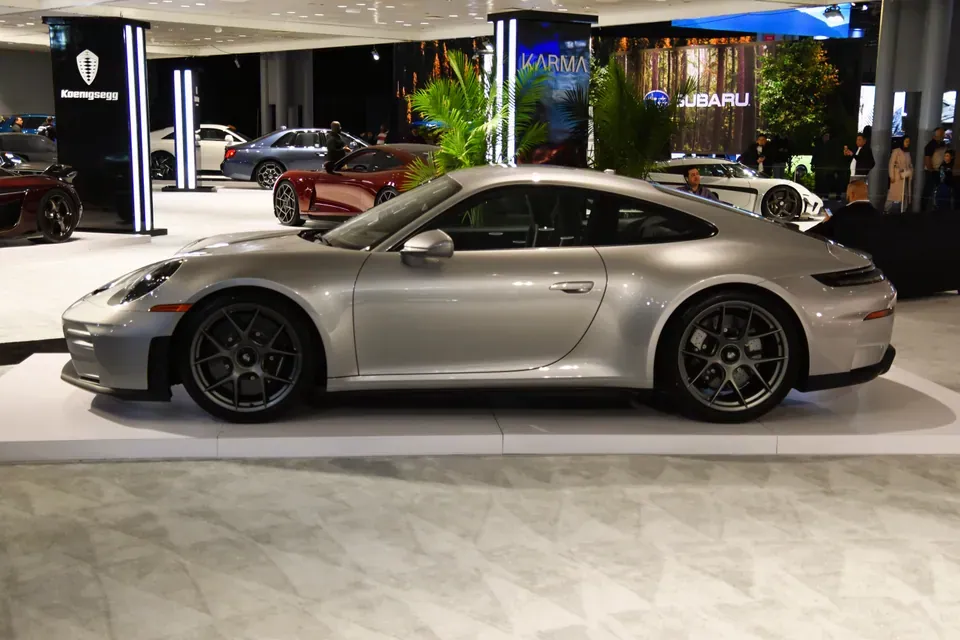
Photo: Calreyn88 · CC BY 4.0 · resized and cropped · Registration identifiers pixelated for privacy.