4.0-litre flat-six · six throttles · 9,000 rpmLongitudinal rear-engine, rear-wheel driveTopology diagram · not to scale · based on the cited primary sources
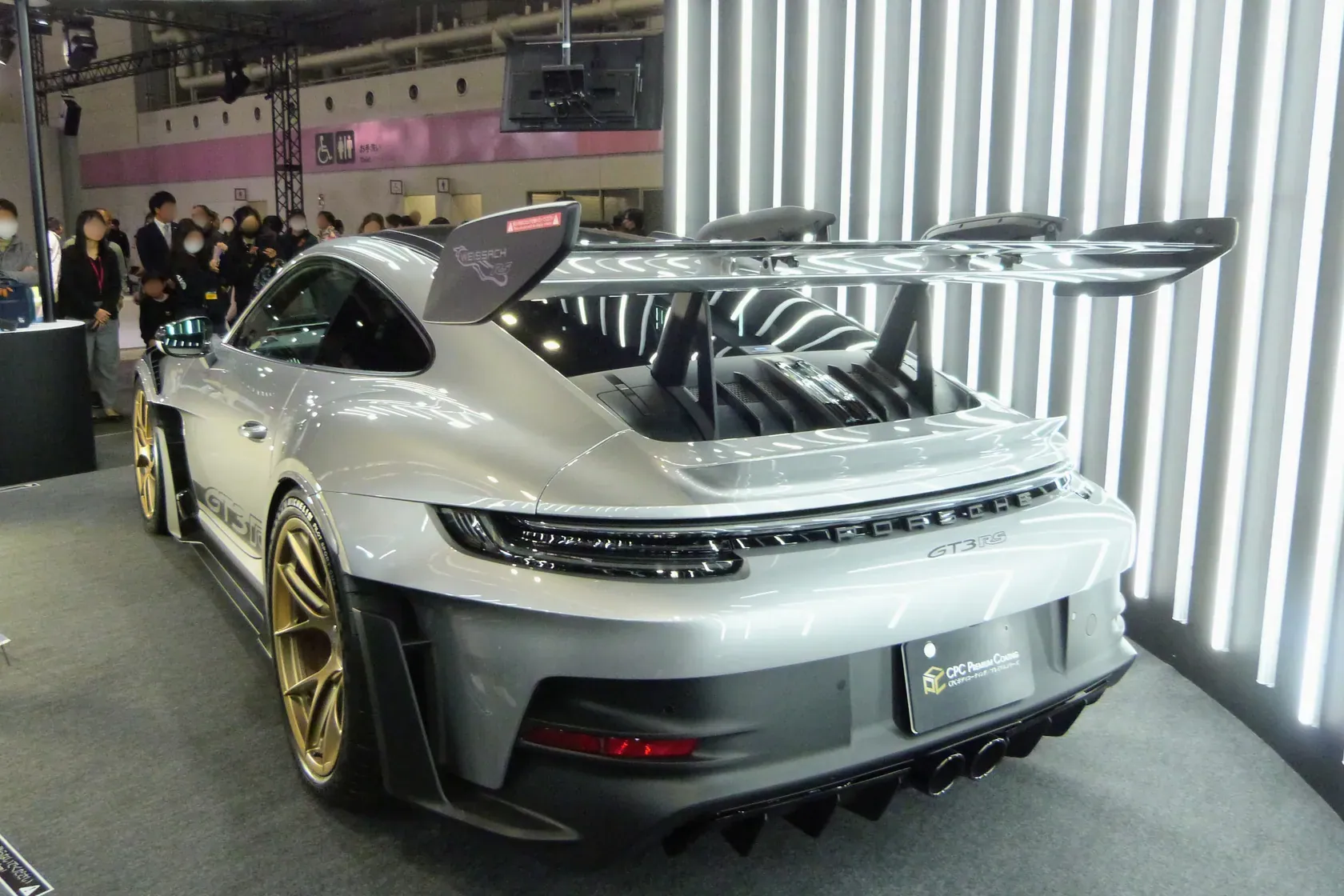
The Type 992.1 GT3 RS turns the GT3 formula into an aero-led road car: 386 kW, six throttle valves, active front and rear elements and a short-ratio PDK.
R / production rarity
How rare is it?
A simple 1–5 rating based on completed worldwide production for this exact version. Price and desirability are not included.
Rarity ratingNot availableNo comparable worldwide production total
Production bandNot available
Production evidenceNo exact production total
ProducedWorldwide total used for the rating
Production total unavailable
A reliable worldwide figure is not listed in the references.
How the rating works
The rating uses five fixed production bands. Smaller production runs receive higher ratings. Exact totals and responsibly sourced estimates for this precise version can be rated. Plans, regional totals, lower bounds, disputed figures and broader-family totals remain visible but unclassified. The evidence description is kept separate from the rating so a source limitation cannot change how scarcity is measured.
Camshafts with revised profiles provide the power increase over the contemporary GT3; a stock capture should document the upper-rev transition without post-processing.
Six throttle valves and a resonance intake contribute a distinct induction layer that should be recorded separately from the central exhaust outlets.
Only the original PDK, engine calibration, intake and particulate-filter exhaust path qualify for this passport.
Six horizontally opposed cylinders
Six individual throttle valves
Fixed valve train with solid cam followers
Dry-sump lubrication with separate oil tank
Seven oil-scavenge stages
Factory sports exhaust with gasoline particulate filter
Underbody air intakes feed the short-ratio seven-speed PDK[3]
03 / context
History and character
Origins and context
The 992.1 GT3 RS, unveiled in August 2022, changed the organising principle of the road-going RS. Earlier generations combined a fixed aerodynamic package with lower mass and a sharper GT3-based chassis; the 992.1 was conceived around airflow from the outset. Porsche moved to a central-radiator layout derived from the 911 RSR and GT3 R, sacrificing the front luggage compartment to free space for active elements on both sides. The engine remains essential, but aerodynamics now determine the architecture around it.
Its EA9A1.5 4.0 B6S is a 3,996 cc naturally aspirated flat-six producing 386 kW (525 PS) at 8,500 rpm and 465 Nm at 6,300 rpm. Revised cam profiles create the output increase over the 510 PS GT3, while six throttle valves, solid cam followers and dry-sump lubrication preserve immediate response and circuit oil control. The engine can reach 9,000 rpm. A shorter-overall-ratio seven-speed PDK is the only transmission, with dedicated underbody cooling for repeated high-load operation.
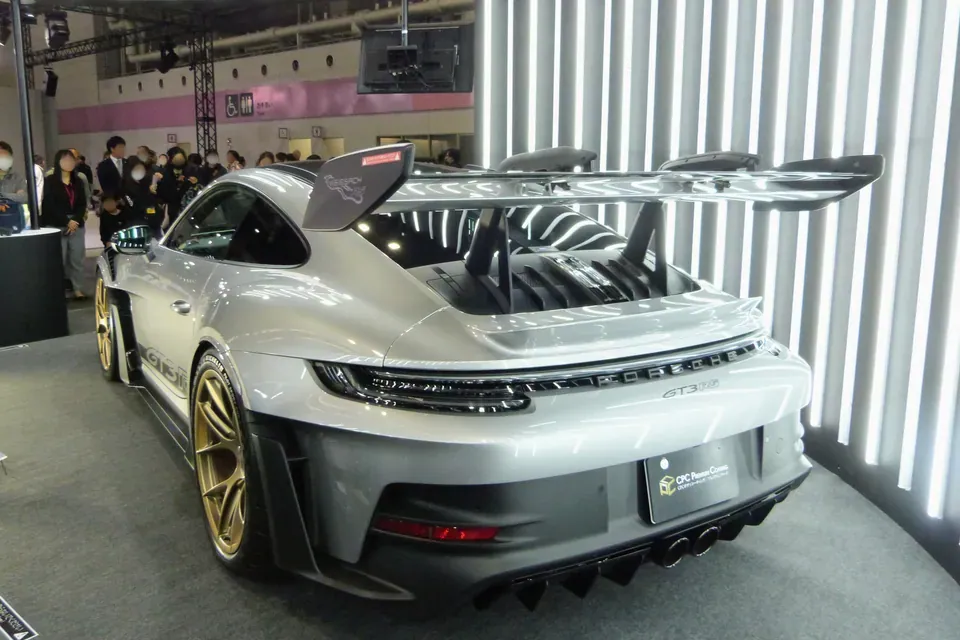
Active front wing elements work with the hydraulically adjustable upper section of the two-part rear wing. The system can reduce drag on suitable straights and rotate toward maximum resistance as an airbrake during emergency braking. Porsche quotes 409 kg of downforce at 200 km/h and 860 kg at 285 km/h—twice the downforce of the 991.2 RS at the latter comparison point. Those values describe a particular factory aero state and speed, not a static weight or a claim transferable to modified settings.
Engineering and character
The chassis is designed to keep working under that load. Longer double-wishbone front links accommodate a track 29 mm wider than the GT3’s, teardrop-section links contribute aerodynamic force, and anti-dive geometry controls pitch under braking. In Track mode the driver can adjust front and rear compression and rebound damping, differential locking and traction-control behaviour from rotary controls on the steering wheel. That interface is a functional transfer from racing, allowing setup changes without reducing the car to an unroadworthy competition special.
Lightweight construction includes carbon-fibre-reinforced plastic doors, front wings, roof and lids, while the lightest factory configuration is quoted at 1,450 kg DIN. The optional Weissach Package adds further exposed carbon components and carbon rear-axle hardware; magnesium wheels are another configuration-sensitive option. A Manthey-equipped car introduces still more aerodynamic and chassis hardware and must be recorded separately. Neither package should be treated as standard equipment or silently used to advertise every 992 RS.
The engine’s individual-throttle induction and 9,000 rpm range remain acoustically distinctive, but the RS intake draws process air beneath the rear wing and the production exhaust includes particulate filtration. PDK cooling, gear whine and rapid ratio changes add their own layer. For a valid sound record, RedlineCodex requires original intake routing, engine calibration, gearbox and exhaust hardware, plus mode and temperature notes. Active-aero position should also be documented in circuit footage because it visibly changes the car’s operating state.
Legacy and identity
The focus here is the 2022-onward Type 992.1 GT3 RS in standard production form. It excludes the ordinary GT3, 991.2 RS, GT2 RS, GT3 R race car and Manthey conversion. Its 296 km/h maximum speed—lower than the predecessor’s—is not a regression hidden by marketing; it reflects shorter gearing and a deliberate exchange of low drag for unprecedented cornering load. That trade is the car’s defining context and the reason precise aero, speed and configuration data matter more than a single headline number.
01
RS, not merely GT3
The focus here is the 386 kW 992.1 GT3 RS with seven-speed PDK, not a GT3 with an aftermarket wing or Manthey conversion.
02
Engine and aero together
The central-radiator layout enables active aero while the individual-throttle 4.0-litre engine remains the sonic centrepiece.
03
Driving modes
Recording notes should identify exhaust setting, engine temperature, PDK mode and whether the car is stationary, road-driven or on circuit.
04 / family tree
Model lineage
1972–2024 · 19 documented milestones
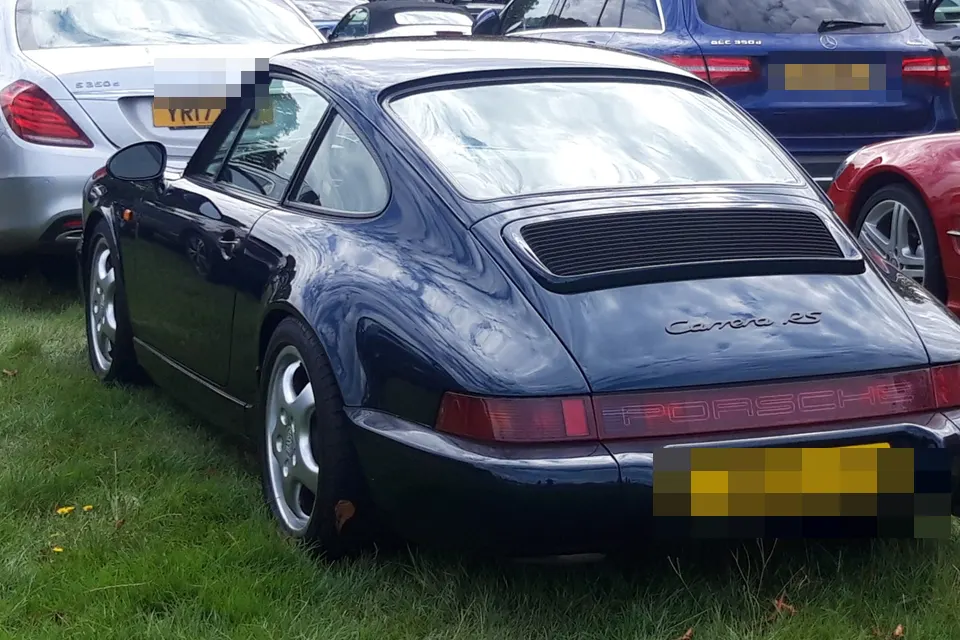
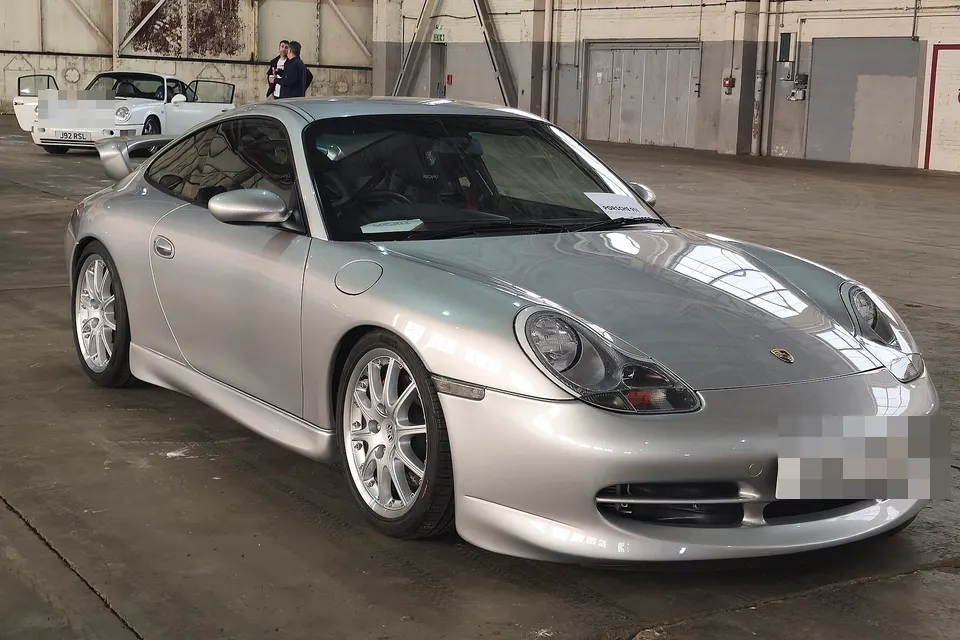
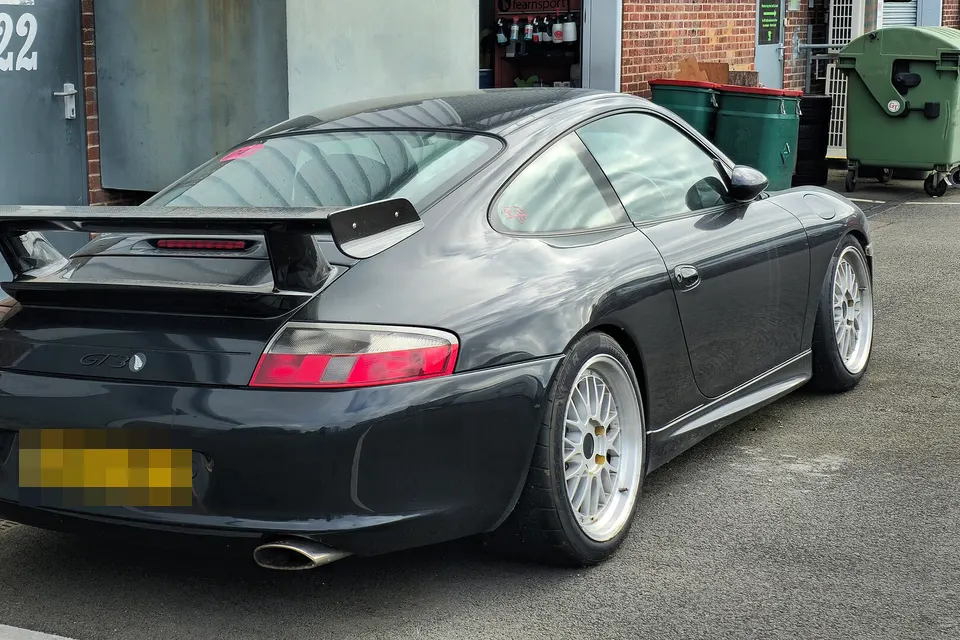
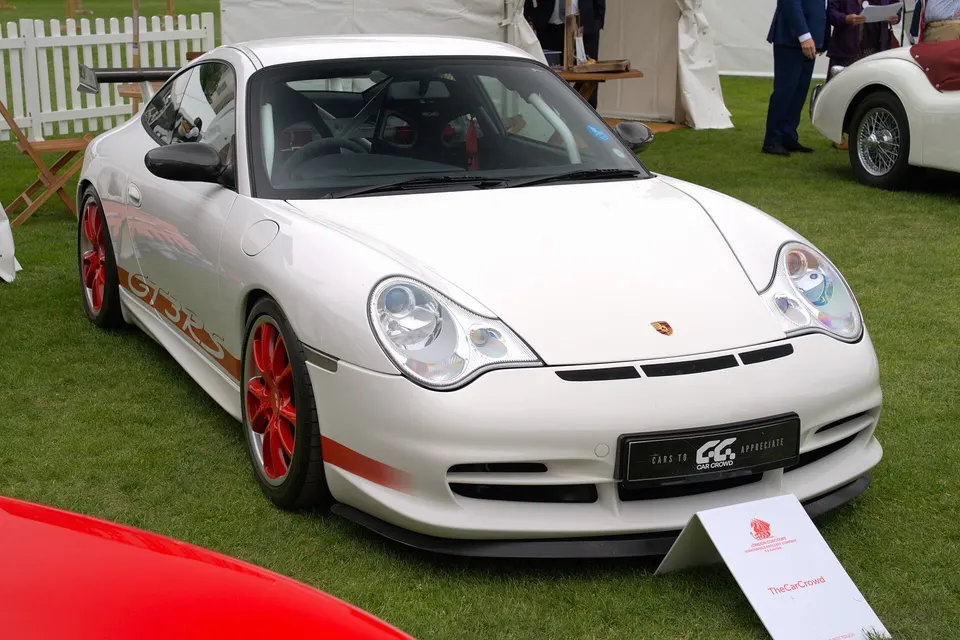
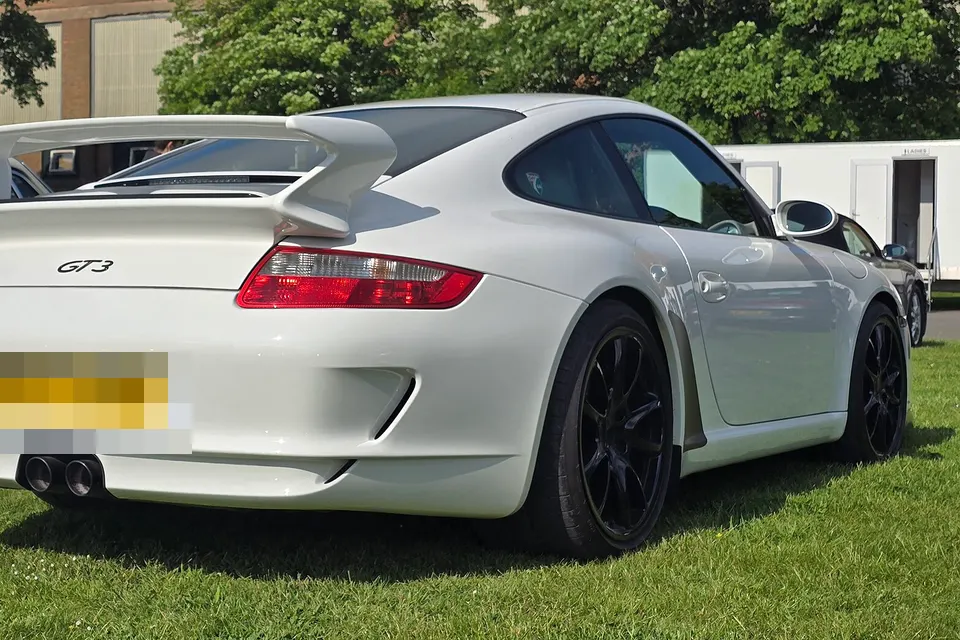
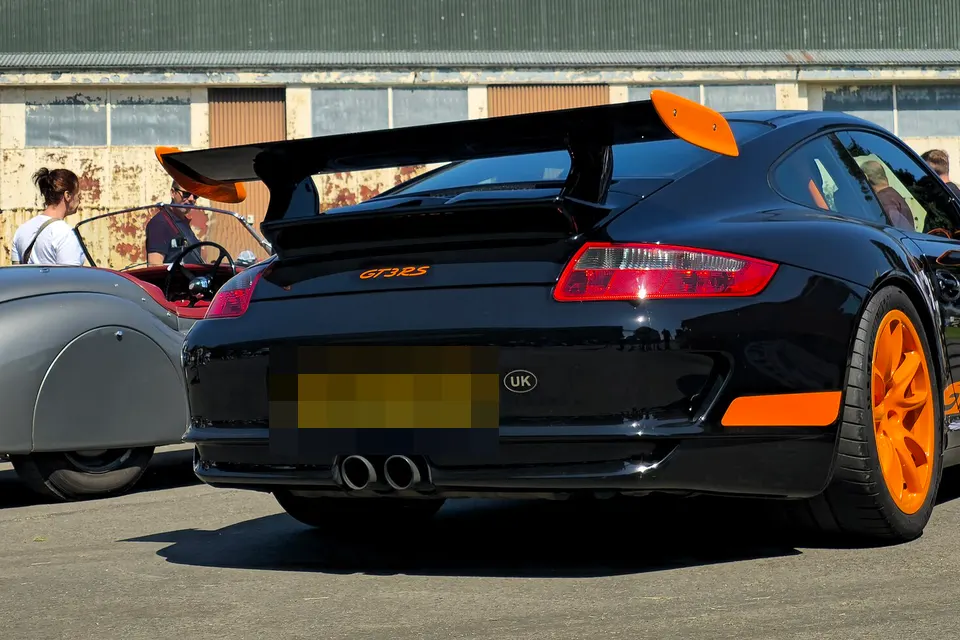
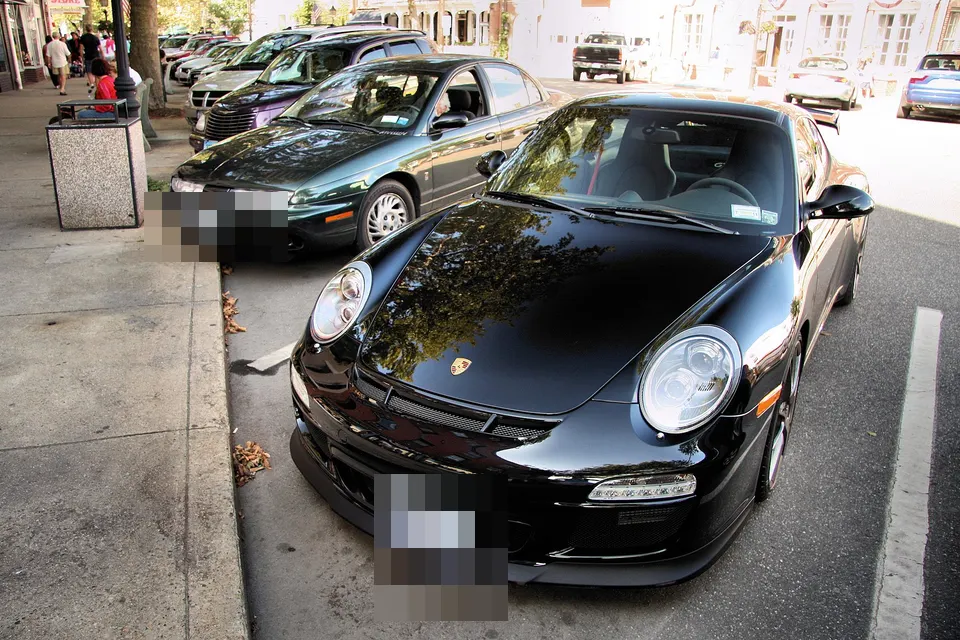
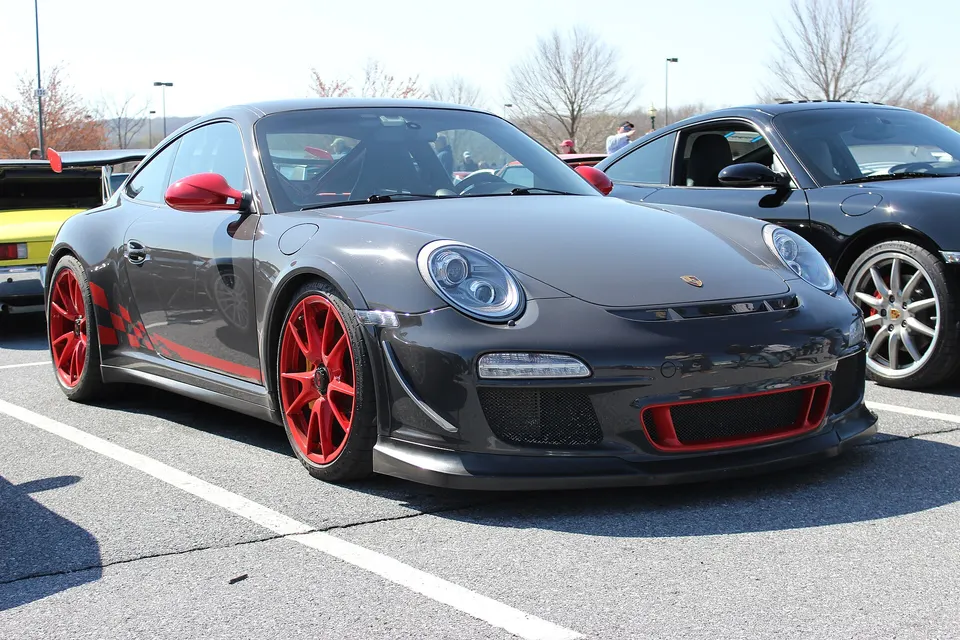
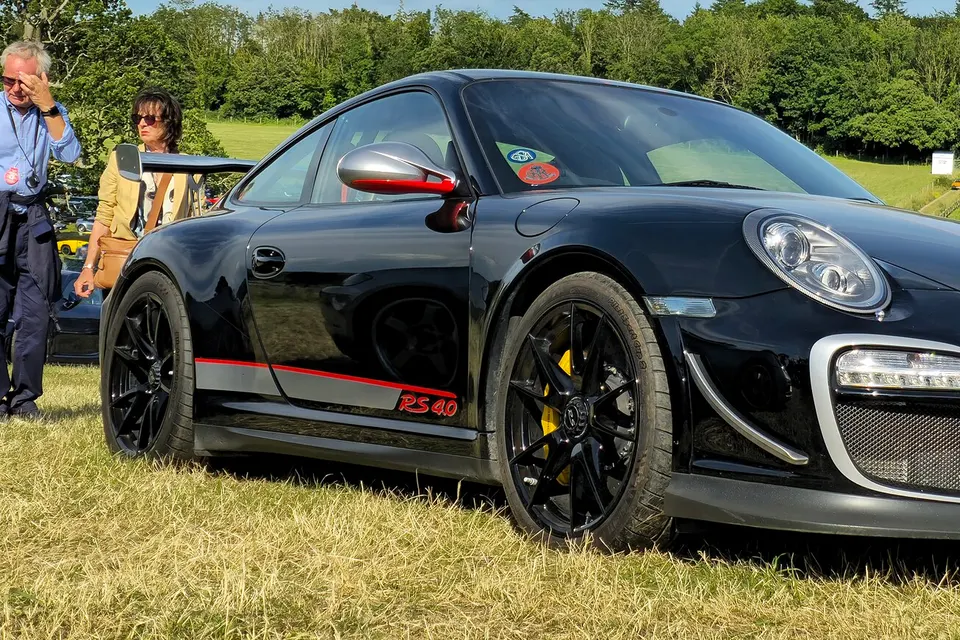
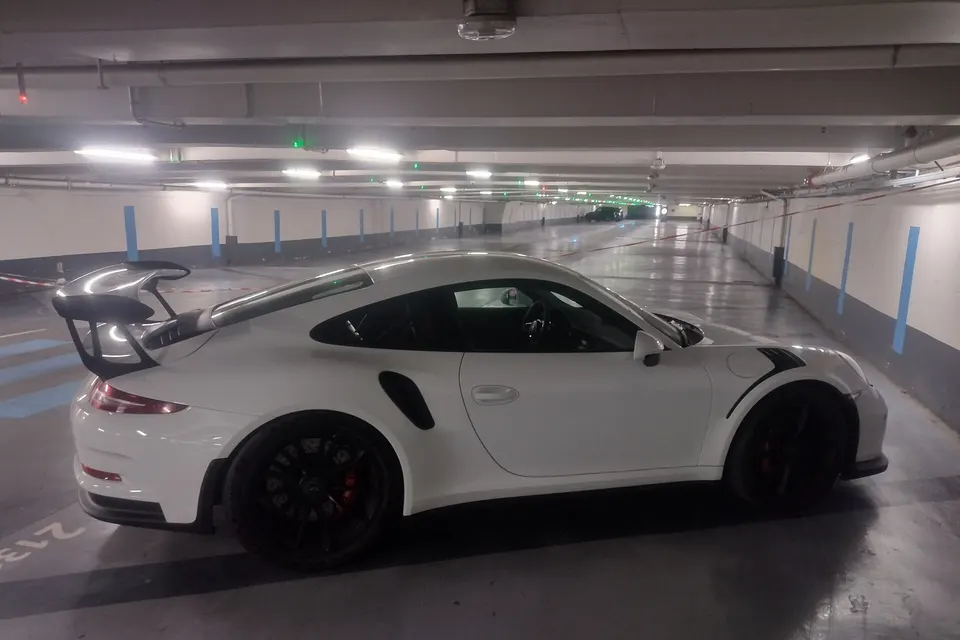
Photo: Calreyn88 · CC BY 4.0 · resized and cropped · Registration identifiers pixelated for privacy.