The rating uses five fixed production bands. Smaller production runs receive higher ratings. Exact totals and responsibly sourced estimates for this precise version can be rated. Plans, regional totals, lower bounds, disputed figures and broader-family totals remain visible but unclassified. The evidence description is kept separate from the rating so a source limitation cannot change how scarcity is measured.
Open-licence recordings can appear with a visible Unregistered note; archive verification still requires independent identity and configuration evidence.
Listening descriptors remain editorial; architecture and output claims trace to the cited manufacturer material.
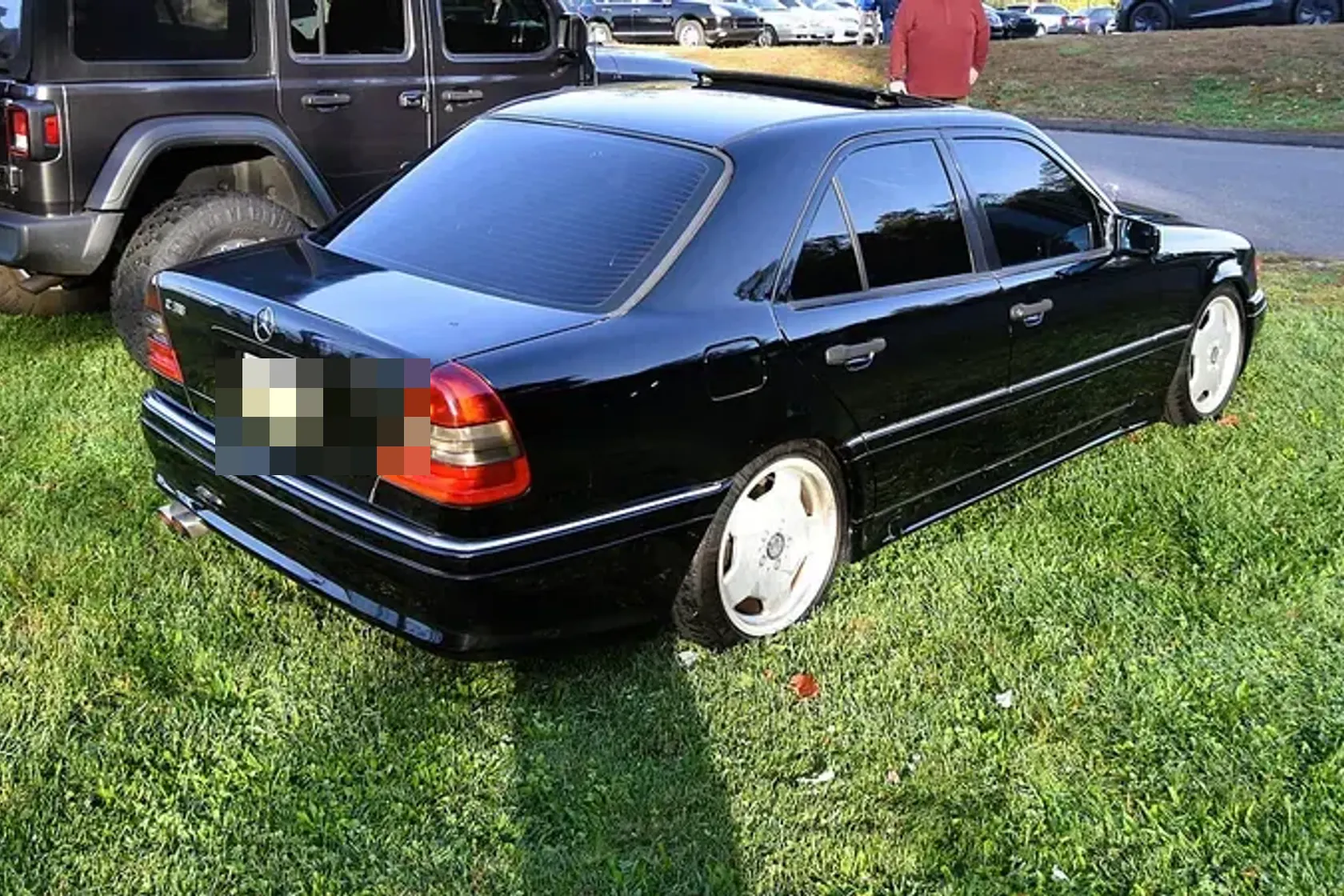
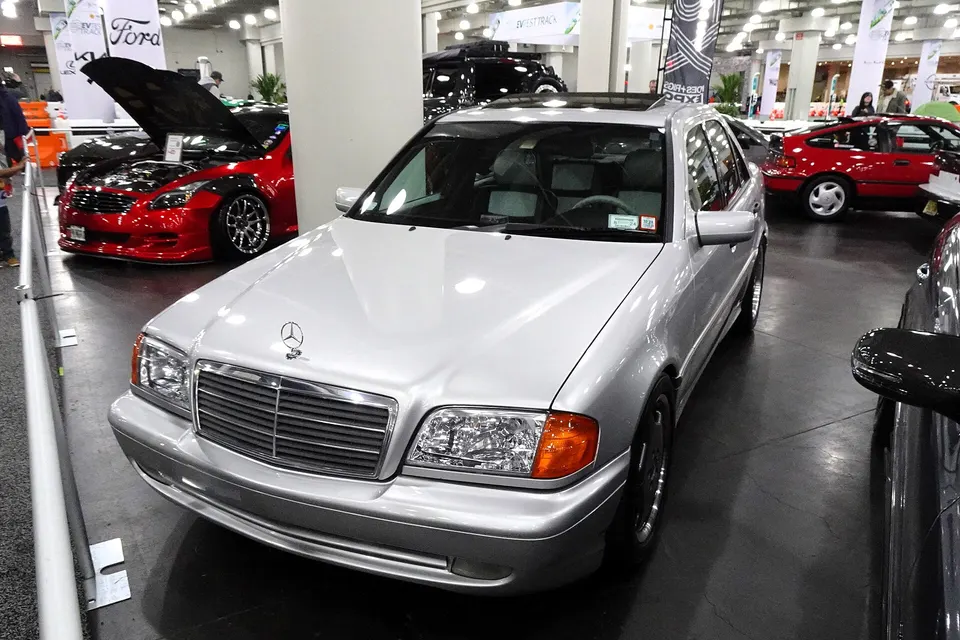
The C 36 AMG debuted at the 1993 Frankfurt motor show as the first vehicle jointly developed by Mercedes-Benz and AMG after their formal cooperation began. That status gives it a clearer historical role than the vague label “early AMG.” It transformed the newly named W202 C-Class into an officially distributed high-performance model and began a production relationship that would eventually become Mercedes-AMG. Mercedes-Benz records 5,221 cars built between autumn 1993 and June 1997, substantial volume compared with earlier specialist AMG conversions.
Its M104.941 naturally aspirated inline-six displaced 3,606 cc and produced 206 kW (280 PS) at 5,750 rpm with 385 Nm across 4,000–4,750 rpm. AMG began from the 3.2-litre M104, increased bore to 91 mm and stroke to 92.4 mm, fitted special pistons and reworked crankshaft, cam timing, exhaust ports, intake plumbing and management. The result was an integrated long-stroke engine specification, not a generic C 280 carrying different software or a decorative body package.
A four-speed automatic was the production transmission in the saloon record, driving the rear wheels with traction control. Brakes drew from larger Mercedes models—the front hardware from the SL 600 and rear from the E 420—while the suspension sat 35 mm lower. Revised bumpers, side skirts and wheels communicated the change without abandoning the restrained W202 shape. Each subsystem reflects the joint-development method: Mercedes production components selected and altered by AMG for a coherent series car.
Engineering and character
The C 36 also became the first official Formula 1 Safety Car supplied by AMG in 1996, beginning a relationship that continues in later forms. That use adds historical context but does not make every road C 36 identical to the circuit support vehicle. Safety equipment, communications, lighting and track preparation belong to that specific chassis.
Its sound is defined by a large naturally aspirated inline-six rather than the V8 thunder later associated with the badge. Even firing intervals, induction length and four-speed automatic shifts create a smooth, rising register with fewer ratio changes than modern AMG cars. Exhaust, catalysts and market calibration can alter the result, while high-mileage driveline mounts affect cabin resonance. Factory-stock recordings must document emissions version, intake, exhaust and transmission state rather than relying on the AMG badge to establish authenticity.
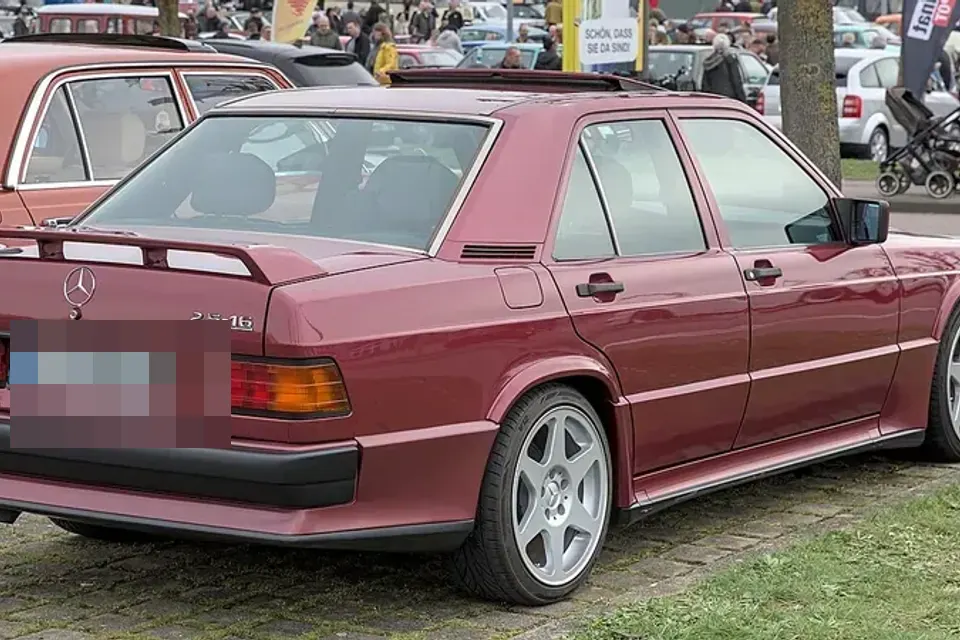
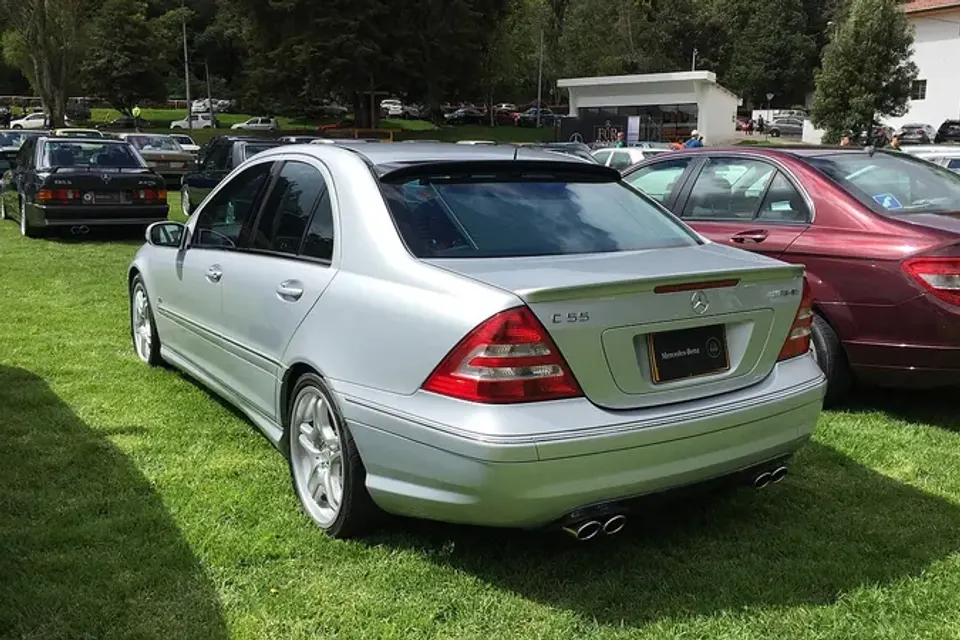
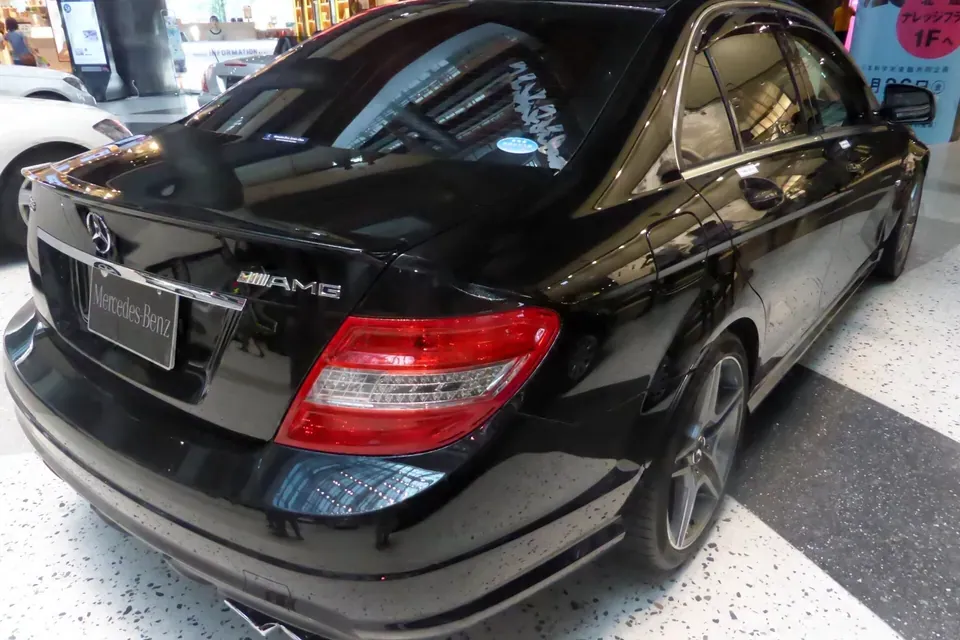
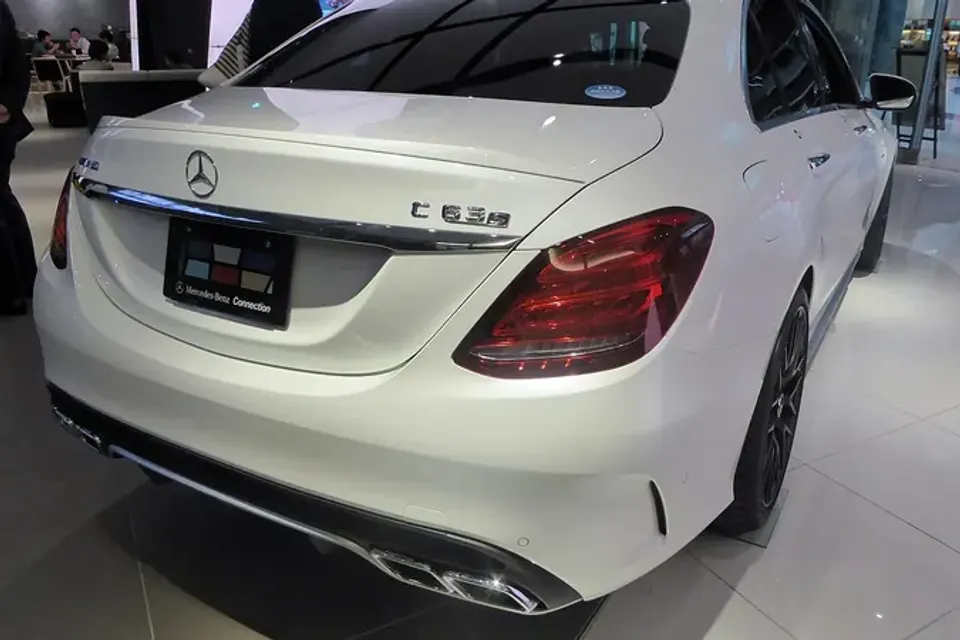
The C 36 replaced no factory AMG C-Class predecessor: the 190 E 2.5-16 belongs to Mercedes-Benz’s own performance line. In 1997 the C 43 AMG succeeded it with the first V8 installed in a C-Class, moving from a modified inline-six and four-speed transmission to a 4.3-litre V8 and five-speed automatic. That short chronology makes the C 36 uniquely important. It is the point at which collaboration became an official production model, before the C-Class AMG identity became inseparable from eight cylinders.
Legacy and identity
The focus here is the 1993–1997 W202 / 202.028 C 36 AMG saloon with M104.941 and four-speed automatic. It excludes C 280 conversions, E 36 and SL 36 models, Formula 1 Safety Car equipment and later C 43 or C 55 derivatives. The broader story explains the corporate and technical beginning of the factory C-Class AMG. Its bore, stroke, component sourcing, production total and body code turn that milestone into a checkable mechanical identity.
01
Model identity
W202 / 202.028 is displayed prominently so this record cannot be confused with an adjacent derivative.
02
Original soundtrack
Modified exhausts, aftermarket induction and replacement EV sound packs are excluded.
04 / family tree
Model lineage
1988–2022 · 8 documented milestones
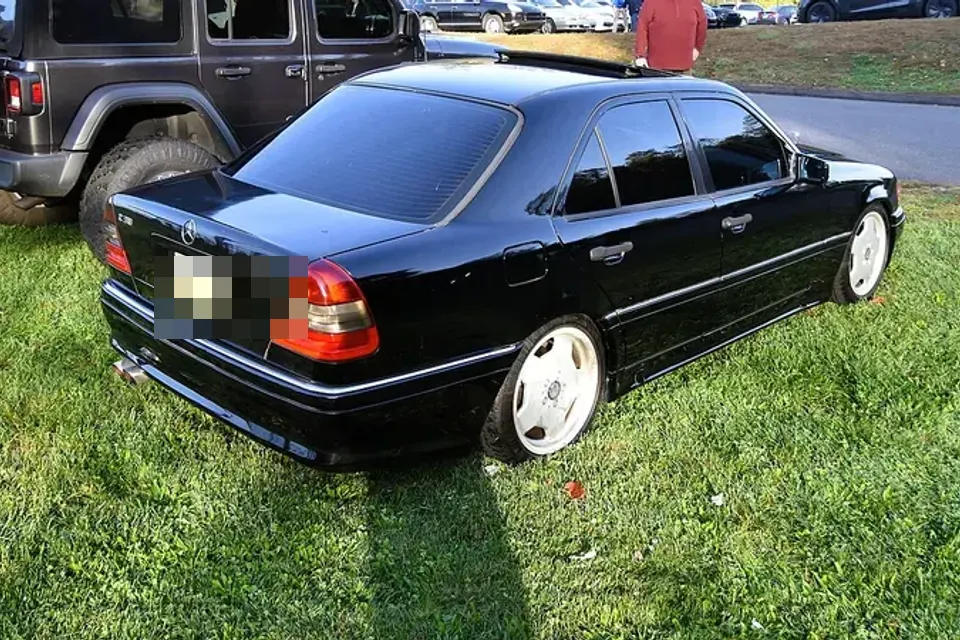
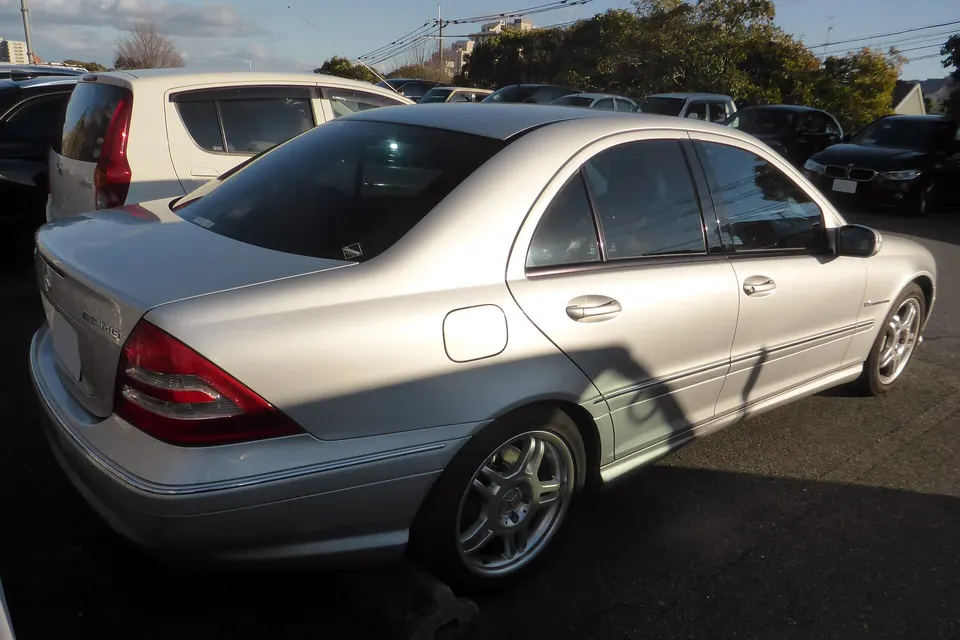
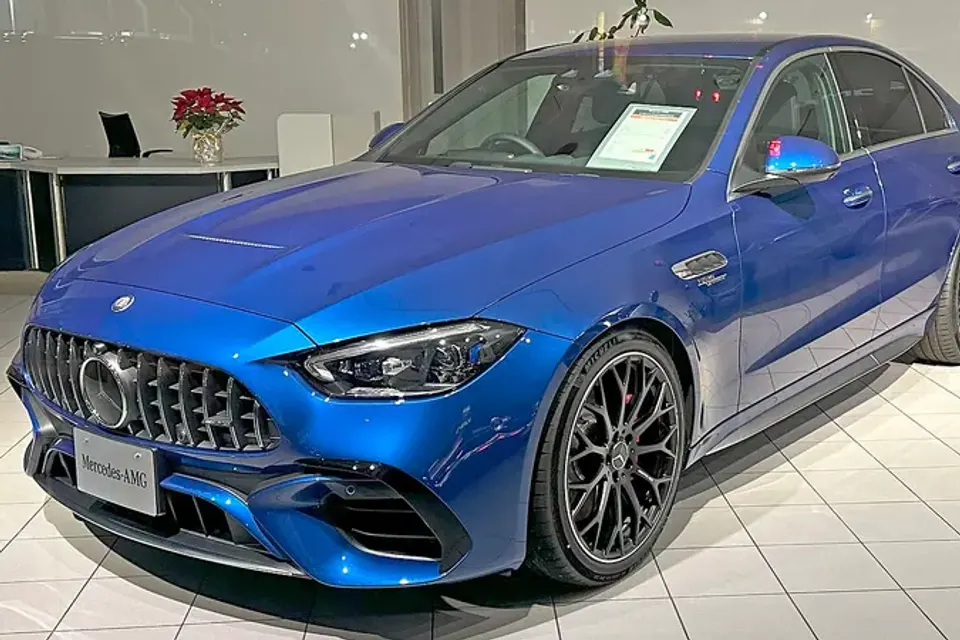
Photo: Alexander-93 · CC BY-SA 4.0 · resized and cropped · Registration identifier pixelated for privacy.