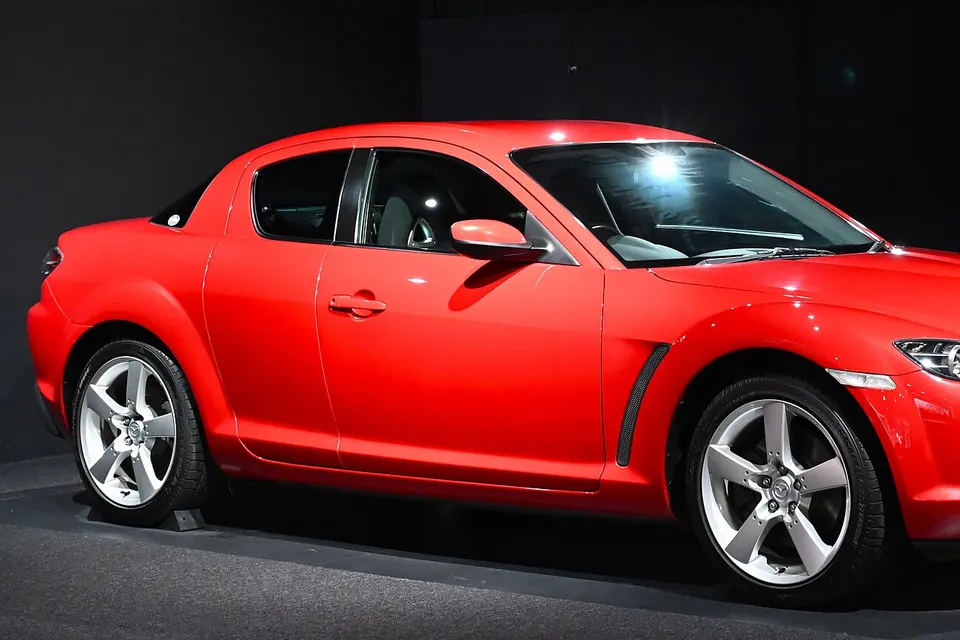
Documentary photographPhoto: TTTNIS · CC0 1.0 · resized and cropped
Engine redprint / verified13B-MSP RENESIS
1,308 cc side-port twin-rotor RENESISFront-mid engine, rear-wheel driveTopology diagram · not to scale · based on the cited primary sources
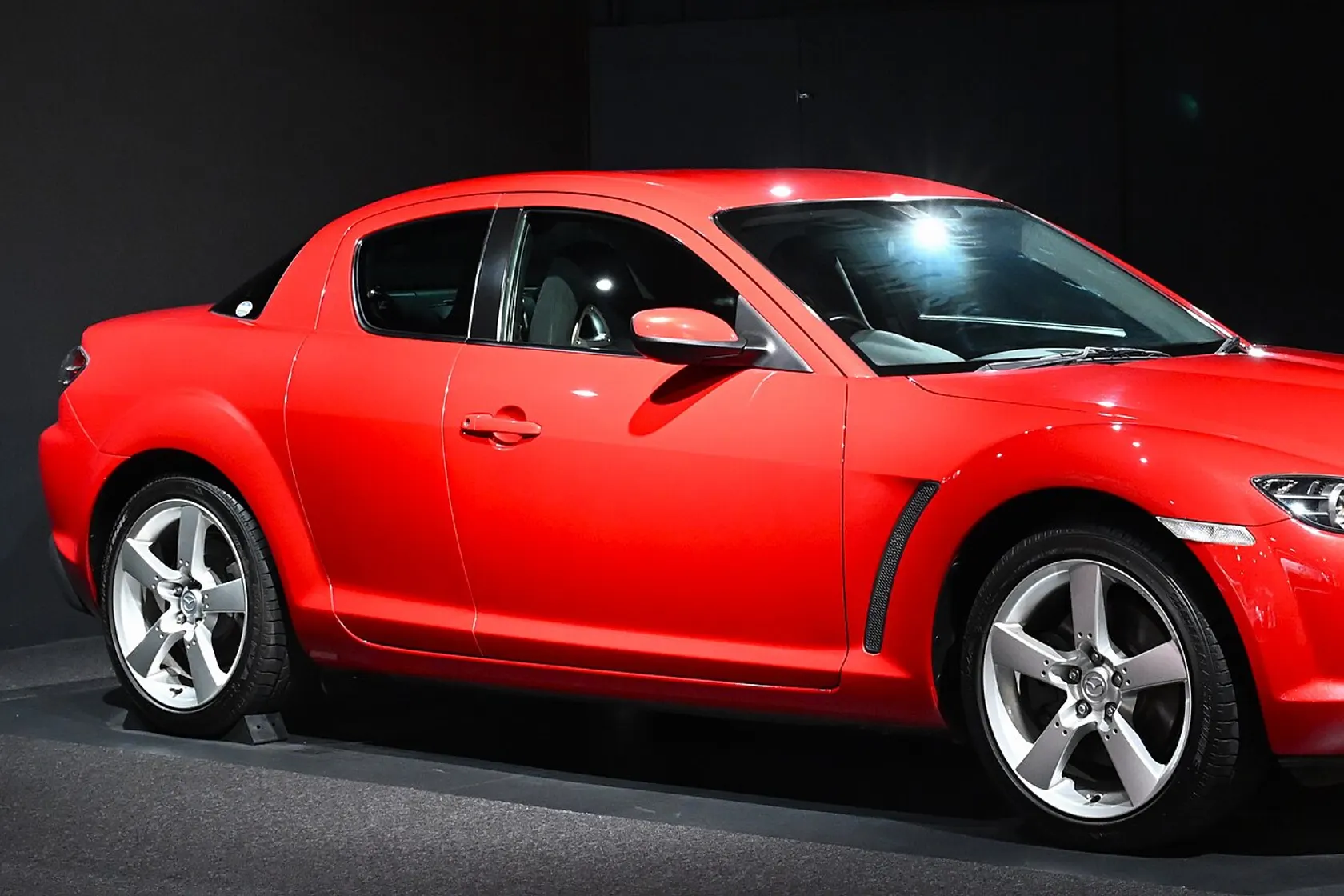
RX-8 Type S is the exact LA-SE3P production representative for the RX-8 milestone in this archive’s source-led family tree.
R / production rarity
How rare is it?
A simple 1–5 rating based on completed worldwide production for this exact version. Price and desirability are not included.
Rarity ratingNot availableNo comparable worldwide production total
Production bandNot available
Production evidenceNo exact production total
ProducedWorldwide total used for the rating
Production total unavailable
A reliable worldwide figure is not listed in the references.
How the rating works
The rating uses five fixed production bands. Smaller production runs receive higher ratings. Exact totals and responsibly sourced estimates for this precise version can be rated. Plans, regional totals, lower bounds, disputed figures and broader-family totals remain visible but unclassified. The evidence description is kept separate from the rating so a source limitation cannot change how scarcity is measured.
Open-licence recordings can appear with a visible Unregistered note; archive verification still requires independent identity and configuration evidence.
Listening descriptors remain editorial; architecture and output claims trace to the cited manufacturer material.
Mazda launched the RX-8 in Japan in April 2003 as a new kind of rotary sports car rather than a direct fourth-generation RX-7. Its four “freestyle” doors opened around a pillarless aperture and provided genuine seating for four adults, while the compact RENESIS engine allowed the occupants and dashboard to move forward. The Type S recorded here was the high-output, six-speed-manual Japanese derivative, distinct from the 210 PS five-speed and automatic versions sold alongside it.
The 13B-MSP RENESIS uses two 654 cc chambers, nominally 1,308 cc, without turbocharging. In launch Type S specification it produces 184 kW (250 PS) at 8,500 rpm and 216 Nm at 5,500 rpm, driving the rear wheels through a six-speed manual. Side intake and side exhaust ports replace the peripheral-exhaust arrangement of earlier 13B road engines, increasing intake area by about 30 percent while reducing overlap, unburned hydrocarbons and thermal loss through the exhaust port.
Because the RENESIS is smaller than the turbocharged 13B-REW, Mazda placed it 40 mm lower and 60 mm farther rearward than the RX-7 engine, while moving the dashboard 80 mm forward. The distance between engine and occupants fell by 140 mm, concentrating mass within the 2,700 mm wheelbase. Double-wishbone front and multi-link rear suspension supported that centralised layout. The packaging explains how four-seat practicality and sports-car responses could coexist without treating rear doors as a styling gimmick.
Engineering and character
The six-speed Type S uses different output, torque, gearing, tyres and final drive from lower-output versions. Later facelift cars, regional power ratings and the 2008 Japanese Type RS introduce further changes. Likewise, the limited Mazdaspeed Version added dedicated intake, exhaust, control software, oil coolers, flywheel and chassis parts. None of those specifications belongs to this launch-era Type S merely because the base model or engine code is shared. Production phase must precede comparison.
A naturally aspirated RENESIS sounds different from an FD: there is no sequential boost transition, and the side-port architecture produces a smoother climb toward 9,000 rpm with induction becoming increasingly prominent. Ignition-coil condition, compression, oil metering and catalyst health strongly affect starting and tone. Flooding or weak hot-start behaviour is a condition issue, not a defining sonic trait.
The RX-8 followed the Spirit R RX-7 but pursued a different answer to emissions, packaging and customer use. Mazda ended production in June 2012 after a final RX-8 Spirit R, closing continuous rotary sports-car manufacture. Rotary production resumed in 2023 with the MX-30 e-SKYACTIV R-EV, where a single rotor generates electricity rather than driving the wheels directly. The Type S remains important as the high-output launch form of the last naturally aspirated production rotary sports car.
Legacy and identity
The focus here is the 2003–2008 LA-SE3P Japanese RX-8 Type S with 250 PS RENESIS and six-speed manual. It excludes lower-output cars, automatics, Mazdaspeed versions, the 2008 facelift Type RS and later Spirit R. The broader story explains why four doors did not make the RX-8 a conventional saloon. Port architecture, output phase, gearbox and engine-health metadata distinguish the intended factory experience from regional specifications and worn or modified cars that can otherwise dominate online advice.
01
Model identity
LA-SE3P is displayed prominently so this record cannot be confused with an adjacent derivative.
02
Original soundtrack
Modified exhausts, aftermarket induction and replacement EV sound packs are excluded.