The rating uses five fixed production bands. Smaller production runs receive higher ratings. Exact totals and responsibly sourced estimates for this precise version can be rated. Plans, regional totals, lower bounds, disputed figures and broader-family totals remain visible but unclassified. The evidence description is kept separate from the rating so a source limitation cannot change how scarcity is measured.
5/5Fewer than 25 builtUltra rare
4/525 to 249 builtVery rare
3/5250 to 2,499 builtRare
2/52,500 to 24,999 builtLimited production
1/525,000 or more builtSeries production
Recorded sales
Documented sales
Prices never affect the rarity rating.
Sold£51,7502018 · RM Sotheby's · London
Auction result
Exact L10B Series II · 1971 Japanese-market configuration
Published sale total; 94,000 km was shown and the catalogue described the car as a driver in very good condition.
Open-licence recordings can appear with a visible Unregistered note; archive verification still requires independent identity and configuration evidence.
Listening descriptors remain editorial; architecture and output claims trace to the cited manufacturer material.
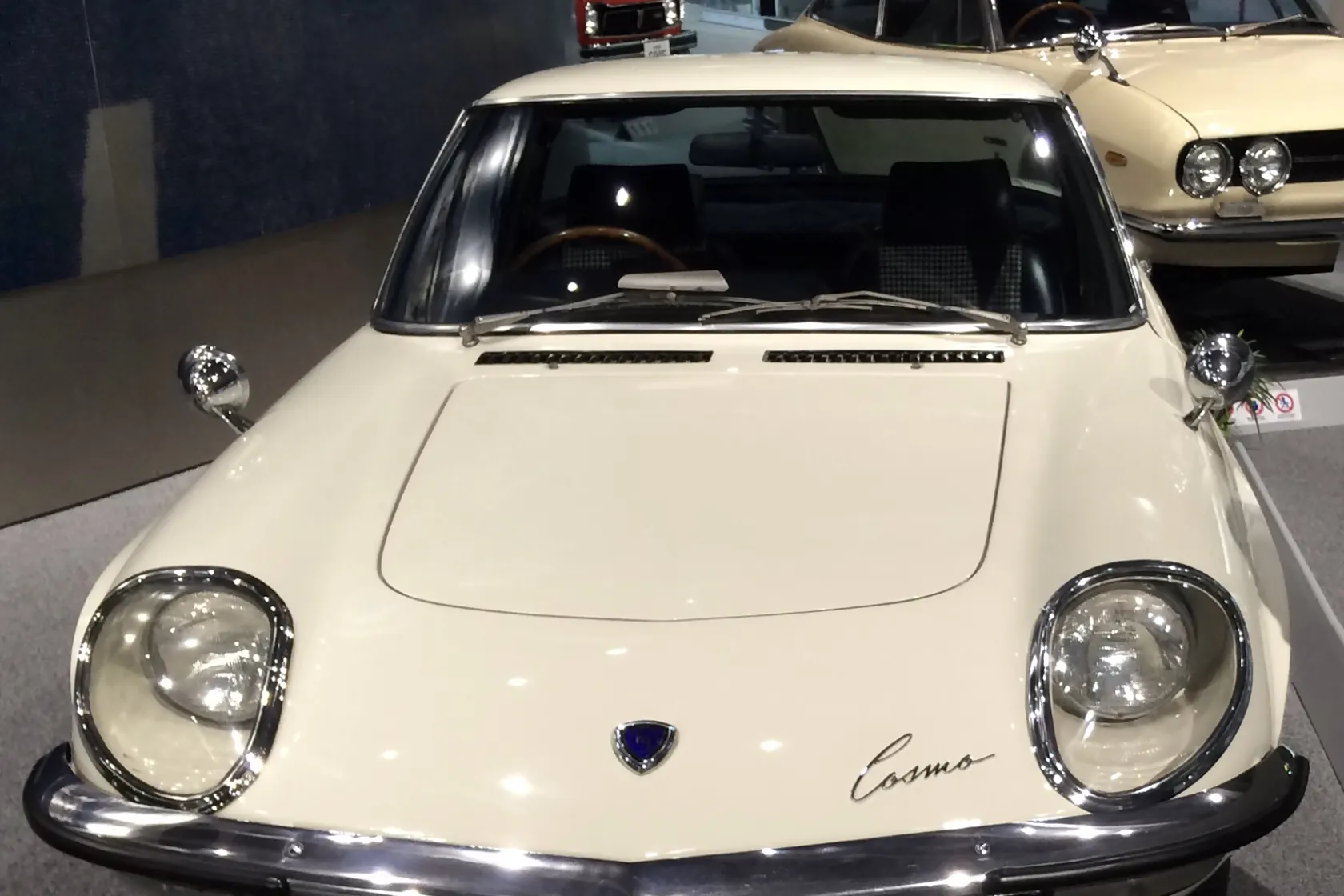
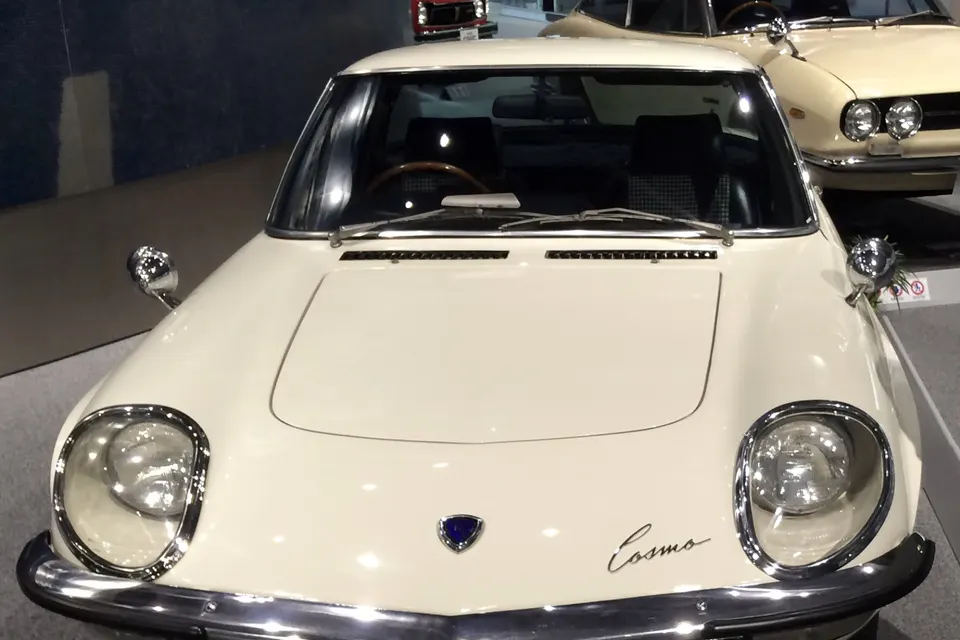
Mazda’s Cosmo Sport placed the company’s twin-rotor engine into production in May 1967 after six years of development and roughly 700,000 kilometres of durability testing. The later L10B recorded here arrived in 1968 as the second-series development, not the original launch specification. Mazda extended the wheelbase, strengthened braking and improved straight-line stability while preparing the car for international endurance competition. That distinction matters because the familiar “Cosmo Sport” name covers two visibly similar but mechanically and dimensionally different phases.
The 10A engine uses two 491 cc rotor chambers for a nominal 982 cc total under Mazda’s own chamber-volume convention. In L10B form output rose from the first series’ 110 PS to 128 PS, with torque increasing to 14.2 kg-m. A five-speed manual replaced the earlier four-speed transmission. The rotary has no pistons or conventional cylinder bank: each triangular rotor turns eccentrically within an epitrochoid housing, separating intake, compression, combustion and exhaust around the chamber wall.
Mazda increased the wheelbase by 150 mm and fitted 15-inch radial tyres as part of the L10B development. Factory top speed reached 200 km/h and the standing 400 metres took 15.8 seconds in Mazda’s retrospective. Two competition-prepared examples entered the 1968 Marathon de la Route, an 84-hour Nürburgring event; one finished fourth. That result validated durability, but the race cars carried preparation not automatically present on an ordinary production L10B and must remain separate in provenance.
Engineering and character
The company built 1,176 Cosmo Sports across the model’s five-year life, at very low monthly volume. The futuristic body and compact engine made it an image leader for Mazda, while Familia Rotary, Capella and Savanna models carried the technology into broader production. The L10B is therefore both a rare sports car and a development platform whose lessons supported Mazda’s later rotary range. It should not inherit the output, wheelbase or gearbox of the smaller first-series L10A merely for narrative simplicity.
Its acoustic signature combines the even pulse density of a twin-rotor engine with carburettor induction, apex-seal passage and a period exhaust. The rotary’s shaft speed and combustion sequence do not map directly onto a four-stroke piston engine, so comparing “revs” without understanding eccentric-shaft operation can mislead. Restored cars often differ in ignition, carburetion and silencers.
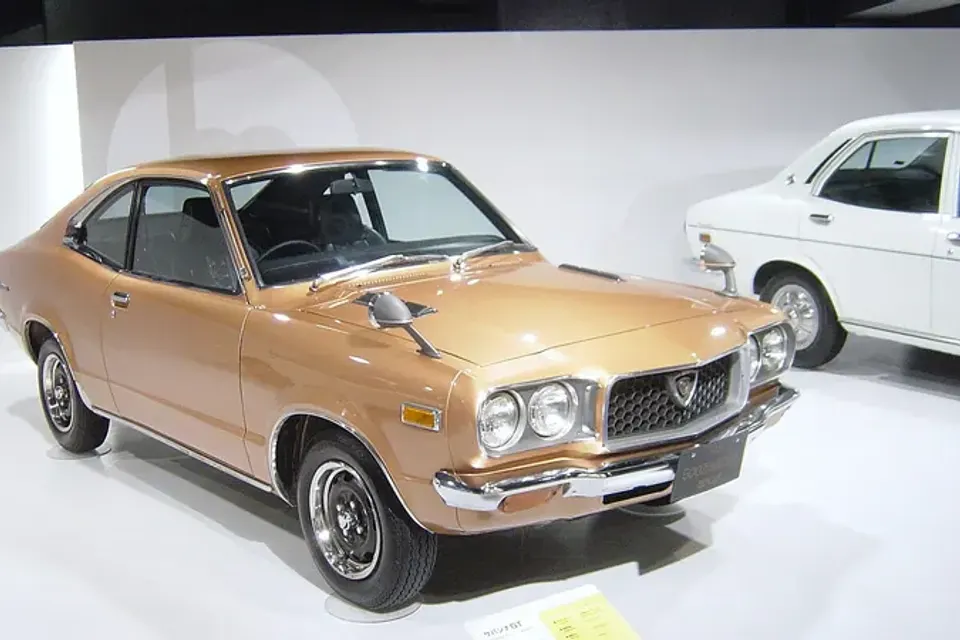
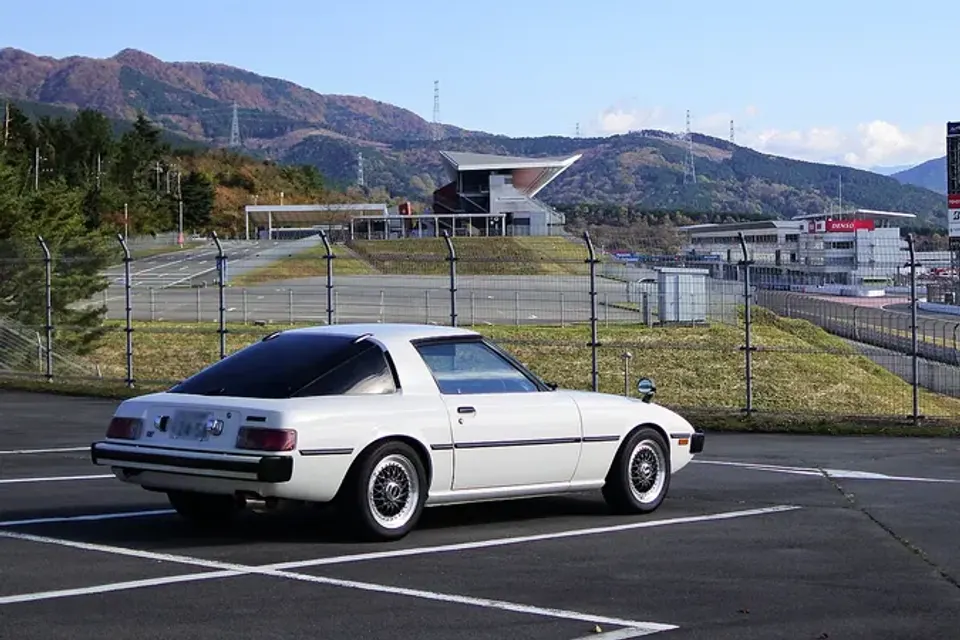
The Cosmo Sport begins Mazda’s production rotary timeline, preceding the Familia Rotary Coupé, Savanna RX-3 and the purpose-built RX-7. It also belongs before the 1991 Le Mans victory that later became the most famous proof of Mazda rotary endurance. Treating that later achievement as the Cosmo’s own competition record would be inaccurate. The 1968 Nürburgring finish is the relevant contemporary evidence, showing that Mazda tested its new architecture internationally almost as soon as customers could buy it.
Legacy and identity
The focus here is the 1968–1972 L10B Cosmo Sport Series II with 128 PS, twin-rotor 10A and five-speed manual. It excludes the 1967 L10A, Marathon de la Route race preparation, replicas and later Cosmo models using 12A, 13B or three-rotor engines. The broader story explains why Mazda’s rotary story starts with persistence rather than novelty alone. Chamber volume, series, wheelbase and gearbox boundaries preserve the precise form in which that early experiment matured into a credible production sports car.
01
Model identity
L10B is displayed prominently so this record cannot be confused with an adjacent derivative.
02
Original soundtrack
Modified exhausts, aftermarket induction and replacement EV sound packs are excluded.