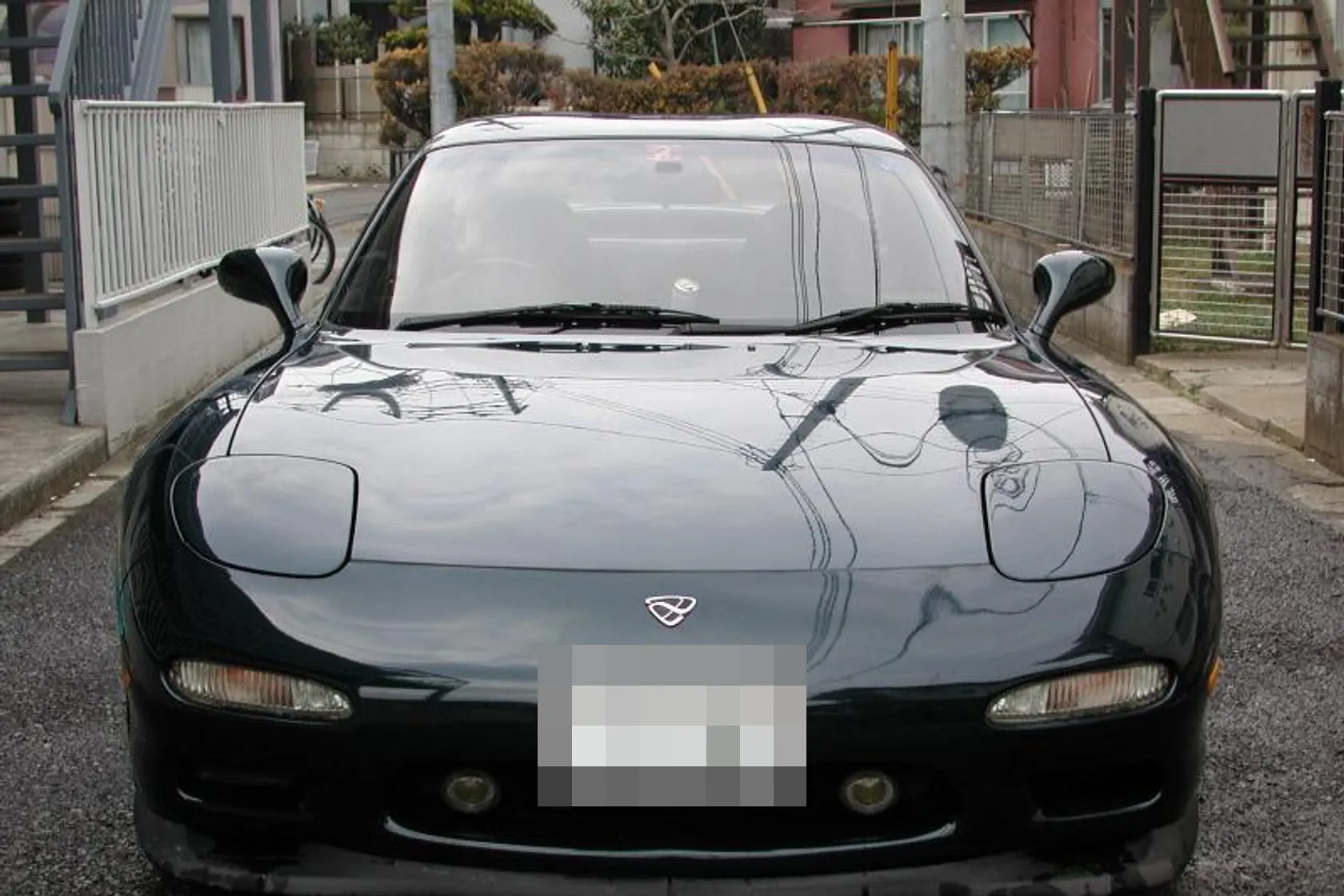
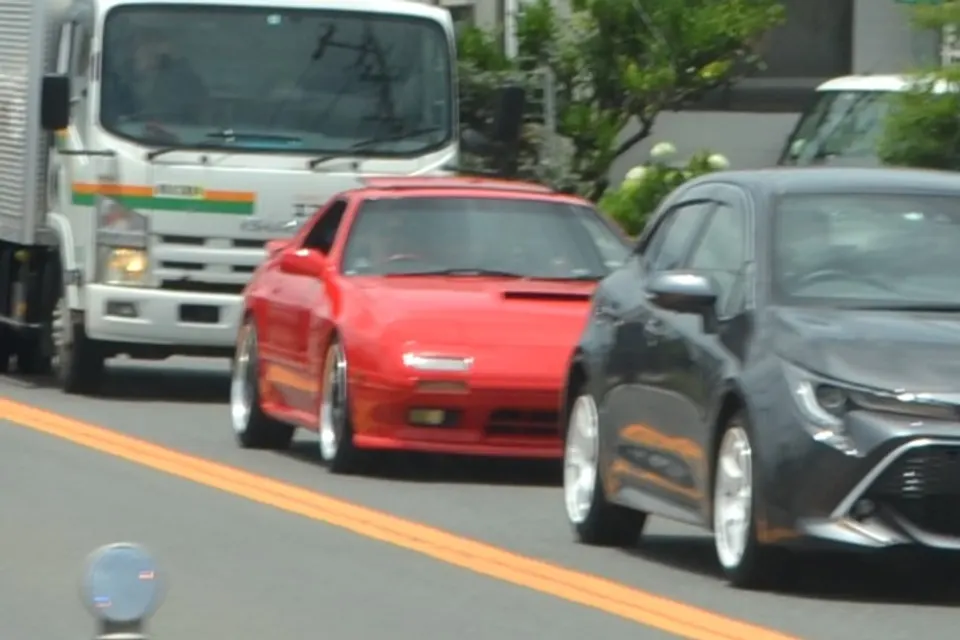
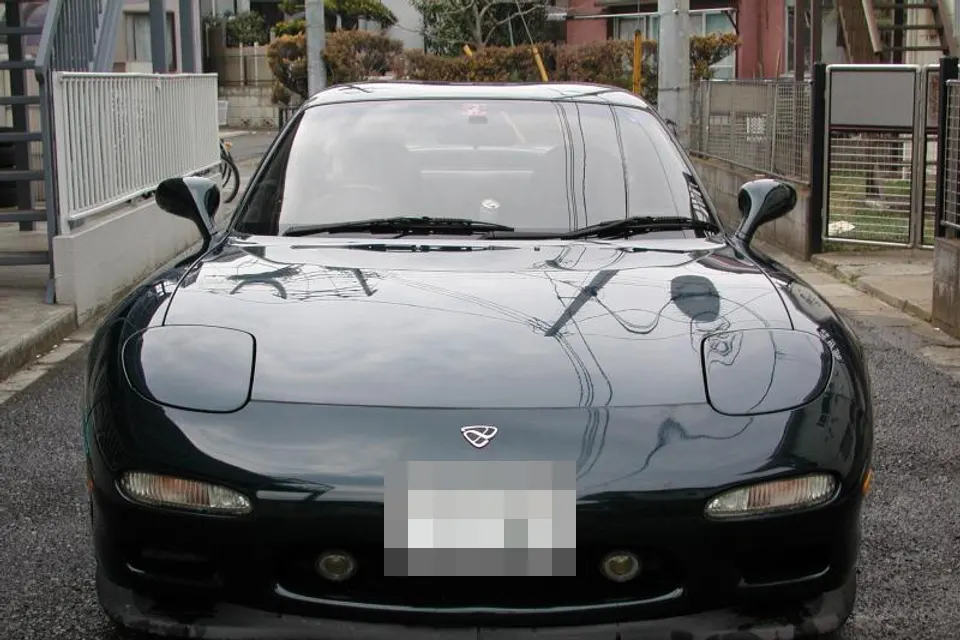
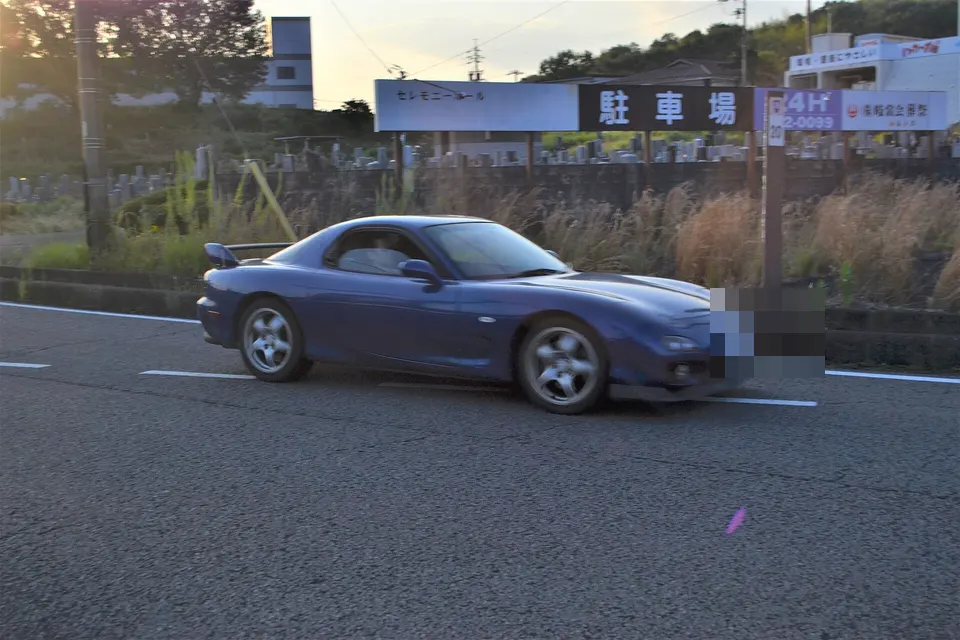
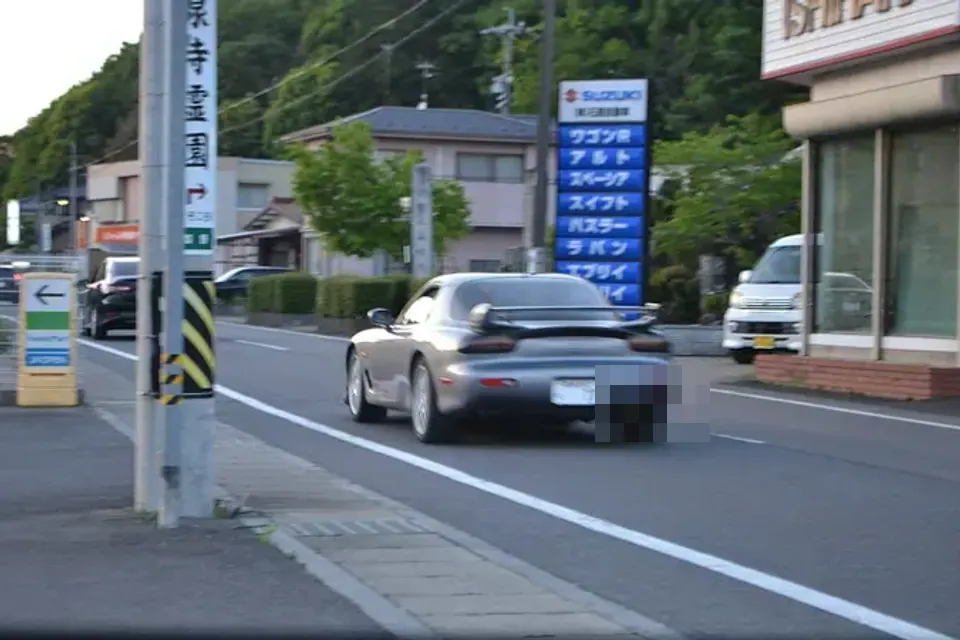
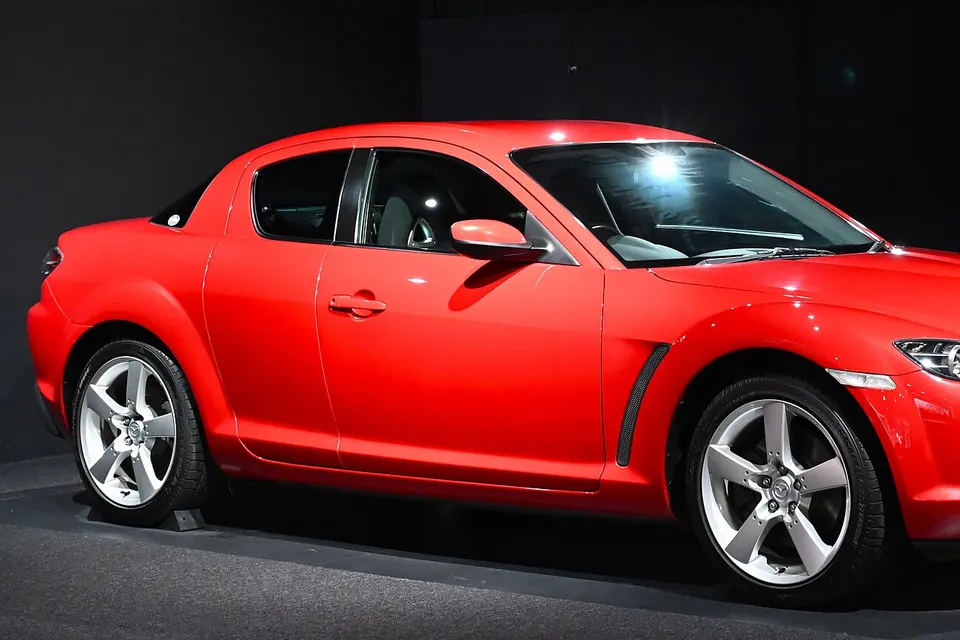
Documentary photographPhoto: Masayuki Igawa · CC BY 2.0 · resized and cropped · Registration identifier pixelated for privacy.
Engine redprint / verified13B-REW
1,308 cc twin-rotor sequential twin-turboFront-mid engine, rear-wheel driveTopology diagram · not to scale · based on the cited primary sources
ɛ̃fini RX-7 Type R is the exact E-FD3S production representative for the RX-7 (FD3S) milestone in this archive’s source-led family tree.
R / production rarity
How rare is it?
A simple 1–5 rating based on completed worldwide production for this exact version. Price and desirability are not included.
Rarity ratingNot availableNo comparable worldwide production total
Production bandNot available
Production evidenceNo exact production total
ProducedWorldwide total used for the rating
Production total unavailable
A reliable worldwide figure is not listed in the references.
How the rating works
The rating uses five fixed production bands. Smaller production runs receive higher ratings. Exact totals and responsibly sourced estimates for this precise version can be rated. Plans, regional totals, lower bounds, disputed figures and broader-family totals remain visible but unclassified. The evidence description is kept separate from the rating so a source limitation cannot change how scarcity is measured.
Open-licence recordings can appear with a visible Unregistered note; archive verification still requires independent identity and configuration evidence.
Listening descriptors remain editorial; architecture and output claims trace to the cited manufacturer material.
The third-generation ɛ̃fini RX-7 launched in Japan in December 1991 under Mazda’s then-new sales-channel branding. Engineers pursued “the best rotary-engine pure sports car,” reducing mass and concentrating it near the centre rather than extending the FC’s grand-touring direction. The early Type R documented here is the 255 PS launch-era performance grade. It predates the later Mazda-badged updates, 280 PS Type RS and farewell Spirit R, all of which share the FD3S silhouette but not the same technical specification.
Its 13B-REW is a water-cooled two-rotor engine with two 654 cc chambers and sequential twin turbochargers. Output is 188 kW (255 PS) in the 1991 Japanese specification, delivered through a five-speed manual to the rear wheels. The turbochargers operate in stages so a primary unit supports lower-speed response before the secondary joins as flow demand increases. Transition control, rather than merely having two compressors, is the engineering feature that gives the FD its distinctive boost delivery.
Mazda targeted 50:50 static weight distribution and used aluminium double-wishbone suspension at all four corners. The compact rotary sits behind the front axle, supporting low polar moment beneath a small, aerodynamically shaped body. Mazda quoted a 4.9 kg-per-PS power-to-weight ratio for the launch car and the FD won the inaugural RJC Japan New Car of the Year. Those achievements belong to the complete early package, not to later high-output engines transplanted into a first-series shell.
Engineering and character
Sequential control became both a strength and a frequent source of modification. Vacuum hoses, solenoids, actuators and valves coordinate the transition, and faults can make delivery abrupt or suppress the second turbo. Many owners convert the system to simplified sequential or non-sequential operation, change intercoolers or fit single turbochargers. Each approach creates a legitimate modified car but no longer represents the stock early Type R. Diagnostic state belongs alongside hardware in provenance.
Sound changes as the secondary turbo comes online: intake flow, compressor pitch, bypass events and exhaust energy layer over the rotary’s dense pulse sequence. A free-flow exhaust can obscure the factory transition and change turbine response as well as volume. Premium recording requires the original turbo pair, control system, airbox, intercooler, catalysts and silencers, with boost pressure and engine temperature documented. Rebuilt engines also need port and rotor-housing specification because internal changes alter idle and upper-range timbre.
The early Type R sits after the FC GT Limited and before six years of FD refinement. The December 1998 update raised Type R and Type RS output to 280 PS through higher-flow turbines, cooling and intake changes. The Spirit R then closed production in 2002 with several trim and transmission combinations. Those later cars are historically connected, but using their figures here would erase the development story. The 255 PS launch specification is the baseline from which the changes become meaningful.
Legacy and identity
The focus here is the 1991–1993 E-FD3S ɛ̃fini RX-7 Type R with 255 PS, sequential 13B-REW and five-speed manual. It excludes later Mazda-branded updates, Type RS, Type RZ, Spirit R and all single-turbo or non-sequential conversions. The broader story explains why sequential operation mattered. Sales channel, production phase, boost-control state and internal engine specification make the record precise enough to distinguish an original early FD from a visually similar car assembled across multiple generations.
01
Model identity
E-FD3S is displayed prominently so this record cannot be confused with an adjacent derivative.
02
Original soundtrack
Modified exhausts, aftermarket induction and replacement EV sound packs are excluded.