The rating uses five fixed production bands. Smaller production runs receive higher ratings. Exact totals and responsibly sourced estimates for this precise version can be rated. Plans, regional totals, lower bounds, disputed figures and broader-family totals remain visible but unclassified. The evidence description is kept separate from the rating so a source limitation cannot change how scarcity is measured.
Open-licence recordings can appear with a visible Unregistered note; archive verification still requires independent identity and configuration evidence.
Listening descriptors remain editorial; architecture and output claims trace to the cited manufacturer material.
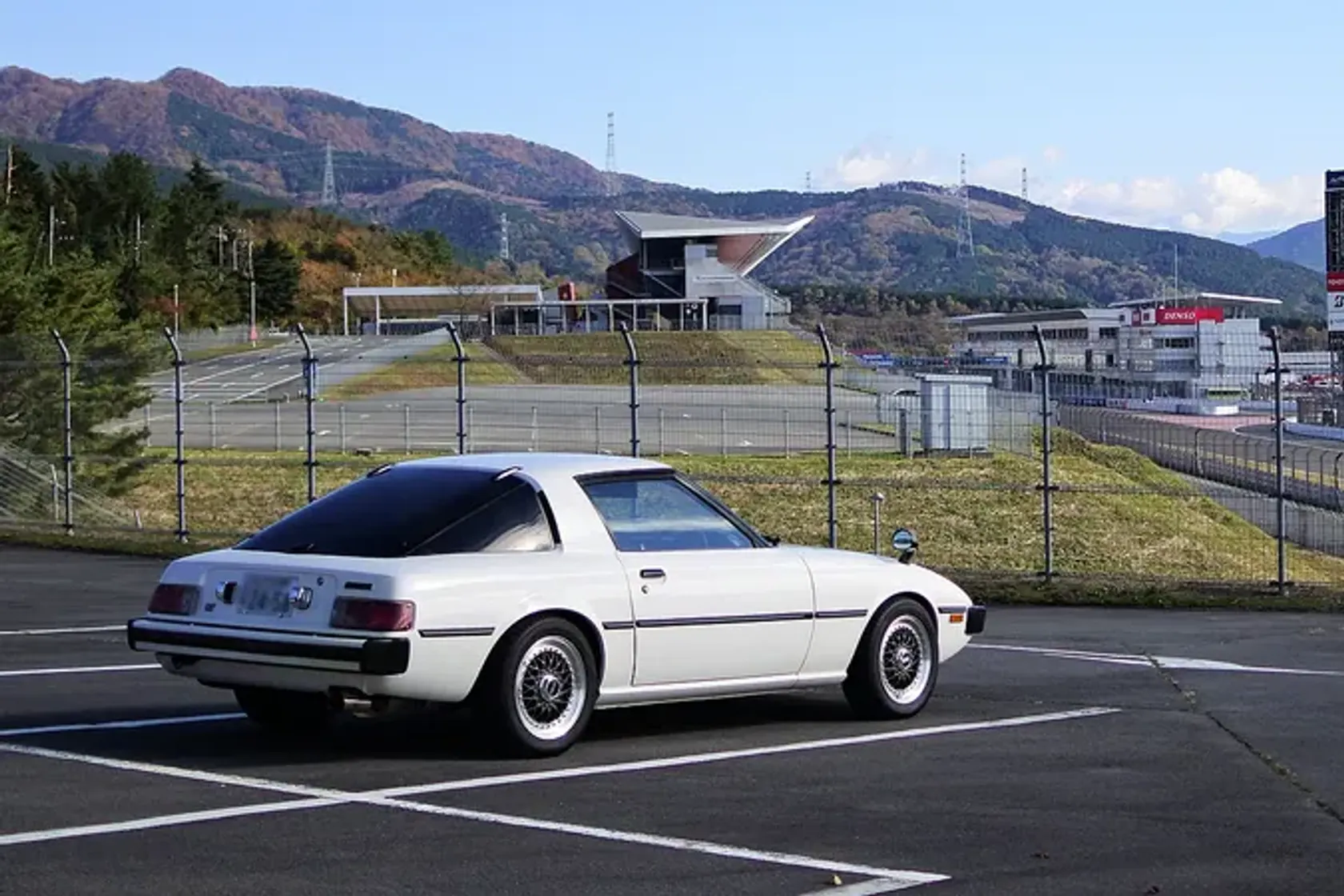
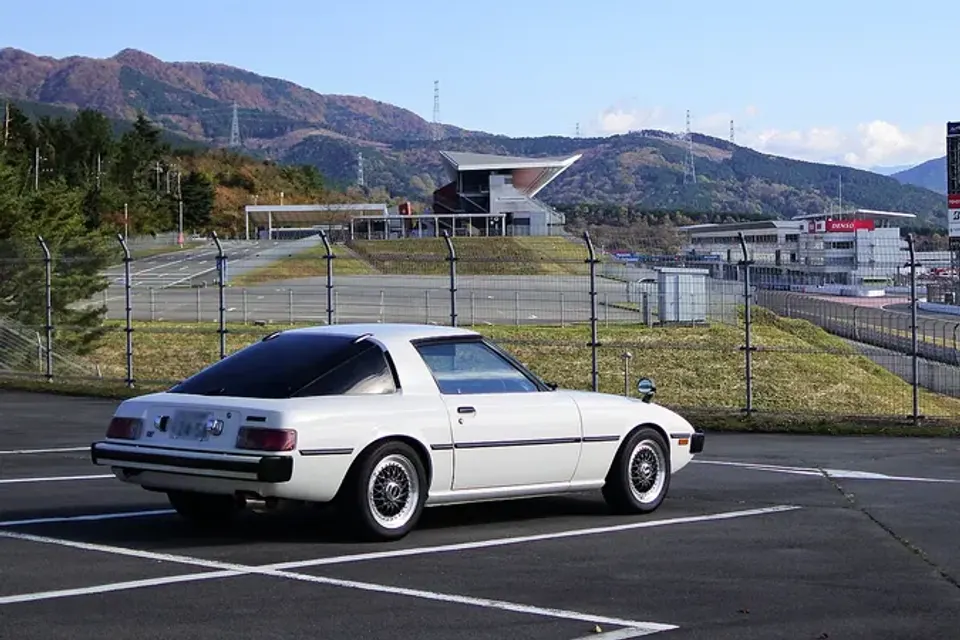
The first Savanna RX-7 launched in Japan in March 1978, during an era shaped by oil shocks and tightening emissions regulation. Mazda chose not to abandon its rotary engine; instead, it concentrated the compact power unit in a purpose-built lightweight sports car. The SA22C’s long bonnet did not conceal a conventional front-heavy layout. The small 12A sat behind the front axle line, creating the “front-midship” balance that would remain central to all three RX-7 generations.
Its 12A engine uses two 573 cc chambers, nominally 1,146 cc, and is naturally aspirated. Mazda’s domestic history records this early Japanese specification at 96 kW (130 PS). A five-speed manual drives the rear wheels; an automatic existed elsewhere in the broader range but is outside this record. Keeping the launch-period rating and transmission scope together prevents later turbocharged, export-market or automatic figures from being projected backward onto the represented car.
Pop-up headlamps helped lower the nose and reduce drag, while the compact engine allowed a low bonnet and useful cabin space. Mazda quoted 180 km/h and a 15.8-second standing 400 metres for the five-speed car in its historical account. More important than either figure was the packaging: steering, suspension and mass distribution were designed around the rotary from the beginning rather than adapting a family-car shell. That coherence turned the RX-7 name into Mazda’s durable sports-car identity.
Engineering and character
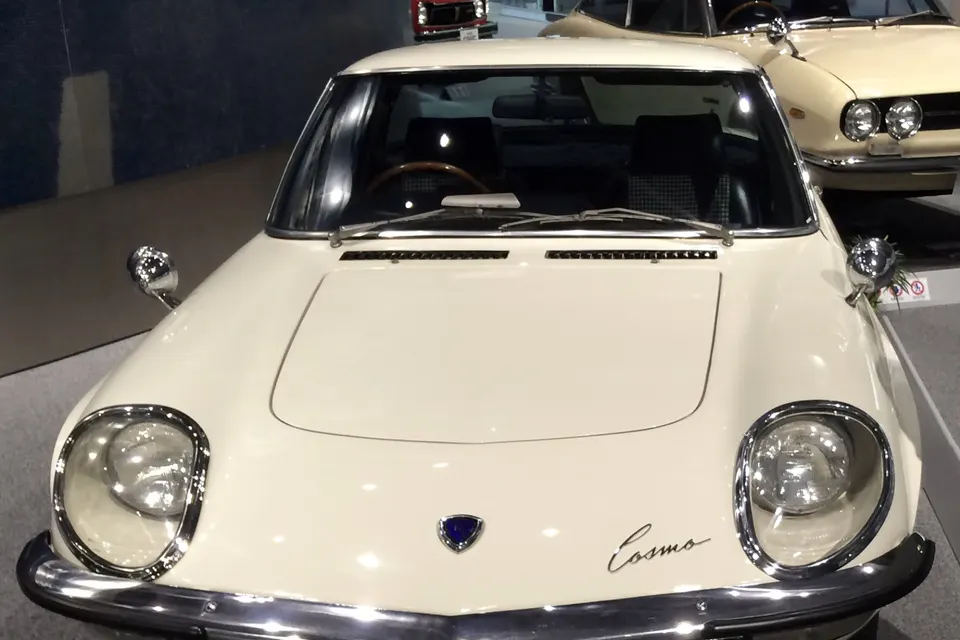
The SA22C also arrived as Mazda narrowed rotary deployment after years of installing the engine in saloons, coupés, a pickup and even a bus. It passed one million cumulative rotary vehicles in November 1978, only months after the RX-7 launch. The 12A turbo and later FB-coded developments must not be projected backward onto the naturally aspirated launch car.
A stock early 12A delivers a smooth, rapid pulse sequence with carburettor induction and relatively modest exhaust volume. Rotor-housing, apex-seal and oil-metering condition affect starting and idle in ways a superficial recording may misinterpret as character. Porting, exhaust replacement and ignition changes are extremely common.
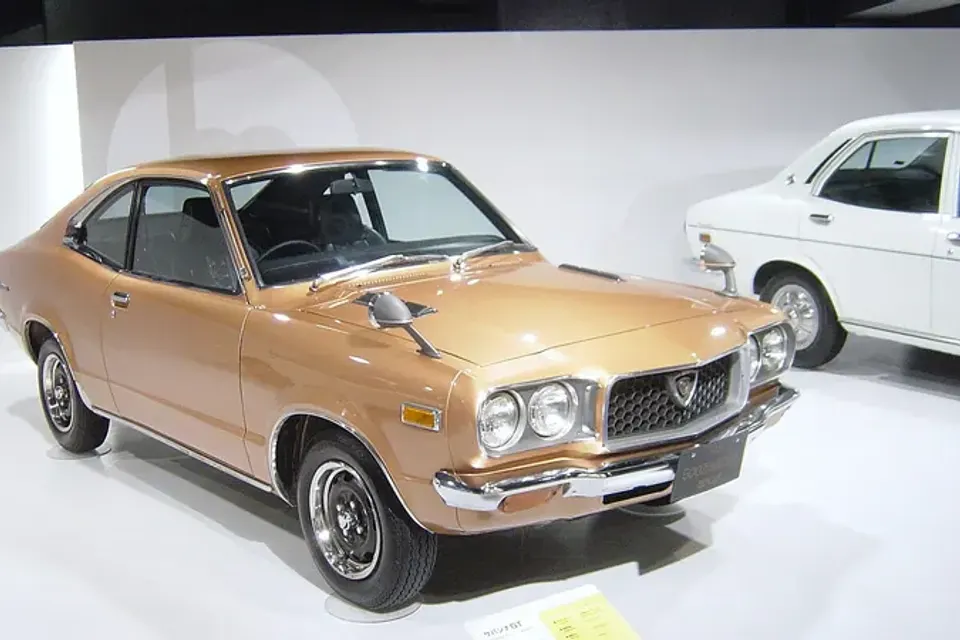
In lineage, the SA22C follows the Savanna RX-3 but changes the underlying proposition. The RX-3 shared a broader compact-car family; the RX-7 was conceived as the rotary sports car. The 1985 FC added a turbocharged 13B and more grand-touring refinement, while the 1991 FD adopted sequential twin turbocharging and extensive aluminium suspension. The first generation is valuable not because it anticipates every later specification, but because it establishes the packaging rules those cars evolved.
Legacy and identity
The focus here is the 1978–1980 Japanese-market Savanna RX-7 SA22C with naturally aspirated 12A and five-speed manual. It excludes later turbo models, automatic cars, export-specific ratings and modified-port engines. The broader story explains how Mazda answered an energy crisis with a lighter, more focused rotary car. Keeping the source-supported launch rating, initial-series dates and engine preparation explicit prevents a forty-year model history from being condensed into one misleading specification.
01
Model identity
SA22C is displayed prominently so this record cannot be confused with an adjacent derivative.
02
Original soundtrack
Modified exhausts, aftermarket induction and replacement EV sound packs are excluded.