
Mazda · Sports car · 1987–1988
RX-7 Turbo II
Recorded designation · FC3S- Recorded designation
- FC3S
- Engine / drive unit
- 13B-T
- Archive no.
- 131
- Sources updated
- 21 September 2026
Help build this passport
Have a recording, source, correction, photo or missing detail for this exact car? Prepare a contribution with the Car ID already selected.
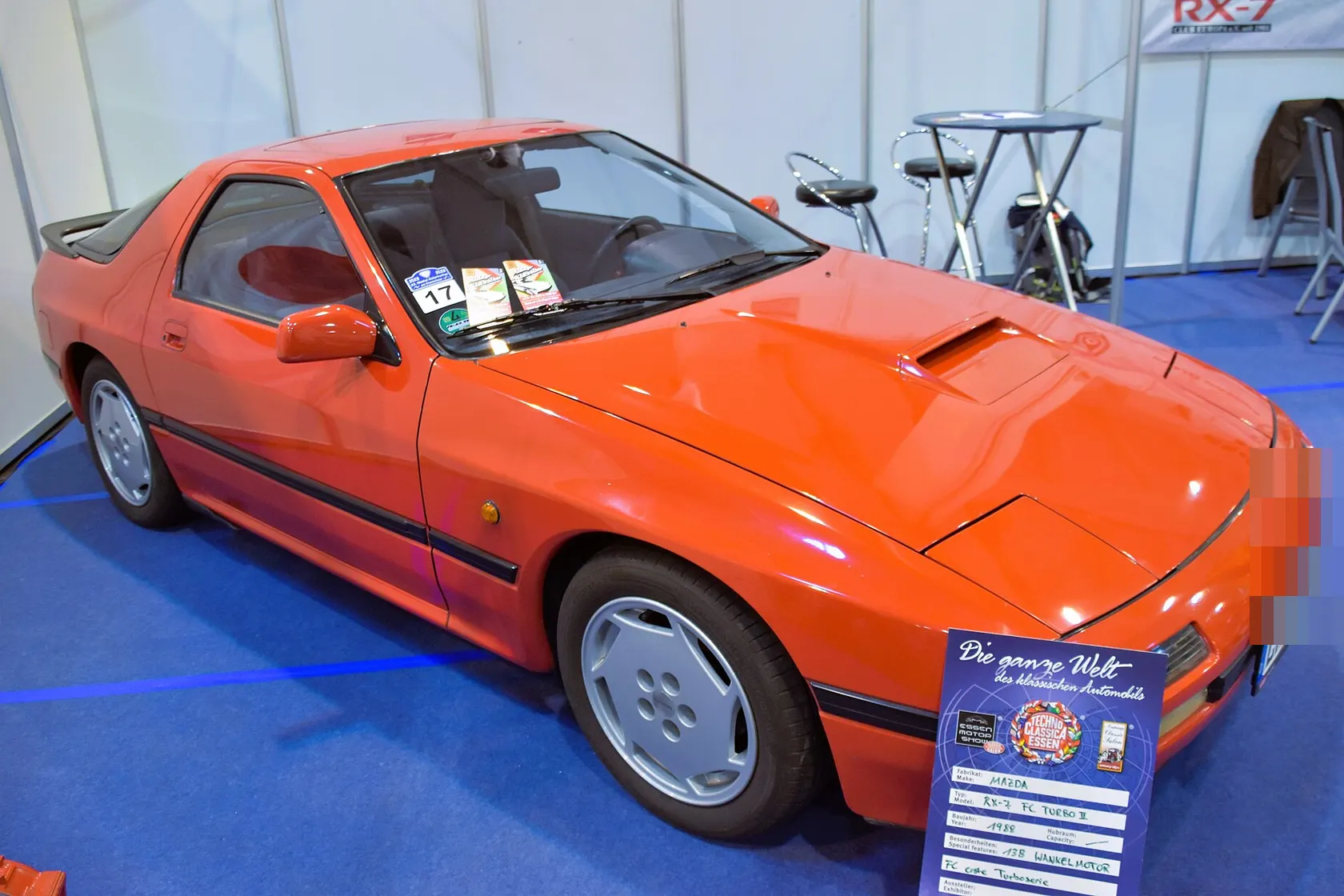
The Turbo II brought forced-induction rotary performance to the second-generation RX-7’s more mature coupé platform.
How rare is it?
A simple 1–5 rating based on completed worldwide production for this exact version. Price and desirability are not included.
A reliable worldwide figure is not listed in the references.
How the rating works
The rating uses five fixed production bands. Smaller production runs receive higher ratings. Exact totals and responsibly sourced estimates for this precise version can be rated. Plans, regional totals, lower bounds, disputed figures and broader-family totals remain visible but unclassified. The evidence description is kept separate from the rating so a source limitation cannot change how scarcity is measured.
- 5/5Fewer than 25 builtUltra rare
- 4/525 to 249 builtVery rare
- 3/5250 to 2,499 builtRare
- 2/52,500 to 24,999 builtLimited production
- 1/525,000 or more builtSeries production
At a glance
What creates the sound
Mechanical, induction, transmission and exhaust sound should be documented separately where practical.
A factory-stock claim requires evidence for engine, intake, catalysts, gearbox and silencers.
Open-licence recordings with incomplete configuration evidence may publish only as Unregistered.
- Rotary architecture
- A turbocharged twin-rotor engine and five-speed manual sit in the FC generation’s front-mid-engine rear-drive chassis.
- 5-speed manual with rear-wheel drive
History and character
Origins and context
RX-7 Turbo II (FC3S) records one precise Mazda performance-car configuration from 1987–1988. The Turbo II brought forced-induction rotary performance to the second-generation RX-7’s more mature coupé platform.
At its centre is a 1,308 cc turbocharged rotary identified as 13B-T. The cited manufacturer material supports 136 kW (185 PS) for this scope and 245 Nm. A turbocharged twin-rotor engine and five-speed manual sit in the FC generation’s front-mid-engine rear-drive chassis.
The powertrain sits in a longitudinal front-mid engine, rear-wheel drive layout and works through a 5-speed manual.
This entry belongs to a deliberately narrow Mazda chronology. Related badges, body styles and competition derivatives can share a visual or mechanical vocabulary without sharing exact specifications. The family tree supplies context, not permission to transfer a recording or fact from a neighbouring model.
Engineering and character
The listening cues twin-rotor cadence, single turbocharger, five-speed manual, 1980s coupé cabin are orientation rather than proof. A cold start can expose idle control and mechanical texture; acceleration can document induction, combustion and shift behaviour; a fly-by can place exhaust and tyre sound in an exterior context.
The focus here is the 1987–1988 North American FC Turbo II. It excludes naturally aspirated FC models, the 1989 facelift and convertibles. Many survivors have replacement exhausts, engine work or other changes. An openly licensed recording may still be useful when its exact state is uncertain, but the page will show a visible Unregistered note until evidence resolves the match.
It invites cold start, acceleration and fly-by recordings, as well as photographs, documents and corrections.
A photograph identifies the model but does not prove every detail of a surviving car.
Legacy and identity
Exact location and ownership evidence stay private while the technical context remains available to later listeners.
That evidence also helps readers compare like with like. A useful submission therefore describes what was heard and how it was recorded, while avoiding claims that the microphone alone cannot establish.
The exact model boundary also keeps the archive useful as the catalogue grows. A reader can follow adjacent generations and special editions without mistaking shared family history for interchangeable hardware. A contributor can attach a photograph, correction or sound to one durable identity, while editors preserve the source, licence and unresolved details that explain why the evidence belongs there.
Preservation means keeping every claim inspectable and correctable. That structure protects the exact identity on which a meaningful sound archive depends.
Model identity
The focus here is the 1987–1988 North American FC Turbo II. It excludes naturally aspirated FC models, the 1989 facelift and convertibles.
Why it matters
The Turbo II brought forced-induction rotary performance to the second-generation RX-7’s more mature coupé platform.
Model lineage
1987–2002 · 2 documented milestones
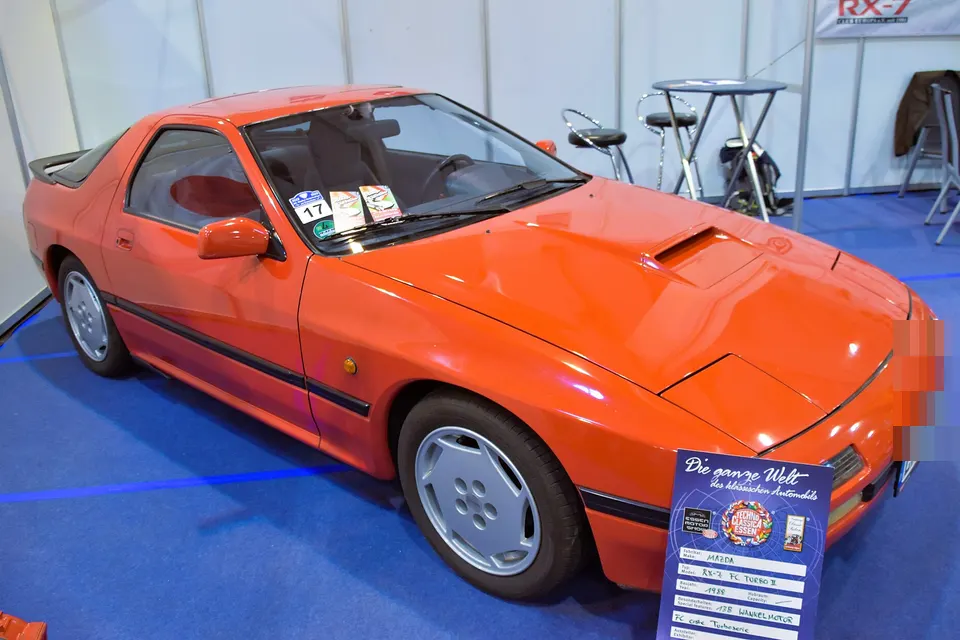
Photo: Charles from Port Chester, New York · CC BY 2.0 · resized and cropped · Registration identifier pixelated for privacy. 1987RX-7 Turbo IICurrent passport: The Turbo II brought forced-induction rotary performance to the second-generation RX-7’s more mature coupé platform.[6]→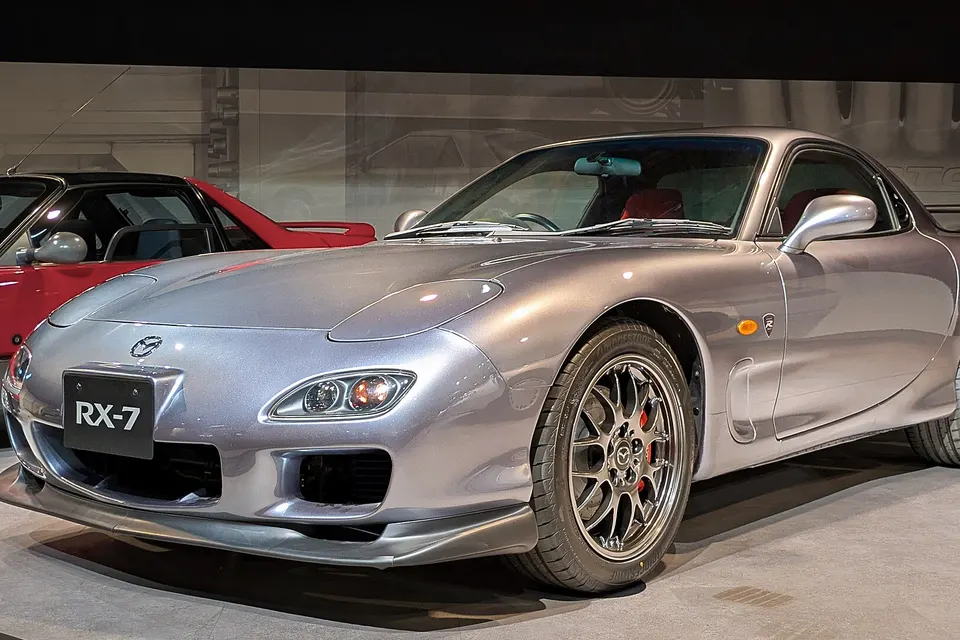
Photo: Aos.1905 · CC BY 4.0 · resized and cropped 2002RX-7 Spirit R Type AThe Type A was the two-seat manual flagship within Mazda’s final Spirit R edition for the FD RX-7.[5]


Help us hear this car
Share a properly licensed recording of this exact model. Stock and modified cars are both welcome when their configuration is described clearly.
- Cold start
- Acceleration
- Fly-by
Authoritative films
Links pass directly to YouTube. The archive does not host, copy or embed these films.
References
- 012005 MAZDASPEED MX-5 Miata specificationsMazda North American Operations · accessed 21 September 2026
- 02Mazda unveils MX-5 Miata 30th Anniversary EditionMazda North American Operations · accessed 21 September 2026
- 03Enhanced engine for 2019 MX-5 MiataMazda North American Operations · accessed 21 September 2026
- 04Mazda MX-5 celebrates its 20th anniversaryMazda Motor Corporation · accessed 21 September 2026
- 05Mazda releases limited-edition RX-7 Spirit RMazda Motor Corporation · accessed 21 September 2026
- 06Mazda history: 1980–1989Mazda Motor Corporation · accessed 21 September 2026
- 07Mazda RX-8 Spirit R coming to JapanMazda Motor Corporation · accessed 21 September 2026