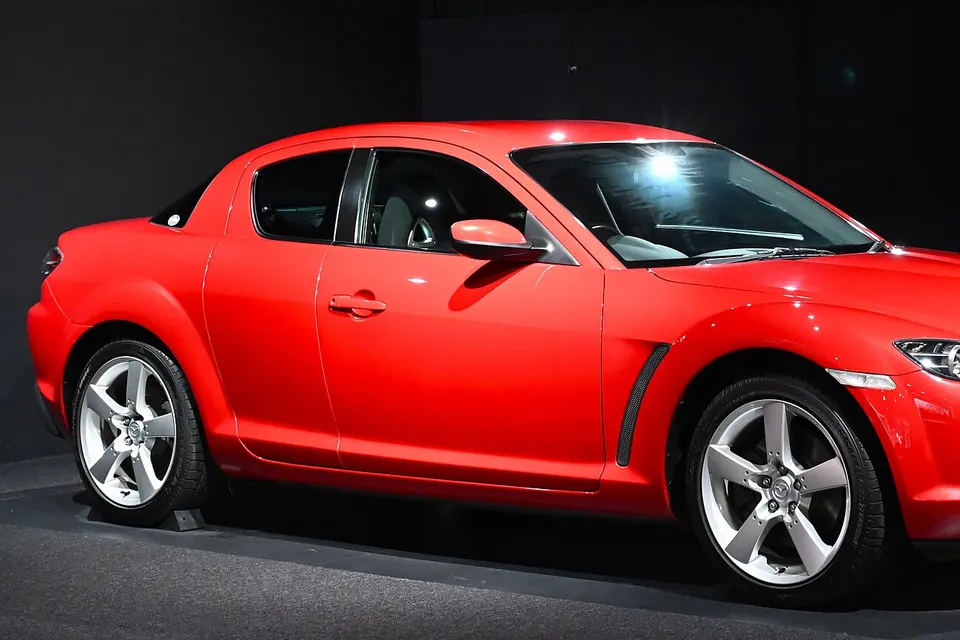
The rating uses five fixed production bands. Smaller production runs receive higher ratings. Exact totals and responsibly sourced estimates for this precise version can be rated. Plans, regional totals, lower bounds, disputed figures and broader-family totals remain visible but unclassified. The evidence description is kept separate from the rating so a source limitation cannot change how scarcity is measured.
Open-licence recordings can appear with a visible Unregistered note; archive verification still requires independent identity and configuration evidence.
Listening descriptors remain editorial; architecture and output claims trace to the cited manufacturer material.
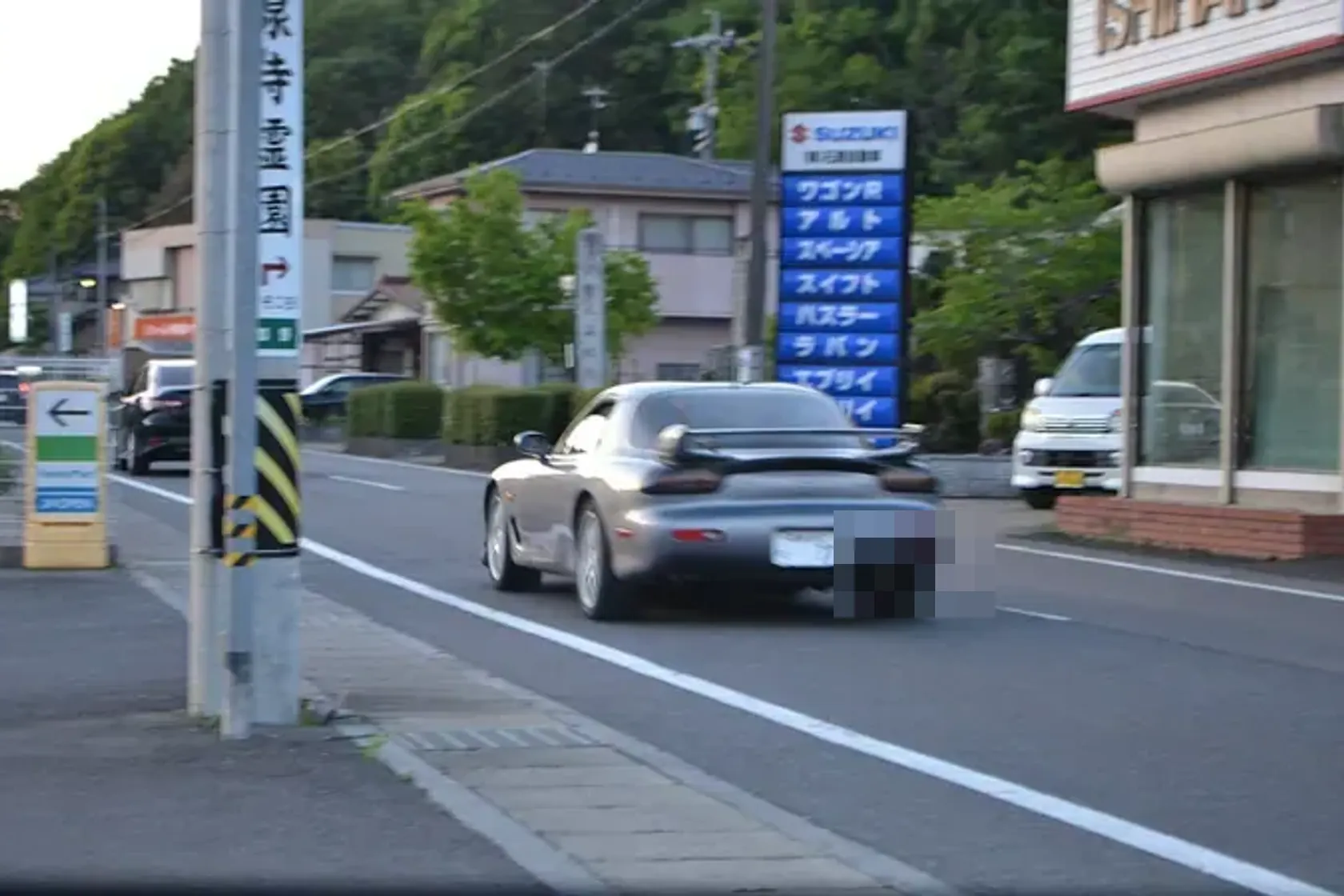
Mazda announced the RX-7 Spirit R in March 2002 as the final limited series before FD3S production ended that August. A total of 1,500 Spirit R cars covered three distinct types. The focus here is Type B: the four-seat, five-speed-manual version. The better-known Type A used two seats and lightweight Recaro full buckets, while Type C combined four seats with a four-speed automatic and lower output. Treating all Spirit Rs as Type A is a common but consequential error.
Type B uses the 13B-REW sequential twin-turbo rotary with two 654 cc chambers, producing 206 kW (280 PS) through a five-speed manual. It shares the headline output with Type A but not every interior or mass detail. Type C was rated at 188 kW (255 PS) because of its automatic configuration. The staged turbo-control system, front-mid engine position and rear drive remain core FD architecture, refined through a decade of production rather than newly invented for the farewell badge.
All Spirit R versions received BBS 17-inch wheels, red brake callipers, exclusive meters and ornaments, soft-coated interior panels and red-stitched Nardi controls. Type A and Type B added large drilled ventilated brakes, stainless-mesh brake hoses and Bilstein dampers. Type B used four seats with specific leather-trimmed red buckets instead of Type A’s two-seat Recaros. Those details are the practical checklist that distinguishes an original Type B from a regular late FD carrying Spirit R trim.
Engineering and character
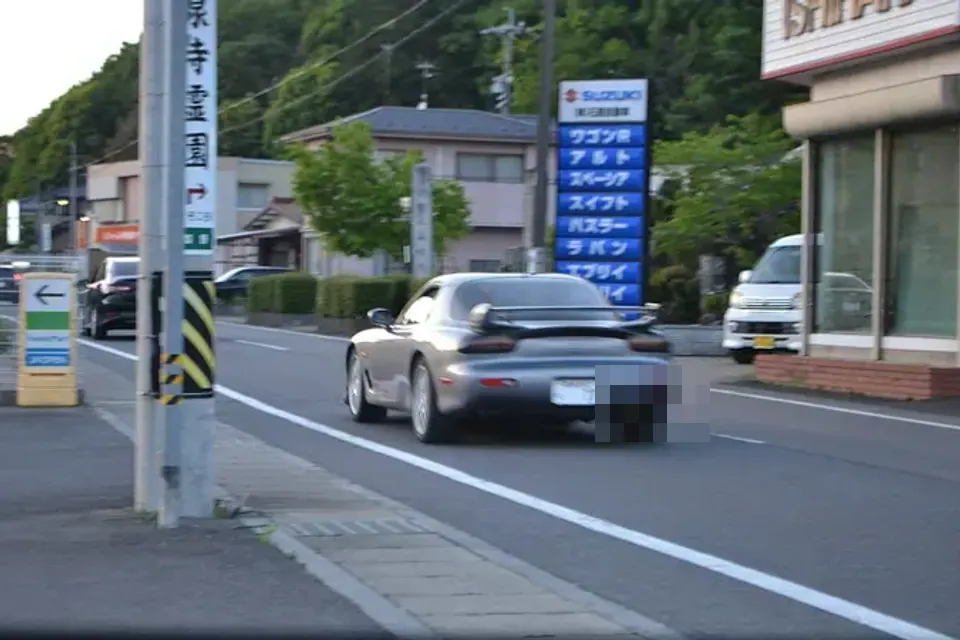
Five factory exterior colours were offered, including Spirit R-exclusive Titanium Gray Metallic. Colour alone cannot prove the derivative because panels are repairable and replicas are common. Chassis records, original equipment, seat count, transmission and brake hardware need to agree. The 1,500 total applies to the complete Type A/B/C series, not to Type B alone.
Acoustically, Type B retains the late 280 PS sequential system and manual shift cadence, while its four-seat cabin and leather seats create a different interior enclosure from Type A. Turbo control, airbox, intercooler, catalysts and silencers require documentation, as do porting and rebuild details. BBS wheels and brakes contribute little directly to engine sound but change tyre and road-noise context. A complete recording should capture warm idle, staged boost and overrun without editing away transition behaviour.
The Spirit R ends the RX-7 line but does not end Mazda’s rotary production. The RX-8 arrived in 2003 with the naturally aspirated side-port RENESIS, four doors and four usable seats, moving the technology toward lower emissions and broader practicality. Mazda ended RX-8 production in 2012, then returned the rotary as a range extender in 2023. The Type B therefore closes the dedicated turbo RX-7 chapter, not every use or development of the rotary engine.
Legacy and identity
The focus here is the 2002 GF-FD3S RX-7 Spirit R Type B: four seats, five-speed manual, 280 PS and Type A/B brake and damper equipment. It excludes Type A, Type C, Type RS, cosmetic replicas and modified turbo systems. It makes sense of the three-part farewell series. Seat count, transmission, shared equipment and total-series production language protect Type B from being misdescribed with the more famous Type A’s lightweight interior or Type C’s lower-output automatic specification.
01
Model identity
GF-FD3S is displayed prominently so this record cannot be confused with an adjacent derivative.
02
Original soundtrack
Modified exhausts, aftermarket induction and replacement EV sound packs are excluded.