4,698 cc 65° V12 · five valves per cylinderLongitudinal rear-mid engine, rear-wheel driveTopology diagram · not to scale · based on the cited primary sources
F50 is Ferrari’s 1995–1997 naturally aspirated v12 and stressed-engine f1 transfer, preserved here as an exact factory road-car passport rather than a generic supercar profile.
R / production rarity
How rare is it?
A simple 1–5 rating based on completed worldwide production for this exact version. Price and desirability are not included.
The rating uses five fixed production bands. Smaller production runs receive higher ratings. Exact totals and responsibly sourced estimates for this precise version can be rated. Plans, regional totals, lower bounds, disputed figures and broader-family totals remain visible but unclassified. The evidence description is kept separate from the rating so a source limitation cannot change how scarcity is measured.
5/5Fewer than 25 builtUltra rare
4/525 to 249 builtVery rare
3/5250 to 2,499 builtRare
2/52,500 to 24,999 builtLimited production
1/525,000 or more builtSeries production
Recorded sales
Documented sales
Prices never affect the rarity rating.
Sold$9,245,0002025 · RM Sotheby's · Monterey
Auction result
Exact road model · 1995 US-specification F50
Published sale total; buyer premium included by the auction house.
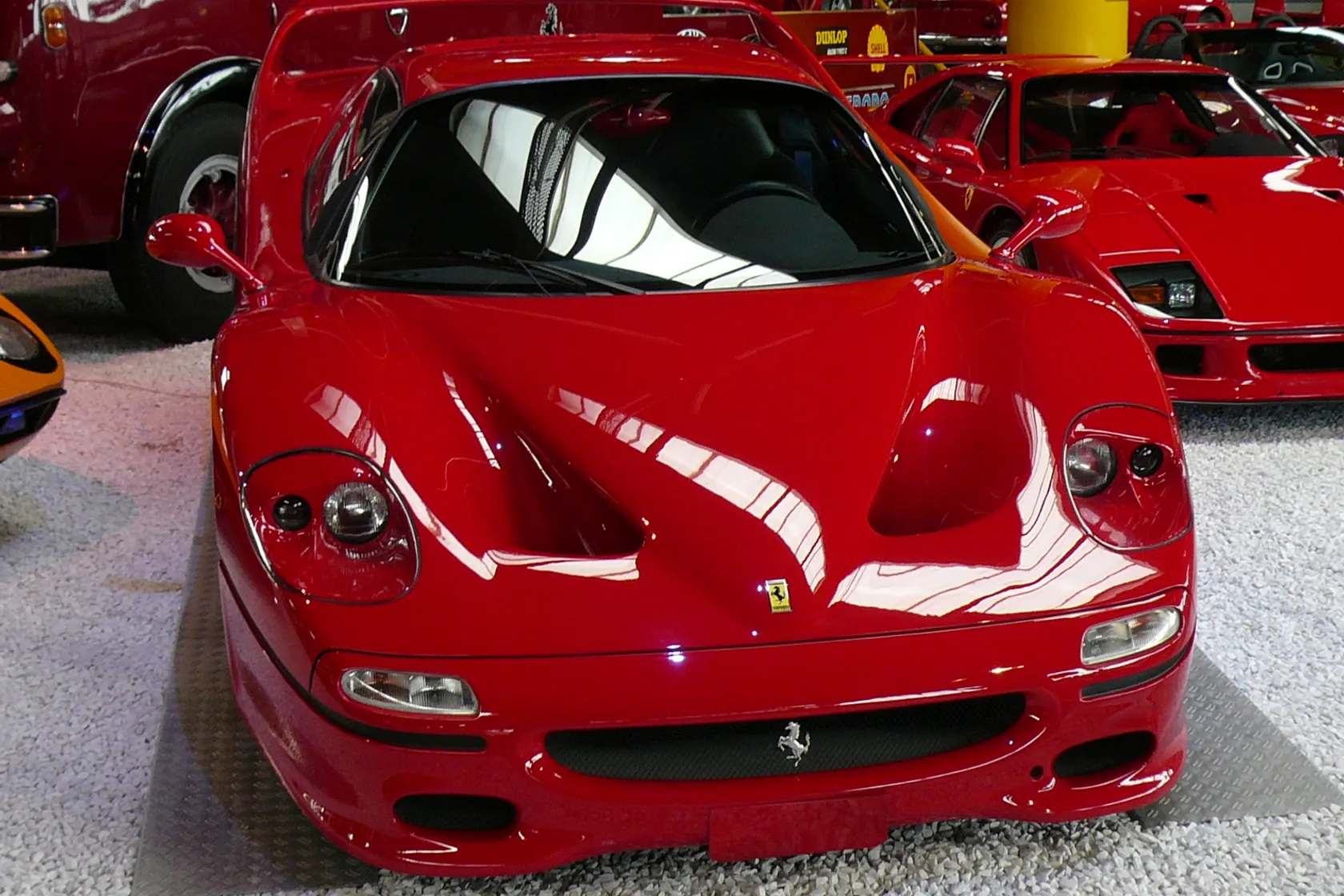
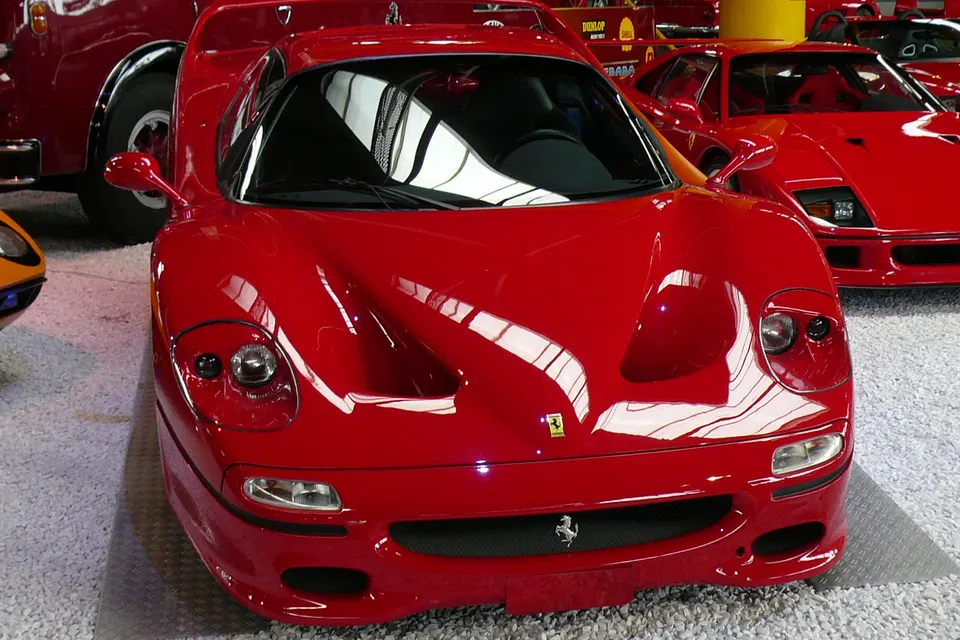
Ferrari revealed the F50 at the 1995 Geneva Motor Show as an early celebration of the company’s fiftieth anniversary. Production was limited to 349 cars—famously framed by Ferrari as one fewer than expected demand—and the model replaced the F40 at the head of the road range. It did not try to improve the F40 by repeating its formula. Instead, Ferrari used the F50 to make the strongest road-going connection yet between its Formula 1 engineering and a limited-series supercar, changing engine type, chassis structure, suspension and even the way vibration reached the cabin.
Its 65-degree V12 traced its concept to Ferrari’s naturally aspirated 3.5-litre Formula 1 engine of 1990, enlarged and re-engineered for road durability to 4,698.50 cc. Five valves per cylinder, dry-sump lubrication and high engine speed supported 382 kW, or 520 cv, at 8,500 rpm and 471 Nm at 6,500 rpm. A twin-plate clutch and six-speed manual transaxle drove the rear wheels. Ferrari documented 325 km/h, 3.87 seconds to 100 km/h and 1,230 kg dry, figures specific to the production road car rather than the later F50 GT.
The carbon-fibre monocoque and pushrod suspension were obvious competition transfers, but the engine installation was still more revealing. Ferrari made the V12 and gearbox stressed structural members behind the passenger cell, as in a racing car, instead of isolating the powertrain in a conventional rear subframe. That decision reduced intermediate structure and sharpened the conceptual link to Formula 1. RedlineCodex treats the resulting sense of mechanical connection as editorial analysis until it can be compared with a documented factory-original recording.
Engineering and character
A removable hard roof allowed the body to operate as either berlinetta or open targa, while Ferrari retained manual steering and omitted anti-lock braking. Those decisions matter to the exact identity because later electronic supercars deliver performance through a very different relationship between driver and chassis. The F50 still has electronically managed engine functions and sophisticated dampers, but clutch, steering and braking loads remain direct. Roof state also changes airflow and the sound field around the occupants, so every serious recording should state whether the panel was fitted.
The soundtrack replaces the GTO and F40’s compressor pressure with twelve naturally aspirated cylinders, a short-stroke design and five-valve breathing. Combustion pulses build with engine speed while the carbon structure transmits valvetrain, gear and mount vibration as part of the experience. Standard exhaust hardware is essential: aftermarket systems can amplify volume while masking the balance between induction, structure and tailpipe sound that Ferrari engineered. A six-speed manual adds clutch engagement and slower discrete shifts, placing the F50 on the opposite side of the lineage from the paddle-shift Enzo.
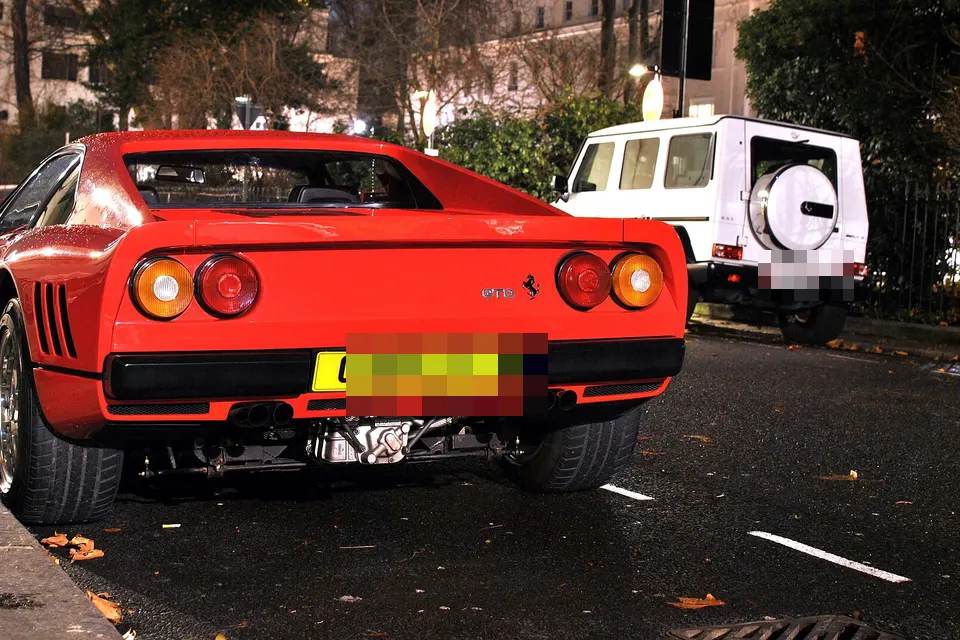
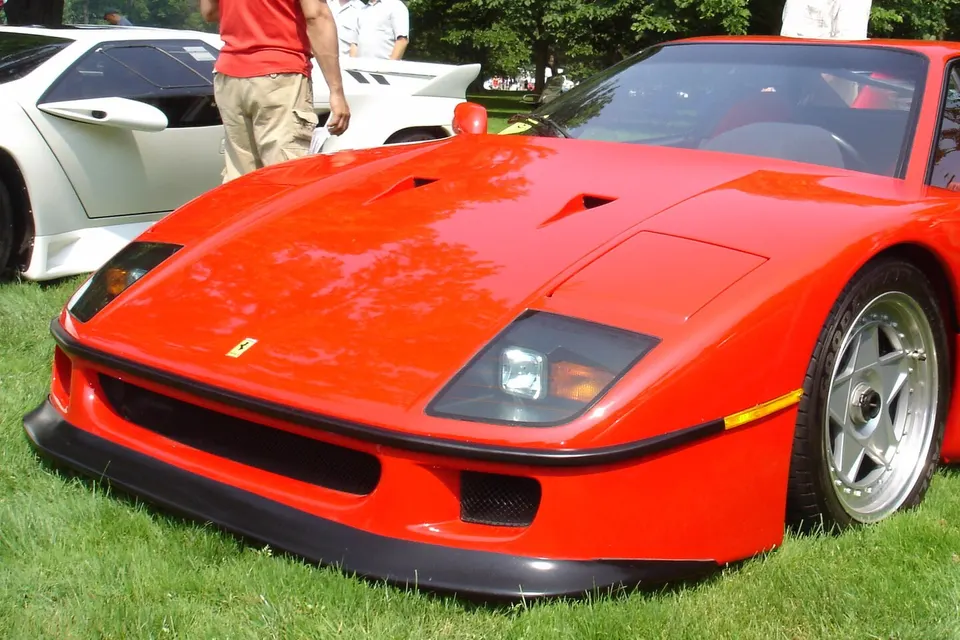
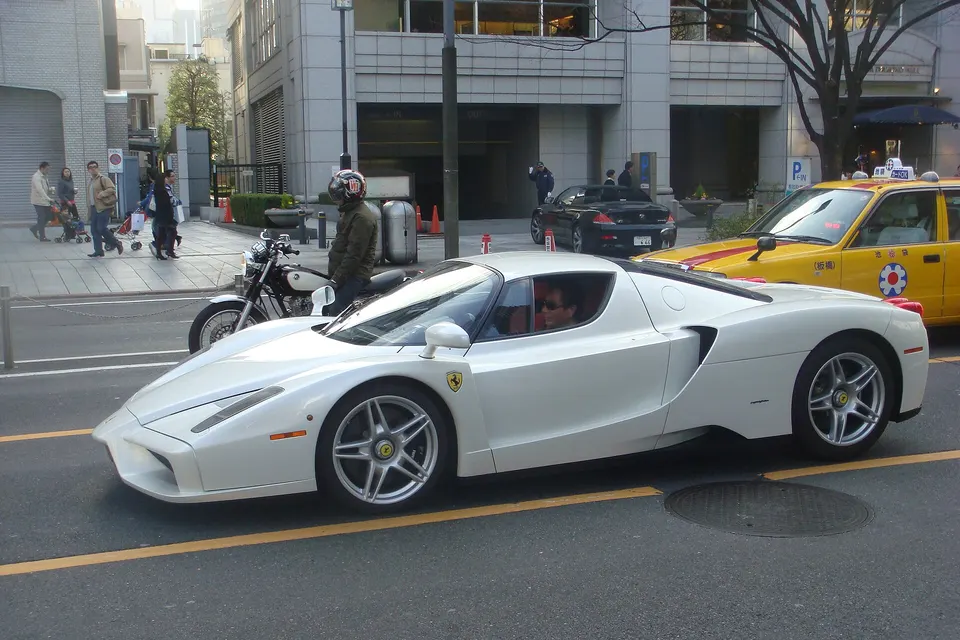
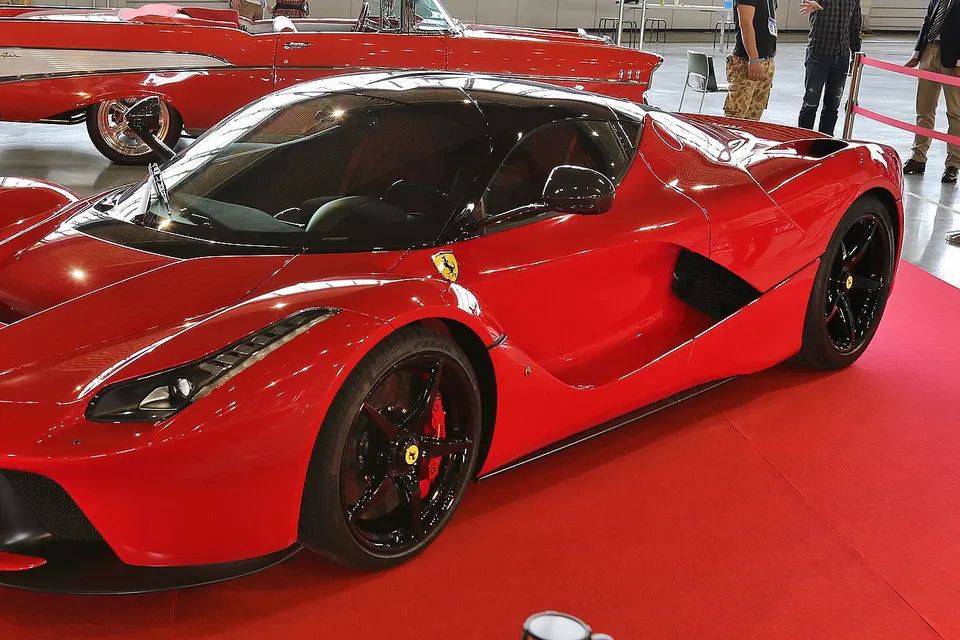
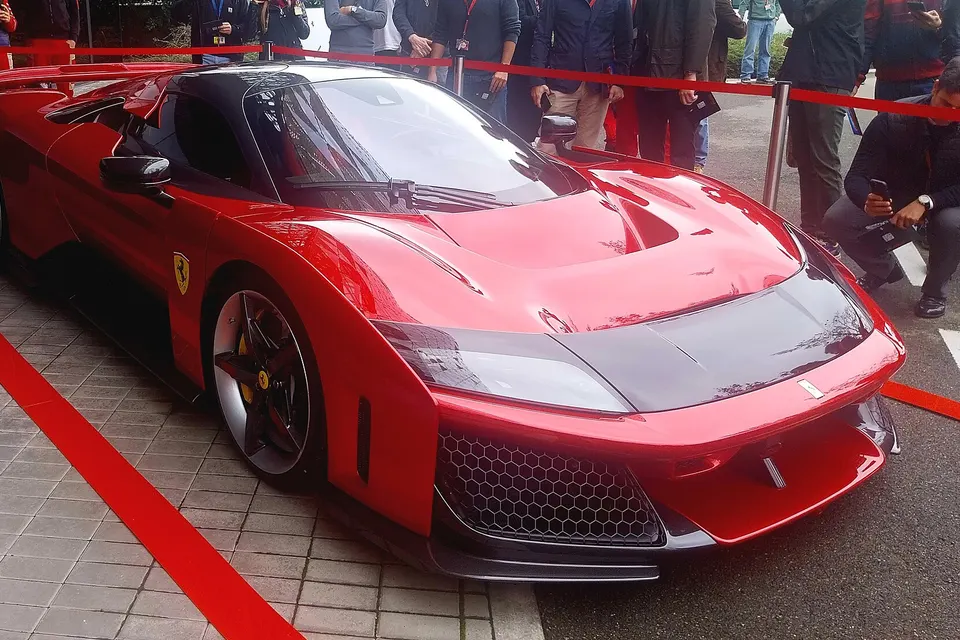
Ferrari’s lineage moves from the turbo V8 F40 to this V12 car, then to the Enzo’s larger six-litre V12, carbon-ceramic brakes and integrated electronic controls. LaFerrari retained twelve cylinders but added HY-KERS, while the F80 later returned to turbocharging with a V6 and electric all-wheel drive. The F50 is therefore not an awkward bridge. It is the line’s purest experiment in using the combustion engine as part of the chassis and in delivering contemporary Formula 1 concepts through a manual road car.
Legacy and identity
The focus here is the 349 production F50 road cars, Tipo F130, built from 1995 to 1997. It excludes the 750 hp F50 GT competition development, replicas and cars carrying non-standard exhaust or suspension hardware. The 4,698 cc F130-family V12, six-speed manual, removable roof and stressed-engine carbon structure belong together. Keeping those identifiers explicit prevents F50 GT output and circuit mythology from overwriting the subtler engineering achievement of the road car, while giving future sound submissions a configuration that can be verified.
01
Model lineage
Ferrari itself identifies GTO, F40, F50, Enzo Ferrari, LaFerrari and F80 as one six-car road-supercar sequence.
02
Road-car identity
The focus here is the production F50; racing, XX, open and modified derivatives require separate evidence.
04 / family tree
Model lineage
1984–2025 · 6 documented milestones
Photo: Ed Callow · CC BY 2.0 · resized and cropped · Registration identifiers pixelated for privacy.