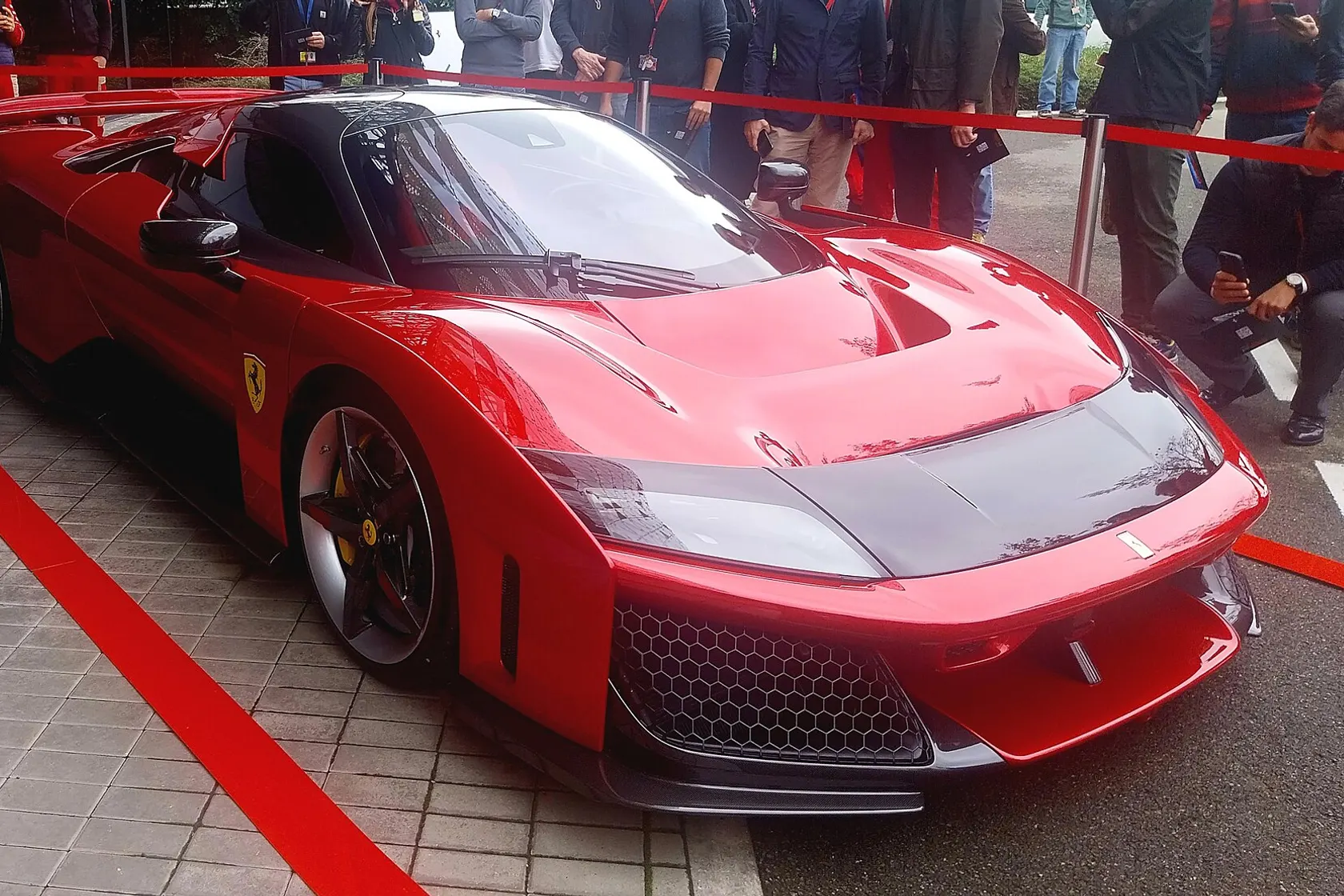
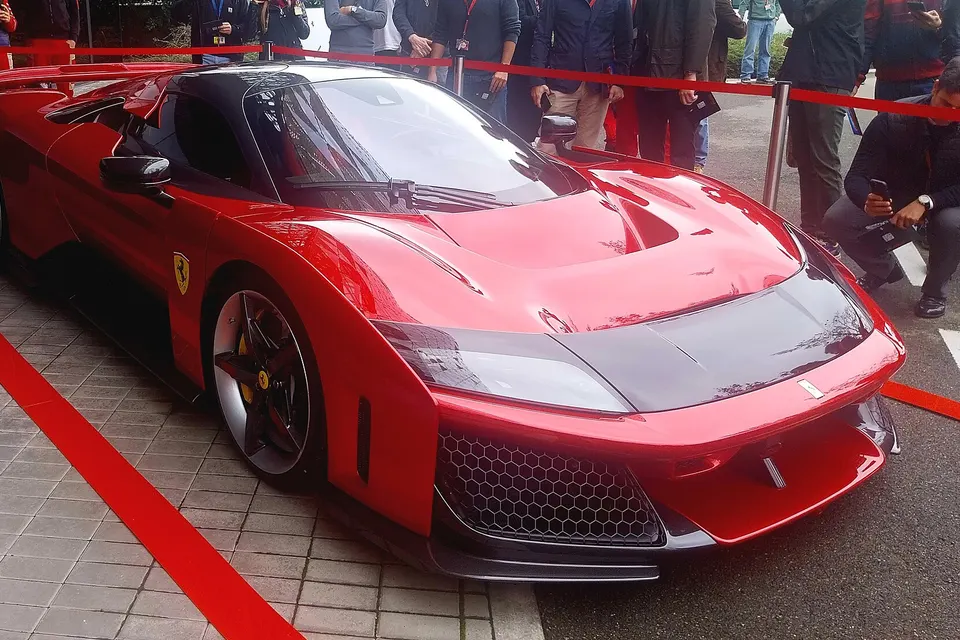
Documentary photographPhoto: Asgaw · CC BY 4.0 · resized and cropped
Engine redprint / verifiedF163CF V6 + 800 V hybrid system
2,992 cc 120° e-turbo V6 · three drive motorsLongitudinal rear-mid engine with electric front axleTopology diagram · not to scale · based on the cited primary sources
F80 is Ferrari’s 2025–2027 499p-derived v6 hybrid architecture and electric all-wheel drive, preserved here as an exact factory road-car passport rather than a generic supercar profile.
R / production rarity
How rare is it?
A simple 1–5 rating based on completed worldwide production for this exact version. Price and desirability are not included.
Rarity ratingNot availableNo comparable worldwide production total
Production bandNot available
Production evidenceFuture production plan
ProducedWorldwide total used for the rating799
Planned production through 2027
Figure type
Planned
Scope
F80 production plan; series incomplete at the review date
The rating uses five fixed production bands. Smaller production runs receive higher ratings. Exact totals and responsibly sourced estimates for this precise version can be rated. Plans, regional totals, lower bounds, disputed figures and broader-family totals remain visible but unclassified. The evidence description is kept separate from the rating so a source limitation cannot change how scarcity is measured.
The 120-degree V6 uses electrically assisted turbochargers, so compressor response and exhaust energy are actively managed rather than purely pressure-driven.
Two front motors, a rear MGU-K and the combustion engine create a layered all-wheel-drive powertrain without synthesising a false V12 identity.
Boost Optimisation mode, battery state, gear and drive mode are mandatory recording metadata because software changes the delivered power and sound.
2,992 cc 120° e-turbo V6 · three drive motors
Longitudinal rear-mid engine with electric front axle
Ferrari presented the F80 in October 2024 for production from 2025 through the company’s eightieth-anniversary year in 2027. Ferrari calls it the sixth supercar in the sequence that began with the 1984 GTO and limits planned production to 799 cars. That volume does not explain the engineering decision at its centre: Ferrari replaced the preceding cars’ V8 and V12 engines with a three-litre V6 hybrid architecture because current endurance racing and Formula 1, rather than nostalgia, define the technology-transfer brief.
The F163CF combustion engine is a 120-degree, 2,992 cc twin-turbocharged V6 with dry-sump lubrication. Ferrari specifies 900 cv at 8,750 rpm, 850 Nm at 5,500 rpm and a dynamic limiter that can reach 9,200 rpm. At 300 cv per litre it is the highest-specific-output Ferrari road engine cited at launch. Its architecture, crankcase, timing-drive layout, oil-scavenge circuit, bearings, injectors and high-pressure pumps have documented links to the 499P that won Le Mans in 2023 and 2024, although road calibration and output are distinctly F80.
Three propulsion motors complete the 800-volt system. Two 105 kW units drive the front axle, while an 81 cv rear MGU-K assists the engine and recovers energy; Ferrari quotes 1,200 cv combined and electric all-wheel drive. The 2.28 kWh battery is designed for rapid power exchange rather than long electric range. This is not a plug-in grand tourer and its motors do more than fill a brochure total: they manage front-axle traction, recuperation and torque response while the combustion engine continues to drive the rear through an eight-speed dual-clutch transmission.
Engineering and character
The electrically assisted turbochargers place a motor between each turbine and compressor, allowing Ferrari to manage boost response and energy independently of the traditional fixed relationship between exhaust flow and compressor speed. Active suspension controls ride height and body attitude to support the ground-effect floor, while an active rear wing changes height and incidence. Together with the front triplane and S-duct, the launch press kit states 1,000 kg of downforce at 250 km/h. That figure describes a coordinated operating state, not one permanently fixed aerodynamic configuration.
Ferrari’s “1+” cockpit offsets and narrows the passenger environment to give the driver a single-seat visual focus while retaining two-person homologation. The technical sheet lists 1,525 kg dry with lightweight options, a 42.2:57.8 weight distribution and 350 km/h maximum speed. As with every optional-condition dry figure, it cannot be treated as the scale weight of any delivered car. Seat, wheel, battery and body specifications must be checked against the individual record before a mass claim becomes evidence about a particular F80.
Its soundtrack is intentionally unlike the V12 LaFerrari. The wide-angle V6 fires through a compact exhaust path while e-turbos alter the familiar relationship between throttle, boost and compressor noise. Electric front drive and the rear MGU-K add high-frequency mechanical layers but do not simulate extra cylinders. Boost Optimisation can learn a circuit and deploy energy at selected points, so battery state, mode, gear, engine temperature and software configuration are essential recording metadata. An F80 capture without operating context would preserve spectacle while losing the technical reason the car sounds and accelerates as it does.
Legacy and identity
The focus here is the production Ferrari F80, not the 499P race car, 296 GTB, a future XX derivative or a visual configuration carrying non-production parts. Its F163CF engine, three drive motors, 800-volt battery, electric front axle, eight-speed transmission and 1,200 cv system figure define the boundary. The page also keeps a time-sensitive fact explicit: Ferrari plans 799 cars through 2027. Premium treatment means recording the car as the newest member of a documented lineage while refusing to borrow race results or unrestricted prototypes as specifications for the road model.
01
Model lineage
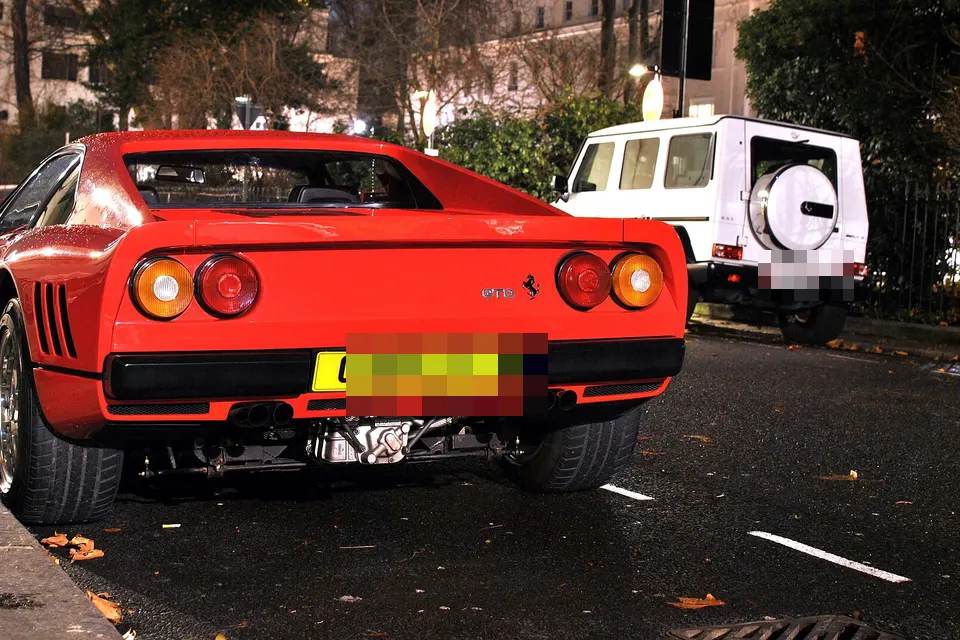
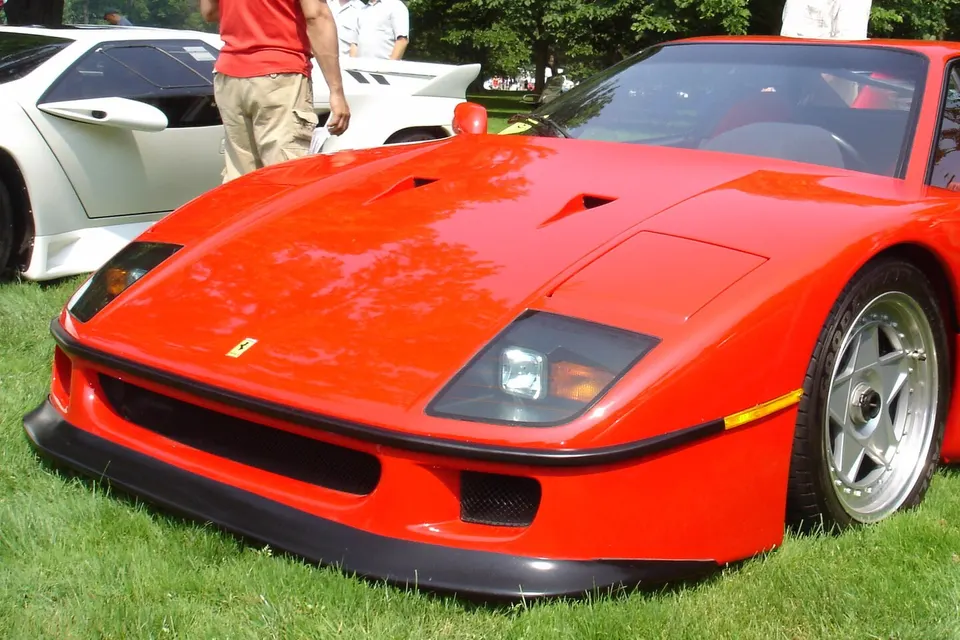
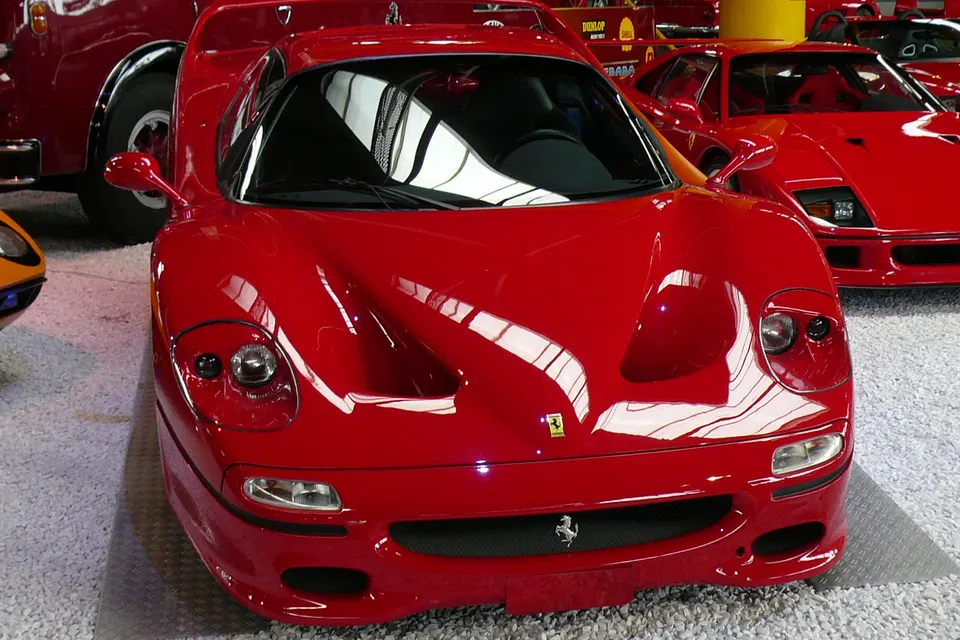
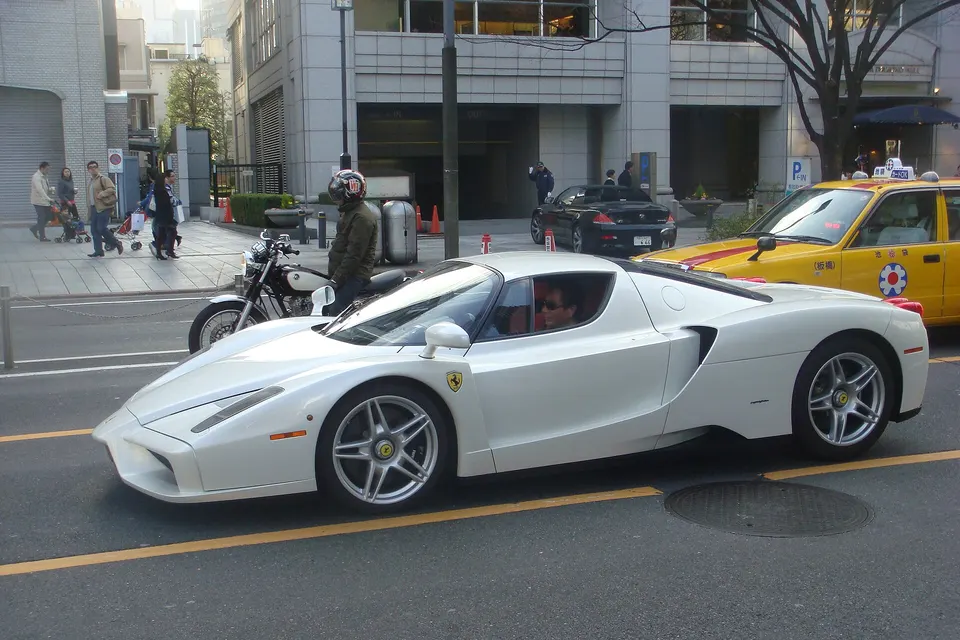
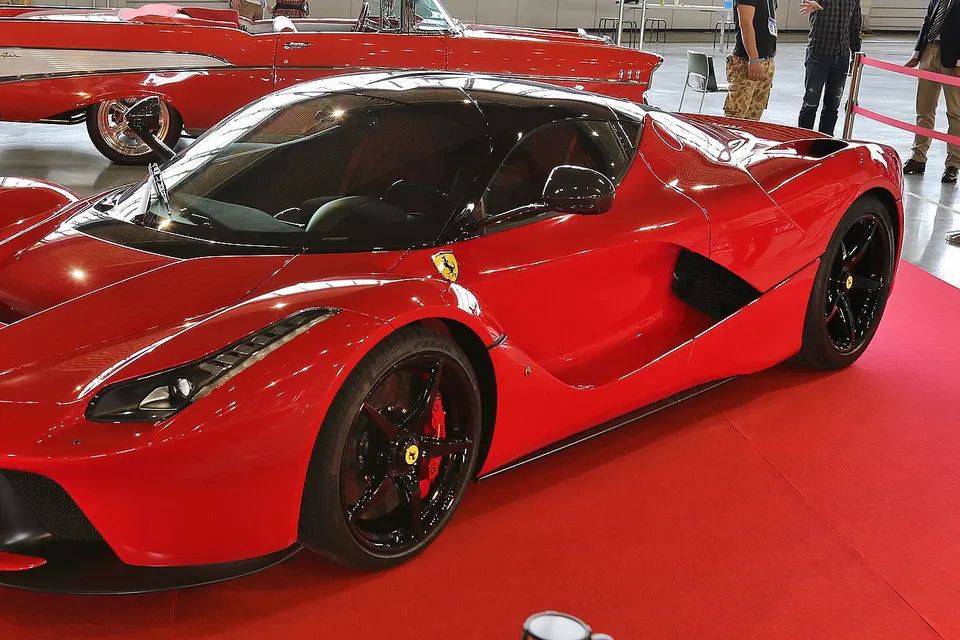
Ferrari itself identifies GTO, F40, F50, Enzo Ferrari, LaFerrari and F80 as one six-car road-supercar sequence.
02
Road-car identity
The focus here is the production F80; racing, XX, open and modified derivatives require separate evidence.
04 / family tree
Model lineage
1984–2025 · 6 documented milestones
Photo: Ed Callow · CC BY 2.0 · resized and cropped · Registration identifiers pixelated for privacy.