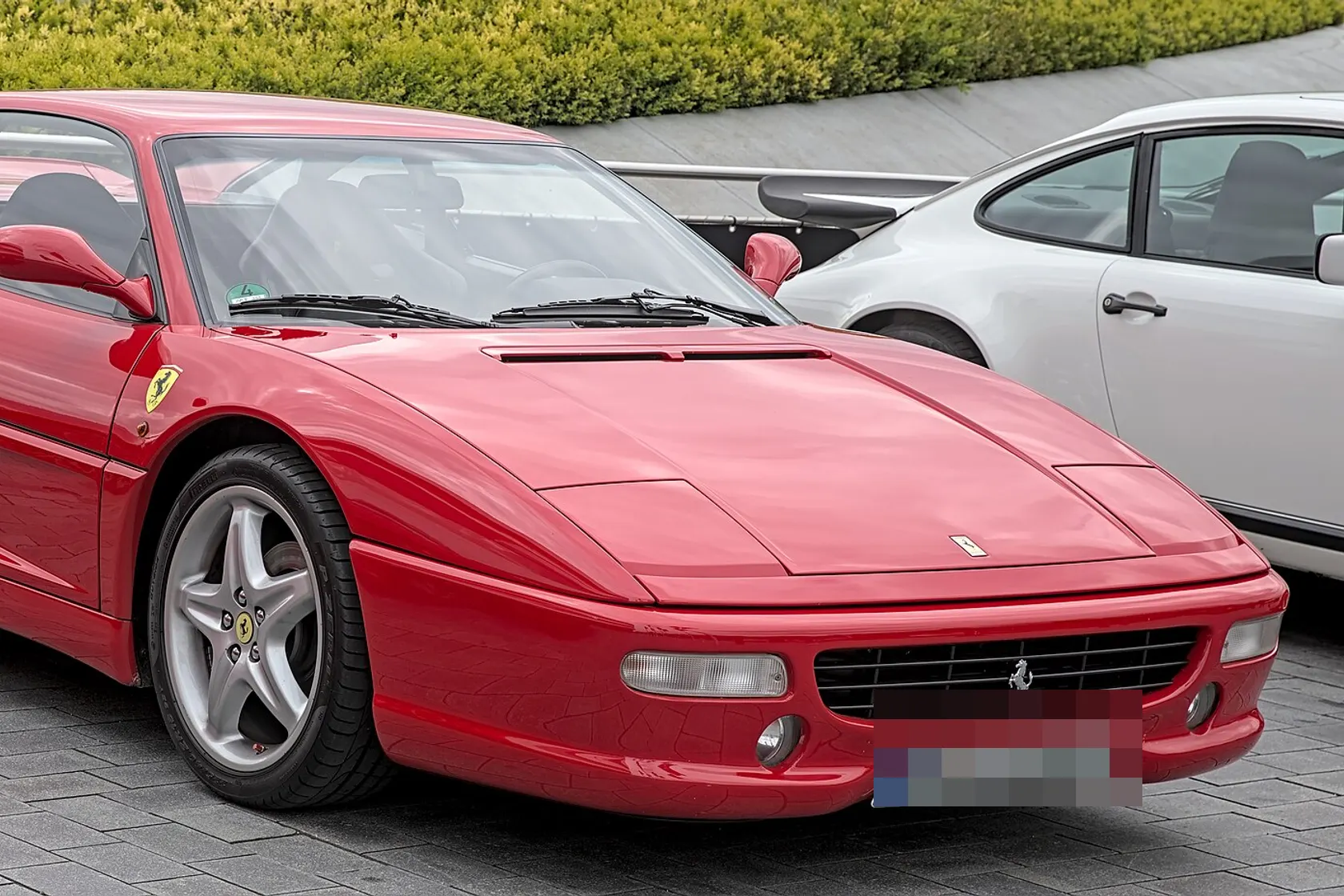
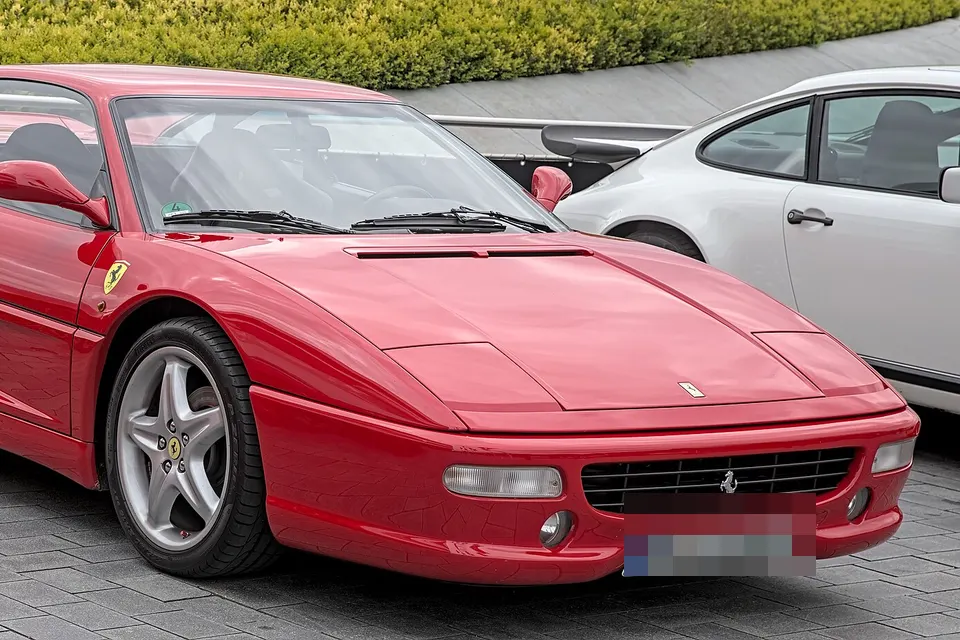
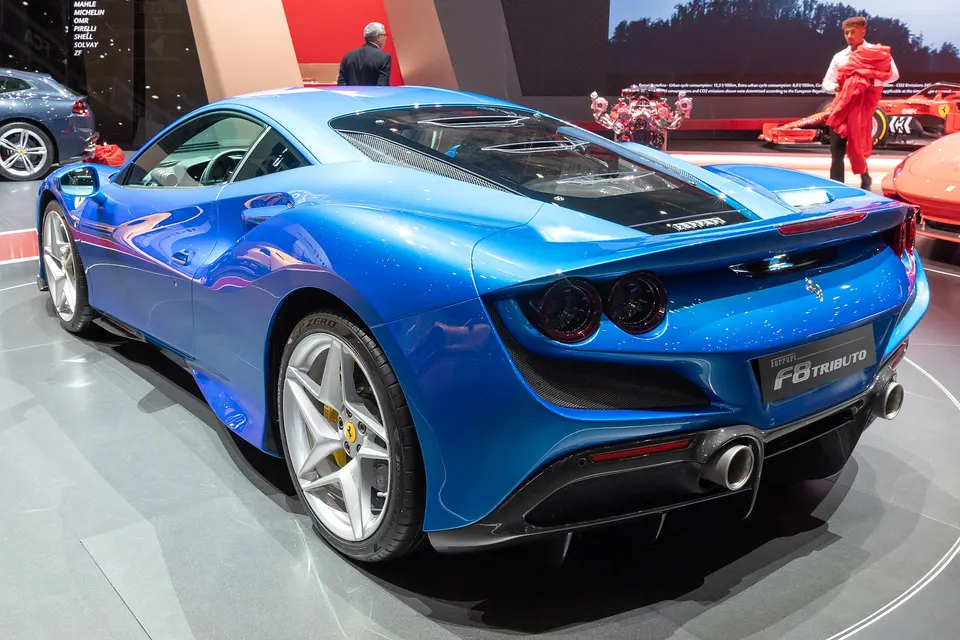
Documentary photographPhoto: Alexander-93 · CC BY-SA 4.0 · resized and cropped · Registration identifier pixelated for privacy.
Engine redprint / verifiedF129B
3.5 L 90° v8 · naturally aspirated · F129BLongitudinal rear-mid engine, rear-wheel driveTopology diagram · not to scale · based on the cited primary sources
The F355 Berlinetta joined a five-valve naturally aspirated V8 to Ferrari’s traditional open-gate manual interface.
R / production rarity
How rare is it?
A simple 1–5 rating based on completed worldwide production for this exact version. Price and desirability are not included.
Rarity ratingNot availableNo comparable worldwide production total
Production bandNot available
Production evidenceNo exact production total
ProducedWorldwide total used for the rating
Production total unavailable
A reliable worldwide figure is not listed in the references.
How the rating works
The rating uses five fixed production bands. Smaller production runs receive higher ratings. Exact totals and responsibly sourced estimates for this precise version can be rated. Plans, regional totals, lower bounds, disputed figures and broader-family totals remain visible but unclassified. The evidence description is kept separate from the rating so a source limitation cannot change how scarcity is measured.
F355 Berlinetta (F129) records one precise Ferrari performance-car configuration from 1994–1999. The F355 Berlinetta joined a five-valve naturally aspirated V8 to Ferrari’s traditional open-gate manual interface.
At its centre is a 3,496 cc naturally aspirated v8 identified as F129B. The manufacturer publishes 279 kW (380 CV) for this scope and 363 Nm. Five valves per cylinder, dry-sump lubrication and an 8,500 rpm limit defined Ferrari’s high-specific-output compact V8 berlinetta.
The engine is installed in a longitudinal rear-mid engine, rear-wheel drive layout and works through a 6-speed gated manual. Those facts matter acoustically as well as technically: engine position, firing order, induction, gear selection and cabin structure all affect what reaches a listener.
Engineering and character
Within Ferrari's history, this is a precisely defined model. Related badges, body styles and competition derivatives may share a visual or mechanical vocabulary without sharing exact specifications. The family tree provides context, not permission to transfer a recording or fact from a neighbouring model.
The listening cues five-valve V8, gated manual, high-revving, flat-plane crank are orientation rather than proof. A cold start can expose idle control and mechanical texture; acceleration can document induction, combustion and shift behaviour; a fly-by can place exhaust and tyre sound in an exterior context.
The focus here is the original six-speed manual F355 Berlinetta. It excludes the GTS, Spider, Challenge, later 355 F1 and modified cars. Many surviving performance cars have replacement exhausts or other changes.
Legacy and identity
It invites cold start, acceleration and fly-by recordings, plus photographs, documents and corrections.
Contributors are therefore asked for capture date, general environment, microphone and recorder details, engine temperature, operating load and any known deviation from factory specification. Private location and ownership details stay out of the public record. This practical metadata lets later researchers distinguish mechanical character from recording technique while leaving room for a corrected identity or a better documented replacement.
Preservation means keeping each claim inspectable and correctable.
01
Model identity
The focus here is the original six-speed manual F355 Berlinetta. It excludes the GTS, Spider, Challenge, later 355 F1 and modified cars.
02
Why it matters
The F355 Berlinetta joined a five-valve naturally aspirated V8 to Ferrari’s traditional open-gate manual interface.
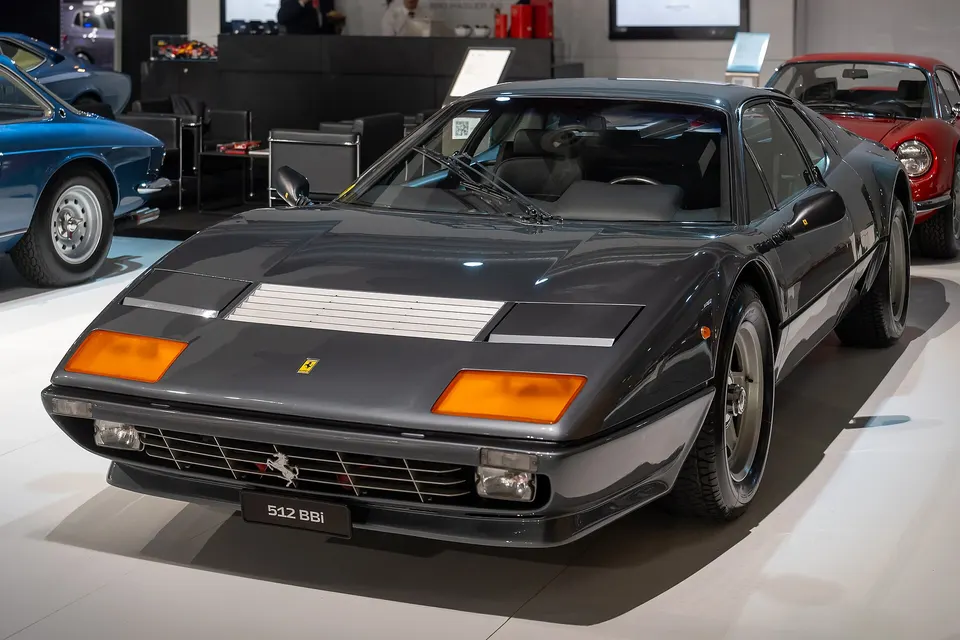
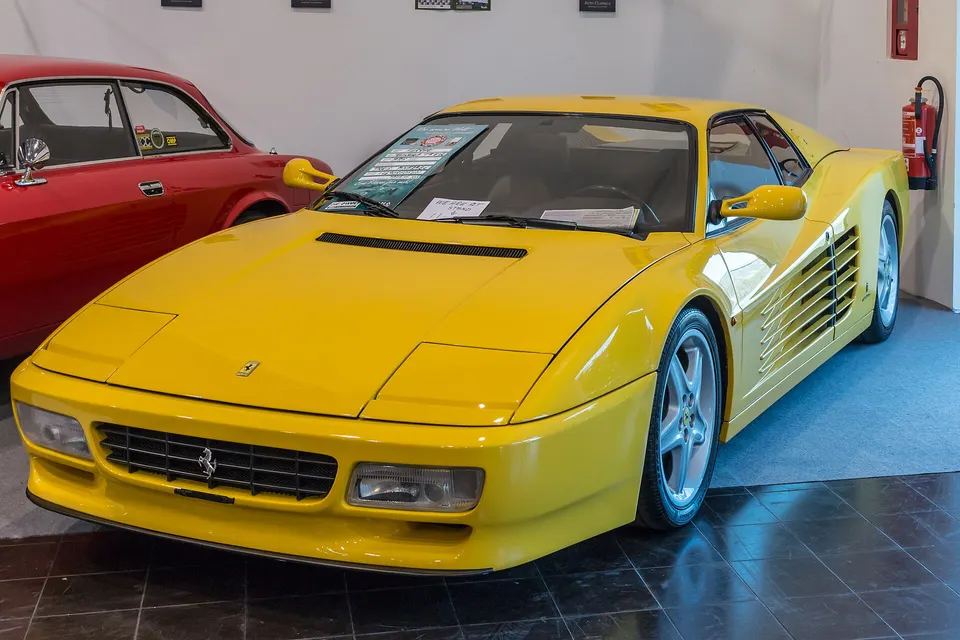
1981512 BBiView passport ↗The 512 BBi was the final Berlinetta Boxer road model and the fuel-injected culmination of Ferrari’s first rear-mid-engined flat-twelve berlinetta line.[1]
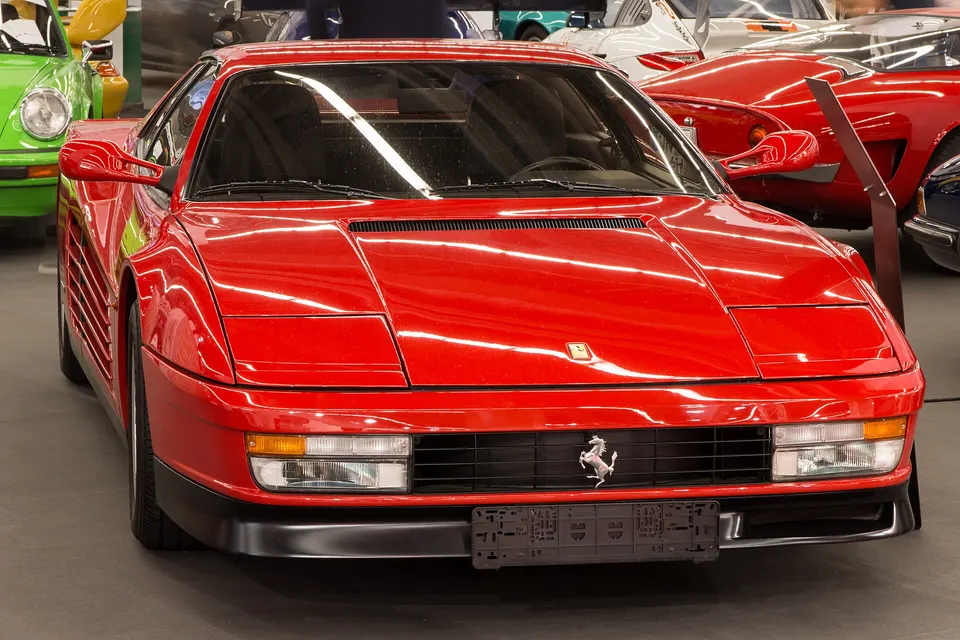
1984TestarossaView passport ↗The Testarossa made Ferrari’s 180-degree twelve-cylinder flagship architecture a defining road-car image of the 1980s.[11]
1991512 TRView passport ↗The 512 TR was the comprehensively revised second phase of Ferrari’s side-straked flat-twelve Testarossa family.[3]
→
Photo: Alexander-93 · CC BY-SA 4.0 · resized and cropped · Registration identifier pixelated for privacy.
1994F355 BerlinettaCurrent passport: The F355 Berlinetta joined a five-valve naturally aspirated V8 to Ferrari’s traditional open-gate manual interface.[8]