5,999 cc 65° V12 · dry-sump lubricationLongitudinal rear-mid engine, rear-wheel driveTopology diagram · not to scale · based on the cited primary sources
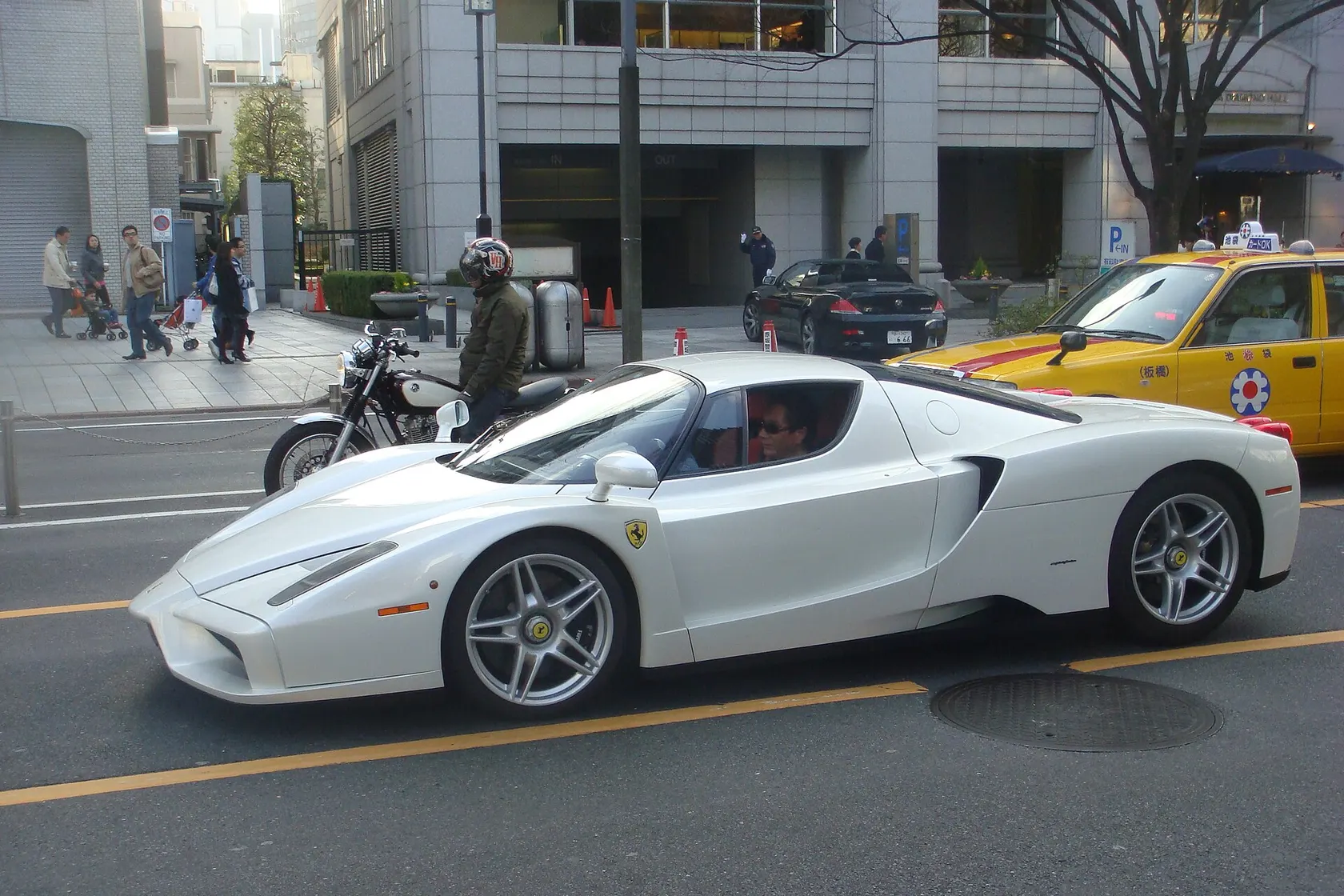
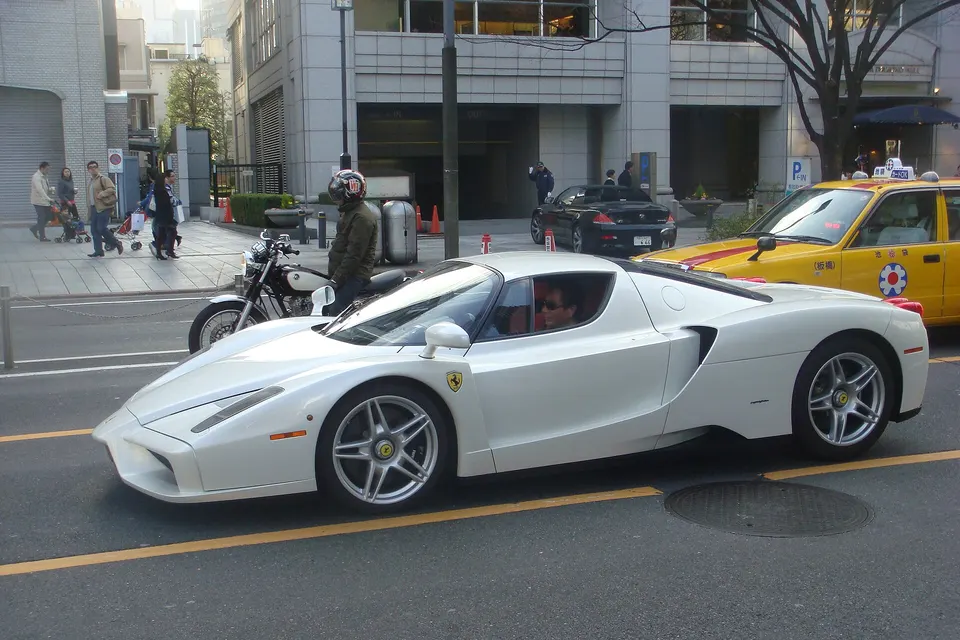
Enzo Ferrari is Ferrari’s 2002–2004 f1 control integration around a new six-litre v12, preserved here as an exact factory road-car passport rather than a generic supercar profile.
R / production rarity
How rare is it?
A simple 1–5 rating based on completed worldwide production for this exact version. Price and desirability are not included.
The rating uses five fixed production bands. Smaller production runs receive higher ratings. Exact totals and responsibly sourced estimates for this precise version can be rated. Plans, regional totals, lower bounds, disputed figures and broader-family totals remain visible but unclassified. The evidence description is kept separate from the rating so a source limitation cannot change how scarcity is measured.
5/5Fewer than 25 builtUltra rare
4/525 to 249 builtVery rare
3/5250 to 2,499 builtRare
2/52,500 to 24,999 builtLimited production
1/525,000 or more builtSeries production
Recorded sales
Documented sales
Prices never affect the rarity rating.
Sold$9,410,0002026 · RM Sotheby's · Monterey
Auction result
Exact road model · 2003 US-specification Enzo
Published sale total. The lot page’s 498-car statement conflicts with Ferrari’s 400-car archive total; RedlineCodex follows the primary factory source.
Ferrari introduced the Enzo Ferrari at the 2002 Paris Motor Show during the Scuderia’s dominant Michael Schumacher era. Naming it for the company’s founder set an unusually high expectation: this would be the road car in which contemporary Formula 1 learning became a complete system rather than a collection of visual references. Ferrari built the planned 399-car series and later constructed a 400th example for Pope John Paul II, auctioned for humanitarian relief. That final car is documented separately from the original production allocation rather than silently changing every period statement of volume.
The new F140-family 65-degree V12 displaced 5,998.80 cc and produced 485 kW, or 660 cv, at 7,800 rpm with 657 Nm at 5,500 rpm. It used dry-sump lubrication, four valves per cylinder and Bosch Motronic management. Ferrari quoted more than 350 km/h and 3.65 seconds to 100 km/h. Unlike the F50, the Enzo did not offer a clutch pedal: a six-speed electrohydraulic F1 transaxle accepted paddle requests and automated the single clutch, creating a distinct interruption and re-engagement of torque at every full-load upshift.
A carbon-fibre and aluminium-honeycomb monocoque supported pushrod suspension, electronically controlled dampers and carbon-ceramic disc brakes. Ferrari describes the Enzo as the first model in this line to integrate the vehicle-dynamics controls completely with an advanced human-machine interface. Buttons on the steering wheel allowed the driver to manage key functions without borrowing the literal cockpit of a racing car. The important transfer was coordinated control: powertrain, damping, aerodynamics and braking increasingly behaved as one engineered system rather than independent high-performance components.
Engineering and character
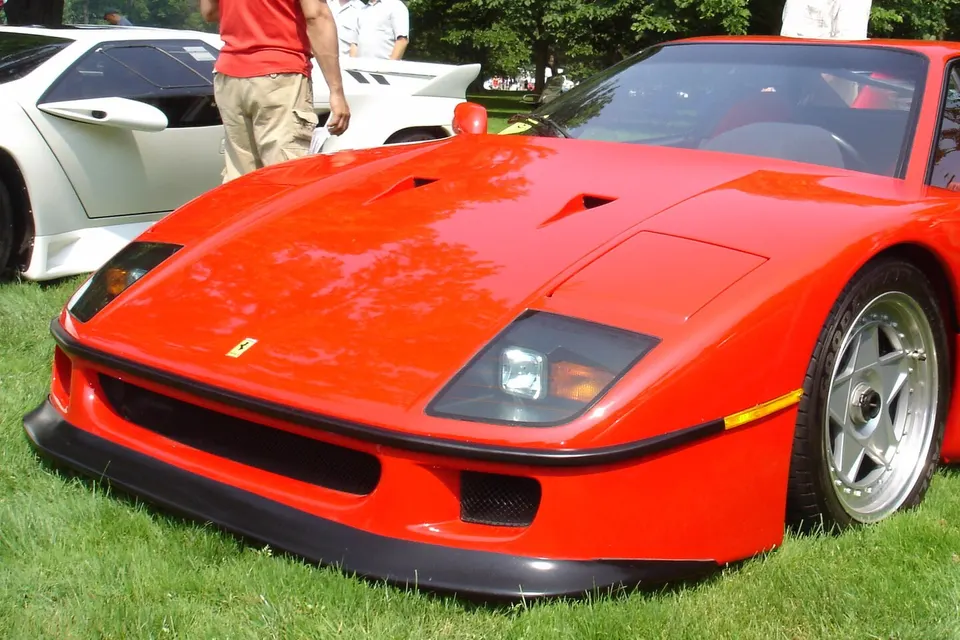
Pininfarina’s design used a narrow raised nose and sculpted front wings that made the F1 reference clear, yet the aerodynamic strategy avoided the F40’s giant fixed rear wing. Active rear elements and underbody management balanced downforce and drag as speed changed. The two-seat body weighed 1,255 kg dry in Ferrari’s archive data. As with every quoted dry figure, fluids and road-ready equipment matter; the number should not be presented as the mass of a fuelled, registered car on scales.
The Enzo’s sound combines a larger, lower-frequency foundation than the F50 with the close pulse spacing and rising induction of a naturally aspirated V12. The electrohydraulic gearbox is equally diagnostic: upshifts include a pronounced torque cut instead of the overlapping clutches of LaFerrari’s later transmission. Original catalysts, silencers, intake plenums and shift calibration all shape a recording. FXX footage is especially misleading here because that circuit-only development uses different power, exhaust, body and operating rules even though its silhouette and basic lineage are unmistakably related.
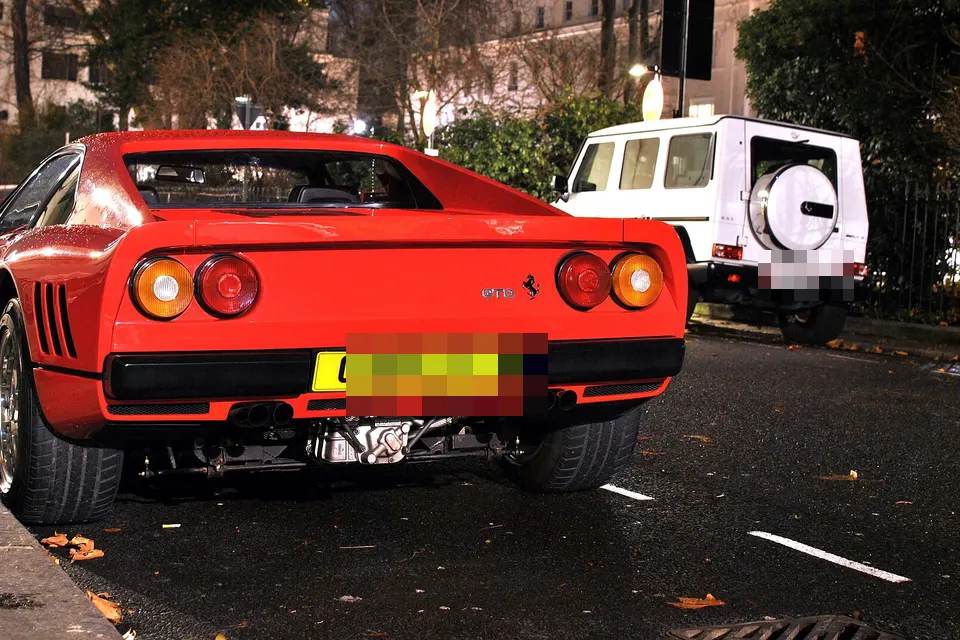
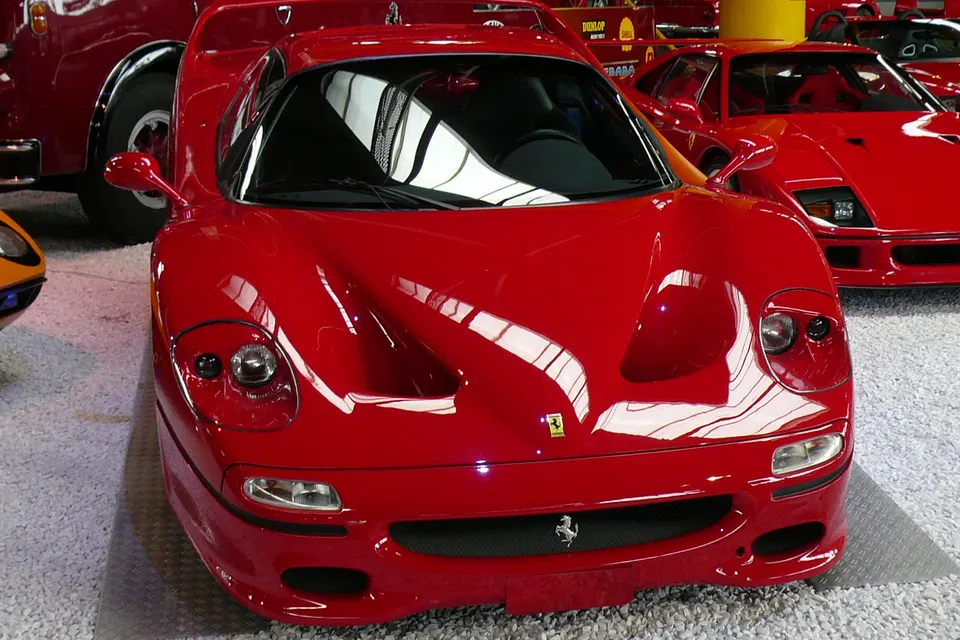
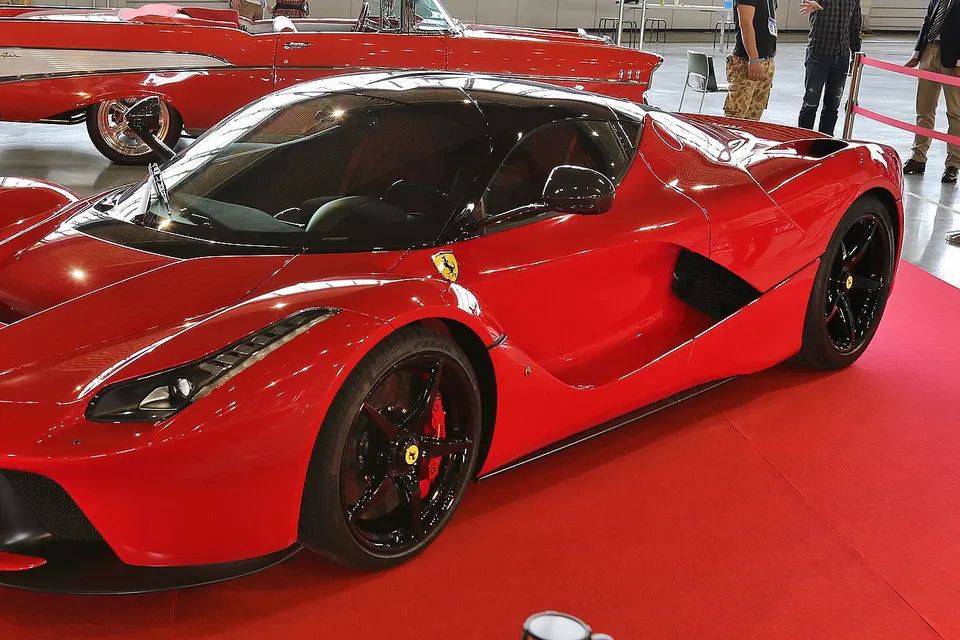
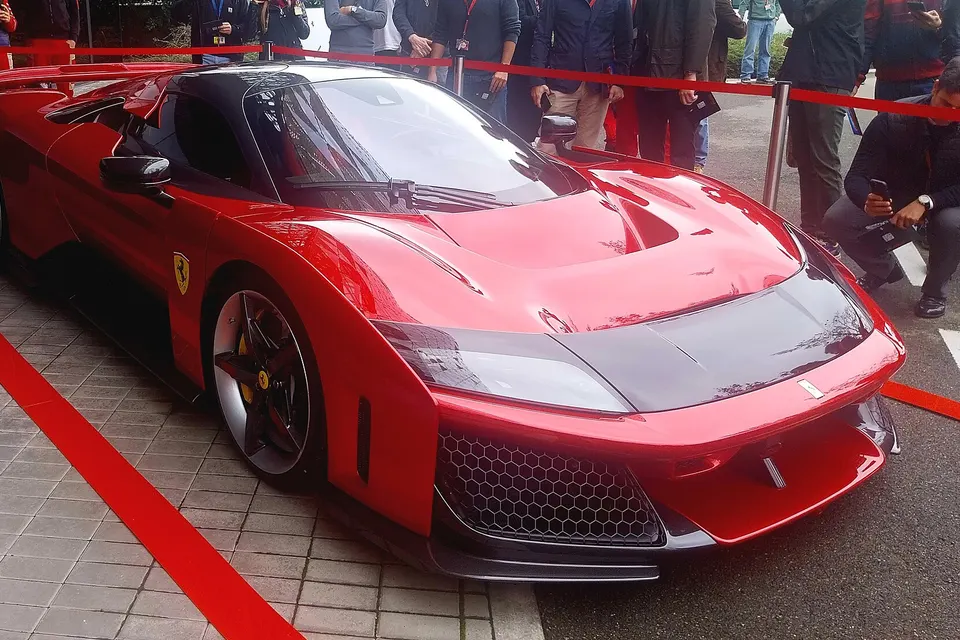
Within Ferrari’s own six-car chronology, the Enzo follows the mechanically direct F50 and precedes LaFerrari’s HY-KERS transformation. It keeps rear-wheel drive and natural aspiration but makes electronics, carbon-ceramic braking and paddle control fundamental. LaFerrari would retain an F140-family V12 while increasing capacity and adding electric torque; F80 would abandon twelve cylinders entirely. The Enzo is thus the line’s control-system turning point, where the driver’s physical inputs began to be mediated more deeply without making the combustion engine a supporting actor.
Legacy and identity
The focus here is the production Enzo Ferrari, Tipo F140, built from 2002 to 2004. It excludes the FXX and FXX Evoluzione track programmes, Maserati MC12, modified exhaust cars and cosmetic replicas. The 5,998.80 cc V12, 660 cv output, six-speed electrohydraulic single-clutch transmission and road homologation define the record. That exact boundary lets general readers understand the F1-era context while giving owners and researchers a defensible basis for comparing hardware, provenance and future factory-original audio.
01
Model lineage
Ferrari itself identifies GTO, F40, F50, Enzo Ferrari, LaFerrari and F80 as one six-car road-supercar sequence.
02
Road-car identity
The focus here is the production Enzo Ferrari; racing, XX, open and modified derivatives require separate evidence.
04 / family tree
Model lineage
1984–2025 · 6 documented milestones
Photo: Ed Callow · CC BY 2.0 · resized and cropped · Registration identifiers pixelated for privacy.