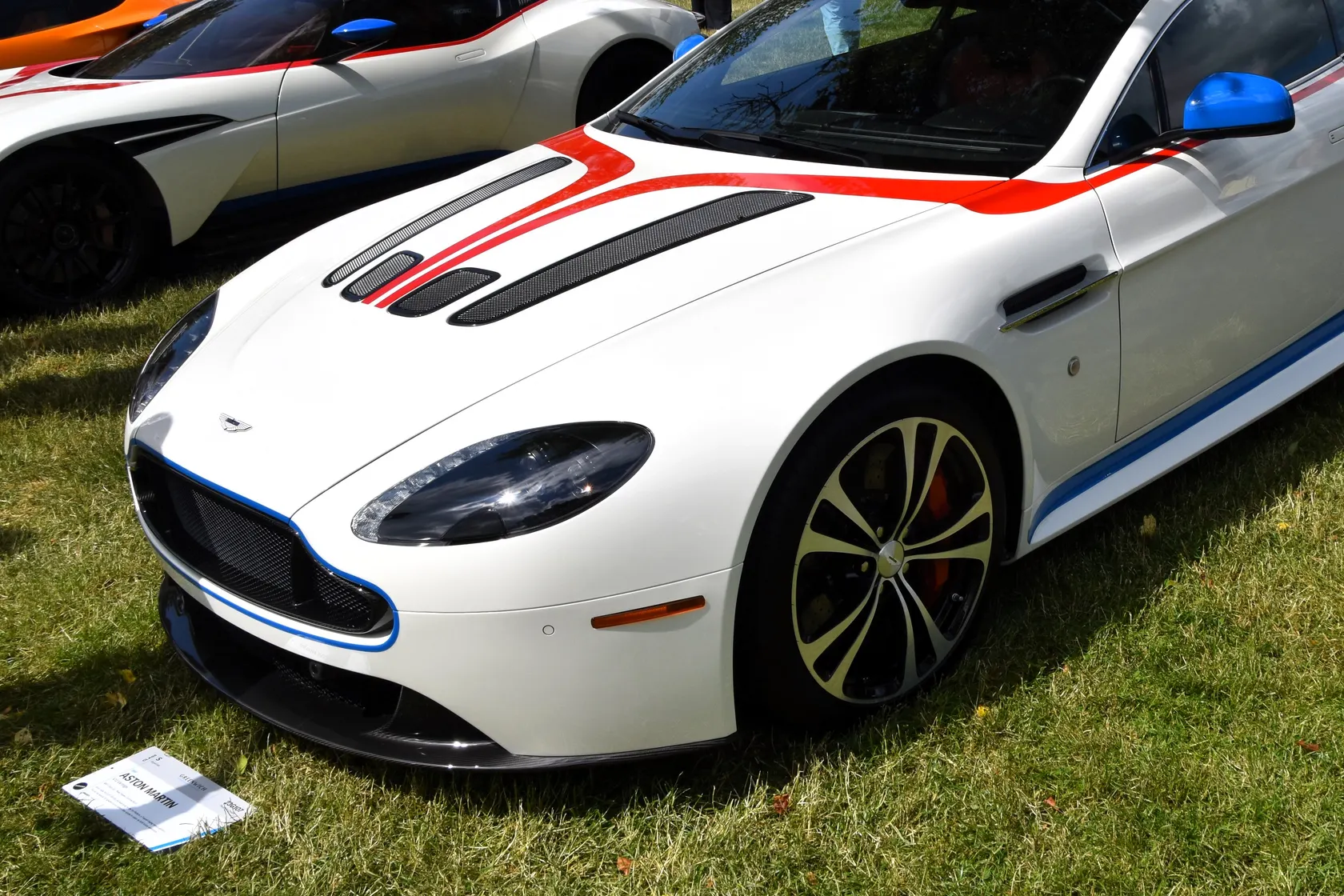
5.9 L v12 · naturally aspirated · AM28 5.9 L V12Longitudinal front engine, rear transaxleTopology diagram · not to scale · based on the cited primary sources
The V12 Vantage S was the faster, more powerful development of Aston Martin’s compact VH sports car, and its later dog-leg manual preserved a rare twelve-cylinder analogue configuration.
R / production rarity
How rare is it?
A simple 1–5 rating based on completed worldwide production for this exact version. Price and desirability are not included.
Rarity ratingNot availableNo comparable worldwide production total
Production bandNot available
Production evidenceNo exact production total
ProducedWorldwide total used for the rating
Production total unavailable
A reliable worldwide figure is not listed in the references.
How the rating works
The rating uses five fixed production bands. Smaller production runs receive higher ratings. Exact totals and responsibly sourced estimates for this precise version can be rated. Plans, regional totals, lower bounds, disputed figures and broader-family totals remain visible but unclassified. The evidence description is kept separate from the rating so a source limitation cannot change how scarcity is measured.
Mechanical, induction, transmission and exhaust sound are best documented separately.
Factory-stock status depends on engine, intake, forced induction, catalysts, gearbox and silencers.
Recordings with uncertain configuration remain visibly marked as Unregistered.
V12 architecture
The AM28 V12 combined revised intake, engine management and freer exhaust flow, while the later manual used AMSHIFT rev matching and a dog-leg first gear
7-speed Sportshift III automated manual; 7-speed dog-leg manual optional from 2016 with rear-wheel drive
The AM28 V12 combined revised intake, engine management and freer exhaust flow, while the later manual used AMSHIFT rev matching and a dog-leg first gear[1][3]
Aston Martin introduced the V12 Vantage S in 2013 as a comprehensive development of the original 2009 V12 Vantage. The familiar VH1 body concealed a higher-output AM28 engine, revised cooling, adaptive damping, quicker steering and a new transmission strategy. Those changes make the S a separate mechanical identity rather than a trim package. This page covers the complete coupe programme, because the later manual was an important configuration within the model rather than a separate vehicle family.
The naturally aspirated 5,935 cc V12 was rated at 573 PS and 620 Nm. Aston Martin initially paired it with the seven-speed Sportshift III automated manual transaxle. Compared with the earlier six-speed manual V12 Vantage, the S changed both calibration and shift character. The automated system can produce abrupt torque interruptions at low speed and sharper changes under load, while the rear transaxle keeps gearbox and differential sounds physically separated from the engine ahead of the cabin.
In 2016 Aston Martin added a seven-speed conventional manual with a dog-leg first gear and AMSHIFT rev matching. That option matters to the sound archive because it changes driver timing, throttle blips and shift duration without changing the core engine. Recordings must therefore identify the gearbox, driving mode and active-exhaust state so the two configurations remain useful rather than being blended.
Engineering and character
Production-number claims require restraint. A frequently repeated figure of 100 manual cars is tied to particular announcements or markets and should not be presented as a worldwide completed total. The page therefore makes no global manual rarity assertion. It also excludes the GT12, whose body, aerodynamics, mass programme and 600 PS tune support a separate identity, along with the later AMR and V600 editions and the unrelated 2022 V12 Vantage generation.
The V12 Vantage S closes an important chapter in Aston Martin’s VH history. It combines a large naturally aspirated engine with a small two-seat platform and, late in the run, a deliberately mechanical manual interface. For a credible recording, contributors should document exhaust valves, catalysts, intake hardware and transmission. An exact manual car can illustrate the subvariant, but its photograph cannot prove that every technical component remains in factory condition.
The earlier V12 Vantage, Roadster, GT12, AMR, V600 and later generations are excluded. Similar badges can cover different engines, transmissions, bodies and production programmes. Preserving those distinctions prevents a familiar name from becoming a blended specification that no single production car carried.
Legacy and identity
The mechanical reference is the AM28 5.9 L V12, a 5,935 cc naturally aspirated v12 represented at 421 kW, 573 PS and 620 Nm. It works through a 7-speed sportshift iii automated manual; 7-speed dog-leg manual optional from 2016 with rear-wheel drive. Units and period rating conventions stay visible rather than being treated as directly interchangeable.
For sound documentation, the principal markers are naturally aspirated V12 induction, active exhaust valves, rear-transaxle driveline, manual or automated-manual shift events. A cold start must include uninterrupted cranking, first combustion and settling idle. Acceleration and fly-by submissions need gear, load, safe road or closed-course context, microphone position and weather. Factory-stock status requires evidence for intake, forced induction, catalysts, gearbox and silencers.
A photograph can establish useful visual context but cannot prove mechanical originality. Restoration, service replacement and reversible modification are common across performance cars. RevAtlas records configuration component by component, allowing modified survivors to remain useful without presenting them as untouched references. That method gives the V12 Vantage S a defensible page now and an exact home for future evidence.
01
Model identity
The focus here is the V12 Vantage S coupe across its 2013–2018 production run, including both Sportshift III and the later manual option. The earlier V12 Vantage, Roadster, GT12, AMR, V600 and later generations are excluded.
02
Why it matters
The V12 Vantage S was the faster, more powerful development of Aston Martin’s compact VH sports car, and its later dog-leg manual preserved a rare twelve-cylinder analogue configuration.
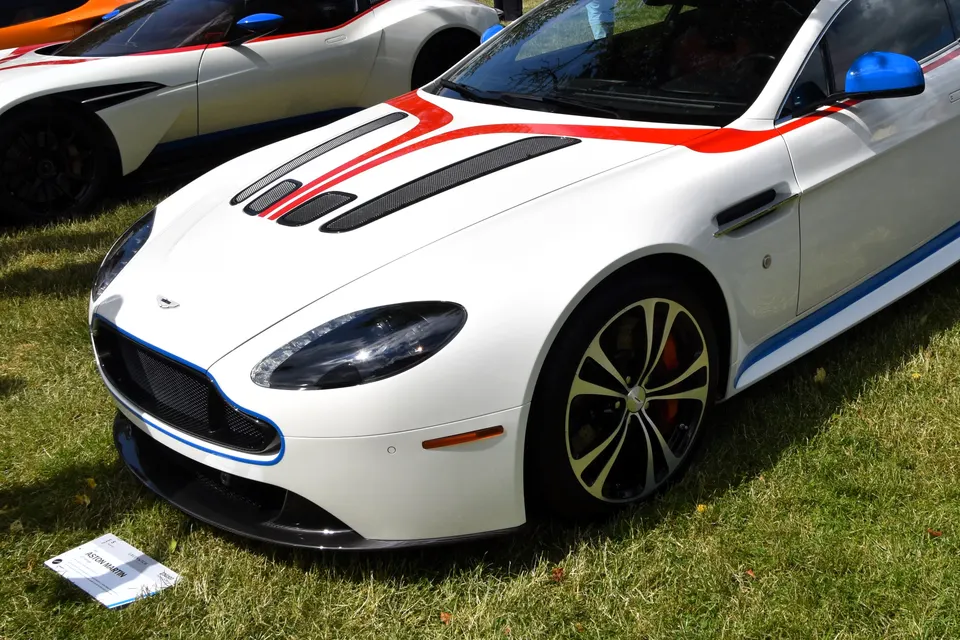
2013V12 Vantage S (VH1 V12 Vantage S)Current model: The V12 Vantage S was the faster, more powerful development of Aston Martin’s compact VH sports car, and its later dog-leg manual preserved a rare twelve-cylinder analogue configuration.[1][3]
→
Photo: MrWalkr · CC BY-SA 4.0 · resized and cropped · Registration identifiers, visible labels and identifiable bystanders pixelated for privacy.
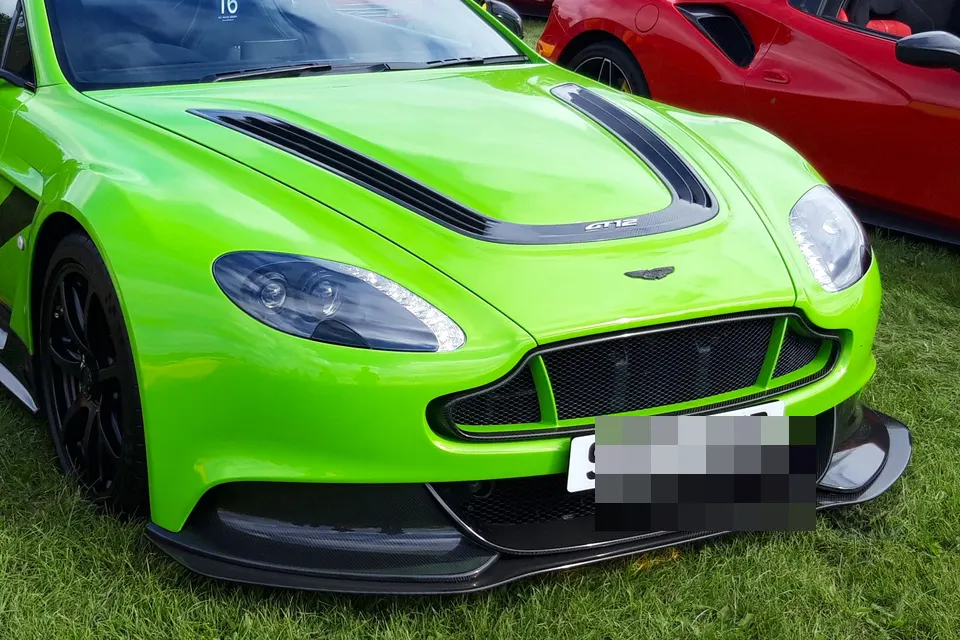
2015Vantage GT12 (VH1 GT12)View passport ↗The GT12 translated Aston Martin’s GT racing theme into a highly differentiated, limited-production V12 road car with major aerodynamic, chassis and mass changes.[5][6]
→
Photo: Calreyn88 · CC BY 4.0 · resized and cropped · Registration identifiers, visible labels and identifiable bystanders pixelated for privacy.
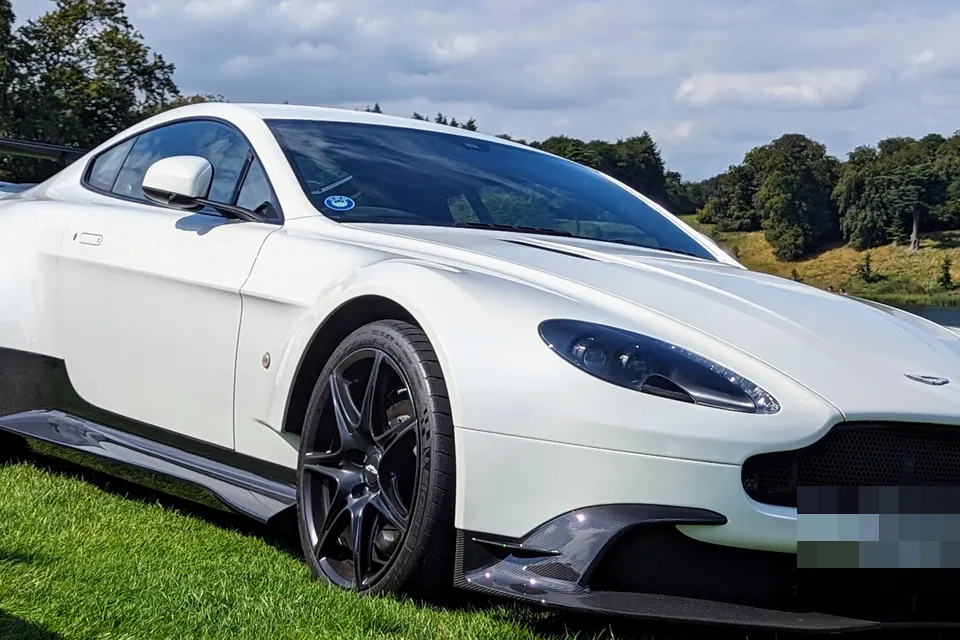
2016Vantage GT8 (VH1 GT8)View passport ↗The Vantage GT8 was the lightest and most circuit-influenced V8 derivative of the original VH Vantage, with substantial body, chassis and mass differentiation.[7][8]
06 / contribute sound
Help us hear this car
Share a properly licensed recording of this exact model. Stock and modified cars are both welcome when their configuration is described clearly.