
Aston Martin · Compact V12 sports car · 2009
V12 Vantage
Recorded designation · VH1 V12 Coupe- Recorded designation
- VH1 V12 Coupe
- Engine / drive unit
- AM11 5.9 L V12
- Archive no.
- 332
- Sources updated
- 3 October 2026
Help build this passport
Have a recording, source, correction, photo or missing detail for this exact car? Prepare a contribution with the Car ID already selected.
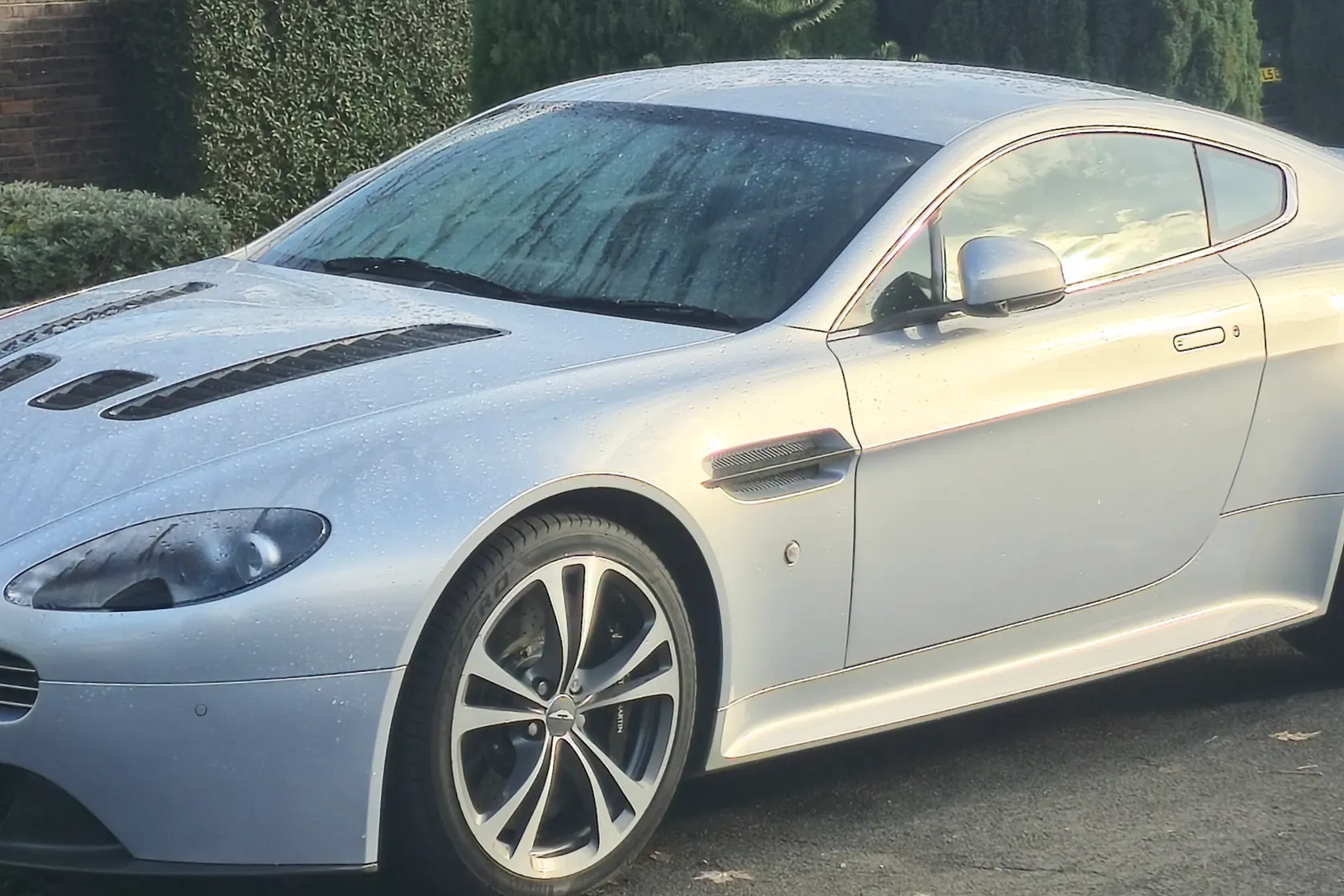
The original V12 Vantage concentrated Aston Martin’s naturally aspirated V12 and manual transaxle into its smallest contemporary road-car platform.
How rare is it?
A simple 1–5 rating based on completed worldwide production for this exact version. Price and desirability are not included.
A reliable worldwide figure is not listed in the references.
How the rating works
The rating uses five fixed production bands. Smaller production runs receive higher ratings. Exact totals and responsibly sourced estimates for this precise version can be rated. Plans, regional totals, lower bounds, disputed figures and broader-family totals remain visible but unclassified. The evidence description is kept separate from the rating so a source limitation cannot change how scarcity is measured.
- 5/5Fewer than 25 builtUltra rare
- 4/525 to 249 builtVery rare
- 3/5250 to 2,499 builtRare
- 2/52,500 to 24,999 builtLimited production
- 1/525,000 or more builtSeries production
At a glance
What creates the sound
Mechanical, induction, transmission and exhaust sound are best documented separately.
Factory-stock status depends on engine, intake, forced induction, catalysts, gearbox and silencers.
Recordings with uncertain configuration remain visibly marked as Unregistered.
- V12 architecture
- The original production V12 Vantage placed the 5,935 cc AM11 V12 and a six-speed manual rear transaxle in the compact VH-platform Vantage body
- 6-speed manual rear transaxle with rear-wheel drive
History and character
Origins and context
Aston Martin previewed the idea with the V12 Vantage RS concept, but the production car that followed in 2009 became a more disciplined proposition. Engineers installed the company’s 5,935 cc V12 in the compact VH-generation Vantage, then revised cooling, suspension, brakes and aerodynamics around the added performance. The result was neither a DB9 shortened by description nor a trim package for the V8 car. It was a specific two-seat coupe with its own powertrain, chassis demands and manual-only launch identity.
The AM11 engine was rated at 510 bhp, 380 kW or 517 PS, with 570 Nm. A six-speed manual connected it to a rear transaxle, preserving the front-mid-engine, rear-drive balance of the VH architecture. That driveline is central to the car’s identity because later V12 Vantage S models adopted a different transmission and calibration. The original car’s sound combines the closely spaced combustion events of a naturally aspirated V12 with deliberate manual shifts and the mechanical contribution of a transaxle behind the cabin.
Packaging the larger engine required functional changes visible around the bonnet and lower body, but appearance alone cannot prove the correct model. A valid archive submission should establish the original AM11 installation, manual transaxle and factory exhaust and intake configuration. Aftermarket silencers are common, while clutch, flywheel and catalyst replacements can also alter the recorded result. The archive can accept documented modified recordings, but it should never use them as an unqualified reference for the original 2009 acoustic character.
Engineering and character
Several similarly named cars followed. The Roadster, V12 Vantage S, GT12, AMR and later V600 commission each carried different combinations of body, engine tune, gearbox, chassis or production context. The 2022 V12 Vantage belongs to a separate generation. This page therefore stops at the original 510 bhp manual coupe identity. Published totals also vary according to whether markets and later derivatives are included, so the page avoids turning a commonly repeated volume into an exact factory rarity claim.
Within Aston Martin history, this V12 Vantage reverses the logic of the DB7 V12 Vantage. The DB7 is a traditional 2+2 grand tourer that received the new V12; the 2009 car places a developed version of that engine family into the marque’s smaller sports-car platform. That contrast makes the pair useful for listening and technical comparison. Similar cylinder count does not guarantee similar sound, because intake length, exhaust routing, cabin position, gearing, body volume and the driver’s proximity to the transaxle all change the experience.
The 2007 RS concept, Roadster, V12 Vantage S, GT12, AMR, 2018 V600 commission and 2022 generation are excluded. Similar names can cover different engines, transmissions, body styles and production programmes. Keeping those distinctions visible protects the technical record and prevents search traffic from turning a familiar badge into a blended specification that no single production car carried.
Legacy and identity
It works through a 6-speed manual rear transaxle with rear-wheel drive. Output units remain explicit because manufacturer and independent sources may use bhp, PS or regional horsepower conventions.
For sound documentation, the primary listening markers are AM11 naturally aspirated V12, high-load intake resonance, six-speed manual shifts, rear-transaxle driveline detail. A cold start must include the uninterrupted crank, first combustion and settling idle, with ambient temperature and vehicle state recorded. Acceleration and fly-by submissions need gear, load, road or closed-course context, microphone position and wind conditions. No recording should be described as factory stock until intake, forced-induction hardware, catalysts, gearbox and silencers have been evidenced.
Period photographs and badges can establish visual context, but they cannot prove mechanical originality. Restoration, service replacement and reversible modification are common across valuable performance cars. RevAtlas therefore records configuration component by component and keeps modified survivors useful without presenting them as untouched references.
Model identity
The focus here is the original 2009 production V12 Vantage Coupe with 510 bhp and a six-speed manual. The 2007 RS concept, Roadster, V12 Vantage S, GT12, AMR, 2018 V600 commission and 2022 generation are excluded.
Why it matters
The original V12 Vantage concentrated Aston Martin’s naturally aspirated V12 and manual transaxle into its smallest contemporary road-car platform.
Model lineage
2007–2009 · 2 documented milestones
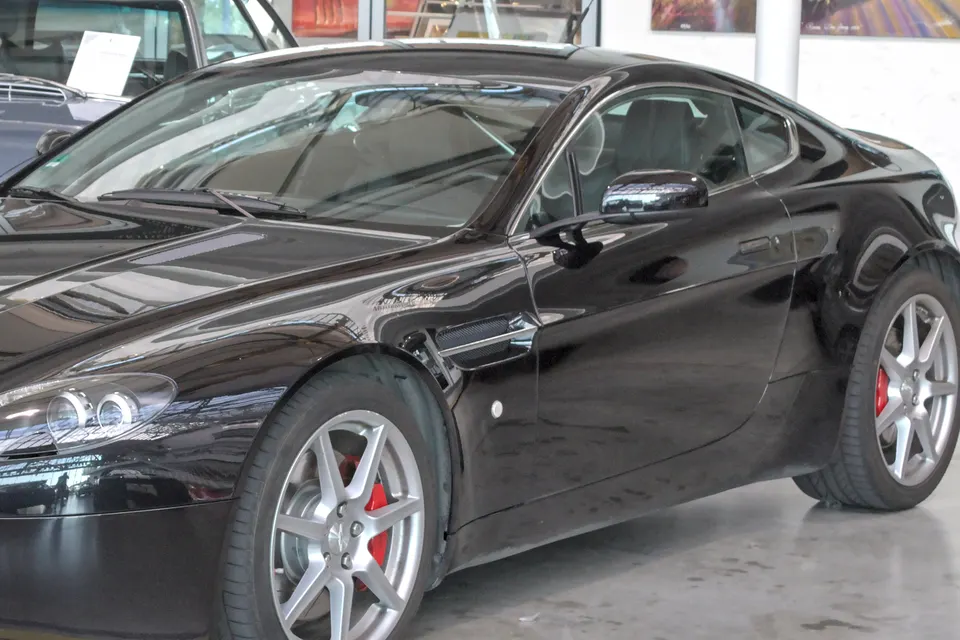
Photo: Alexander Migl · CC BY-SA 4.0 · resized and cropped 2007V8 Vantage N400 (N400 Coupe)The N400 is editorially distinct because its Nürburgring theme accompanied a measurable engine upgrade and coordinated chassis package rather than appearance changes alone.[5][6]→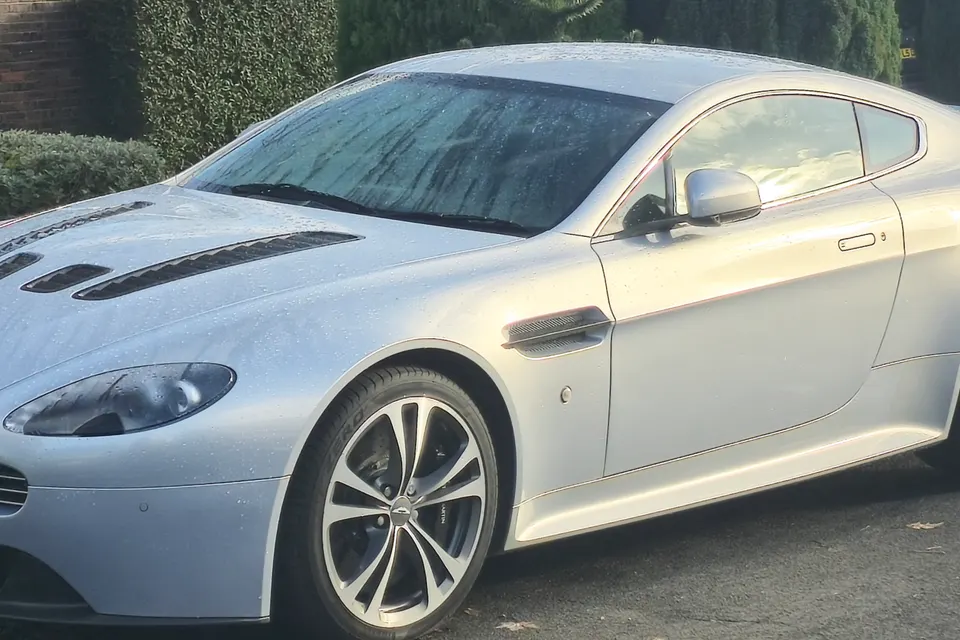
Photo: Calreyn88 · CC BY-SA 4.0 · resized and cropped


Help us hear this car
Share a properly licensed recording of this exact model. Stock and modified cars are both welcome when their configuration is described clearly.
- Cold start
- Acceleration
- Fly-by
Authoritative films
Links pass directly to YouTube. The archive does not host, copy or embed these films.
References
- 01Original Aston Martin V12 Vantage model historyAston Martin · accessed 3 October 2026
- 022010 Aston Martin V12 Vantage reviewCar and Driver · accessed 3 October 2026
- 03Aston Martin V12 Vantage technical brochureAston Martin · accessed 3 October 2026
- 042011 Aston Martin V12 Vantage road testCar and Driver · accessed 3 October 2026
- 05Aston Martin V8 Vantage N400 technical brochureAston Martin · accessed 3 October 2026
- 06Aston Martin V8 Vantage N400 reviewAuto Express · accessed 3 October 2026