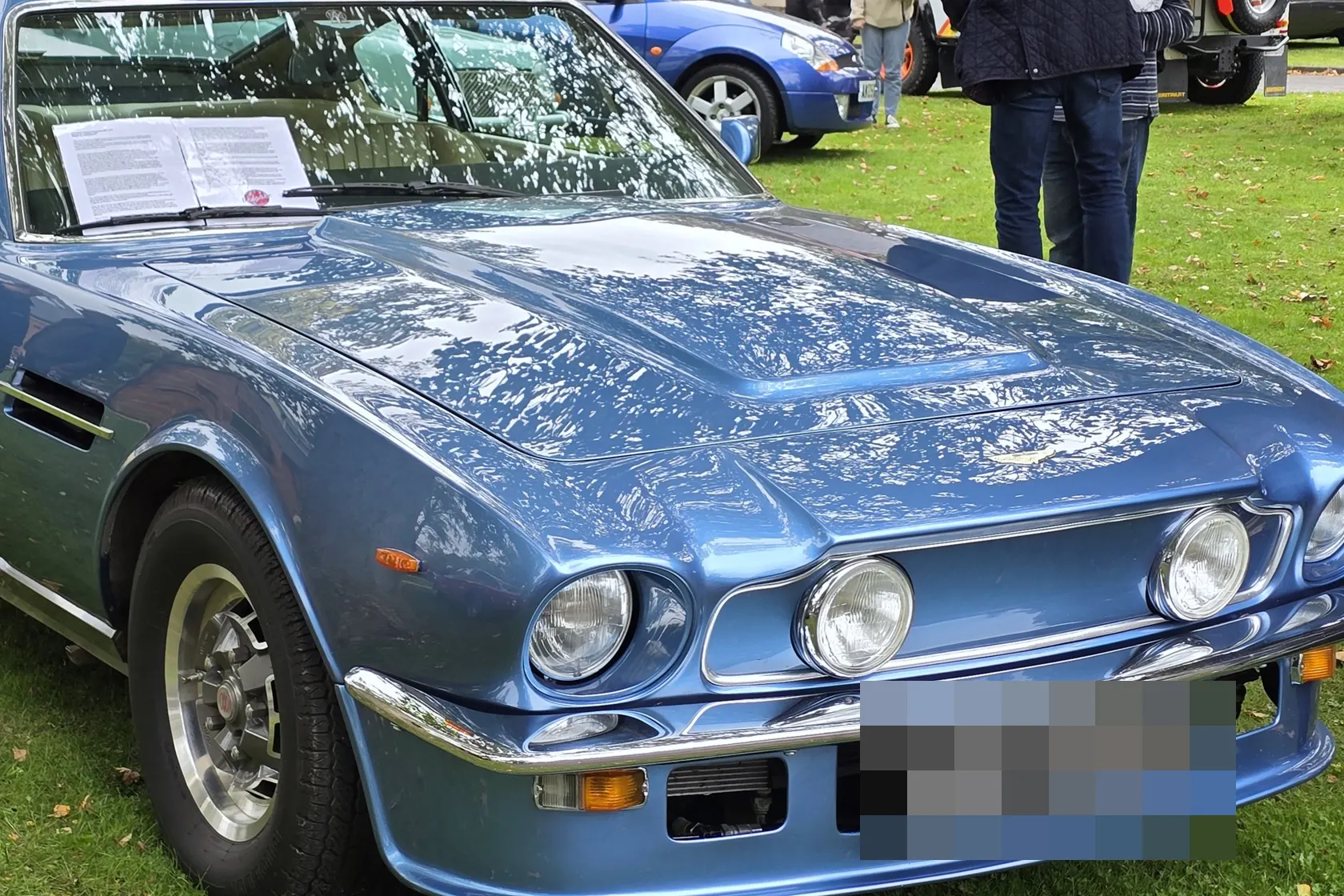
Documentary photographPhoto: MrWalkr · CC BY-SA 4.0 · resized and cropped · Registration identifier and identifiable bystanders pixelated for privacy.
Engine redprint / verified5.3 L DOHC V8
5.3 L v8 · naturally aspirated · 5.3 L DOHC V8Longitudinal front engine, rear-wheel driveTopology diagram · not to scale · based on the cited primary sources
The 1977 V8 Vantage established a fully engineered Aston Martin performance model around the hand-built 5.3-litre V8, manual gearbox and revised chassis.
R / production rarity
How rare is it?
A simple 1–5 rating based on completed worldwide production for this exact version. Price and desirability are not included.
Rarity ratingNot availableNo comparable worldwide production total
Production bandNot available
Production evidenceNo exact production total
ProducedWorldwide total used for the rating
Production total unavailable
A reliable worldwide figure is not listed in the references.
How the rating works
The rating uses five fixed production bands. Smaller production runs receive higher ratings. Exact totals and responsibly sourced estimates for this precise version can be rated. Plans, regional totals, lower bounds, disputed figures and broader-family totals remain visible but unclassified. The evidence description is kept separate from the rating so a source limitation cannot change how scarcity is measured.
Mechanical, induction, transmission and exhaust sound are best documented separately.
Factory-stock status depends on engine, intake, forced induction, catalysts, gearbox and silencers.
Recordings with uncertain configuration remain visibly marked as Unregistered.
V8 architecture
The 1977 V8 Vantage combined higher-output V8 tuning with revised intake, camshaft, chassis and aerodynamic details rather than relying on a badge-only derivative
The 1977 V8 Vantage combined higher-output V8 tuning with revised intake, camshaft, chassis and aerodynamic details rather than relying on a badge-only derivative[2][3]
Aston Martin announced the V8 Vantage in February 1977 as a performance model developed from the existing AM V8, but its identity rested on coordinated mechanical and aerodynamic work. The engine received revised camshafts, larger inlet valves and carburettor changes, while the chassis, tyres and brakes were chosen for the higher capability. A blanked grille area, deeper front air dam and tail treatment helped distinguish the body and manage high-speed lift.
Aston Martin’s current heritage material quotes approximately 380 bhp from 5,340 cc. Independent retrospectives vary, often citing figures around 375 or 390 bhp, partly because period reporting and factory descriptions were not always standardised. RevAtlas therefore uses the manufacturer’s 380 bhp conversion of 283 kW and 385 PS, while treating 515 Nm as a qualified period-review figure rather than false laboratory precision. The important mechanical facts are the naturally aspirated quad-cam V8, front-engine layout and ZF five-speed manual.
The car’s sound belongs to a different era of high-performance tuning from the later supercharged Virage Vantage. Carburettor induction, a large-capacity naturally aspirated V8 and a manual gearbox create the principal layers. At idle, cam timing and accessory drive can dominate; under load, induction and exhaust rise together without turbocharger or supercharger noise. The long nose and substantial 2+2 body add their own resonance. Recording notes should identify carburettor specification, air-cleaner hardware, exhaust manifolds, silencers and any later engine upgrade.
Engineering and character
Production development complicates casual descriptions. Later cars gained detail changes, and the 580 and X-Pack packages moved output and hardware beyond the 1977 launch state. Volante and Zagato versions have separate bodies, while the 1993 model bearing the Vantage name was derived from the Virage and used twin superchargers. A restored car may also combine parts from several stages. This page excludes those identities so its specifications and listening guidance remain attached to the original closed coupe as introduced.
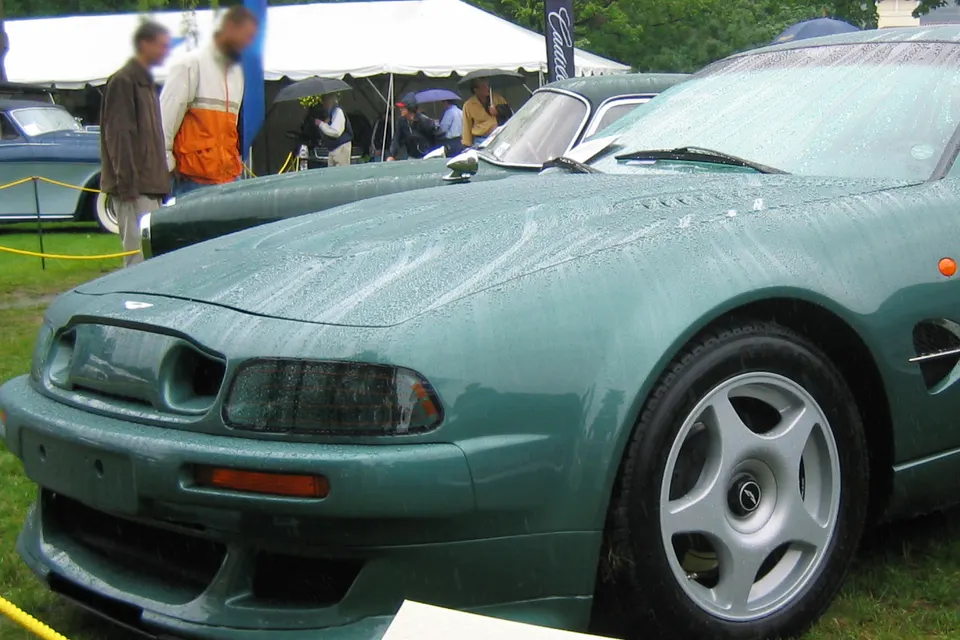
The 1977 V8 Vantage matters because it helped turn Vantage from an engine option into a complete high-performance model. It forms a bridge from the Weber-fed DB5 Vantage to the later V550 and V600 cars, showing how Aston Martin repeatedly used the designation while changing the underlying engineering. Comparisons should focus on architecture and state of tune, not badge continuity alone. A well-documented factory-stock recording would preserve a naturally aspirated reference point before forced induction transformed the company’s large V8 sound.
Standard AM V8s, Volante models, Zagato derivatives, later 580 and X-Pack evolutions and the separate Virage-derived 1993 Vantage are excluded. Similar names can cover different engines, transmissions, body styles and production programmes. Keeping those distinctions visible protects the technical record and prevents search traffic from turning a familiar badge into a blended specification that no single production car carried.
Legacy and identity
It works through a zf 5-speed manual with rear-wheel drive. Output units remain explicit because manufacturer and independent sources may use bhp, PS or regional horsepower conventions.
For sound documentation, the primary listening markers are quad-cam naturally aspirated V8, carburettor induction, five-speed manual shifts, large coupe body resonance. A cold start must include the uninterrupted crank, first combustion and settling idle, with ambient temperature and vehicle state recorded. Acceleration and fly-by submissions need gear, load, road or closed-course context, microphone position and wind conditions. No recording should be described as factory stock until intake, forced-induction hardware, catalysts, gearbox and silencers have been evidenced.
Period photographs and badges can establish visual context, but they cannot prove mechanical originality. Restoration, service replacement and reversible modification are common across valuable performance cars. RevAtlas therefore records configuration component by component and keeps modified survivors useful without presenting them as untouched references.
01
Model identity
The focus here is the original closed 1977 V8 Vantage launch specification. Standard AM V8s, Volante models, Zagato derivatives, later 580 and X-Pack evolutions and the separate Virage-derived 1993 Vantage are excluded.
02
Why it matters
The 1977 V8 Vantage established a fully engineered Aston Martin performance model around the hand-built 5.3-litre V8, manual gearbox and revised chassis.
04 / family tree
Model lineage
1964–1999 · 3 documented milestones
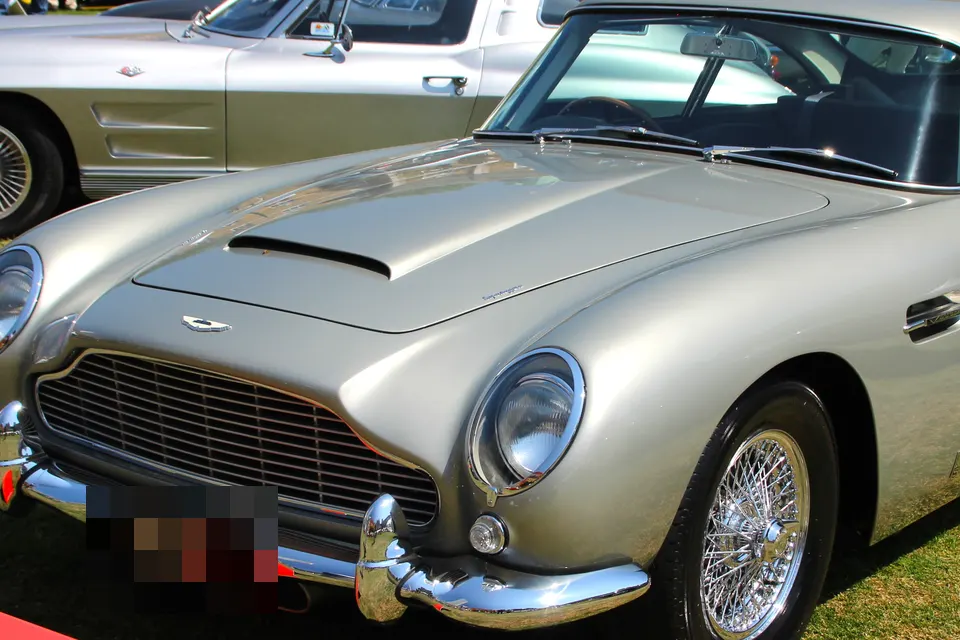
Photo: MrWalkr · CC BY-SA 4.0 · resized and cropped · Registration identifier and identifiable bystanders pixelated for privacy.
1964Aston Martin DB5 VantageView passport ↗The DB5 shows the earlier engine-tune use of Vantage before the 1977 car became a comprehensively engineered performance model.[1]
→
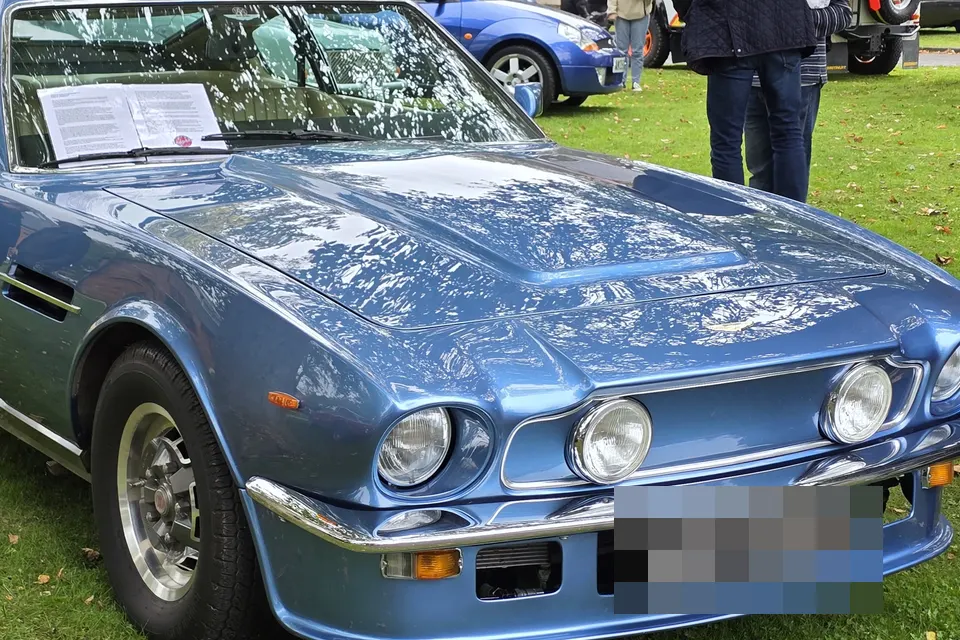
Photo: MrWalkr · CC BY-SA 4.0 · resized and cropped · Registration identifier and identifiable bystanders pixelated for privacy.
1977V8 Vantage (Launch specification)Current model: The 1977 V8 Vantage established a fully engineered Aston Martin performance model around the hand-built 5.3-litre V8, manual gearbox and revised chassis.[2][3]