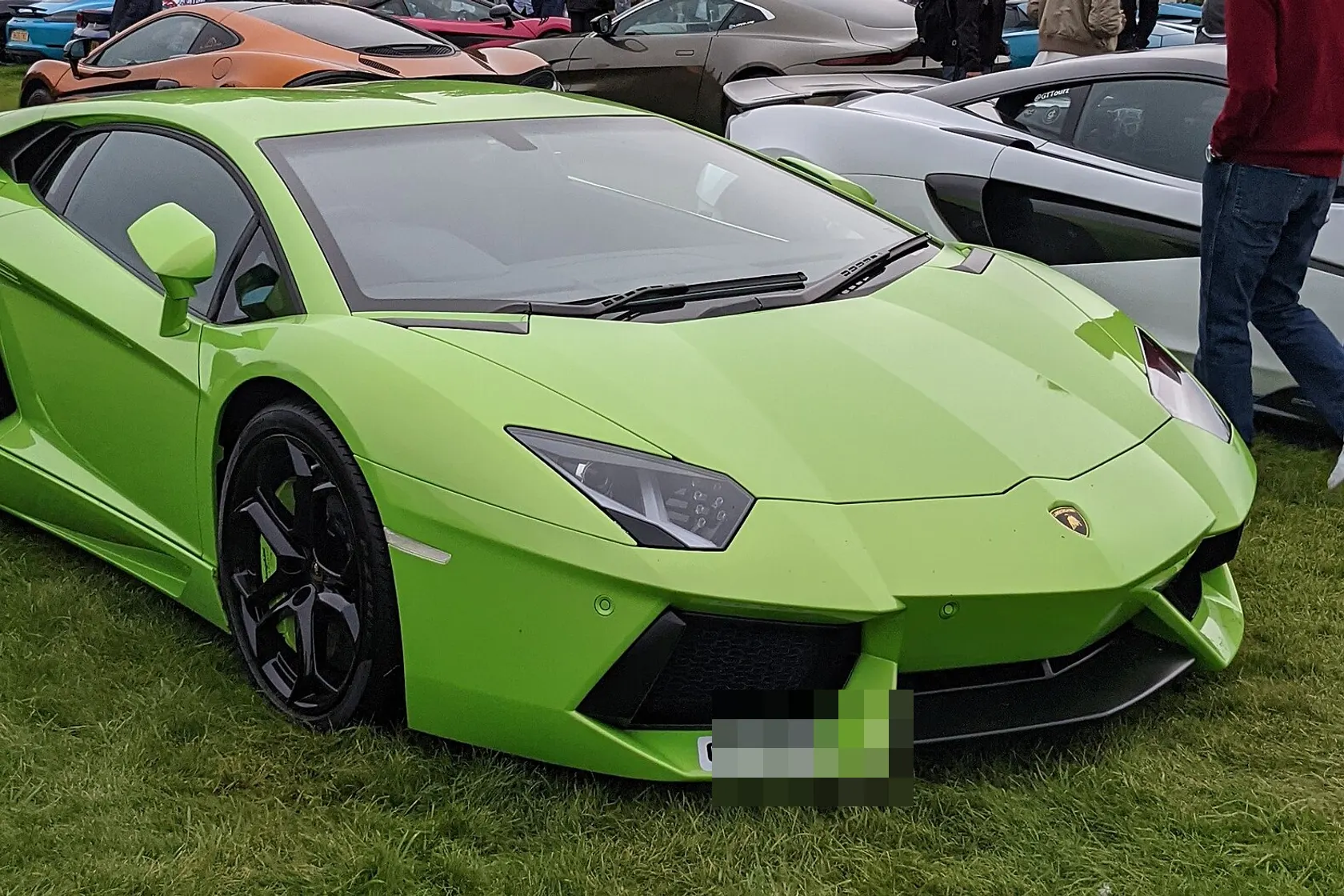
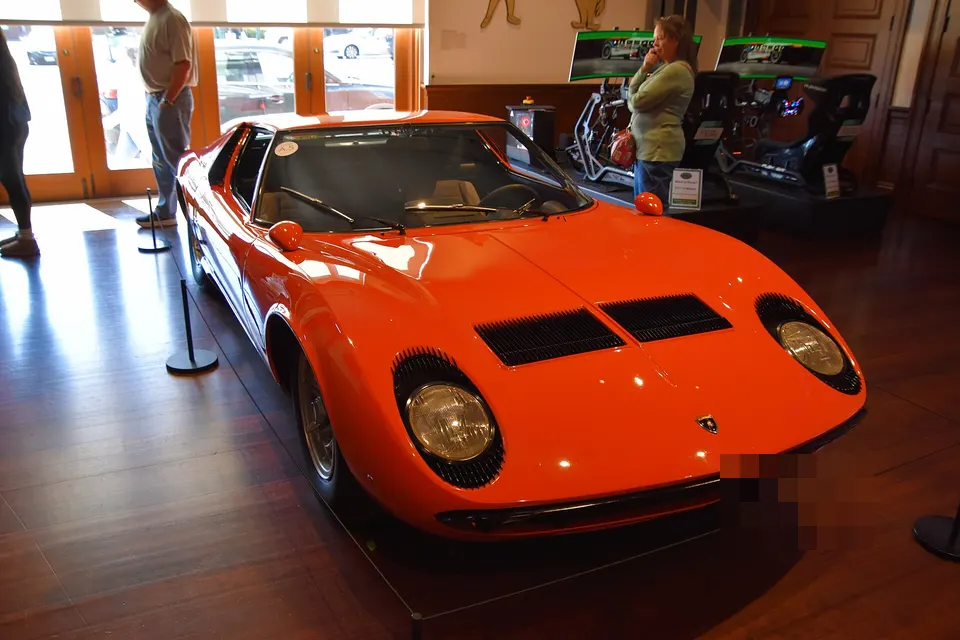
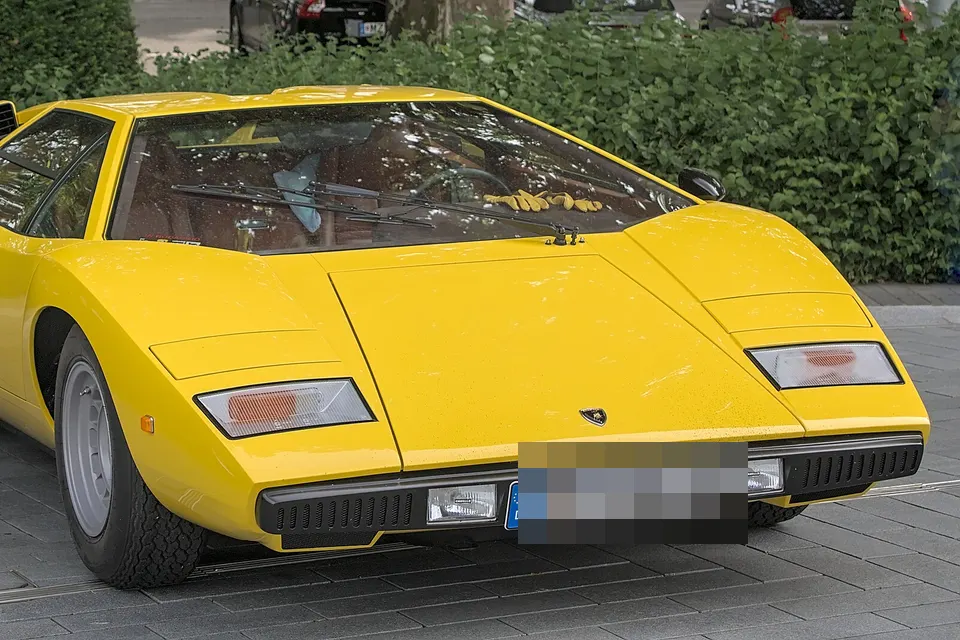
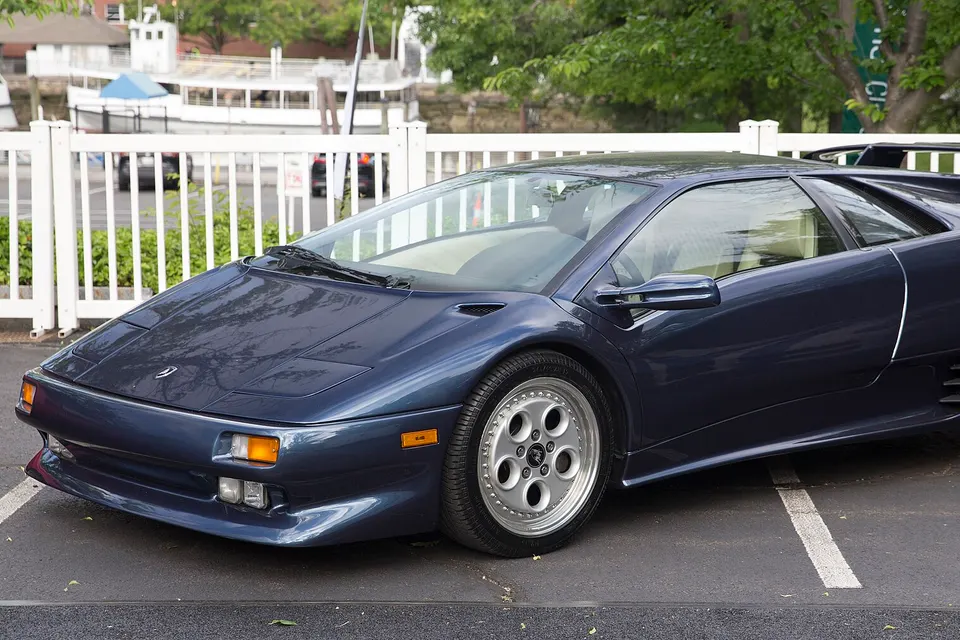
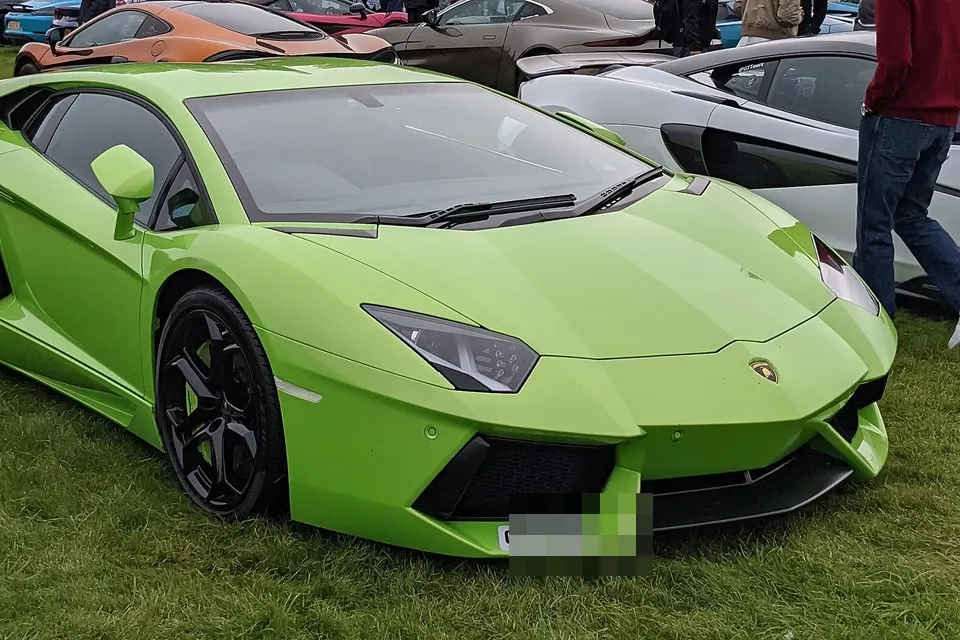
Documentary photographPhoto: Calreyn88 · CC BY-SA 4.0 · resized and cropped · Registration identifier pixelated for privacy.
Engine redprint / verifiedL539 V12
6,498 cc 60° V12 · dry-sump lubricationLongitudinal rear-mid engine, all-wheel driveTopology diagram · not to scale · based on the cited primary sources
Aventador LP 700-4 is Lamborghini’s 2011–2016 a new v12, carbon monocoque and isr transmission, preserved here as an exact factory road-car passport rather than a blended model-family profile.
R / production rarity
How rare is it?
A simple 1–5 rating based on completed worldwide production for this exact version. Price and desirability are not included.
Rarity ratingNot availableNo comparable worldwide production total
Production bandNot available
Production evidenceDocumented lower bound
ProducedWorldwide total used for the rating10,000
Factory milestone for the Aventador family
Figure type
Minimum
Scope
At least 10,000 Aventadors across all derivatives; exact LP 700-4 coupé count not isolated
The rating uses five fixed production bands. Smaller production runs receive higher ratings. Exact totals and responsibly sourced estimates for this precise version can be rated. Plans, regional totals, lower bounds, disputed figures and broader-family totals remain visible but unclassified. The evidence description is kept separate from the rating so a source limitation cannot change how scarcity is measured.
Lamborghini unveiled the Aventador LP 700-4 at Geneva in 2011 as the successor to Murciélago and a technical reset for the flagship line. The designation states the essentials: Longitudinale Posteriore engine position, 700 CV and four driven wheels. Lamborghini’s historical milestones call it the brand’s new reference point for power, technology and futuristic design. The focus here is the original coupé before the Aventador S revision, rather than combining eleven years of SV, S, SVJ, Ultimae and roadster development into one highest-number specification.
The L539 60-degree V12 displaced 6,498 cc and was new rather than another enlargement of the Bizzarrini-derived family. Lamborghini’s V12 history documents 700 CV, 2.9 seconds to 100 km/h and 350 km/h; it does not restate launch-car torque or dry mass, so this page leaves those values unresolved. Power passed through a seven-speed Independent Shifting Rod transmission and electronically managed all-wheel drive. ISR is an automated single-clutch gearbox, not a dual clutch: torque still breaks and returns with a distinct physical event under full load.
A carbon-fibre monocoque replaced Murciélago’s steel-tube central structure. Lamborghini developed and produced the composite structure in Sant’Agata, integrating occupant cell and roof while using aluminium front and rear frames. Pushrod suspension brought the spring and damper inboard, and active rear aero and electronically managed intake openings coordinated cooling and stability. A cited Lamborghini carbon-fibre history gives the complete chassis structure at 229.5 kg; that component figure must not be confused with the dry mass of the assembled car.
Engineering and character
The original LP 700-4 was followed by Roadster, LP 750-4 Superveloce, Aventador S, SVJ and LP 780-4 Ultimae. Rear-wheel steering, output, aerodynamics, exhaust, software and body details changed across those phases. Lamborghini celebrated more than 10,000 Aventadors by 2020 and later called it the best-selling V12 family in company history, but that family count is not the production number of the original coupé.
The L539’s twelve cylinders and high engine speed create the principal acoustic line, while ISR gives each upshift a pronounced cut and re-engagement. Drive modes change throttle, shift severity, all-wheel-drive strategy, damping and exhaust-valve behaviour, so a spectacular Corsa-mode clip is not a neutral all-state reference. Catalyst market, valve state, software, transmission temperature and original silencers must be recorded. SVJ or aftermarket exhaust audio cannot represent the quieter production path of an early LP 700-4.
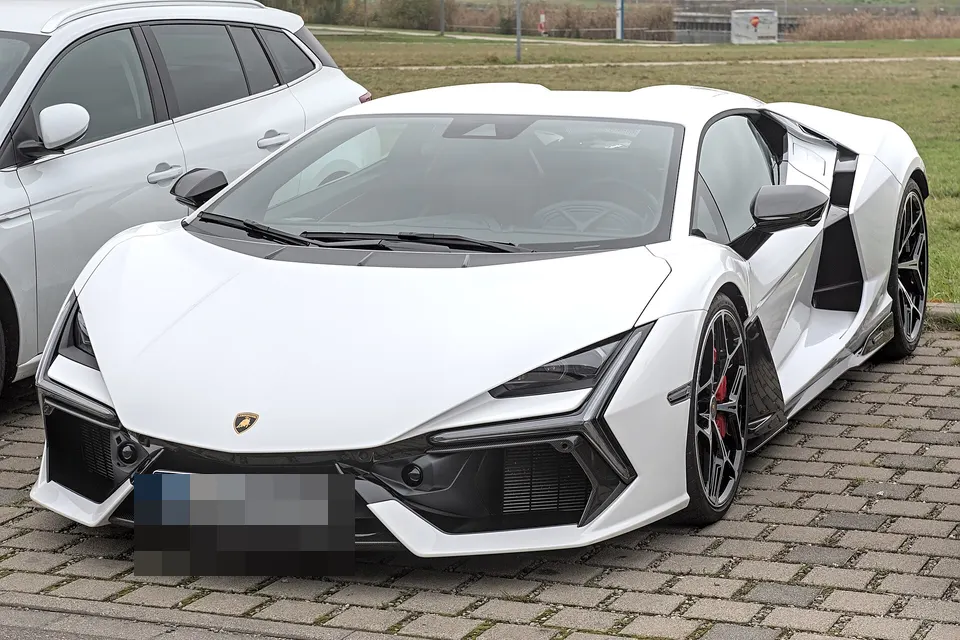
Revuelto kept a 6.5-litre naturally aspirated V12 but rotated the transmission relationship, adding an eight-speed transverse dual clutch behind the engine, three electric motors and a plug-in battery. That comparison reveals why Aventador is more than the last non-hybrid car: it is also the only generation in this line defined by the L539 plus ISR combination. Murciélago before it retained the original engine family and gated manual at launch; Revuelto after it electrically fills torque and shortens shifts through a fundamentally different architecture.
Legacy and identity
The focus here is the 2011–2016 Aventador LP 700-4 coupé, model family LB834, before the Aventador S. It excludes Roadster, SV, S, SVJ and Ultimae, plus limited-series derivatives using related hardware. The 700 CV L539, carbon monocoque, seven-speed ISR and all-wheel drive define the exact identity. That boundary prevents later 740, 750, 770 or 780 CV claims and rear-wheel-steering features from appearing on an early car merely because every version shares the Aventador name.
01
V12 lineage
Lamborghini identifies Miura, Countach, Diablo, Murciélago, Aventador and Revuelto as successive carriers of its mid-engine supercar legacy.
02
Launch model
The focus here is the production Aventador LP 700-4; later S, SV, VT, roadster and racing derivatives require separate evidence.