
Jaguar · Supercar · 1992–1994
XJ220
Recorded designation · Production XJ220- Recorded designation
- Production XJ220
- Engine / drive unit
- JV6 3.5 L twin-turbo V6
- Archive no.
- 349
- Sources updated
- 3 October 2026
Help build this passport
Have a recording, source, correction, photo or missing detail for this exact car? Prepare a contribution with the Car ID already selected.
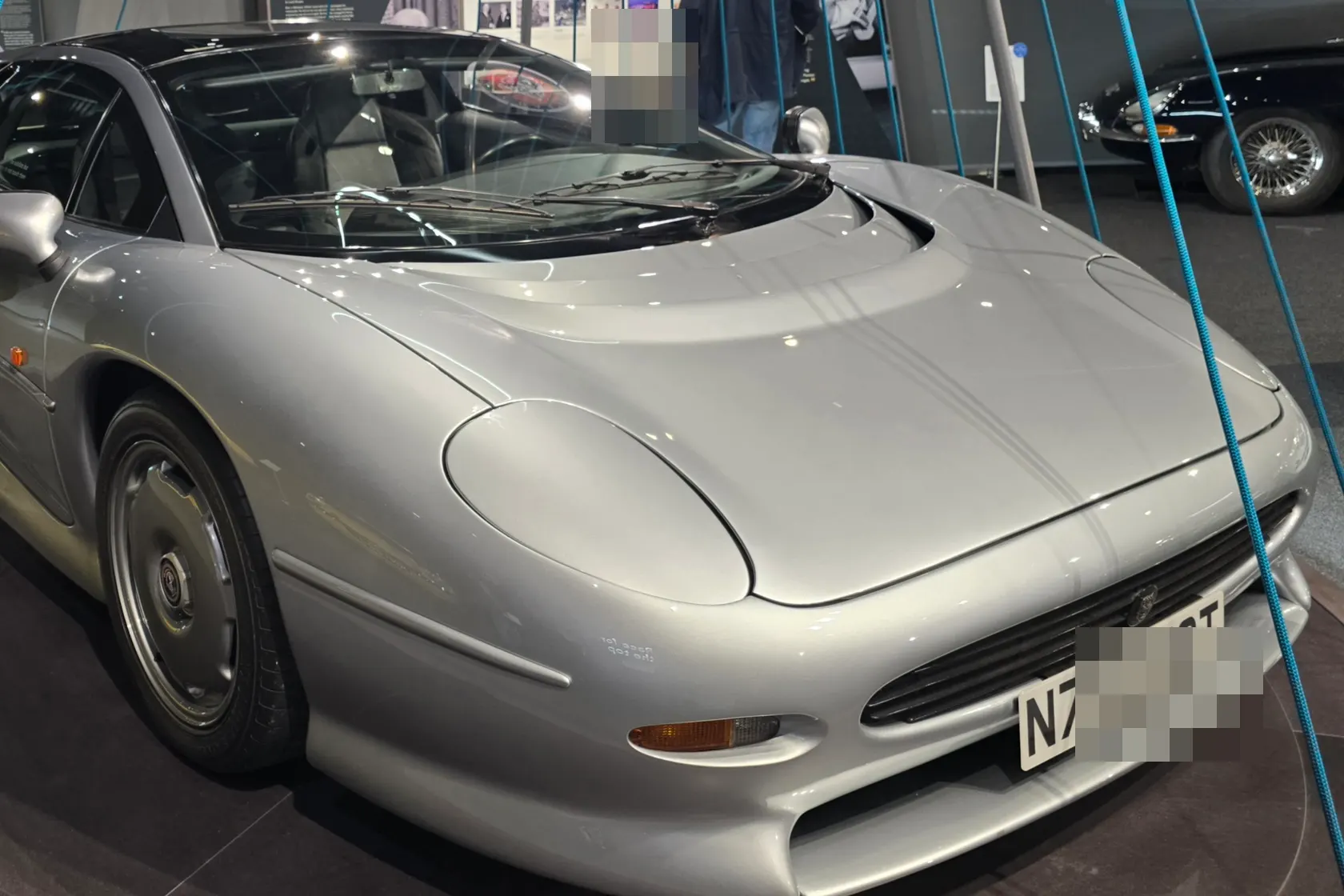
The production XJ220 was Jaguar’s early-1990s halo supercar, translating a dramatic concept into a technically distinct twin-turbo V6, rear-drive production car.
How rare is it?
A simple 1–5 rating based on completed worldwide production for this exact version. Price and desirability are not included.
Rare
Completed production
- Figure type
- Exact
- Scope
- Production XJ220 road cars, excluding prototypes, XJ220C and XJ220S derivatives
- Geography / date
- Global · 1992–1994
How the rating works
The rating uses five fixed production bands. Smaller production runs receive higher ratings. Exact totals and responsibly sourced estimates for this precise version can be rated. Plans, regional totals, lower bounds, disputed figures and broader-family totals remain visible but unclassified. The evidence description is kept separate from the rating so a source limitation cannot change how scarcity is measured.
- 5/5Fewer than 25 builtUltra rare
- 4/525 to 249 builtVery rare
- 3/5250 to 2,499 builtRare
- 2/52,500 to 24,999 builtLimited production
- 1/525,000 or more builtSeries production
At a glance
What creates the sound
Mechanical, induction, transmission and exhaust sound are best documented separately.
Factory-stock status depends on engine, intake, forced induction, catalysts, gearbox and silencers.
Recordings with uncertain configuration remain visibly marked as Unregistered.
- V6 architecture
- The production XJ220 used an aluminium structure and body around a twin-turbo V6, five-speed manual transaxle and rear-wheel drive
- 5-speed manual with rear-wheel drive
History and character
Origins and context
Jaguar’s XJ220 production car differed fundamentally from the V12, all-wheel-drive concept that generated its name and early expectations. The customer model used a compact twin-turbo V6, rear-wheel drive and an aluminium structure developed for production. RevAtlas treats that change as the authentic completed car rather than calling it a compromised version of the concept. The concept, prototypes, XJ220C racers and later XJ220S conversions remain outside this page.
The 3,498 cc twin-turbocharged V6 produced 550 PS, 404 kW and 644 Nm. A five-speed manual transaxle drove the rear wheels. Period road tests record intense boost delivery and very high performance, but maximum-speed figures vary with catalyst and test configuration. The archive does not merge 212, 213 and 217 mph claims into one universal number. Sound submissions should identify boost state, exhaust and whether catalysts remain fitted.
A mid-engine layout, long aluminium body and small cabin create an acoustic environment unlike Jaguar’s front-engine V12 grand tourers. Turbocharger whistle, wastegate behaviour, intake rush and the V6 exhaust note may dominate in different microphone positions. Mechanical originality matters because exhaust and boost modifications can transform both sound and output. A visible production XJ220 cannot by itself prove untouched management or turbo hardware.
Engineering and character
The source image is an exact production road car photographed in 1995, after the 1992 introduction, so it carries disclosed year uncertainty rather than pretending to show the launch example. Registration identifiers and bystanders are removed or pixelated in public derivatives without altering the vehicle’s documentary form.
The XJ220 belongs in the performance archive for its engineering and historical impact, not only for headline speed. It shows how Jaguar and its partners turned a motor-show idea into a manufacturable early-1990s supercar under different technical constraints. Recordings can document an important twin-turbo analogue reference, provided the production V6 road car remains clearly separated from the concept and motorsport derivatives.
The V12 all-wheel-drive concept, XJ220C racers, XJ220S road conversions and prototypes are excluded. Similar badges can cover different engines, transmissions, bodies and production programmes. Preserving those distinctions prevents a familiar name from becoming a blended specification that no single production car carried.
Legacy and identity
The mechanical reference is the JV6 3.5 L twin-turbo V6, a 3,498 cc twin-turbocharged v6 represented at 404 kW, 550 PS and 644 Nm. It works through a 5-speed manual with rear-wheel drive. Units and period rating conventions stay visible rather than being treated as directly interchangeable.
For sound documentation, the principal markers are twin-turbo V6 spool, five-speed manual shifts, mid-engine intake path, long-body cabin resonance. A cold start must include uninterrupted cranking, first combustion and settling idle. Acceleration and fly-by submissions need gear, load, safe road or closed-course context, microphone position and weather. Factory-stock status requires evidence for intake, forced induction, catalysts, gearbox and silencers.
A photograph can establish useful visual context but cannot prove mechanical originality. Restoration, service replacement and reversible modification are common across performance cars. RevAtlas records configuration component by component, allowing modified survivors to remain useful without presenting them as untouched references. That method gives the XJ220 a defensible page now and an exact home for future evidence.
Model identity
The focus here is the 281 production XJ220 road cars built from 1992–1994. The V12 all-wheel-drive concept, XJ220C racers, XJ220S road conversions and prototypes are excluded.
Why it matters
The production XJ220 was Jaguar’s early-1990s halo supercar, translating a dramatic concept into a technically distinct twin-turbo V6, rear-drive production car.
Model lineage
1988–1992 · 2 documented milestones
- No archive image1988Jaguar XJ220 conceptThe V12 all-wheel-drive concept established the design theme, while the production car adopted a twin-turbo V6 and rear-wheel drive.[2]→
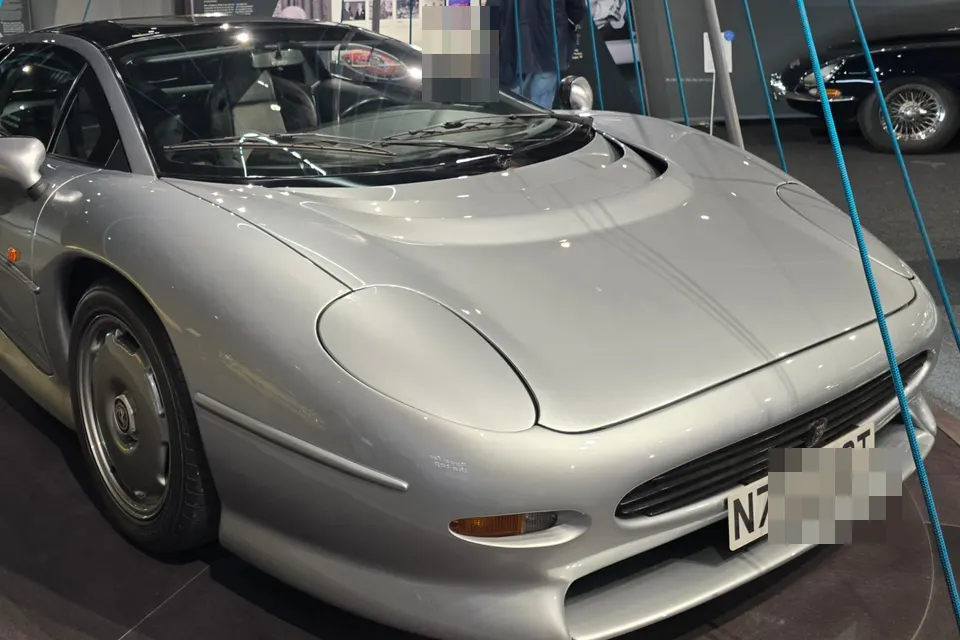
Photo: Calreyn88 · CC BY 4.0 · resized and cropped · Registration identifiers, visible labels and identifiable bystanders pixelated for privacy.

Help us hear this car
Share a properly licensed recording of this exact model. Stock and modified cars are both welcome when their configuration is described clearly.
- Cold start
- Acceleration
- Fly-by
Authoritative films
Links pass directly to YouTube. The archive does not host, copy or embed these films.
References
- 01Jaguar XJ220 history and productionJaguar Daimler Heritage Trust · accessed 3 October 2026
- 02XJR-15 versus XJ220Jaguar Daimler Heritage Trust · accessed 3 October 2026
- 03Jaguar XJ220 road testMotor Sport · accessed 3 October 2026
- 041993 Jaguar XJ220 archive driveCar and Driver · accessed 3 October 2026