
McLaren · Hybrid high-speed Hyper-GT · 2020
Speedtail
Recorded designation · Ultimate Series- Recorded designation
- Ultimate Series
- Engine / drive unit
- M840TQ 4.0 L twin-turbo V8 hybrid
- Archive no.
- 339
- Sources updated
- 3 October 2026
Help build this passport
Have a recording, source, correction, photo or missing detail for this exact car? Prepare a contribution with the Car ID already selected.
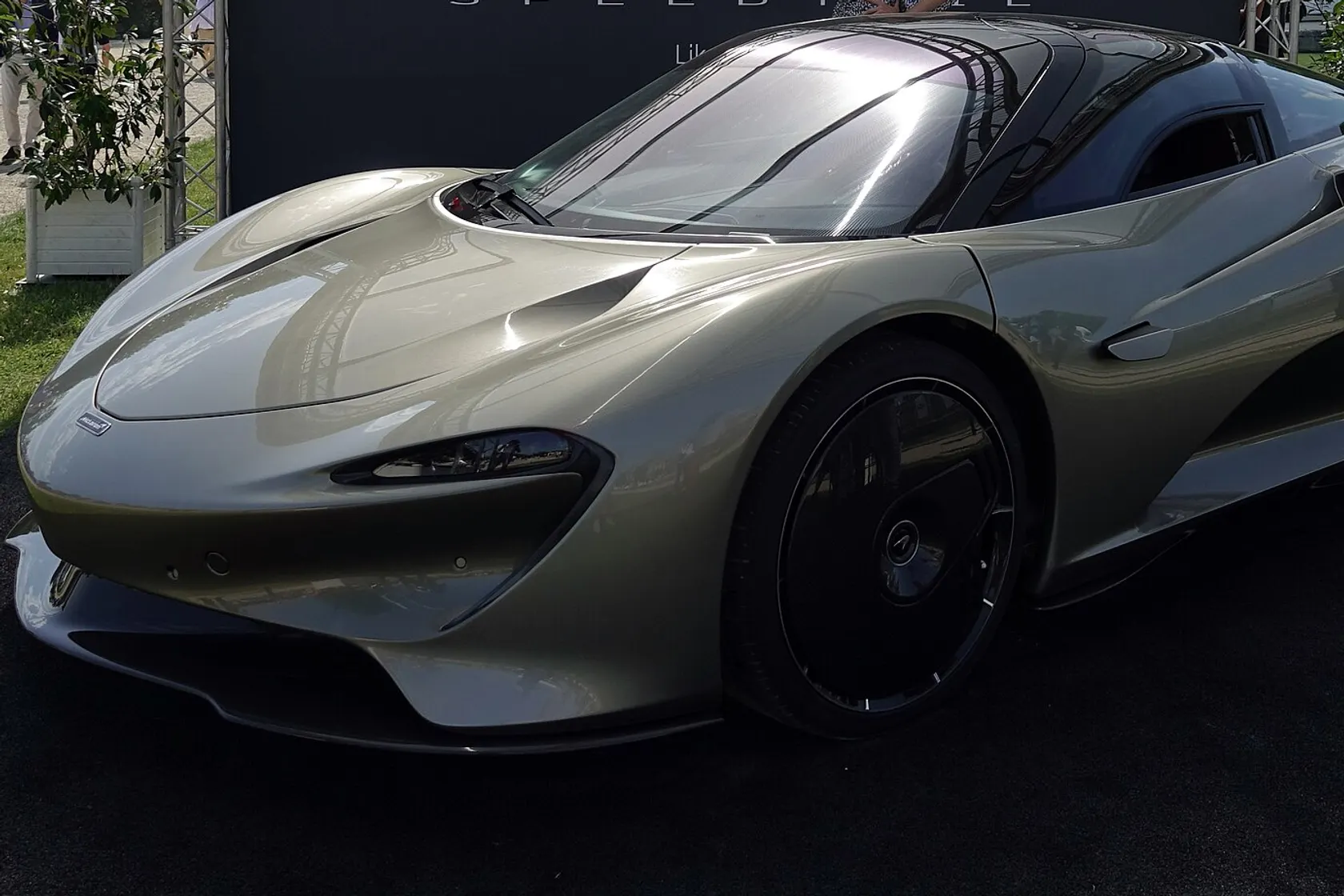
The Speedtail reinterpreted McLaren’s central-seat, three-occupant road-car idea as a hybrid Hyper-GT engineered for low drag and a manufacturer-claimed 403 km/h maximum.
How rare is it?
A simple 1–5 rating based on completed worldwide production for this exact version. Price and desirability are not included.
Allocated customer production
- Figure type
- Planned
- Scope
- Customer Speedtail allocation, excluding development prototypes and validation cars
- Geography / date
- Global · 2018-2020
Not rated: Production not completed
How the rating works
The rating uses five fixed production bands. Smaller production runs receive higher ratings. Exact totals and responsibly sourced estimates for this precise version can be rated. Plans, regional totals, lower bounds, disputed figures and broader-family totals remain visible but unclassified. The evidence description is kept separate from the rating so a source limitation cannot change how scarcity is measured.
- 5/5Fewer than 25 builtUltra rare
- 4/525 to 249 builtVery rare
- 3/5250 to 2,499 builtRare
- 2/52,500 to 24,999 builtLimited production
- 1/525,000 or more builtSeries production
At a glance
What creates the sound
Mechanical, induction, transmission and exhaust sound are best documented separately.
Factory-stock status depends on engine, intake, forced induction, catalysts, gearbox and silencers.
Recordings with uncertain configuration remain visibly marked as Unregistered.
- V8 architecture
- The Speedtail combined a twin-turbocharged V8 with parallel electric assistance, a central driving position, three-seat cabin and low-drag active body surfaces
- 7-speed dual-clutch transmission with rear-wheel drive
History and character
Origins and context
McLaren developed the Speedtail under the BP23 programme as a high-speed Hyper-GT rather than a circuit-focused successor to the Senna. Its three-seat cabin placed the driver centrally, consciously revisiting one of the F1’s most recognisable ideas while using a different carbon structure, hybrid powertrain and aerodynamic philosophy. Development prototypes and individually themed MSO executions are excluded from the standard production identity.
The current labelled McLaren specification gives a combined 1,070 PS, 787 kW and 1,150 Nm from a 4.0-litre twin-turbo V8 with parallel electric assistance. A seven-speed dual-clutch transmission drives the rear wheels. McLaren claims 403 km/h, making controlled airflow and power delivery central to the design. The hybrid system is not an incidental efficiency device: electric torque supplements the combustion engine and changes transient response, so a Speedtail recording should identify battery state, operating mode and the point at which the V8 becomes dominant.
The long body, enclosed front-wheel surfaces, retractable cameras and flexible rear ailerons pursue low drag rather than the large downforce devices of the Senna. That choice affects the car’s sound environment. At lower speed, hybrid operation, turbocharger response and cabin isolation may separate events that merge during full acceleration. At very high speed, airflow would dominate, but public-road recordings must never attempt to reproduce the maximum-speed programme. Safe closed-course context and precise microphone placement are mandatory for any performance submission.
Engineering and character
McLaren material is not internally consistent across every surviving web section. Some prose describes 1,050 PS and 1,430 kg, while the current labelled technical table shows 1,070 PS and 1,499 kg dry, with a higher DIN figure. Independent publications also mix launch-stage and later specifications. RevAtlas uses the current labelled output and torque while avoiding a mass fact in the main passport until convention and final production specification are reconciled. The discrepancy remains an editorial note, not something to average away.
Only 106 customer slots were announced and allocated, but allocation is not identical to a post-production audit. The archive records 106 as planned production. In lineage, Speedtail belongs beside the F1 because of the central driving position and three-seat layout, yet their powertrains are fundamentally different. It also contrasts with Senna and Elva inside the Ultimate Series. Its archival value lies in documenting how combustion sound, turbocharger behaviour, electrical assistance and a highly insulated aerodynamic body combine in a modern high-speed grand tourer.
BP23 development prototypes, validation cars, themed MSO one-offs and the unrelated McLaren F1 are excluded. Similar names can cover different engines, transmissions, body styles and production programmes. Keeping those distinctions visible protects the technical record and prevents search traffic from turning a familiar badge into a blended specification that no single production car carried.
Legacy and identity
It works through a 7-speed dual-clutch transmission with rear-wheel drive. Output units remain explicit because manufacturer and independent sources may use bhp, PS or regional horsepower conventions.
For sound documentation, the primary listening markers are hybrid-assisted twin-turbo V8, electric torque fill, seven-speed dual-clutch shifts, high-speed airflow. A cold start must include the uninterrupted crank, first combustion and settling idle, with ambient temperature and vehicle state recorded. Acceleration and fly-by submissions need gear, load, road or closed-course context, microphone position and wind conditions. No recording should be described as factory stock until intake, forced-induction hardware, catalysts, gearbox and silencers have been evidenced.
Period photographs and badges can establish visual context, but they cannot prove mechanical originality. Restoration, service replacement and reversible modification are common across valuable performance cars. RevAtlas therefore records configuration component by component and keeps modified survivors useful without presenting them as untouched references.
Model identity
The focus here is the 2020 customer-production McLaren Speedtail. BP23 development prototypes, validation cars, themed MSO one-offs and the unrelated McLaren F1 are excluded.
Why it matters
The Speedtail reinterpreted McLaren’s central-seat, three-occupant road-car idea as a hybrid Hyper-GT engineered for low drag and a manufacturer-claimed 403 km/h maximum.
Model lineage
1994–2020 · 4 documented milestones
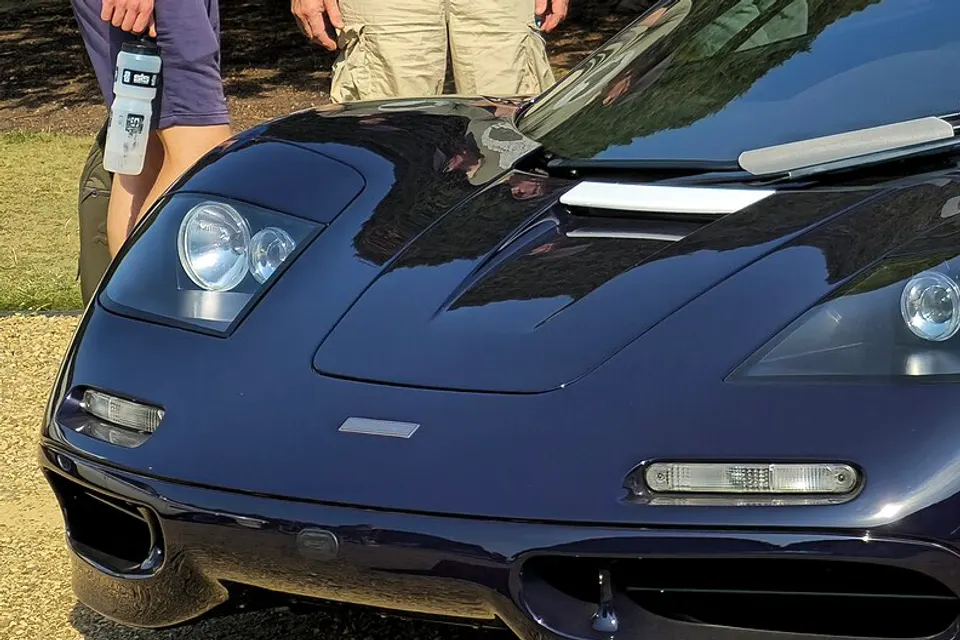
Photo: Calreyn88 · CC BY-SA 4.0 · resized and cropped 1994McLaren F1The F1 is the earlier McLaren road car with a central driving position and three-seat cabin, but it uses a naturally aspirated V12 rather than hybrid power.[5]→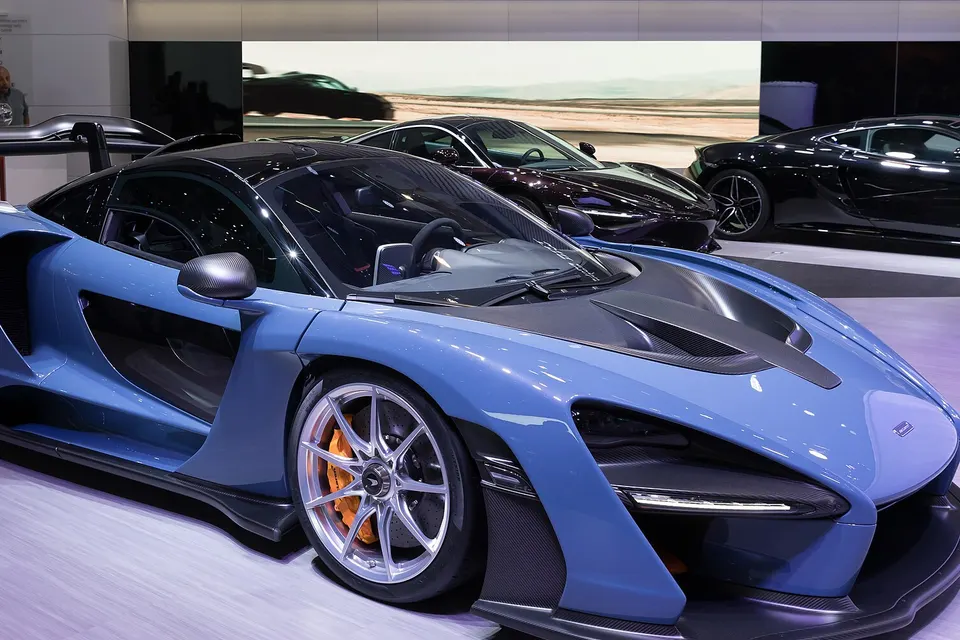
Photo: Matti Blume · CC BY-SA 4.0 · resized and cropped 2018Senna (Ultimate Series)The Senna made circuit performance the organising principle of a road-legal Ultimate Series model, coordinating active aerodynamics, hydraulic chassis control and an 800 PS V8.[3][4]→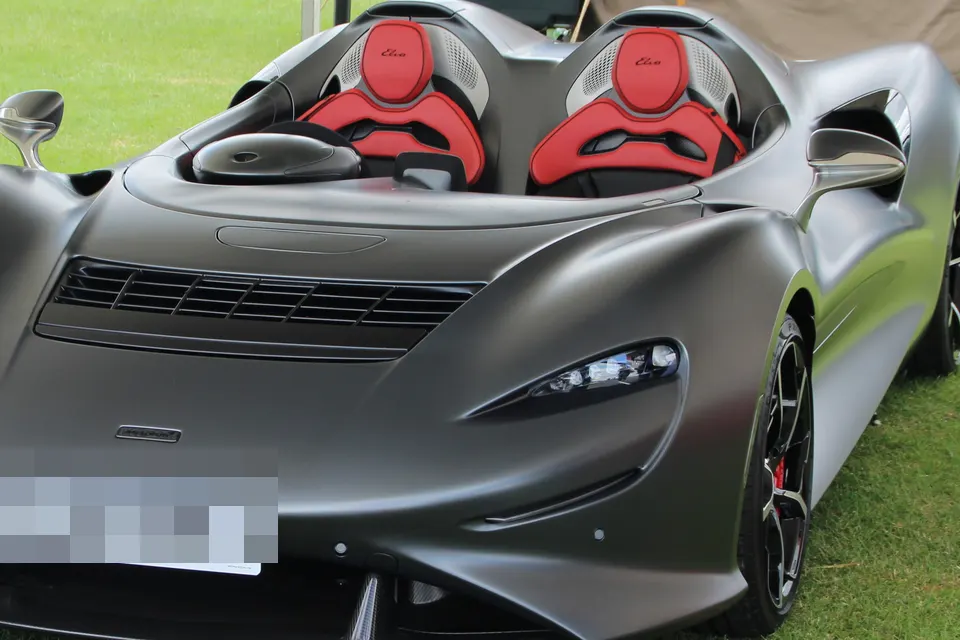
Photo: MrWalkr · CC BY-SA 4.0 · resized and cropped · Registration identifier and identifiable bystanders pixelated for privacy. 2020Elva (Ultimate Series)The Elva gave McLaren’s Ultimate Series a lightweight open-cockpit identity built around active airflow management and the marque’s highest-output non-hybrid road-car V8 tune at launch.[1][2]→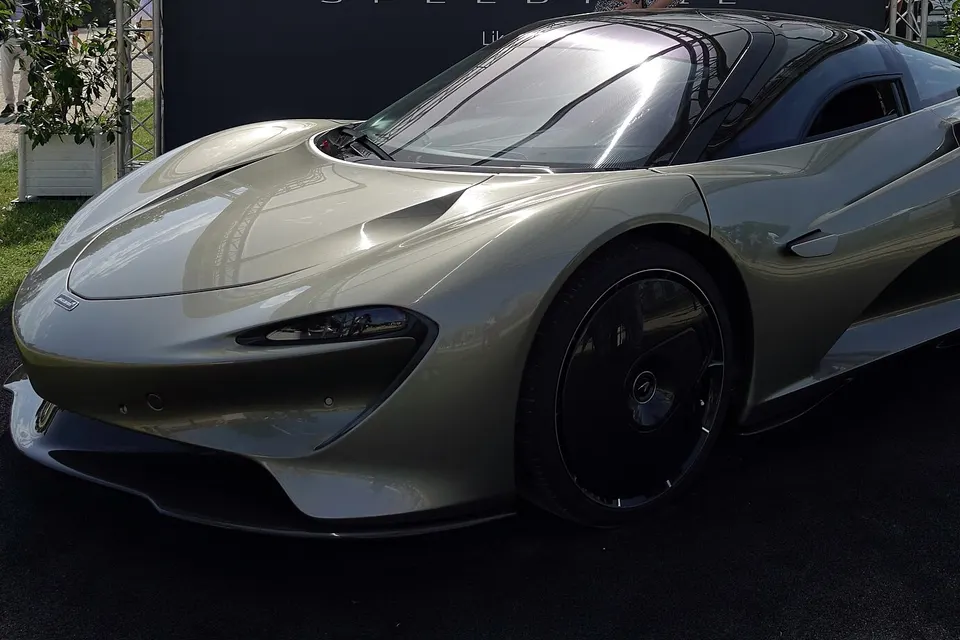
Photo: Y.Leclercq · CC BY-SA 4.0 · resized and cropped


Help us hear this car
Share a properly licensed recording of this exact model. Stock and modified cars are both welcome when their configuration is described clearly.
- Cold start
- Acceleration
- Fly-by
Authoritative films
Links pass directly to YouTube. The archive does not host, copy or embed these films.
References
- 01McLaren Elva model specificationMcLaren Automotive · accessed 3 October 2026
- 022021 McLaren Elva first driveCar and Driver · accessed 3 October 2026
- 03McLaren Senna model specificationMcLaren Automotive · accessed 3 October 2026
- 042019 McLaren Senna prototype driveCar and Driver · accessed 3 October 2026
- 05McLaren Speedtail model specificationMcLaren Automotive · accessed 3 October 2026
- 06McLaren Speedtail first driveTop Gear · accessed 3 October 2026
- 07McLaren Speedtail media informationMcLaren Automotive · accessed 3 October 2026
- 08McLaren Speedtail reviewAutocar · accessed 3 October 2026