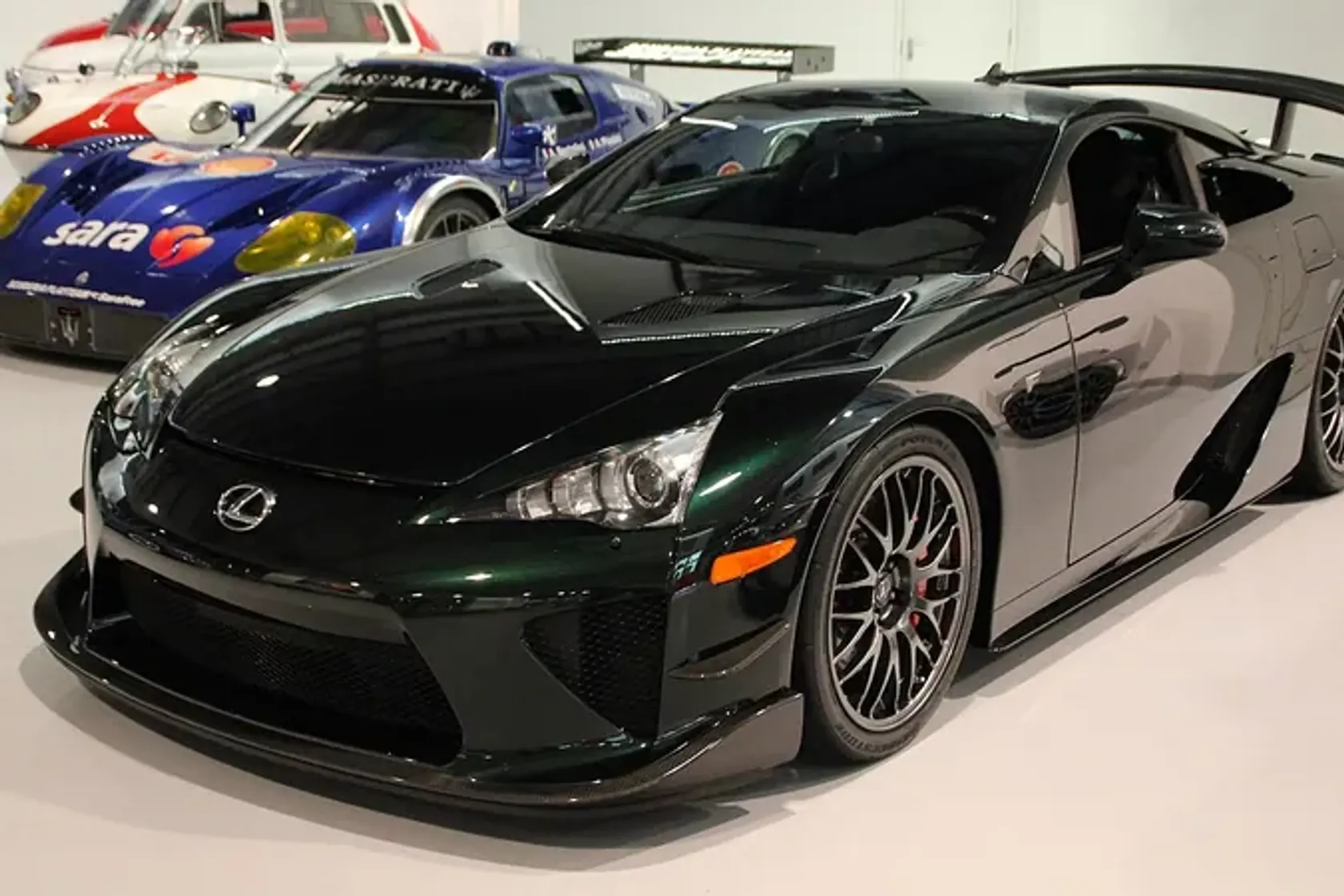
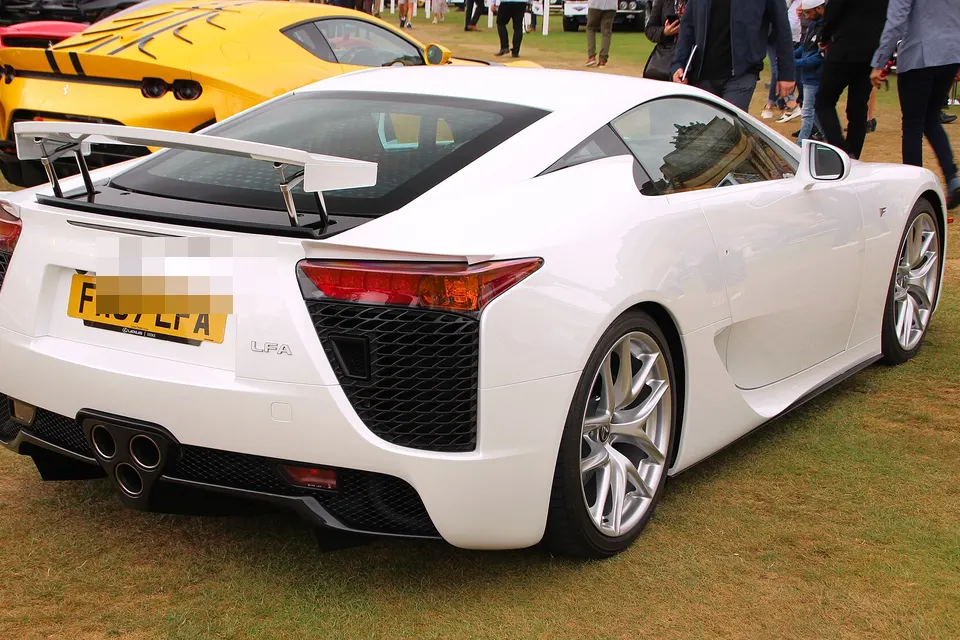
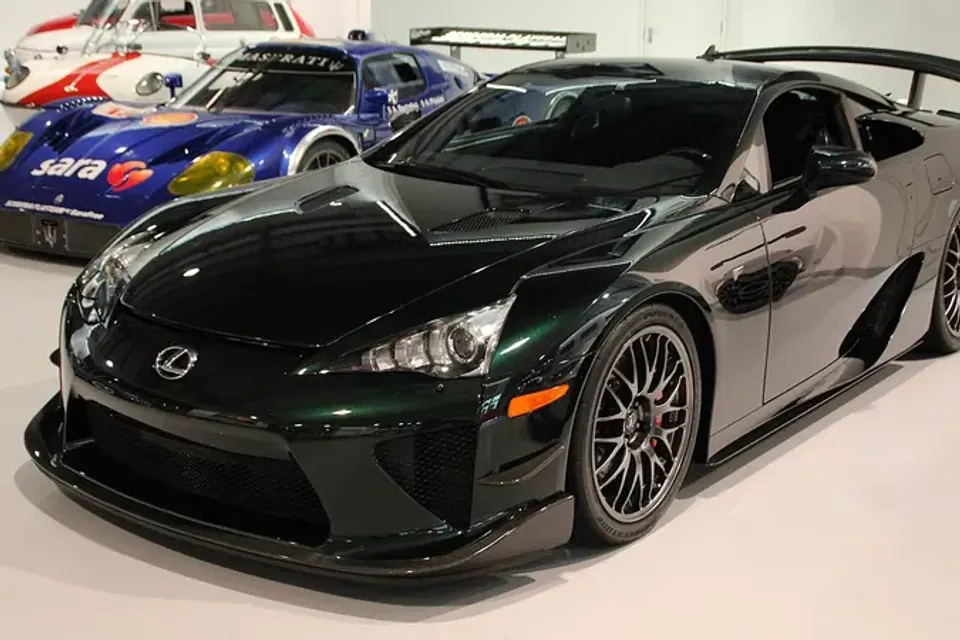
4.8-litre 72° V10 · Nürburgring calibrationFront-mid engine, rear transaxleTopology diagram · not to scale · based on the cited primary sources
LFA Nürburgring Package is the exact LFA10 production representative for the LFA Nürburgring Package milestone in this archive’s source-led family tree.
R / production rarity
How rare is it?
A simple 1–5 rating based on completed worldwide production for this exact version. Price and desirability are not included.
Rarity ratingNot availableNo comparable worldwide production total
Production bandNot available
Production evidenceNo exact production total
ProducedWorldwide total used for the rating
Production total unavailable
A reliable worldwide figure is not listed in the references.
How the rating works
The rating uses five fixed production bands. Smaller production runs receive higher ratings. Exact totals and responsibly sourced estimates for this precise version can be rated. Plans, regional totals, lower bounds, disputed figures and broader-family totals remain visible but unclassified. The evidence description is kept separate from the rating so a source limitation cannot change how scarcity is measured.
5/5Fewer than 25 builtUltra rare
4/525 to 249 builtVery rare
3/5250 to 2,499 builtRare
2/52,500 to 24,999 builtLimited production
1/525,000 or more builtSeries production
Recorded sales
Documented sales
Prices never affect the rarity rating.
Sold$1,600,0002021 · RM Sotheby's · Monterey
Auction result
Exact Nürburgring Package configuration
The auction catalogue reports a completed package count that the current manufacturer ledger does not corroborate; the count is not scored pending reconciliation.
Open-licence recordings can appear with a visible Unregistered note; archive verification still requires independent identity and configuration evidence.
Listening descriptors remain editorial; architecture and output claims trace to the cited manufacturer material.
The LFA Nürburgring Package was the circuit-focused derivative of Lexus’s finite halo programme, announced as a limited subset rather than a separate production run beyond it. Later exact-model auction material reports a completed package count that the current manufacturer ledger does not corroborate, so RedlineCodex leaves the quantity unscored instead of presenting it as settled production. The package recognised the Nürburgring’s role in LFA development and competition, where prototypes had entered the 24-hour race before series launch. Its changes were coordinated across engine, transmission, aerodynamics, suspension, wheels and tyres, making it substantially more than a colour or trim edition.
The 4,805 cc 1LR-GUE V10 retained its 72-degree layout, dry-sump lubrication and ten individual throttles, but revised calibration raised output to 420 kW (571 PS), 11 PS above the regular car’s metric rating. Torque remained 480 Nm, and the engine still operated to 9,000 rpm. The six-speed ASG rear transaxle received faster shift programming, shortening the minimum change time. It remained a single-clutch automated manual whose torque interruption is audible and mechanically distinct from a dual-clutch transmission.
A larger fixed front spoiler and fixed rear wing replaced the standard car’s active rear-aero emphasis, trading some maximum speed for greater circuit stability and downforce. Ride height was reduced, suspension tuning became firmer and model-specific lightweight wheels wore track-oriented tyres. These elements work together. Installing a fixed wing on a regular LFA does not create the package, and removing original aerodynamic parts from a genuine car compromises the exact configuration behind its factory performance claims.
Engineering and character
Lexus used a production Nürburgring Package car to record 7:14.64 on the Nordschleife in 2011. Any presentation of that result should preserve driver, track layout, tyre and timing context rather than treating it as an eternal rank. The lap matters because it validates the package’s integrated purpose, not because one number defines every road or circuit condition. Chassis provenance should also distinguish factory package equipment from later track preparation that may improve performance while reducing originality.
The acoustic foundation remains the LFA’s deliberately engineered Octave Harmony system: surge tank, individual throttles, equal-length manifolds and titanium multi-stage silencer. The extra output and faster ASG calibration alter how quickly the engine crosses its harmonic ranges and how sharply each shift interrupts them. A reference capture should document package authenticity, transmission mode, temperature, intake and exhaust hardware. Standard-LFA audio cannot simply be relabelled because the engine family and redline are shared.
This derivative closes the original LFA line rather than replacing the standard model. It also differs from Nürburgring 24-hour race cars, which used competition safety, aero and mechanical preparation. Lexus’s future halo concepts may reuse the LFA name, but they do not retroactively change this V10 car’s identity. The package belongs to a specific 2011–2012 production context in which a road-legal front-mid-engine supercar was sharpened around the circuit that helped develop it.
Legacy and identity
The focus here is the LFA10 Nürburgring Package with 571 PS, six-speed ASG and factory fixed-aero and chassis changes. It excludes standard LFAs, race entries, cosmetic replicas and later modifications. The broader story explains why the package commands attention beyond scarcity. The explicitly unresolved production boundary, exact output, shift calibration, aero and lap protocol prevent a famous suffix from becoming a vague claim attached to any winged LFA. That precision is essential when rarity makes visual assumptions financially consequential.
01
Model identity
LFA10 is displayed prominently so this record cannot be confused with an adjacent derivative.
02
Original soundtrack
Modified exhausts, aftermarket induction and replacement EV sound packs are excluded.