
Subaru · Twin-turbo all-wheel-drive saloon · 1998
Legacy B4 RSK
Recorded designation · BE5- Recorded designation
- BE5
- Engine / drive unit
- EJ20 2.0 L sequential twin-turbo flat-four
- Archive no.
- 290
- Sources updated
- 2 October 2026
Help build this passport
Have a recording, source, correction, photo or missing detail for this exact car? Prepare a contribution with the Car ID already selected.
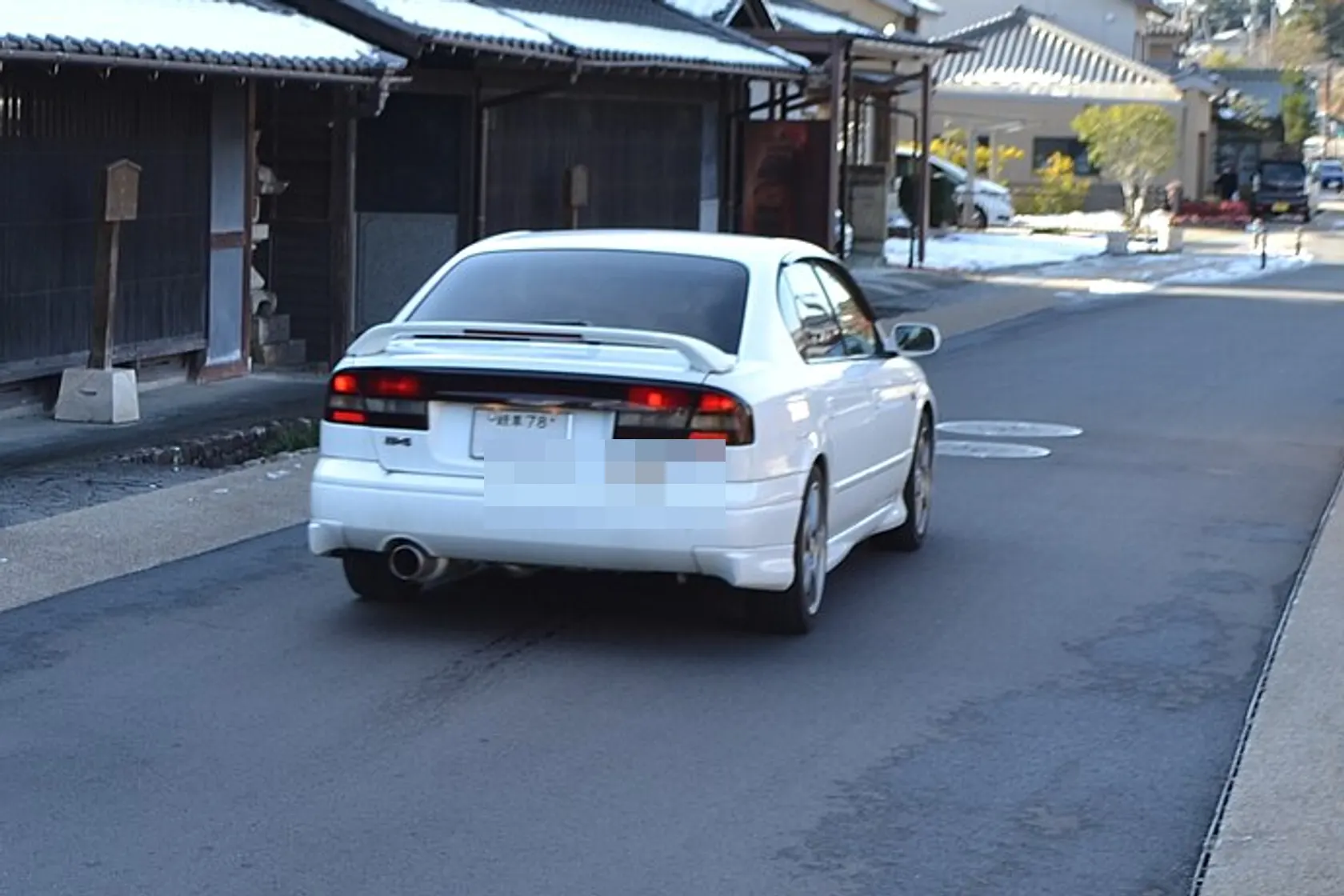
The B4 RSK launched Subaru’s performance-saloon identity around sequential twin-turbo flat-four power and all-wheel drive.
How rare is it?
A simple 1–5 rating based on completed worldwide production for this exact version. Price and desirability are not included.
A reliable worldwide figure is not listed in the references.
How the rating works
The rating uses five fixed production bands. Smaller production runs receive higher ratings. Exact totals and responsibly sourced estimates for this precise version can be rated. Plans, regional totals, lower bounds, disputed figures and broader-family totals remain visible but unclassified. The evidence description is kept separate from the rating so a source limitation cannot change how scarcity is measured.
- 5/5Fewer than 25 builtUltra rare
- 4/525 to 249 builtVery rare
- 3/5250 to 2,499 builtRare
- 2/52,500 to 24,999 builtLimited production
- 1/525,000 or more builtSeries production
At a glance
What creates the sound
Mechanical, induction, transmission and exhaust sound are best documented separately.
Factory-stock status depends on engine, intake, forced induction, catalysts, gearbox and silencers.
Recordings with uncertain configuration remain visibly marked as Unregistered.
- Flat-4 architecture
- The manual RSK used sequential twin turbochargers, Bilstein dampers and full-time all-wheel drive in the first BE5 B4 saloon
- 5-speed manual with all-wheel drive
History and character
Origins and context
Subaru built the Legacy B4 RSK (BE5) from 1998. The B4 RSK launched Subaru’s performance-saloon identity around sequential twin-turbo flat-four power and all-wheel drive. Its four-door performance saloon form and twin-turbo all-wheel-drive saloon purpose locate it within a specific chapter of the marque’s performance history.
The focus here is the December 1998 Japan-market GF-BE5 Legacy B4 RSK with five-speed manual and 280 PS, excluding the 260 PS automatic, later BE5 revisions and other B4 grades. That scope is important: familiar badges can cover several engines, markets and model years, while road cars and competition derivatives may share a name without sharing a usable technical specification.
The mechanical centre is the EJ20 2.0 L sequential twin-turbo flat-four, a 1,994 cc twin-turbocharged flat-4. The period specification represented here is 206 kW (280 PS) and 343 Nm. Those figures stay attached to this configuration rather than blending regional tunes or later revisions.
The manual RSK used sequential twin turbochargers, Bilstein dampers and full-time all-wheel drive in the first BE5 B4 saloon The installation is longitudinal front engine, full-time all-wheel drive, working through a 5-speed manual. That combination determines throttle response, traction and the path by which induction, combustion and transmission sound reach the cabin and roadside.
Engineering and character
Useful listening markers include sequential twin-turbo flat-four, primary-to-secondary turbo transition, five-speed manual shifts, all-wheel-drive transmission note. A genuine cold start records cranking, first combustion and the transition to a settled idle; a warm restart is a different event and should be labelled as such.
Under acceleration, microphone position and engine load reveal different layers. An engine-bay or cabin recording can expose induction and valvetrain detail, while an exterior pass gives more weight to exhaust, tyres, turbocharger or supercharger behaviour and the acoustic effect of speed.
The BE5 identity also makes comparisons within the Legacy family meaningful. Closely related editions may differ in intake hardware, boost control, gearing, catalysts, silencers or mass, so their recordings should not be treated as interchangeable merely because the body shell looks similar.
Surviving examples frequently carry replacement exhausts, wheels, suspension or engine parts. Those cars can still make valuable contributions when the changes are documented; the archive simply needs to distinguish a modified survivor from an evidenced factory-stock reference.
Legacy and identity
The 1998 production period supplies another boundary for research. Manufacturers revised emissions calibrations, equipment and market availability during model runs, and historic output may appear in PS, kilowatts or regional horsepower standards. Keeping units and market context visible prevents false precision.
Body layout matters to sound as much as specification sheets suggest. The four-door performance saloon changes cabin volume, resonance and the listener’s distance from the powertrain. Engine position, driveline and body openings can therefore make related engines feel substantially different in use.
Period photographs establish design and historical context, but appearance alone cannot prove untouched mechanical condition. Originality should be described component by component, especially for intake, forced induction, catalysts, silencers, transmission and final-drive hardware that can alter performance and sound. Service records and dated photographs can make those distinctions clearer without asking readers to accept appearance as proof.
The Legacy B4 RSK is therefore best understood as a connected mechanical identity: EJ20 2.0 L sequential twin-turbo flat-four, 5-speed manual, all-wheel drive and the BE5 boundary. Preserving those elements gives readers a useful story now and gives future community recordings an exact historical home.
Model identity
The focus here is the December 1998 Japan-market GF-BE5 Legacy B4 RSK with five-speed manual and 280 PS, excluding the 260 PS automatic, later BE5 revisions and other B4 grades.
Why it matters
The B4 RSK launched Subaru’s performance-saloon identity around sequential twin-turbo flat-four power and all-wheel drive.
Model lineage
1989–2003 · 3 documented milestones
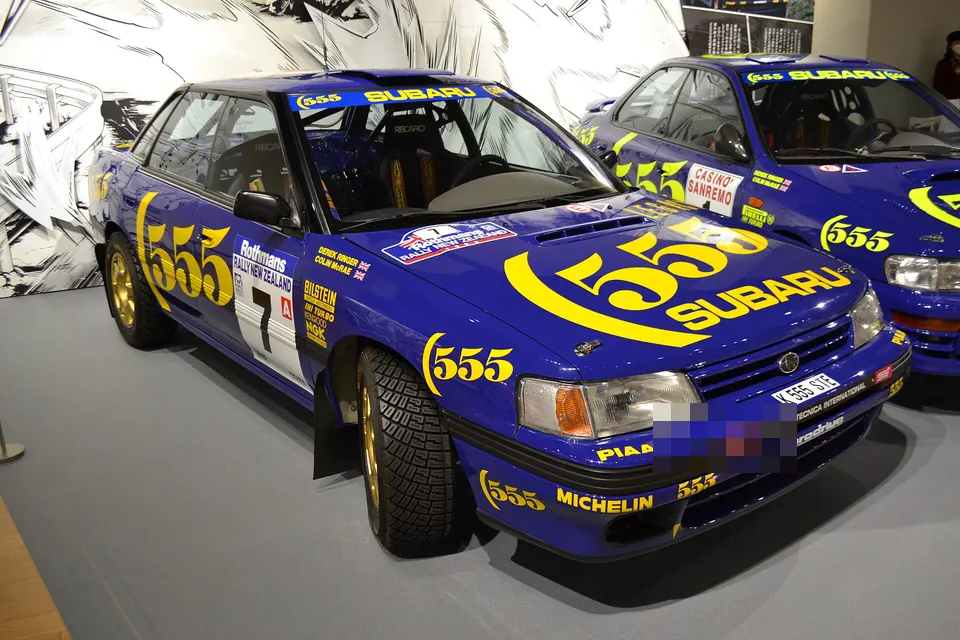
Photo: 先従隗始 · CC0 1.0 · resized and cropped · Registration identifier pixelated for privacy. 1989Legacy RS (BC5)The first Legacy RS established Subaru’s turbo all-wheel-drive performance saloon.[12]→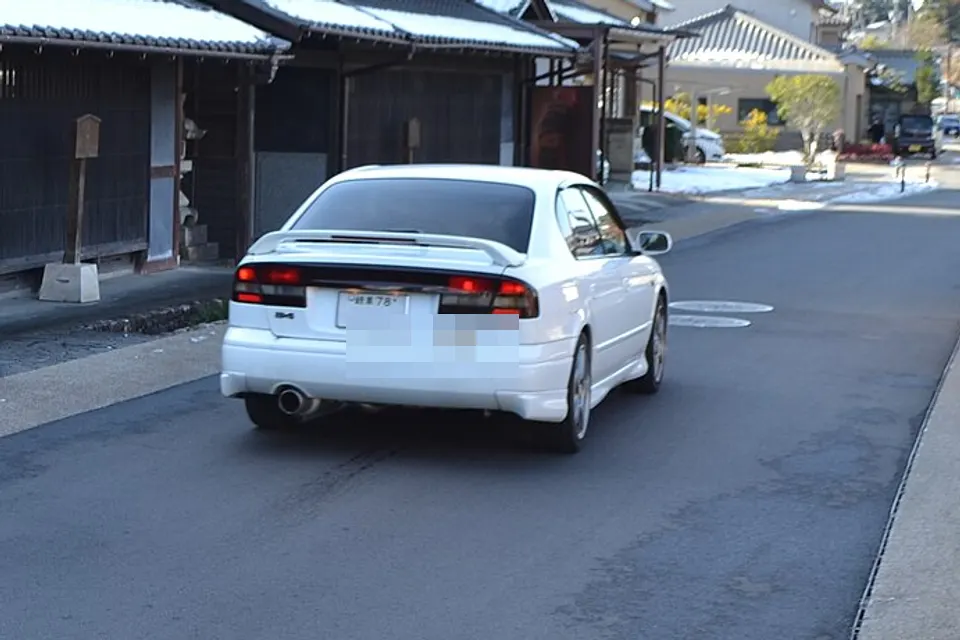
Photo: 先従隗始 · CC0 1.0 · resized and cropped · Registration identifier pixelated for privacy. 1998Legacy B4 RSK (BE5)The B4 RSK developed the formula with sequential twin-turbo power and a dedicated saloon identity.[9]→Photo: 先従隗始 · CC0 1.0 · resized and cropped · Registration identifier pixelated for privacy. 2003Legacy B4 2.0 GT (BL5)The next B4 generation replaced the sequential system with a single twin-scroll turbocharger.[9]


Help us hear this car
Share a properly licensed recording of this exact model. Stock and modified cars are both welcome when their configuration is described clearly.
- Cold start
- Acceleration
- Fly-by
Authoritative films
Links pass directly to YouTube. The archive does not host, copy or embed these films.
References
- 01Impreza 22B STI heritage entrySubaru Tecnica International · accessed 2 October 2026
- 02Impreza 22B-STi Version releaseSubaru · accessed 2 October 2026
- 03Subaru Impreza 22B STI archived testCar and Driver · accessed 2 October 2026
- 04Subaru Impreza model historyevo · accessed 2 October 2026
- 05Impreza WRX Type RA STI Version V releaseSubaru · accessed 2 October 2026
- 06Impreza WRX Type RA STI Version V grade catalogueSubaru · accessed 2 October 2026
- 071998 Subaru Impreza WRX Type RA STI Version V dataAutomobile Catalog · accessed 2 October 2026
- 08Subaru Impreza Type RA model identificationType RA · accessed 2 October 2026
- 09Legacy B4 launch releaseSubaru · accessed 2 October 2026
- 10Legacy B4 factory specification tableSubaru · accessed 2 October 2026
- 111998 Subaru Legacy technical reviewAutoZine · accessed 2 October 2026
- 121989 Legacy RS grade catalogueSubaru · accessed 2 October 2026
- 13Subaru Legacy history and 100,000 km record programmeSubaru · accessed 2 October 2026
- 141989 Subaru Legacy RS specificationTradeCarView · accessed 2 October 2026